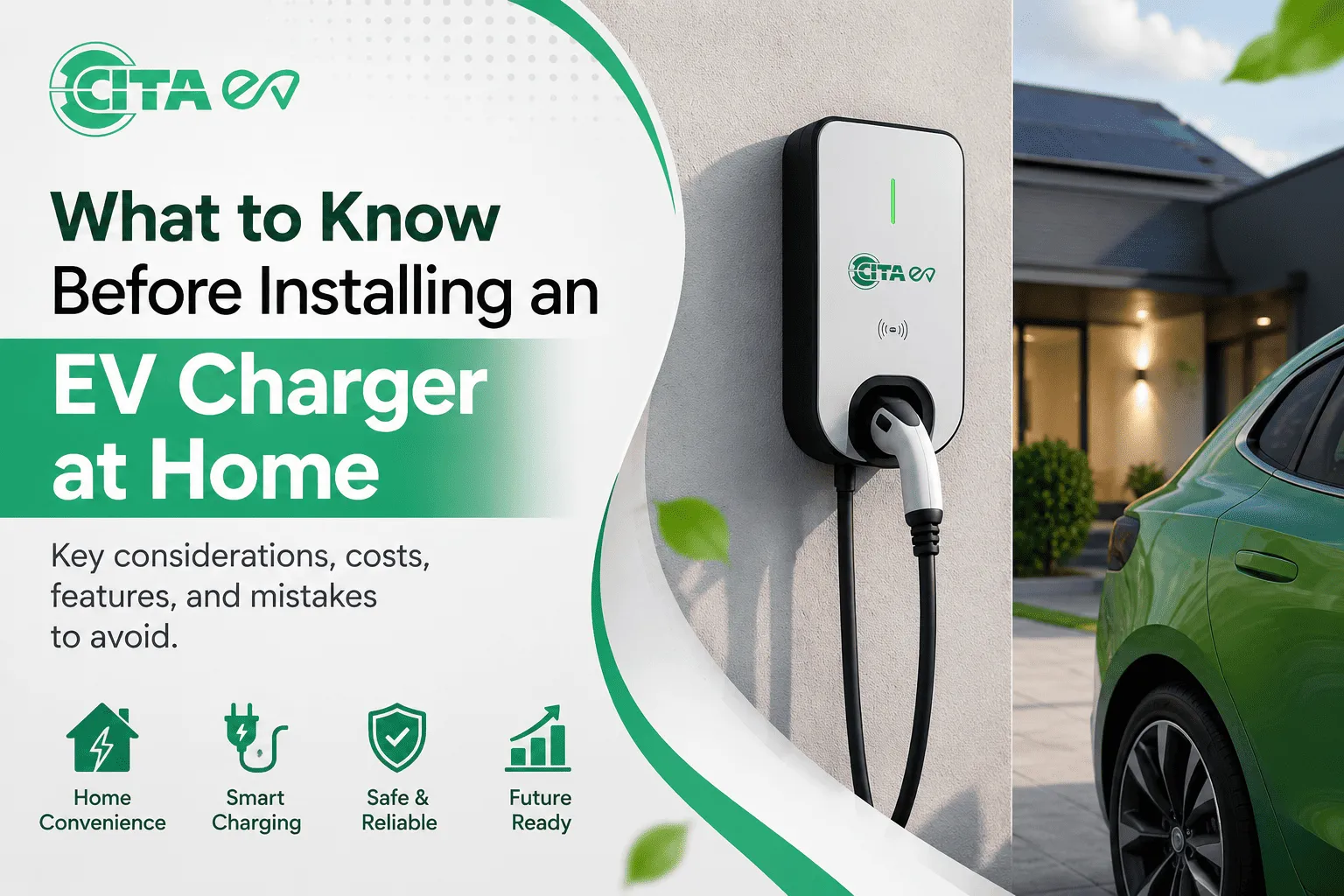

Purchasing an electric vehicle is often the easy part. The bigger challenge for many owners comes afterward when it's time to decide how they'll charge it on a daily basis.
While public charging networks continue to expand, most EV owners quickly discover that home charging offers the greatest convenience. Instead of planning trips around charging stations, drivers can simply plug in their vehicle at home and wake up to a fully charged battery.
However, installing a home charging solution isn't as simple as buying the first charger you find online. Electrical requirements, charging speed, installation costs, and future vehicle needs all play an important role in determining which solution is right for you.
Understanding these factors before making a purchase can help you avoid costly mistakes and ensure a better ownership experience.
Why Home Charging Matters More Than Most People Realize
When people first buy an electric vehicle, they often focus on battery range and charging speed. While those factors are important, convenience is what truly shapes the ownership experience.
Most EV owners spend several hours at home every day, making it the ideal location for charging. Rather than stopping at a charging station multiple times each week, drivers can charge while sleeping, working remotely, or spending time with family.
Some of the biggest advantages of home charging include:
- Greater convenience
- Consistent charging access
- Less reliance on public infrastructure
- Better control over charging schedules
- Reduced charging-related travel time
For many drivers, home charging becomes one of the biggest benefits of owning an EV.
Understanding Your Actual Charging Needs
One of the biggest mistakes new EV owners make is assuming they need the fastest charger available.
In reality, charging needs vary from person to person. Someone driving 20 to 30 kilometers per day has completely different requirements than someone commuting over 100 kilometers daily.
Before choosing a charger, ask yourself:
- How many kilometers do I drive each day?
- How often do I take long-distance trips?
- Will multiple EVs be using the charger?
- How many hours is my vehicle parked overnight?
- Do I plan to upgrade my EV in the future?
Answering these questions can help prevent overspending on charging capacity that may never actually be used.
Can Your Home Handle an EV Charger?
Many homeowners purchase charging equipment before checking whether their electrical system can support it.
This often leads to unexpected installation expenses and delays.
Your home's electrical setup should be evaluated before making a purchase. Important considerations include the condition of your electrical panel, available circuit capacity, and overall power consumption.
A professional assessment can help determine:
- Available electrical capacity
- Potential upgrade requirements
- Installation complexity
- Safety considerations
- Future expansion possibilities
Identifying these factors early can save both time and money.
The Hidden Costs Most Buyers Don't Consider
The cost of a charger is only one part of the overall investment.
Many first-time buyers are surprised to learn that installation expenses can vary significantly depending on their property's electrical infrastructure.
Additional costs may include:
- Electrical wiring
- Circuit breaker upgrades
- Electrical panel modifications
- Professional installation services
- Mounting hardware
- Permit requirements
The good news is that these costs are often one-time investments that contribute to years of convenient charging.
Choosing the Best Location for Installation
Where you install your charger can have a major impact on daily convenience.
A poorly positioned charger may create ongoing frustrations, even if the equipment itself performs perfectly.
Before installation, consider:
- Vehicle parking position
- Cable reach requirements
- Garage layout
- Outdoor weather exposure
- Future parking arrangements
- Ease of access
A few extra minutes spent planning the installation location can make charging much easier in the long run.
Features Worth Paying For
Not every charger offers the same functionality.
While basic charging capabilities may be sufficient for some users, many modern chargers include features that improve convenience and efficiency.
Popular features include:
- Mobile app control
- Charging schedules
- Energy monitoring
- Usage reporting
- Remote management
- Software updates
These tools can help users better understand energy consumption and optimize charging behavior.
Companies such as CITA EV Charger have helped make advanced charging solutions more accessible by offering products designed to meet the needs of both residential and commercial EV owners.
Common Mistakes to Avoid
After researching charging equipment and installation requirements, there are still a few mistakes that frequently affect first-time buyers.
The most common include:
- Choosing solely based on price
- Ignoring future charging needs
- Overlooking installation costs
- Selecting the wrong installation location
- Failing to verify warranty coverage
- Buying from unknown suppliers
Avoiding these mistakes can improve both reliability and long-term satisfaction.
Planning for the Future
Electric vehicle technology continues to evolve rapidly.
Battery capacities are increasing, charging speeds are improving, and many households are beginning to own more than one EV.
When planning your charging setup, it is worth thinking beyond your current vehicle.
Future considerations may include:
- Additional EV purchases
- Faster charging requirements
- Increased household electricity demand
- Smart energy management systems
- Home solar integration
Planning ahead can reduce the likelihood of needing costly upgrades later.
Homeowners looking for a reliable EV Charger should focus on safety, long-term performance, and compatibility with future charging needs rather than making a decision based solely on price.
Final Thoughts
Installing a home charging solution is one of the most important decisions new EV owners make. The right setup can improve convenience, reduce charging stress, and support years of reliable vehicle ownership.
By understanding your charging needs, evaluating your home's electrical system, and planning for future requirements, you can make a more informed decision and enjoy a smoother transition to electric mobility.























Sign in to leave a comment.