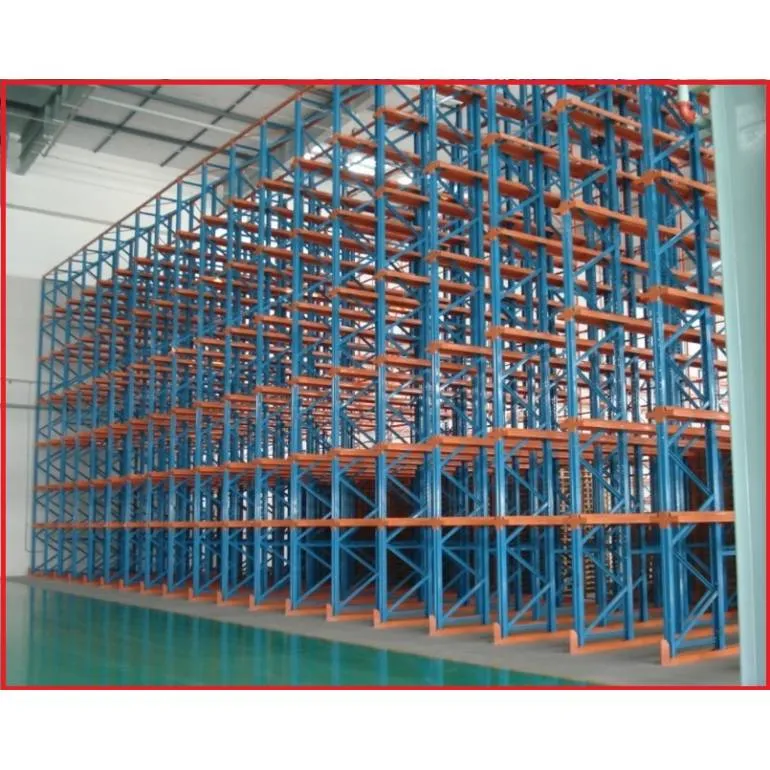

A drive-in racking system in Singapore warehouse operators may consider a high-density pallet storage configuration that allows forklifts to enter designated rack lanes to place and retrieve loads. By reducing the number of access aisles required, the system can increase the number of pallet positions available within a defined warehouse area.
Drive-in racking is not appropriate for every inventory profile. It is generally better suited to warehouses storing relatively large quantities of similar palletised products where high-density storage is more important than direct access to every individual pallet.
The decision should therefore be based on inventory characteristics, stock rotation, pallet consistency, forklift operations and available warehouse space. Understanding these factors helps determine whether drive-in racking can provide practical storage efficiency rather than simply greater theoretical capacity.
Understanding Drive-In Racking
Drive-in racking is a pallet storage system designed with deep storage lanes instead of conventional rows that require an aisle between each rack face. Forklifts enter these lanes to deposit or retrieve pallets at designated positions.
Pallets are typically supported along rails within the storage lane. This configuration allows several pallet positions to be arranged at depth and height within the same rack structure.
The main purpose is high-density storage. Because fewer aisles are required, a larger proportion of available floor space can potentially be assigned to pallet positions.
This arrangement also changes the way inventory is accessed. Pallets located deeper within a lane cannot necessarily be retrieved independently of those positioned closer to the entry point.
Drive-in storage should therefore be assessed according to both capacity requirements and inventory movement.
How Drive-In Racking Uses Warehouse Space
Drive-in racking increases storage density by consolidating pallet positions into deeper lanes and reducing the amount of floor area allocated to aisles. This can make more effective use of a warehouse footprint where the inventory profile supports this arrangement.
Traditional selective pallet racking usually provides an aisle beside each rack face so forklifts can directly access individual pallet positions. That approach provides high accessibility but requires substantial aisle space.
Drive-in systems take a different approach. Pallets are positioned several locations deep, allowing multiple loads to occupy the space that would otherwise include additional access aisles.
The potential benefit becomes more significant when a warehouse stores a large quantity of similar palletised inventory. Multiple pallets of the same or compatible stock can be assigned to individual lanes without requiring immediate direct access to every load.
However, warehouse optimisation should not be measured only by the number of pallet positions. The system must also support efficient receiving, replenishment and retrieval.
Suitable Inventory Profiles for Drive-In Storage
Drive-in racking is generally suited to relatively homogeneous palletised inventory where multiple pallets of the same stock can be stored within a single lane. This reduces the operational limitations created by restricted access to pallets positioned deeper in the system.
Warehouses with a small number of stock-keeping units but relatively large quantities of each item may therefore be suitable candidates. The system can allocate separate lanes to different products or batches while maintaining high storage density.
Suitable inventory characteristics may include:
- multiple pallets of the same or similar product
- consistent pallet dimensions
- relatively predictable stock movement
- goods that do not require constant individual pallet access
- inventory that can be organised effectively by lane
The suitability of the system depends on the complete inventory profile. A warehouse with hundreds of stock-keeping units and only one or two pallets of each may gain less practical benefit because many separate storage lanes would be required.
Understanding High-Density Pallet Storage
High-density pallet storage aims to increase the number of pallet positions within a given warehouse area by reducing non-storage space. Drive-in racking achieves this primarily by limiting the number of forklift aisles.
Storage density can be particularly relevant where floor area is constrained or where a warehouse needs to accommodate substantial quantities of reserve inventory.
However, density should be considered together with accessibility. A system that accommodates more pallets but substantially increases retrieval time may not improve the overall warehouse operation.
High-density storage is most effective when inventory characteristics support grouped storage. Pallets that can be placed together according to product, batch or movement pattern can make better use of deep storage lanes.
The objective should therefore be to increase usable storage capacity without creating an inventory arrangement that conflicts with operational requirements.
Stock Rotation and Inventory Management
Stock rotation determines the sequence in which stored goods are retrieved, and it is an important consideration when evaluating drive-in racking. The physical arrangement of pallets within a lane influences which loads can be accessed first.
A conventional drive-in configuration is commonly associated with last-in, first-out storage. Pallets placed towards the front of a lane are retrieved before pallets located further inside because the forklift accesses the lane from the same side.
This arrangement may be suitable for products where strict first-in, first-out rotation is not required. Inventory management procedures should still ensure that batches and storage dates remain identifiable.
Goods with strict rotation requirements may require a different configuration or storage approach. The appropriate choice depends on product characteristics and the operational rules governing inventory movement.
Warehouse operators should therefore evaluate stock rotation before deciding that higher storage density justifies a drive-in system.
Forklift Access Within Drive-In Racking
Forklift access is a defining feature of drive-in racking because the handling equipment physically enters the rack structure. This differs from selective pallet racking, where the forklift generally operates from an aisle outside the rack.
The dimensions and operating characteristics of the forklift must therefore correspond with the storage lane. Clearances, turning requirements, lift height and pallet handling all influence how the system should be configured.
Operators also need clear procedures for entering and leaving storage lanes. Because forklifts work within a confined rack structure, careful positioning becomes particularly important during pallet placement and retrieval.
Rack protection and operational discipline are relevant considerations because contact between handling equipment and structural components can affect the storage environment.
Drive-in racking should consequently be planned as a combined rack-and-equipment system rather than selecting the storage structure without considering the forklifts that will operate within it.
Drive-In Racking vs. Selective Pallet Racking
Drive-in and selective pallet racking address different warehouse priorities. Drive-in systems generally prioritise storage density, while selective pallet racking prioritises direct pallet accessibility.
Selective racking gives forklifts access to individual pallet positions from an aisle. This can suit warehouses with numerous stock-keeping units or frequent picking requirements.
Drive-in racking groups pallets within deeper storage lanes. This reduces aisle requirements but also means some loads cannot be retrieved until pallets positioned closer to the lane entrance have been removed.
The main distinctions can be summarised as follows:
| Consideration | Drive-In Racking | Selective Pallet Racking |
| Storage density | Higher potential density | Lower relative density |
| Direct pallet access | Limited | High |
| Number of aisles | Fewer | More |
| SKU suitability | Larger quantities per SKU | Greater SKU variety |
| Forklift operation | Enters storage lanes | Operates mainly from aisles |
Neither configuration is inherently better. The appropriate choice depends on whether storage density or direct accessibility is more important to the warehouse operation.
Advantages of Drive-In Racking
The principal advantage of drive-in racking is its ability to create high-density pallet storage within a relatively compact footprint. This can help warehouses make more intensive use of available floor and vertical space.
Reducing the number of aisles allows more of the warehouse area to be dedicated to stored goods. The benefit can be significant where inventory is well suited to deep-lane storage.
Drive-in racking can also provide clearly defined storage zones. Individual lanes may be assigned to specific products or batches, supporting structured storage where large quantities of similar inventory are held.
The system can therefore be useful for bulk or reserve storage environments where direct access to every pallet is not the primary operational requirement.
These advantages depend on suitable inventory management. Higher density does not compensate for a mismatch between the storage configuration and the way goods need to move through the warehouse.
Limitations to Consider
The main limitation of drive-in racking is reduced direct access to individual pallets. Loads stored deeper within a lane may require other pallets to be removed before they can be retrieved.
This characteristic can make the system less suitable for warehouses with high SKU diversity or frequent access to individual pallets. It can also influence stock rotation.
Forklift operations require additional consideration because the equipment enters the rack lanes. The storage system, pallets and handling equipment need to be compatible with the planned configuration.
Warehouse managers should also consider the effect of lane allocation. If individual lanes are reserved for specific products but remain partially empty, the theoretical density advantage may not always translate into fully utilised capacity.
The system should therefore be evaluated using realistic inventory volumes rather than maximum rack capacity alone.
When Drive-In Racking Makes Operational Sense
Drive-in racking makes operational sense when a warehouse needs higher pallet density and its inventory can be effectively grouped into deep storage lanes. The strongest use case is usually a relatively high quantity of similar products combined with a lower requirement for direct individual pallet access.
A warehouse assessment should consider several questions before selecting the system:
- Are multiple pallets of the same product regularly stored?
- Is high-density storage a significant operational requirement?
- Can the inventory follow an appropriate stock rotation method?
- Are pallet dimensions sufficiently consistent for the planned system?
- Is the forklift suitable for operating within the storage lanes?
- Can products be allocated efficiently without leaving substantial unused lane capacity?
If several of these conditions are not met, selective pallet racking or another storage configuration may provide better operational flexibility.
The decision should be based on the relationship between storage capacity and inventory movement rather than density alone.
Planning for Warehouse Capacity
Warehouse capacity is the amount of inventory that can be practically stored while maintaining the access and movement required for operations. Drive-in racking can increase pallet positions, but usable capacity depends on how effectively those positions match inventory demand.
A storage lane that is technically capable of holding several pallets may not operate at full capacity if only a small quantity of the assigned product is available. SKU distribution therefore has a direct effect on real-world space utilisation.
Capacity planning should examine average and peak inventory rather than a single stock snapshot. Seasonal changes, incoming shipments and expected stock growth can influence the number of lanes required.
The warehouse layout must also retain sufficient space for receiving, dispatch and material movement. Allocating excessive space to storage can create congestion elsewhere in the facility.
Effective capacity planning therefore balances storage density with the operational space needed to move inventory efficiently.
Frequently Asked Questions (FAQs)
What is a drive-in racking system?
A drive-in racking system is a high-density pallet storage configuration with deep storage lanes that forklifts enter to place and retrieve pallets. It reduces the number of aisles required compared with many conventional pallet racking layouts.
What products are suitable for drive-in racking?
Drive-in racking is generally suitable for palletised goods held in relatively large quantities per product or stock-keeping unit. The products should also be compatible with the stock rotation and access characteristics of the system.
Does drive-in racking increase warehouse capacity?
It can increase pallet storage capacity by reducing the floor area required for access aisles. The actual improvement depends on warehouse dimensions, lane utilisation, inventory profile and rack configuration.
Is drive-in racking suitable for warehouses with many SKUs?
It may be less suitable when a warehouse stores many SKUs in small quantities because each product may require separate lane allocation. Selective racking can provide greater direct accessibility for diverse inventory profiles.
Do forklifts enter drive-in racks?
Yes. Forklifts enter designated storage lanes to place and retrieve pallets. The rack layout and forklift specifications therefore need to be considered together when planning the system.
Deciding Whether Higher Density Fits the Operation
Drive-in racking can provide an effective approach to warehouse optimisation when high-density pallet storage corresponds with the inventory profile. Its reduced aisle requirements can increase storage capacity, but this benefit comes with different accessibility and stock-rotation considerations.
A drive-in racking system in Singapore warehouse operators select should therefore be based on pallet quantities, SKU diversity, forklift requirements and inventory movement. Evaluating these factors helps determine whether deep-lane storage provides genuine operational value rather than capacity that cannot be used efficiently.
Determine Whether Drive-In Racking Fits Your Warehouse
High-density storage requirements vary according to warehouse dimensions, pallet characteristics and inventory movement. Eastern Win Enterprises provides racking configurations for different warehouse and industrial storage applications. Businesses assessing whether drive-in racking is suitable for their facility can contact Eastern Win Enterprises to discuss their storage requirements.




















Sign in to leave a comment.