
The story of art in ancient China spans millennia and reflects the rise and fall of dynasties, the rhythm of spiritual beliefs, and the refinement of intellectual traditions. Through turbulent times and golden ages, art remained a resilient thread in the tapestry of Chinese civilization, offering insight into societal values, cosmology, politics, and daily life.
From Neolithic pottery to the iconic scroll paintings of the Song dynasty, every artistic development captured the spirit of its age. One might think that warfare and conflict would hinder cultural growth, yet ironically, some of the most exquisite pieces emerged during eras of chaos. This article explores how dynastic shifts shaped the trajectory of ancient Chinese art and answers the intriguing question: how did turmoil nourish artistic evolution?
Prehistoric Foundations: The Neolithic Beginnings
The roots of art in ancient China trace back to the Neolithic period (c. 7000–1700 BCE). Early communities such as those in the Yangshao and Longshan cultures created pottery adorned with geometric patterns and animal motifs. These ceramics were not merely functional; they were also expressions of spiritual and symbolic beliefs.
In Yangshao culture, hand-painted red pottery often depicted fish and human figures, possibly related to religious rites. Longshan artisans advanced these designs with black pottery, thinner and more refined, showcasing early technical mastery.
Shang Dynasty (c. 1600–1046 BCE): Bronze and Belief
During the Shang dynasty, art in ancient China took a dramatic turn with the introduction of bronze casting. Bronze vessels became essential in ancestor worship, displaying complex patterns and taotie (monster face) motifs. These artifacts weren’t only ritualistic—they were emblems of social hierarchy and power.
The Shang era also laid the groundwork for calligraphy, with oracle bone inscriptions representing the earliest forms of Chinese script. These carvings would eventually evolve into an independent artistic discipline.
Zhou Dynasty (1046–256 BCE): Order, Music, and Symbolism
As political control shifted from the Shang to the Zhou, art evolved to reflect Confucian ideals of order, hierarchy, and morality. The Zhou introduced ritual bronze vessels with inscriptions, honoring ancestors and cementing the roles of aristocrats in society.
Silk production began to rise, leading to new forms of visual expression. While not many silk paintings from this era survive, textual records speak of large-scale scrolls and banners that may have depicted court rituals and mythology.
Musical instruments crafted in this period, such as bronze bells and chimes, added a sonic dimension to art in ancient China, closely tied to ceremonial life and statecraft.
Warring States Period (475–221 BCE): Art Amidst Anarchy
Now we reach the era hinted at in the tricky question: the Warring States Period. Despite its name and brutal conflicts, this was a fertile time for philosophy and artistic experimentation.
Thinkers like Confucius, Laozi, and Zhuangzi inspired themes of harmony, balance, and naturalism in visual representation. Artisans crafted lacquerware with intricate inlays, bronze mirrors, and fine jade carvings. Notably, the use of perspective and natural forms became more sophisticated.
The chaotic environment ironically spurred states to promote culture as a means of asserting legitimacy and prestige, giving rise to competitive artistic patronage.
Qin Dynasty (221–206 BCE): Monumentality and Uniformity
Although brief, the Qin dynasty left a massive artistic footprint—most famously the Terracotta Army, guarding the tomb of China’s first emperor, Qin Shi Huang. Each soldier was uniquely modeled, an astonishing feat of craftsmanship and mass production.
The Qin also standardized scripts, weights, and measurements, laying the foundation for artistic coherence across the empire. The emphasis on order and discipline became key visual themes.
Han Dynasty (206 BCE–220 CE): Realism and the Cosmos
Under the Han dynasty, art in ancient China became more human-centric and cosmologically aware. Tomb murals, figurines, and lacquer boxes reflected daily life, the afterlife, and mythological realms.
Han tombs were often decorated with scenes of banquets, farming, and celestial deities, blending Confucian, Taoist, and folk influences. The Silk Road opened doors to artistic exchanges, introducing new motifs from Central Asia and India.
Paper was also invented during this time, though silk remained the dominant medium for painting.
Six Dynasties to Sui Dynasty (220–618 CE): Buddhist Influence
With the fall of the Han, China entered a period of fragmentation. Still, art in ancient China adapted through Buddhism’s rise. Caves such as those at Dunhuang and Yungang became vibrant centers of religious frescoes and sculpture.
Buddhist iconography—Bodhisattvas, lotus thrones, and haloed figures—blended with traditional Chinese aesthetics. The result was a unique synthesis that endured for centuries.
While court art declined, private patronage and regional workshops flourished, proving that even in disunity, creativity persisted.
Tang Dynasty (618–907 CE): Cosmopolitan Splendor
Often hailed as the golden age, the Tang dynasty brought a global flair to art in ancient China. Influences from Persia, India, and beyond enriched the visual vocabulary, especially through the bustling Silk Road.
Tang painters excelled in figure painting, capturing court ladies, monks, and warriors with lively brushwork and dynamic composition. Artists like Yan Liben and Wu Daozi became household names.
The flourishing of poetry and painting side by side also gave rise to the literati tradition, where calligraphy, ink painting, and verse coexisted harmoniously.
Song Dynasty (960–1279 CE): Nature and Introspection
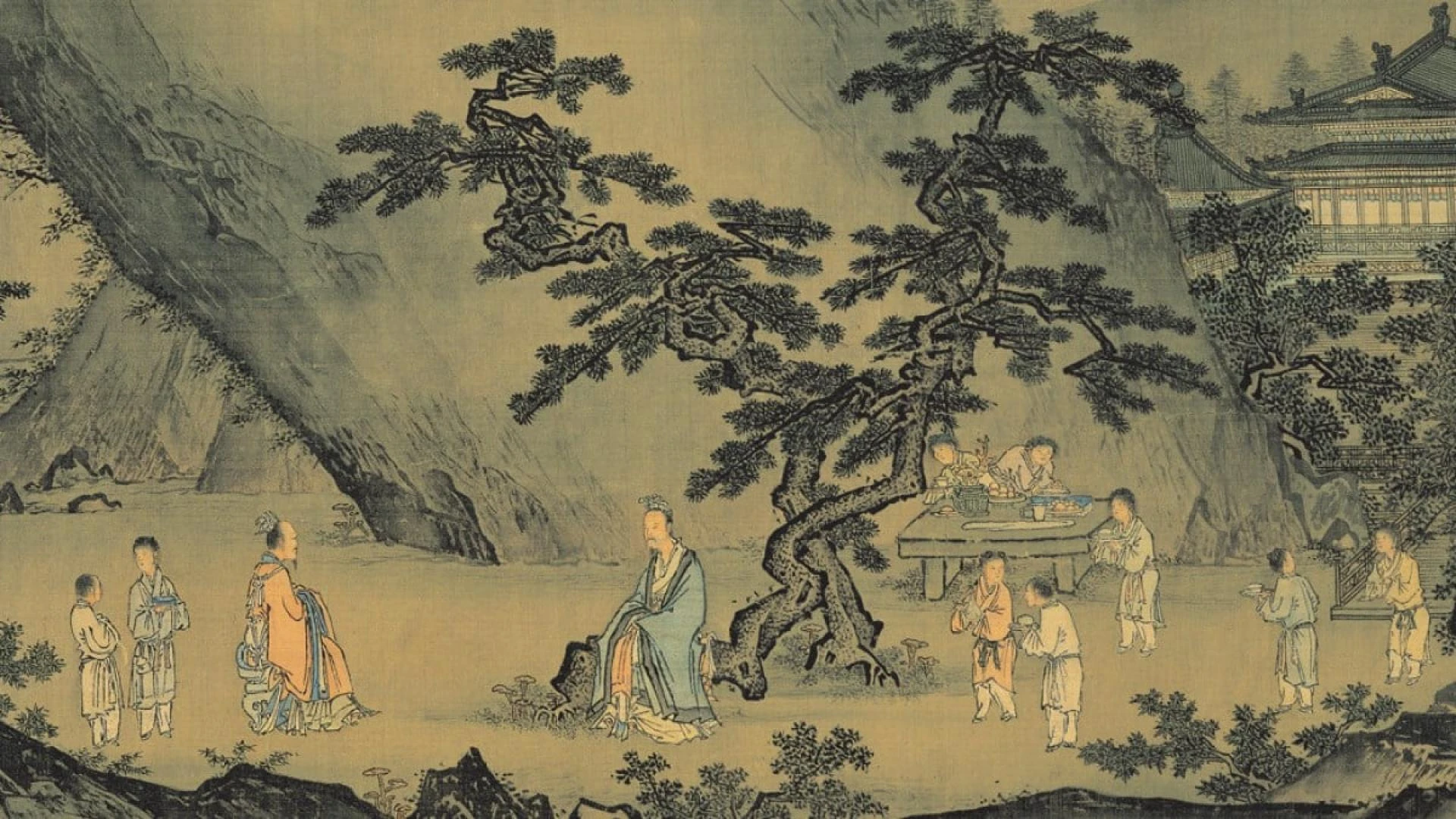
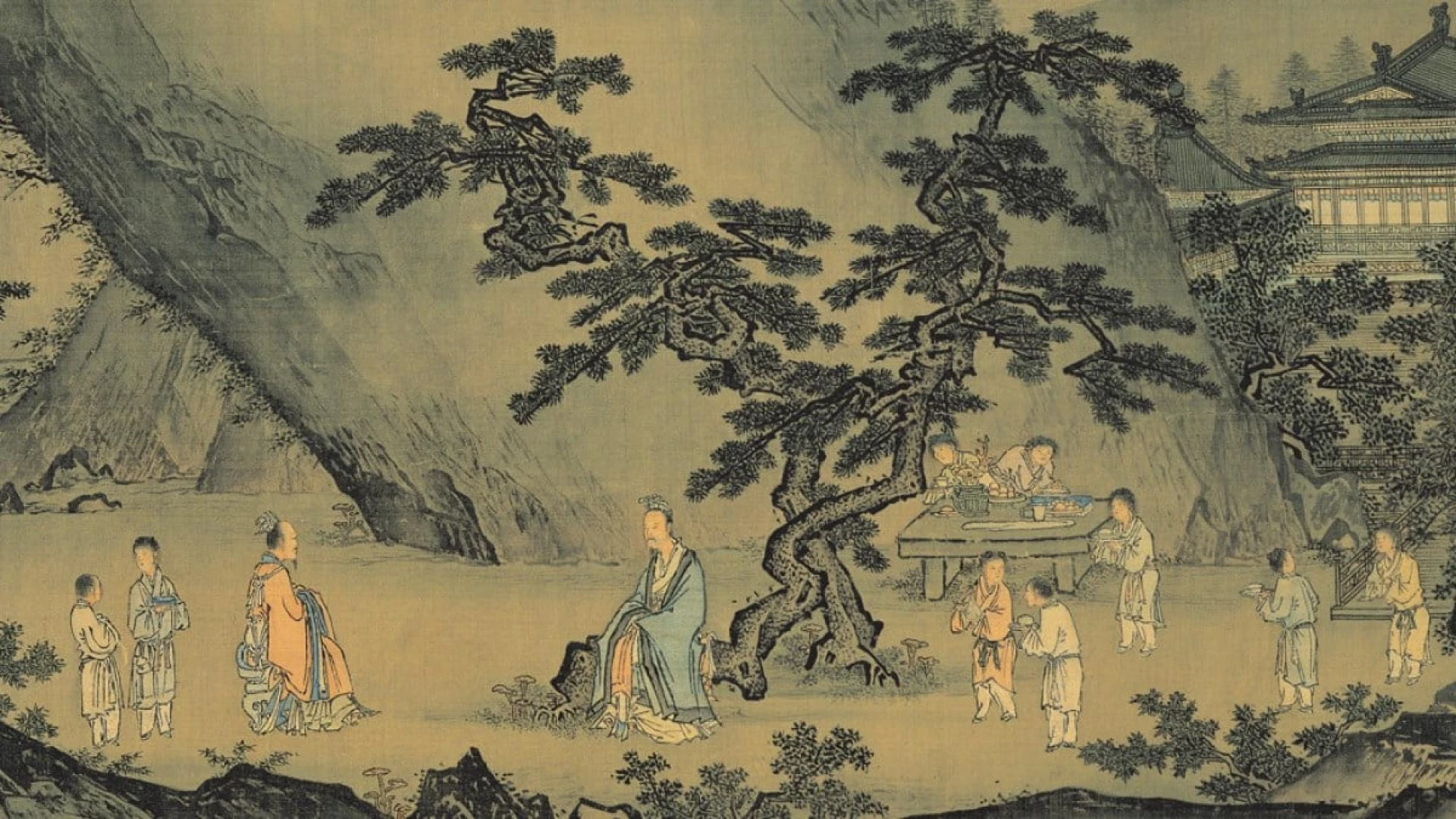
The Song dynasty saw a shift from grandeur to subtlety. Landscape painting—shanshui hua (mountain-water painting)—became the defining genre of art in ancient China. These works weren’t just visual depictions but philosophical meditations on humanity’s place in the cosmos.
Painters like Fan Kuan, Guo Xi, and Ma Yuan captured misty mountains, flowing rivers, and solitary scholars. Scrolls grew longer and more complex, inviting viewers on visual journeys.
Calligraphy gained further elevation as both literary expression and spiritual practice. Every stroke was an embodiment of the artist’s mind and soul.
Yuan Dynasty (1271–1368 CE): Literati Resistance
Under Mongol rule, Chinese scholars turned to art as a form of quiet defiance. Literati painters, often excluded from court service, used ink painting and poetry to express personal grief and philosophical reflection.
Works became more abstract and symbolic, favoring monochrome palettes and spontaneous brushwork. Artists like Zhao Mengfu and Ni Zan rejected ornamental styles for a purer, contemplative visual language.
This era emphasized individuality and the artist’s inner world over state-driven narratives.
Art in Ancient China: A Continuing Legacy
Across millennia, art in ancient China has continuously adapted to external pressures, dynastic transitions, and philosophical currents. Whether in the tomb chambers of the Han, the Buddhist caves of the Northern Wei, or the minimalist scrolls of the Yuan, each artistic leap reveals how creativity can thrive even amidst adversity.
Rather than being a static tradition, Chinese art evolved with fluidity—absorbing, reflecting, and innovating with each era. The question posed at the beginning—how art could flourish during conflict—is answered by understanding the role of culture in asserting identity, legitimacy, and continuity.
Final Thoughts
The journey through art in ancient China is one of resilience, refinement, and reinvention. Each brushstroke, carving, or cast bronze tells a story deeper than aesthetics—it whispers of emperors and monks, poets and peasants, battles and beliefs.
As we look back on these artistic treasures, we are reminded that true creativity doesn’t wait for peace or prosperity. It emerges even in shadows, guided by a civilization’s enduring spirit. Whether you're a scholar, collector, or enthusiast, the legacy of ancient Chinese art offers endless paths to explore and appreciate.
And if you’re looking to bring a piece of this legacy into your life—whether through scroll reproductions, curated art pieces, or traditional tools—start your journey at China Art Hub, where history and art meet in every brushstroke.


















Sign in to leave a comment.