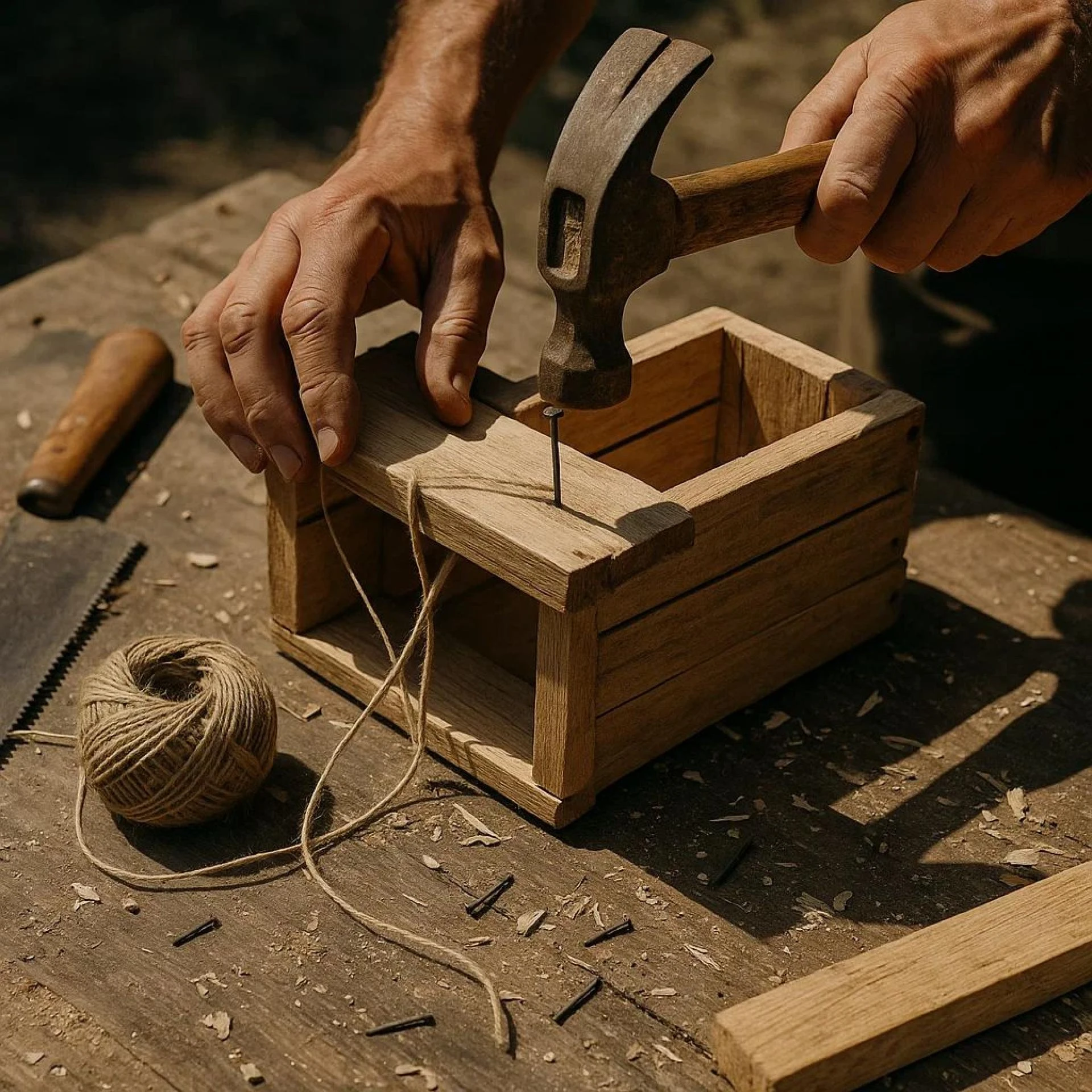

There are front porches in this world that tell no stories. Ours isn’t one of them.
At the Monkey Ranch, our porch is less “architectural feature” and more “outdoor museum curated by a man with too much time, too many pocketknives, and not enough adult supervision.”
Lined across the railing, on every post and beam, are whittled wood carvings that look like they came straight out of a dream, a nightmare, or a family reunion gone sideways.
Each one has a story. Some are funny. Some are spooky. Some are just plain confusing.
But every last one of them is carved in the name of Southern folklore, stitched together with the spirit of traditional folk art, and told through the kind of short humorous stories you’d only hear on a porch with sweet tea in one hand and a wood chip in your eye.
So come sit a spell. Let me tell you about the legends that live on my porch.
The Rooster With Sunglasses
We’ll start with the most obvious one the rooster wearing sunglasses and holding a banjo.
Now I know what you’re thinking that’s absurd. Roosters can’t play instruments.
Tell that to my Uncle Henry, who swore on a stack of Bibles that he once raised a musical rooster named Sonny. According to him, every morning at dawn, Sonny would perch on the woodpile and peck the strings of an old dulcimer someone left outside after a wedding.
Now, nobody ever saw Sonny play anything. But that didn’t stop Uncle Henry from whittling him into existence complete with banjo, shades, and a proud tail feather made from an old bottle cap.
You can believe it or not. Around here, we don’t argue with a man who owns three knives and names his chickens after gospel singers.
The Possum That Knew Morse Code
Right next to the rooster sits a carving of a possum tiny dots carved into its belly, like Braille with attitude.
That’s from a tale told by my neighbor, Old Miss Delphine, who once claimed she had a possum that tapped on her back door in perfect rhythm.
She said it was spelling things.
“Tapped twice for food. Three times for pie. Four times when he wanted me to turn the TV up.”
We all smiled and nodded because Miss Delphine made a mean peach cobbler and we weren’t about to cross her.
When she passed, I carved that possum myself. The marks? They say “feed me.” Probably. I never quite figured out Morse code, but I figured the possum wouldn’t mind.
The Man With No Pants and a Squirrel Hat

I’ll just go ahead and admit this one’s a mystery even to me.
It appeared on the porch one morning. A carving of a wide-eyed fella wearing nothing but a squirrel pelt and a grin, carved out of cedar with the initials “R.T.B.” scratched into the back.
We still don’t know who left it.
Some say it’s based on a drifter who used to steal peaches and serenade dogs. Others think it’s symbolic “a warning,” my cousin Ellie Mae says, “about what happens when you drink creek water after dark.”
Whatever its origin, it holds a place of honor near the rocking chair. Visitors always ask. We always change the story.
That’s the beauty of Southern folklore truth’s got nothing to do with it. It just has to sound like it could’ve happened on the other side of the county line.
Why We Whittle
Now you might be wondering why so many folks around here carve things out of wood.
Some call it boredom. Some call it therapy. I call it traditional folk art passed down from pawpaw to pop to whoever’s holding a knife next.
It ain’t about perfection. It’s about personality. A crooked nose. A too-big hat. A squirrel with a monocle. Each carving has a soul, shaped not by sandpaper but by stories.
Most of us around here didn’t go to art school. We went to fishing holes, church picnics, and barbershops where men argued about football and UFOs. That’s where we learned how to make something from nothing.
The Porch as a Storybook
There’s a reason all these carvings live on the porch.
It’s the first thing you see when you pull up. It’s where mail gets dropped, coffee gets sipped, and gossip gets traded faster than stocks on Wall Street.
Our porch is our welcome mat and our museum. A timeline of tales you can hold in your hand, if you don’t mind getting a splinter.
It might not be in any history book, but around these parts, it’s sacred. It’s where tradition lives, laughs echo, and the past sits comfortably in a rocking chair, waiting to tell you what happened “back in ’72 when the cow got loose during Vacation Bible School.”
Final Thoughts from the Porch
I don’t claim to be an artist.
But I do claim to know a good story when I hear one. And sometimes, those stories deserve more than a memory they deserve a shape.
That’s what whittling is. That’s what these porch carvings are.
A little bit of memory. A little bit of mystery. And a whole lotta whoppers.
So next time you pass a porch with a wooden pig wearing pearls or a carved preacher shoutg from a stump don’t laugh too hard. Somewhere in that mess is a tale that might just stick with you longer than anything you read in a book.
And if you're lucky, the carving might wink back.
FAQs
1. What is traditional folk art?
Traditional folk art is handmade, often self-taught, art that reflects local culture and community stories. It’s practical, personal, and passed down through generations like porch carvings, quilts, or hand-painted signs.
2. Why do people carve stories into wood?
Woodcarving is a way to preserve memories, tell stories, or simply pass the time. It allows artists to turn a tale into something tangible often humorous, always meaningful.
3. What role does Southern folklore play in this kind of art?
Southern folklore brings characters, myths, and “almost-true” tales to life. Many carvings reflect these legendary stories or pay tribute to local heroes and mischief-makers.
4. Are these carvings meant to be serious art?
Not always. Most are playful, odd, or downright hilarious. They’re more about expression than precision a visual form of short humorous storytelling.
5. Can anyone start whittling?
Absolutely. All you need is a piece of wood, a carving knife, and a story you’re half-itching to tell. Just watch your fingers and maybe don’t start with a squirrel hat guy.

























Sign in to leave a comment.