

Fitting a traditional mandir into a modern home is trickier than it sounds. The living room has a carefully thought-out look of neutral walls, clean furniture, nothing unnecessary and then an open shelf full of idols, flowers, and incense holders sits right in the middle of it. Some families make it work. Many don't. Which is exactly why a temple for home with door keeps coming up as the practical answer: it lets you keep the practice without the space looking pulled in two directions.
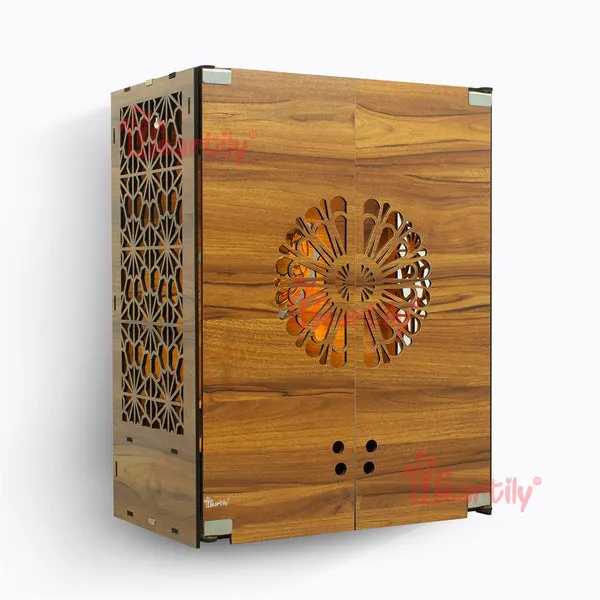
Blending Tradition with Modern Living
The way people design homes has shifted considerably. Open layouts, fewer decorative items, furniture that earns its place, modern interiors don't leave much room for things that don't fit the overall picture. But daily worship is non-negotiable for a lot of families, regardless of how the rest of the home looks.
A Home temple with doors handles this without compromise. During prayer, the doors open and the mandir becomes the focus of the room properly, the way it should be. Afterward, the doors close and it becomes part of the furniture, sitting quietly alongside everything else. No visual conflict, no awkward compromise. Just two modes, both working exactly as they should.
Creates a Dedicated Spiritual Space
Most modern homes don't have a spare room to turn into a prayer room. Space is the constraint, and families work around it constantly. A pooja mandir for homes with doors creates a dedicated worship area without needing extra square footage; the doors do the work of establishing the boundary.
That boundary matters more than people realise. It tells everyone in the household that this particular corner means something different. During prayer, the open doors signal focus. Outside of prayer time, the closed doors keep the space protected and apart from the general activity of the home. In busy households especially, that separation is worth a lot.
Helps Keep the Mandir Clean
Open mandirs get dusty quickly, and constantly. In homes with ceiling fans, air conditioning, or just decent ventilation, dust settles on idols and religious items faster than most people want to deal with. Wiping everything down regularly takes time and care, and it's easy for things to start looking neglected between cleanings.
Closing the doors solves most of this. A temple for home with door keeps the interior protected between prayer times, cutting down significantly on how often everything inside needs attention. The idols stay clean, the accessories stay presentable, and the whole space looks maintained with far less effort. It's a small practical detail that makes a real difference over time.
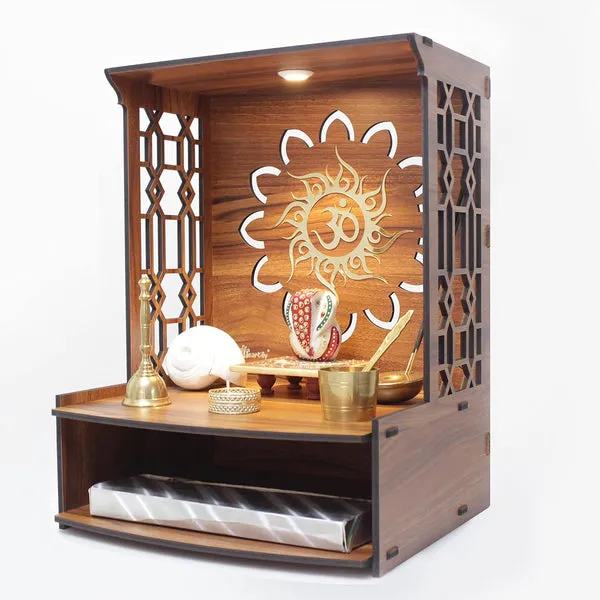
Enhances Privacy During Worship
Not everyone in a shared home is always doing the same thing at the same time. Someone is watching television, someone else is on a call, kids are moving around and in the middle of all that, one family member is trying to pray. Open mandirs offer no separation from any of this.
A Pooja mandir with doors changes that dynamic. The act of opening the doors marks the beginning of something set apart from the rest of the household noise. Closing them afterward keeps the space contained. It's a simple physical gesture, but it creates a genuinely different quality of attention during worship, something that matters to people who take their practice seriously.
Complements Contemporary Interior Design
The question most homeowners ask is whether a mandir will look like it belongs in the room or like it was placed there because there was nowhere else to put it. A beautiful mandir for home with a closed-door design answers that question well.
Enclosed mandirs come in styles that suit minimalist interiors, transitional spaces, and traditionally decorated rooms alike. The closed-door format gives the piece a furniture-like quality structured, intentional, finished. It doesn't fight with the rest of the room. It sits within it, looking like it was always meant to be there.
Offers Better Organisation
The number of small items involved in daily worship adds up quickly. Incense sticks, diyas, matchboxes, prayer books, offering plates, ritual accessories, without a proper place for all of it, the area around the mandir becomes cluttered fast.
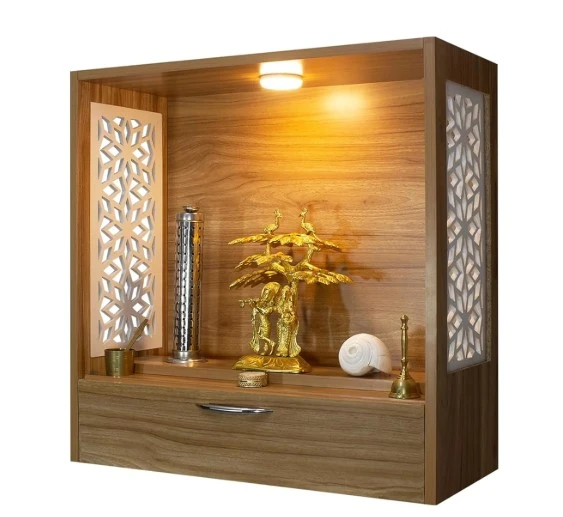
A Home temple with doors usually includes shelves, small compartments or drawers, that keep everything organised and out of sight when the doors are closed. The prayer space stays clean and purposeful rather than gradually accumulating clutter. Everything is there when it's needed, and none of it is visible when it isn't.
Wooden Mandirs Add Warmth and Character
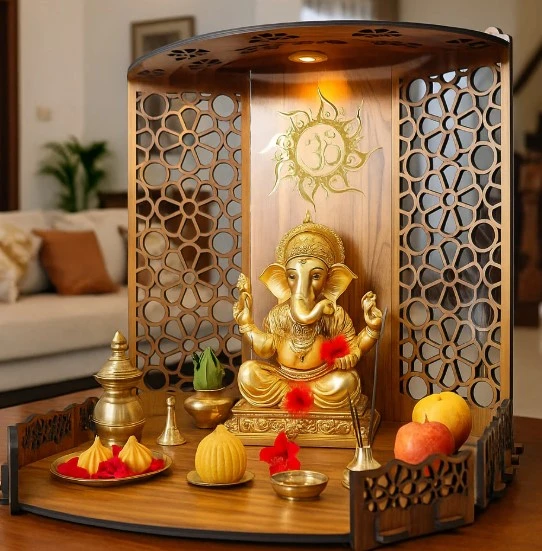
There's a reason a wooden temple for home with door remains the first choice for most families. Wood brings something to a space that other materials don't have: texture, warmth, a sense of craft. A well-made wooden mandir looks considered rather than mass-produced, and it ages in a way that actually improves its appearance over time rather than making it look worn.
The range of styles available is broad enough to suit most interiors, from clean, simple designs that work in contemporary homes to carved, detailed pieces that suit more traditional spaces. Either way, wood brings a quality to the mandir that feels appropriate to what the space is meant to represent.
Ideal for Compact Urban Homes
Apartment living means making decisions about every piece of furniture. Anything that takes up significant space needs to justify its footprint. A Pooja mandir with doors does this well; wall-mounted versions use vertical space without touching the floor, corner designs fill angles that would otherwise sit empty, and compact floor-standing units deliver a complete prayer space without dominating the room.
The closed-door format helps here too. A mandir that closes looks smaller and less prominent when not in use, which matters in rooms where space is genuinely limited.
Adds a Sense of Respect and Reverence
Opening and closing the mandir doors is, for many families, part of the ritual itself not an afterthought. It marks the beginning and end of prayer in a physical way that an open shelf simply can't. A pooja mandir for home with doors preserves this without requiring any explanation or adaptation. The gesture is built into the design.
Provides Long-Term Versatility
Interiors change. Families move, rooms get repurposed, styles shift. A beautiful mandir for home with a closed-door design moves with all of that different room, different layout, different surrounding décor and keeps working without needing to be replaced or reconsidered.
Conclusion
A wooden temple for home with a door is a practical and elegant way to create a dedicated space for daily worship while maintaining a neat and organized home environment. It helps protect sacred items, offers privacy during prayers, and complements a wide range of interior styles. Combining functionality with timeless design, a wooden temple with a door provides a meaningful addition to any home. For families looking for thoughtfully crafted mandirs that blend devotion with aesthetics, Heartily Gifts offers designs created to meet both spiritual and decorative needs.

























Sign in to leave a comment.