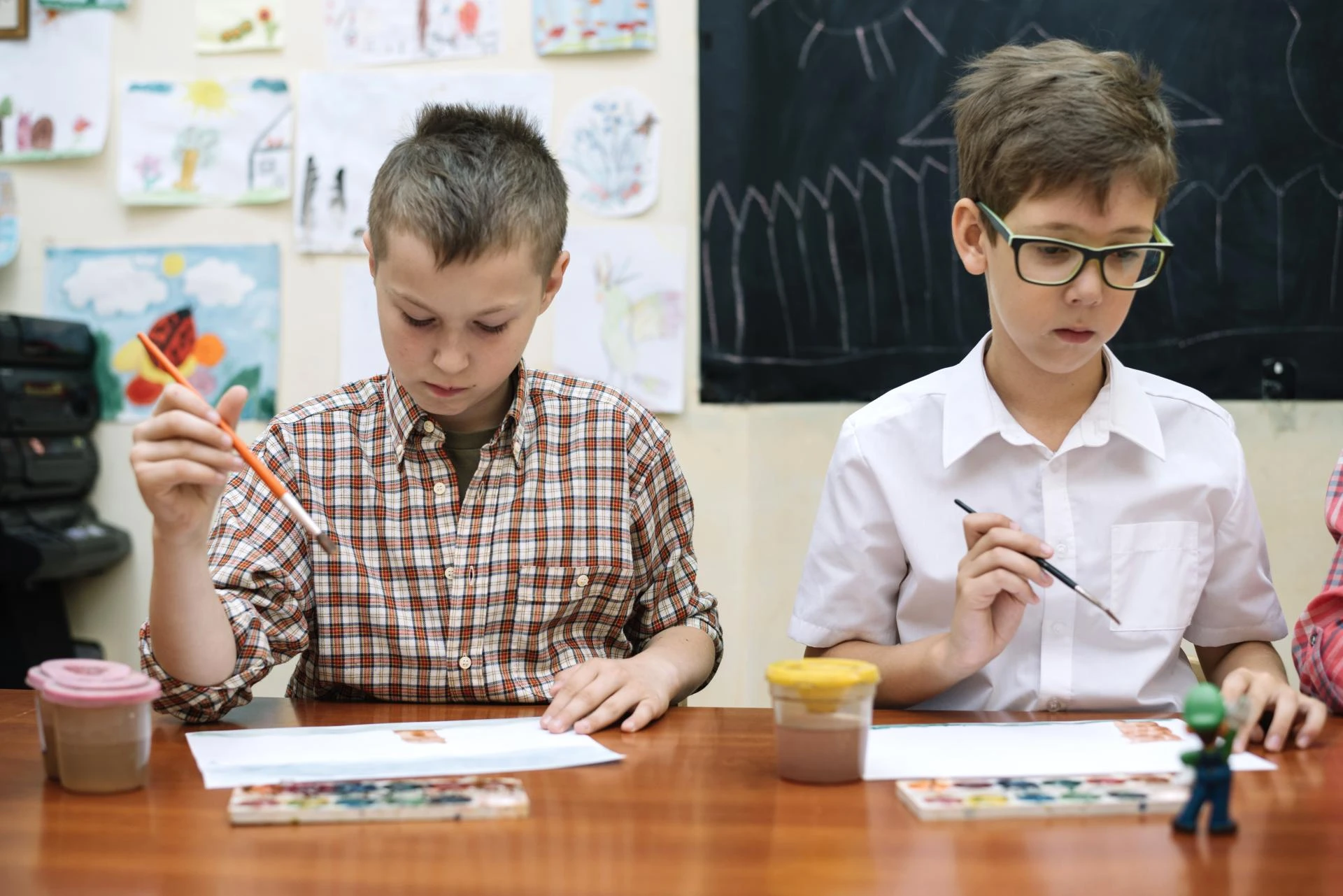

Elementary education reaches maximum effectiveness when students become active participants rather than passive observers. Children possess innate drives to explore, question, and manipulate their surroundings—drives that traditional lecture-based instruction fails to harness. When schools honor these natural learning inclinations through structured interactive experiences, comprehension deepens, and retention strengthens. ITH School has built its educational model on this foundation, watching students excel when learning becomes experiential.
The Neuroscience Behind Physical Engagement
Young brains form knowledge differently from mature minds. Elementary students construct understanding through sensory input and physical manipulation rather than abstract reasoning. Educational approaches that incorporate touch, movement, and direct observation align with these developmental realities. International Technology House School translates this science into daily practice. Vocabulary development occurs through dramatic play and contextual usage. Scientific principles emerge from controlled experiments that students design and execute themselves. Mathematical reasoning strengthens through pattern recognition with concrete materials.
Wide-Ranging Benefits of Hands-On Methodology
Interactive learning produces outcomes that extend across academic, social, and personal development domains. Students gain:
- Enhanced critical thinking and strategic problem-solving
- Increased confidence through measurable accomplishment
- Improved motor skills and physical competence
- Developed collaboration abilities and communication skills
- Encouraged creative expression and innovative thinking
Crafting Effective Interactive Learning Experiences
Successful hands-on instruction demands purposeful planning. Activities must serve clear educational goals while providing opportunities for student-driven discovery and investigation.
Practical Applications Across the Curriculum
Biological Sciences: Students learn anatomy by building skeletal models, identifying bones, and understanding how structure supports function—making abstract concepts tangible and memorable. Mathematical Reasoning: Shopping simulations with play money, recipe doubling exercises, and measurement challenges connect arithmetic to real-world applications that children recognize. Language Arts: Podcast creation, newspaper publishing, and debate forums transform communication skills into purposeful activities with authentic audiences. Historical Studies: Dressing in period costumes, preparing historical recipes, or simulating historical events helps students emotionally connect to different eras and cultures.
Evidence Supporting Interactive Education
Educational research across multiple disciplines confirms that activity-based learning produces measurably better outcomes for elementary students.
Academic and Cognitive Advantages
Students who participate physically in lessons demonstrate clear benefits:
- Memory retention strengthens through multiple sensory channels
- Attention span extends during participatory activities
- Natural enthusiasm for learning increases
- Conceptual understanding transfers more effectively to new situations
- Brain architecture develops more interconnected neural networks
Research consistently demonstrates that students remember approximately 75% of practiced content, versus only 10% of material read and 20% of content heard. This performance gap highlights why passive instruction proves insufficient for young learners.
Creating Continuous Learning Through Family Involvement
Schools provide essential interactive frameworks, yet families multiply these benefits through everyday engagement. Household activities like organizing, measuring, building, and investigating transform routine tasks into educational opportunities. Families can support development by:
- Establishing areas where exploration and creative mess are acceptable
- Providing materials like building toys, craft supplies, and scientific tools
- Encouraging curiosity through questions that prompt reasoning
- Normalizing experimentation and accepting productive failure
- Engaging actively in projects alongside their children
Coordinated approaches between schools and homes create reinforcing learning environments where children flourish.
Conclusion
Interactive, hands-on education represents the optimal methodology for elementary learners. By prioritizing direct engagement over passive reception, we cultivate students equipped with adaptable skills, confident problem-solving abilities, and genuine enthusiasm for lifelong learning. At ITH School, located at 01 Block A, Chaudhry Road, KCHS Phase 1, Defence Road, we deliver immersive hands-on experiences that develop curious, confident, capable young learners. Explore our interactive methodology on Facebook, Instagram, LinkedIn, and X. For enrollment information, visit our Contact Us page or message us via WhatsApp.

























Sign in to leave a comment.