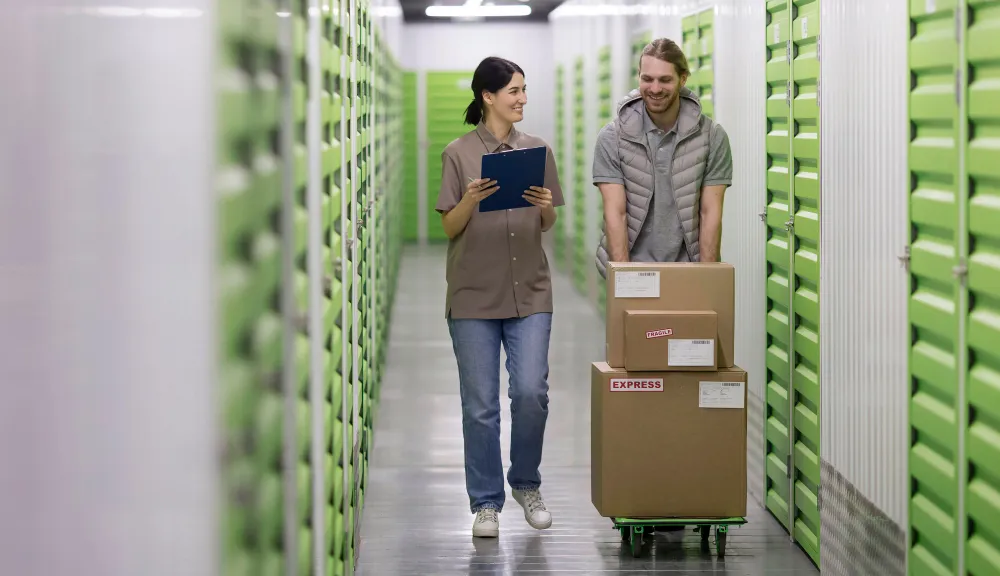

“Australia’s self storage industry is evolving rapidly due to urban growth, changing lifestyles, and rising demand for flexible storage solutions”.
Australia’s self storage industry has experienced steady growth over the past decade, driven by urbanisation, changing housing patterns, business expansion, and evolving consumer lifestyles. What was once considered a niche property segment has now become an increasingly important part of the broader commercial real estate market.
Industry analysts suggest that demand for storage facilities continues to rise across metropolitan and regional areas due to population growth and limited residential space. As apartment living becomes more common in major Australian cities, households are seeking practical ways to store seasonal items, furniture, recreational equipment, and personal belongings without overcrowding living environments.
The shift toward remote and hybrid work arrangements has also influenced storage demand. Many businesses downsized office spaces during recent years while continuing to require secure locations for documents, equipment, and inventory. Small e-commerce businesses, in particular, have emerged as major users of storage facilities because flexible units provide cost-effective alternatives to traditional warehouses.
These changing market conditions have increased interest among investors looking to sell self storage facility assets or reposition existing commercial properties within the storage sector. Industry experts note that self storage is increasingly viewed as a resilient asset class due to relatively stable occupancy rates and recurring customer demand during varying economic conditions.
Another major factor contributing to industry growth is the rise of consumer mobility. Australians are relocating more frequently for employment opportunities, education, and lifestyle changes. Temporary storage solutions have become essential during moving periods, property renovations, and interstate transitions. This has created consistent demand across both urban and suburban markets.
Technology is also transforming how storage facilities operate. Modern facilities increasingly rely on digital booking systems, automated access control, mobile applications, and advanced security monitoring. Customers now expect seamless online experiences, including digital payments, real-time unit availability, and remote account management.
At the same time, sustainability is becoming more relevant within the commercial property sector. Developers and operators are exploring energy-efficient lighting, solar integration, water-saving infrastructure, and environmentally conscious building materials to improve operational efficiency and meet evolving environmental expectations.
The increasing sophistication of the market has contributed to rising activity in self storage facility sales Australia. Investors are paying closer attention to factors such as location accessibility, occupancy performance, operational scalability, and demographic trends when evaluating facilities. Urban fringe areas and high-growth suburban corridors are often considered attractive due to expanding residential populations and limited household storage capacity.
Industry specialists also highlight the importance of site selection in long-term facility performance. Areas with strong population density, limited residential storage space, and growing business activity tend to generate more consistent demand. Accessibility, traffic flow, and local competition are all critical considerations during acquisition or development planning.
The growth of online retail has further accelerated storage demand across Australia. Many small businesses now operate without traditional storefronts, relying instead on compact storage units for inventory management and logistics support. This shift has created additional demand for facilities offering flexible leasing arrangements and 24-hour accessibility.
Another notable trend is the diversification of storage services. Beyond traditional household storage, facilities are increasingly catering to specialised needs such as vehicle storage, wine storage, climate-controlled units, and secure document archiving. This diversification allows operators to serve broader customer segments while improving revenue stability.
The expansion of the sector has also increased interest in self storage development Australia, particularly in fast-growing suburban and mixed-use areas. Developers are adapting facility designs to accommodate changing customer expectations, including improved aesthetics, advanced security systems, and integrated smart technologies.
Multi-level storage facilities are becoming more common in densely populated urban environments where land availability is limited. These developments aim to maximise operational efficiency while minimising land use pressures. Modern architectural approaches are also helping facilities integrate more effectively into residential and commercial neighbourhoods.
Economic uncertainty has contributed to the resilience of the storage industry as well. During periods of financial pressure, downsizing, relocation, and business restructuring often increase the need for temporary storage solutions. This countercyclical demand characteristic is one reason why many investors view the sector as relatively stable compared to other commercial property categories.
Operational efficiency remains another critical focus area. Automated customer onboarding, digital surveillance systems, and cloud-based management platforms are helping operators reduce administrative costs while improving customer experiences. Facilities that adopt modern operational technologies are often better positioned to remain competitive in evolving markets.
As competition increases, businesses are placing greater emphasis on market research, operational planning, and financial analysis. This has strengthened demand for professional self storage advisory Australia that provides insights into development feasibility, market trends, investment performance, and operational optimisation.
Industry observers also note that customer expectations are continuing to evolve. Modern consumers value convenience, transparency, and security when selecting storage solutions. Features such as contactless entry, flexible contracts, online reservations, and climate-controlled environments are becoming increasingly influential in decision-making processes.
Looking ahead, experts expect Australia’s self storage sector to continue growing alongside urban expansion and demographic changes. Population mobility, housing affordability challenges, and small business growth are likely to remain key drivers of long-term demand.
Ultimately, the self storage industry is no longer viewed simply as a supplementary real estate segment. It has become an essential infrastructure component supporting residential flexibility, commercial adaptability, and modern urban lifestyles. As technology and consumer needs continue to evolve, the sector is expected to remain an important part of Australia’s commercial property landscape.
Author Bio:
The author Rob is a commercial property and infrastructure writer covering investment trends, urban development, and evolving business sectors. He frequently writes about self storage advisory and self storage development in Australia.


























Sign in to leave a comment.