
Digital transformation is no longer optional. In 2026, businesses are under constant pressure to move faster, reduce costs, and deliver better customer experiences. Yet, many organizations still struggle with manual processes, disconnected systems, and slow development cycles.
This is exactly why more companies are turning to Microsoft Power Platform. It offers a practical way to modernize operations without heavy coding or long development timelines.
What is Microsoft Power Platform and Why Does It Matter?
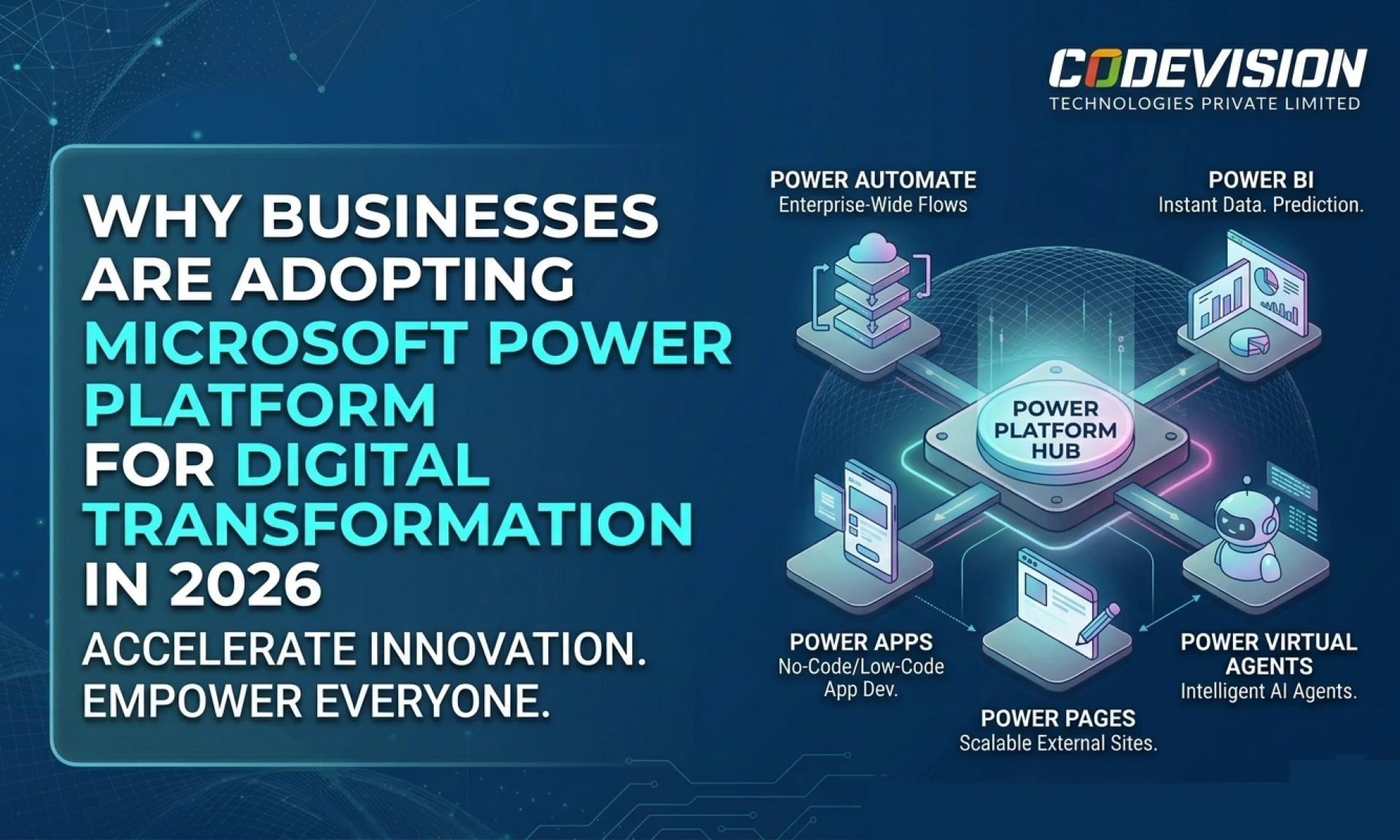
Microsoft Power Platform is a suite of tools that helps businesses build apps, automate workflows, analyse data, and create websites—all with a low-code approach.
Instead of relying entirely on traditional development, organizations can quickly create solutions using:
- Power Apps for custom business applications
- Power Automate for workflow automation
- Power BI for data analytics and reporting
- Power Pages for building secure business websites
This combination allows companies to connect systems, streamline processes, and make smarter decisions from a single ecosystem.
At Codevision Technologies, we see Power Platform as one of the most effective tools for accelerating digital transformation across industries.
Why Are Businesses Adopting Power Platform in 2026?
The shift toward Power Platform is driven by real business challenges. Companies need faster solutions, better insights, and more flexibility without increasing costs.
Faster Application Development
Traditional development can take months. With Power Platform, businesses can build and deploy applications in weeks.
- Teams can quickly create apps without deep coding knowledge
- Changes can be implemented faster based on feedback
- Time-to-market is significantly reduced
This speed gives businesses a strong competitive advantage.
Automation of Manual Processes
Many organizations still rely on repetitive tasks like approvals, data entry, and reporting. These processes consume time and increase the risk of errors.
Power Platform helps automate these workflows efficiently.
- Approval processes can run automatically
- Notifications and updates are triggered in real time
- Manual data handling is minimized
This leads to improved productivity and reduces operational costs.
Better Data-Driven Decision Making
Data is one of the most valuable assets for any business. However, without proper tools, it often remains underutilized.
Power BI enables businesses to turn raw data into meaningful insights.
- Real-time dashboards provide clear visibility
- Reports are easy to understand and share
- Decision-makers can act quickly based on accurate data
This helps organizations move from guesswork to informed strategies.
Seamless Integration Across Systems
One of the biggest challenges businesses faces is disconnected systems. Power Platform solves this by integrating with Microsoft tools and other applications.
- Connects with Microsoft 365, Dynamics 365, and Azure
- Integrates with third-party tools and databases
- Ensures smooth data flow across departments
This creates a unified ecosystem where teams can collaborate more effectively.
Real-World Use Cases of Power Platform
Power Platform is not just a concept—it delivers real business value across industries.
Workflow Automation in Enterprises
Businesses use Power Automate to streamline approvals, document processing, and notifications. This reduces delays and improves efficiency.
Custom Business Applications
With Power Apps, companies build apps tailored to their specific needs, such as employee management systems or inventory tracking tools.
KPI Reporting and Analytics
Organizations use Power BI dashboards to monitor performance, track KPIs, and make data-driven decisions in real time.
We have worked with businesses in manufacturing and enterprise sectors, helping them automate reporting and improve operational efficiency using Power Platform solutions.
You can explore similar implementations through case studies available on the Codevision Technologies website.
Key Benefits of Microsoft Power Platform
Adopting Power Platform offers several advantages that directly impact business performance.
- Increased productivity as employees spends less time on repetitive tasks and more time on strategic work
- Faster innovation with low-code development that allows quick experimentation and deployment
- Cost efficiency by reducing dependency on large development teams and minimizing operational overhead
- Improved collaboration through integrated tools and shared data access across departments
- Scalability that supports business growth without requiring major system changes
These benefits make Power Platform a preferred choice for organizations aiming to modernize quickly.
Common Challenges and How to Overcome Them
While Power Platform simplifies development, businesses may still face challenges during adoption.
- Some teams may resist change due to unfamiliarity with new tools, which can be addressed through proper training and onboarding
- Data integration from legacy systems may require careful planning to ensure accuracy and consistency
- Governance and security need to be managed effectively to maintain compliance and data protection
Working with experienced partners like Codevision Technologies ensures a smooth implementation and long-term success.
Why Power Platform is a Key Driver of Digital Transformation
Digital transformation is not just about technology—it’s about improving how businesses operate and deliver value.
Power Platform plays a critical role by:
- Enabling rapid innovation
- Connecting systems and data
- Automating processes
- Empowering both developers and business users
It bridges the gap between IT and business teams, allowing organizations to move faster and adapt to changing market demands.
The Future of Business with Power Platform
Looking ahead, the role of Power Platform will continue to grow.
Businesses will increasingly rely on:
- AI-powered automation
- Low-code development for faster solutions
- Integrated platforms for better collaboration
- Real-time analytics for smarter decisions
Organizations that adopt these technologies early will be better positioned to lead in their industries.
Conclusion
The adoption of Microsoft Power Platform in 2026 is driven by a clear need—to build faster, automate smarter, and operate more efficiently.
Businesses are no longer willing to rely on slow, complex systems. Instead, they are choosing platforms that offer flexibility, scalability, and real value.
The key takeaway is simple:
Power Platform is not just a tool—it is a foundation for modern business innovation.
If you are planning to start or accelerate your digital transformation journey, working with experts like Codevision Technologies can help you achieve faster and more reliable results.
FAQs
Q1. What is Microsoft Power Platform used for?
It is used to build apps, automate workflows, analyse data, and create business solutions using a low-code approach.
Q2. Why is Power Platform popular in 2026?
Because it enables faster development, automation, and better decision-making without heavy coding.
Q3. Can non-developers use Microsoft Power Platform?
Yes, it is designed for both developers and business users, making it accessible to a wider audience.
Q4. What industries benefit from Power Platform?
Industries such as manufacturing, finance, healthcare, and retail benefit significantly from its capabilities.
Q5. How can Codevision Technologies help with Power Platform implementation?
Codevision Technologies provides consulting, development, integration, and support services to help businesses successfully adopt Power Platform.

























Sign in to leave a comment.