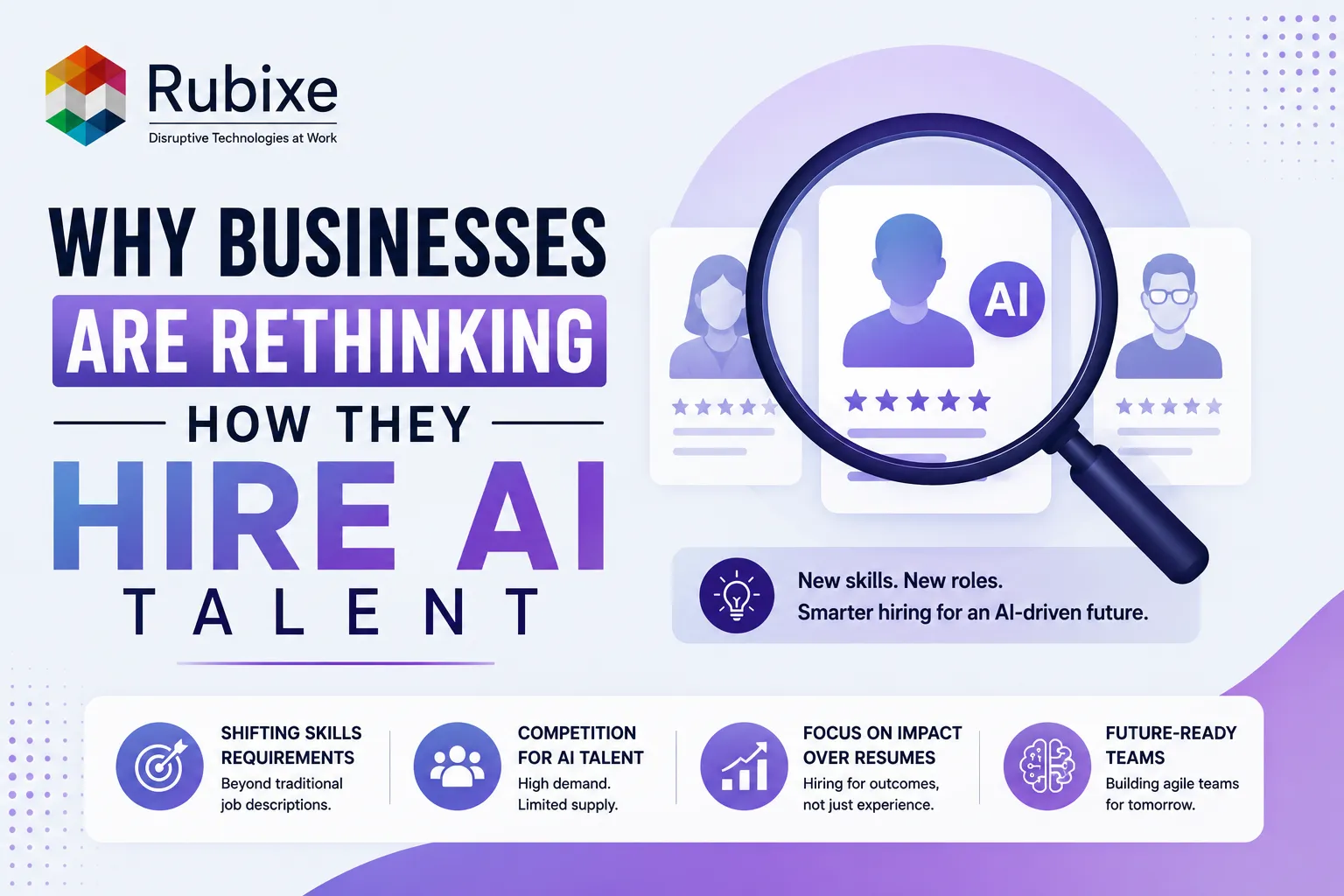

Hiring has never been just about filling vacancies. It is about finding people with the right skills, experience, and mindset to help a business grow. As artificial intelligence becomes part of everyday business operations, companies are discovering that hiring AI professionals requires a different approach from traditional recruitment.
Many organizations initially believed that posting a job advertisement would be enough to attract qualified candidates. Instead, they found a limited talent pool, increasing competition, and candidates with highly specialized skills who were evaluating employers just as carefully as employers were evaluating them.
This changing landscape has increased the importance of artificial intelligence recruitment. Businesses are moving beyond conventional hiring methods and focusing on long term talent strategies that help them attract, evaluate, and retain professionals with the expertise needed for AI related roles.
Why has hiring AI talent become more challenging?
Demand for AI professionals has grown across industries.
Technology companies are no longer the only organizations looking for these skills.
Healthcare, manufacturing, finance, retail, logistics, and education are all expanding their AI initiatives.
This increased demand means businesses often compete for the same candidates.
Common hiring challenges include:
- Limited availability of experienced professionals
- High competition between employers
- Specialized technical skill requirements
- Longer recruitment cycles
- Rising candidate expectations
Finding the right person now requires more planning than simply advertising an open position.
Why are businesses changing their hiring process?
Traditional recruitment often emphasizes resumes and previous job titles.
For AI positions, practical ability frequently matters more than a long employment history.
Many businesses now include:
- Technical assessments
- Portfolio reviews
- Practical problem solving exercises
- Collaborative interviews
- Scenario based discussions
These methods provide a clearer understanding of how candidates may perform in real business environments.
How important are business skills?
Technical expertise alone does not guarantee success.
AI professionals often work alongside leadership teams, operations, sales, product development, and customer support.
Strong candidates usually demonstrate:
- Clear communication
- Business awareness
- Team collaboration
- Analytical thinking
- Continuous learning
These qualities help technical knowledge create meaningful business outcomes.
Why are businesses planning ahead instead of hiring urgently?
Many organizations previously started recruiting only after a project had already begun.
This approach often resulted in rushed hiring decisions.
Today, businesses are investing more time in workforce planning by:
- Identifying future skill requirements.
- Building candidate pipelines.
- Reviewing internal talent.
- Defining hiring priorities.
- Planning recruitment budgets.
Preparing early reduces pressure when new opportunities arise.
What role do external specialists play?
Recruiting highly specialized talent is not always straightforward.
Some organizations work with AI consultants to understand which skills are actually required before beginning recruitment.
This approach helps businesses distinguish between roles that require advanced technical expertise and those focused on implementation, project management, or business integration.
Clarifying requirements early often reduces hiring delays and improves candidate quality.
Why are candidates evaluating employers differently?
Experienced AI professionals often receive multiple opportunities.
As a result, candidates increasingly compare employers based on factors such as:
- Career development
- Learning opportunities
- Project quality
- Company culture
- Leadership support
- Long term growth
Businesses that communicate these strengths clearly often stand out in a competitive hiring market.
What should organizations evaluate before hiring?
Successful recruitment begins with understanding business needs rather than simply filling a vacancy.
| Evaluation Area | Why It Matters |
| Business objectives | Defines the required role |
| Technical skills | Matches project requirements |
| Team collaboration | Supports cross functional work |
| Learning potential | Prepares for future growth |
| Recruitment timeline | Reduces hiring delays |
Careful planning helps businesses build teams that remain valuable as technology and business priorities continue evolving.
Why is retaining AI talent becoming as important as hiring?
Recruitment is only the beginning of the journey.
Many businesses have discovered that finding skilled professionals is difficult, but keeping them engaged can be even more challenging.
Employees are more likely to stay when they have:
- Meaningful projects
- Opportunities to learn
- Clear career progression
- Supportive leadership
- A collaborative work environment
Organizations that invest in employee development often reduce turnover while building stronger internal expertise.
How can businesses improve their hiring decisions?
Successful recruitment rarely depends on speed alone.
Businesses are increasingly taking a structured approach by:
- Defining the exact skills required.
- Involving technical and business teams in interviews.
- Assessing practical problem solving abilities.
- Looking beyond certifications and job titles.
- Reviewing long term growth potential.
This approach helps organizations recruit professionals who can contribute beyond immediate project requirements.
Why are businesses seeking outside expertise before recruiting?
Some companies begin hiring before they fully understand the type of expertise they actually need.
As a result, recruitment becomes longer and more expensive.
Many organizations now work with AI consulting services to evaluate project requirements, define suitable roles, and create realistic hiring plans before starting recruitment.
This preparation helps businesses attract candidates whose skills align with long term business objectives instead of temporary project demands.
How should companies evaluate AI candidates?
A balanced hiring process considers both technical capability and business readiness.
| Evaluation Area | Why It Matters |
| Technical knowledge | Matches project requirements |
| Business understanding | Supports practical implementation |
| Communication | Improves cross functional collaboration |
| Problem solving | Demonstrates real world capability |
| Learning ability | Supports long term growth |
Looking at multiple evaluation areas provides a more complete understanding of a candidate's potential.
What role does company culture play?
Candidates increasingly evaluate how they will work, not just where they will work.
Businesses that encourage collaboration, continuous learning, and open communication often create environments where skilled professionals want to remain for the long term.
This culture supports stronger teamwork while helping organizations retain valuable expertise.
How are experienced organizations approaching recruitment?
Many businesses now recognize that successful hiring begins with understanding business needs before searching for candidates.
For example, organizations such as Rubixe, along with other companies working in enterprise AI, often encourage businesses to define project objectives first and then recruit professionals whose expertise aligns with those goals. This approach reflects a growing emphasis on thoughtful workforce planning instead of reactive hiring.
What will shape the future of AI hiring?
As demand for skilled professionals continues growing, businesses that succeed will likely focus on building sustainable recruitment strategies rather than competing only through salary offers.
Organizations that invest in planning, employee development, and structured hiring processes are generally better positioned to attract and retain experienced professionals while adapting to future business needs.
This continued focus on artificial intelligence recruitment will help businesses build teams capable of supporting long term innovation and operational growth.
Frequently Asked Questions
Why is artificial intelligence recruitment becoming more important?
Artificial intelligence recruitment helps businesses identify, attract, and hire professionals with the specialized skills needed to support AI related projects while aligning recruitment with long term business goals.
Why are businesses finding it difficult to hire AI talent?
Demand for skilled AI professionals has increased across multiple industries, creating stronger competition, longer hiring cycles, and a limited pool of experienced candidates.
How do AI consultants support recruitment?
AI consultants help businesses understand the technical skills, project requirements, and workforce needs before recruitment begins, making hiring decisions more focused and effective.
What role do AI consulting services play in hiring?
AI consulting services assist organizations with workforce planning, role definition, technical assessment, and recruitment strategy so businesses can hire candidates who match both immediate and future business requirements.
What should businesses look for when hiring AI professionals?
Businesses should evaluate technical expertise, business understanding, communication skills, problem solving ability, adaptability, and long term learning potential instead of relying only on resumes or job titles.
Hiring AI talent is no longer a straightforward recruitment exercise. As demand for specialized skills continues to grow, businesses are realizing that successful hiring depends on careful planning, clear role definitions, and a strong understanding of long term workforce needs rather than filling vacancies as quickly as possible.
Organizations that invest in structured artificial intelligence recruitment, evaluate candidates from both technical and business perspectives, and create environments where skilled professionals can continue growing are more likely to build teams that contribute lasting value. The companies that rethink how they hire today will be better prepared for tomorrow's opportunities.

























Sign in to leave a comment.