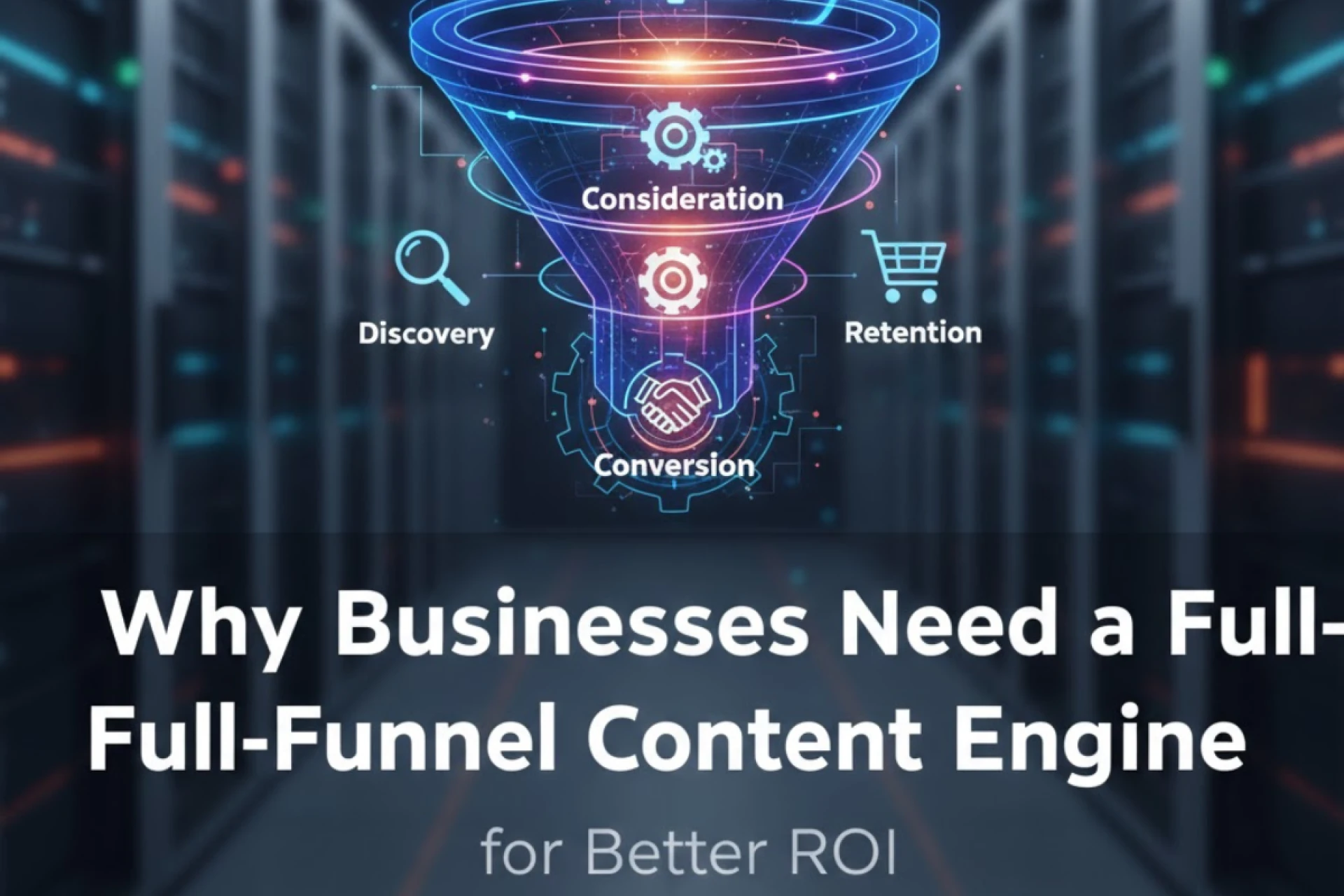

We have all seen it. A brand publishes a steady stream of blog posts, maybe a few ads, a landing page or two. Traffic comes in. Numbers look fine on paper. Sales? Not always. Something feels off. Content exists, yet revenue feels disconnected from the effort.
That gap is where a full-funnel content engine quietly does the heavy lifting.
Halfway through the first real planning conversation, most teams realize they are missing connective tissue. Content for awareness lives on one island. Sales pages live on another. Nurture emails float somewhere in between. A full-funnel content engine pulls those pieces into a working system, not a pile of assets.
Right in the middle of this conversation sits the full-funnel content engine itself. Not as a buzzword. As a structure that supports how people actually decide to buy.
Content That Matches Real Buyer Behavior
People rarely wake up ready to purchase. They scroll. They skim. They hesitate. They leave tabs open for days. Sometimes weeks. A funnel-shaped content system respects that reality.
At the top, curiosity rules. Someone notices a problem but does not name it yet. Blog posts, social content, light guides, and short videos work here. They feel helpful, not sales-heavy. We have watched bounce rates drop just by softening the tone at this stage.
Middle-funnel content feels different. The reader knows the problem now. They compare options. They want proof. Case studies, long-form explainers, webinars, and email sequences belong here. This is where trust grows, slowly, almost quietly.
Bottom-funnel content is where clarity matters. Pricing pages, demos, product walkthroughs, testimonials with real numbers. No fluff. Just answers. A content engine maps each step without forcing the reader to jump gaps on their own.
Why ROI Suffers Without Full-Funnel Coverage
We have audited content libraries packed with strong articles that never connect to revenue. Traffic looks impressive. Sales teams still struggle. The reason shows up fast. Too much content talks to strangers. Not enough speaks to buyers who are almost ready.
A full-funnel approach fixes that imbalance. Instead of chasing more clicks, the focus shifts toward guiding existing attention forward. One piece leads to the next. Nothing feels random.
ROI improves because content begins to compound. A single top-funnel article feeds multiple middle-funnel assets. Those assets feed sales conversations. Paid campaigns cost less because organic pathways already exist. The math changes, quietly but clearly.
Consistency Without Burnout
One fear comes up often. “Do we need more content?” Usually, no. We need better alignment.
A content engine relies on planning themes, not constant reinvention. One research-backed topic can turn into a blog, a short email sequence, a sales enablement page, and a webinar outline. Same idea. Different depth.
Teams stop scrambling. Publishing feels steadier. Creativity lasts longer. That alone saves budget and morale, two things rarely tracked on spreadsheets.
Search Visibility That Feels Natural
Search engines reward depth. Not keyword stuffing. Not awkward phrasing. A funnel-based system naturally creates topic clusters. Awareness content introduces ideas. Mid-funnel pages expand them. Bottom-funnel pages confirm authority.
This structure supports long-tail keywords, buyer-intent searches, and branded terms without sounding forced. Pages reference each other in ways that make sense to humans first. Rankings tend to follow.
We have noticed that time-on-page rises when content answers the next question before the reader asks it. That behavior sends quiet signals search platforms notice.
Sales and Marketing Stop Working Separately
A full-funnel content engine changes internal dynamics. Marketing no longer hands over cold leads and hopes for magic. Sales teams stop rewriting explanations from scratch.
Content becomes shared ground. Sales reps point prospects to specific articles. Marketing listens to objections and turns them into content pieces. The loop tightens.
Revenue attribution becomes clearer too. When each funnel stage has defined content, tracking influence feels less like guesswork.
Long-Term Value Beats Short Bursts
Short campaigns spike traffic. Then fade. A funnel-based system builds equity. Articles written a year ago still educate. Guides continue capturing emails. Case studies keep closing deals.
That long tail matters. Especially for brands watching acquisition costs rise. Content that keeps working without constant spend changes how ROI looks over time.
We have seen older mid-funnel assets outperform newer ads. Not flashy. Just reliable.
Ad Spend Works Harder
Paid traffic performs better when it lands inside a content ecosystem. A visitor who reads one article and leaves costs money. A visitor who enters a sequence of relevant pages starts a relationship.
A content engine gives ads somewhere useful to point. Not just landing pages, but learning paths. That reduces friction without sounding salesy.
Click costs drop. Conversion rates lift. Small gains stack.
Measurement Stops Feeling Vague
Without funnel mapping, metrics feel disconnected. Page views here. Leads there. Sales somewhere else.
With a structured content engine, each stage has its own signals. Awareness tracks reach and engagement. Middle stages track return visits and email depth. Bottom stages track assisted conversions.
Suddenly, content discussions feel grounded. Decisions rely less on gut feeling. Still human. Just clearer.
Building Trust Without Overexplaining
People sense intention. Content that exists only to sell feels thin. Content that exists only to educate feels unfinished.
A full-funnel engine balances both without shouting. Education builds comfort. Proof builds confidence. Clear offers respect time.
That balance earns trust. Quietly.
Why Businesses That Scale Choose This Model
Growth adds complexity. More products. Longer sales cycles. Multiple audiences. A funnel-based content system adapts without chaos.
Each new offer plugs into an existing structure. Each new audience follows the same logic, adjusted slightly. Systems scale better than tactics.
We have seen brands reduce content waste simply by knowing where each piece fits before writing a word.
A System That Respects Real Humans
People scroll while distracted. They save links they forget to open. They return weeks later. A content engine welcomes that behavior instead of fighting it.
Nothing breaks if someone enters halfway through. Paths reconnect. Context appears naturally.
That flexibility matters. Humans are messy. Funnels should allow for that.
The work feels less forced. Results feel steadier. Conversations improve. Revenue follows, usually sooner than expected.

























Sign in to leave a comment.