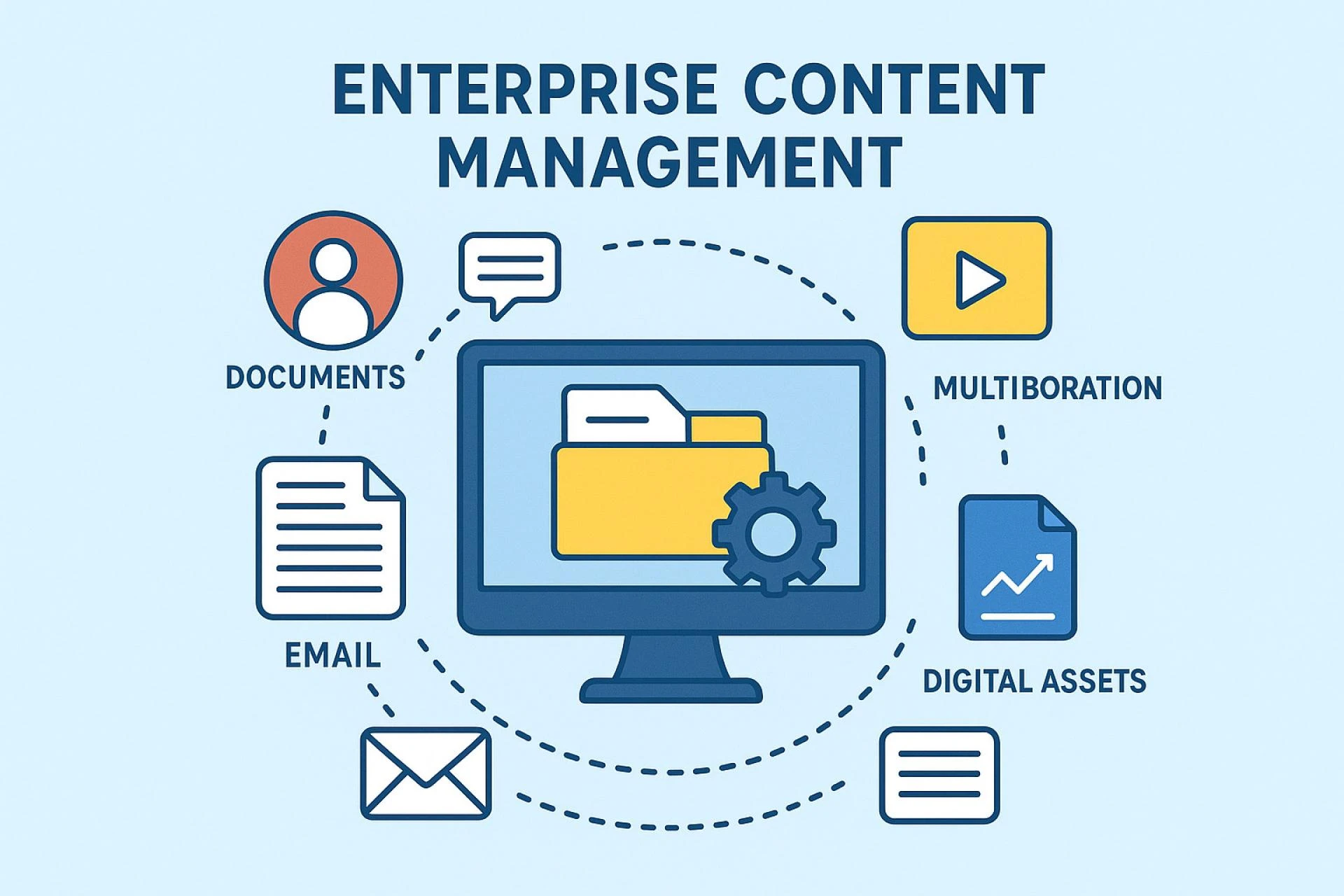
In today’s digital landscape, businesses generate an overwhelming volume of content—from invoices and contracts to emails, multimedia files, HR records, and customer data. Managing this information effectively is critical not just for operational efficiency but also for compliance, security, and strategic decision-making. This is where Enterprise Content Management Services (ECM Services) play a vital role.
Enterprise Content Management Services help organizations capture, store, organize, access, and manage all types of content throughout its lifecycle. Whether you’re a large enterprise or a mid-sized business on the rise, ECM services provide the tools you need to reduce clutter, enhance collaboration, and streamline document-driven processes.
What Do ECM Services Mean?
Enterprise Content Management Services refer to a set of processes, tools, and strategies that enable organizations to manage unstructured information—such as documents, emails, images, and videos—in a centralized, secure, and structured way.
Unlike traditional document storage or basic file-sharing platforms, ECM services focus on the complete lifecycle of content—from creation and editing to storage, retrieval, archival, and disposal. They ensure the right people access the right content at the right time, regardless of device or location.
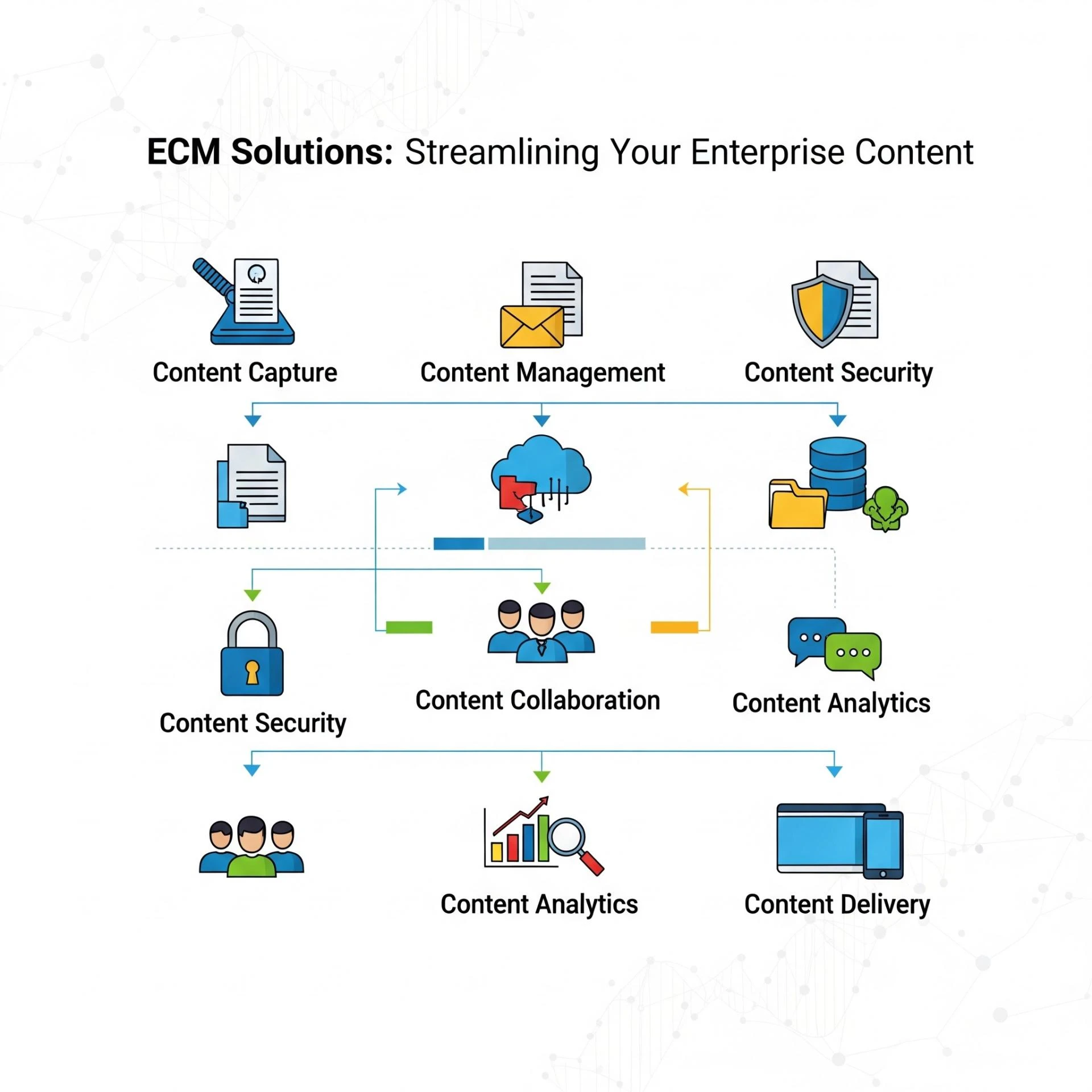
Key Components of Enterprise Content Management Services
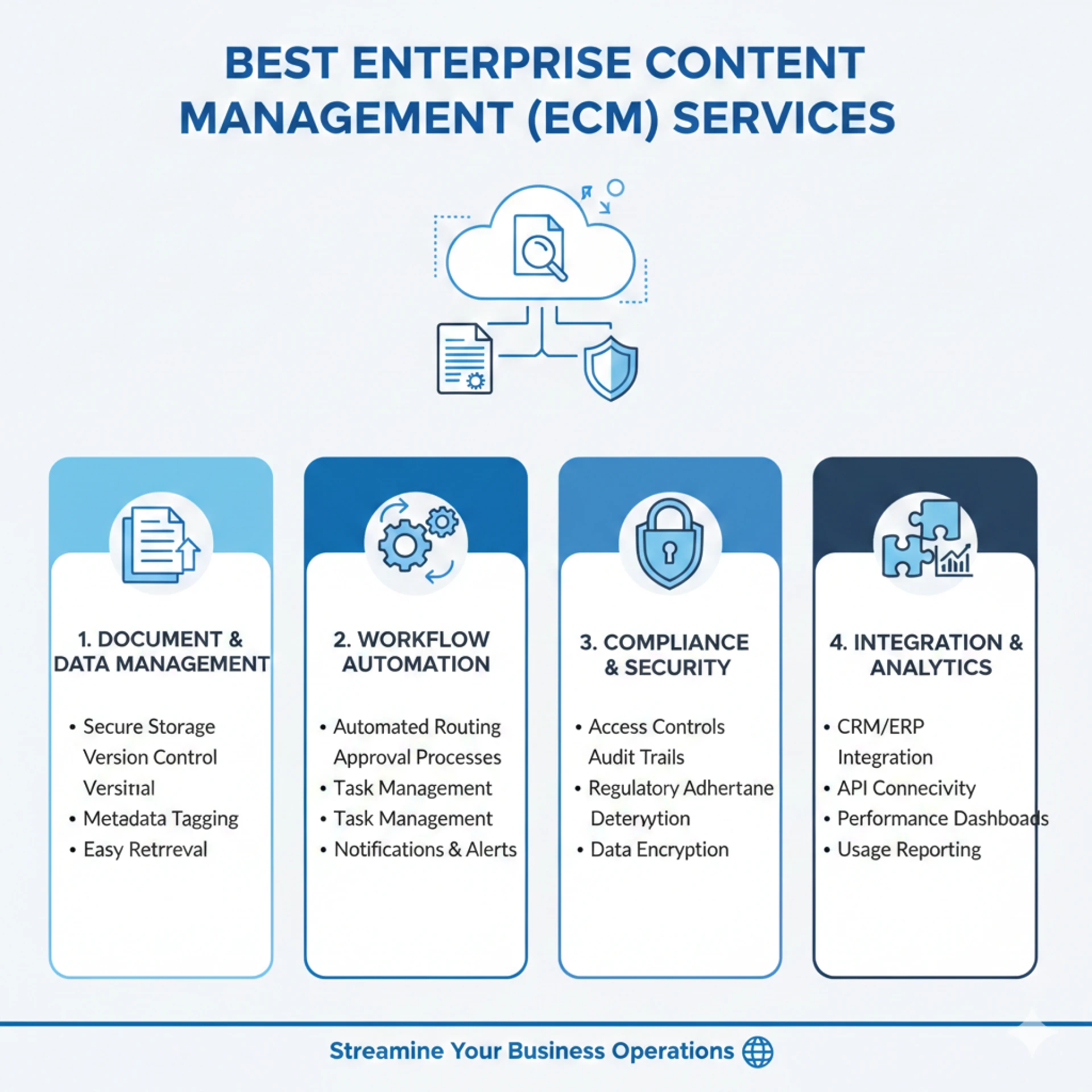
Document Management: Efficiently organize, track, and manage documents with version control, access permissions, and search features.
Content Capture: Use scanning, OCR (Optical Character Recognition), and indexing to convert physical documents into digital formats.
Workflow Automation: Automate processes like invoice approvals, contract renewals, and employee onboarding.
Records Management: Apply retention schedules and compliance rules to safeguard important records.
Collaboration Tools: Enable teams to co-author and share documents in real time.
Security & Compliance: Restrict access, track user activity, and ensure adherence to standards like HIPAA or GDPR.
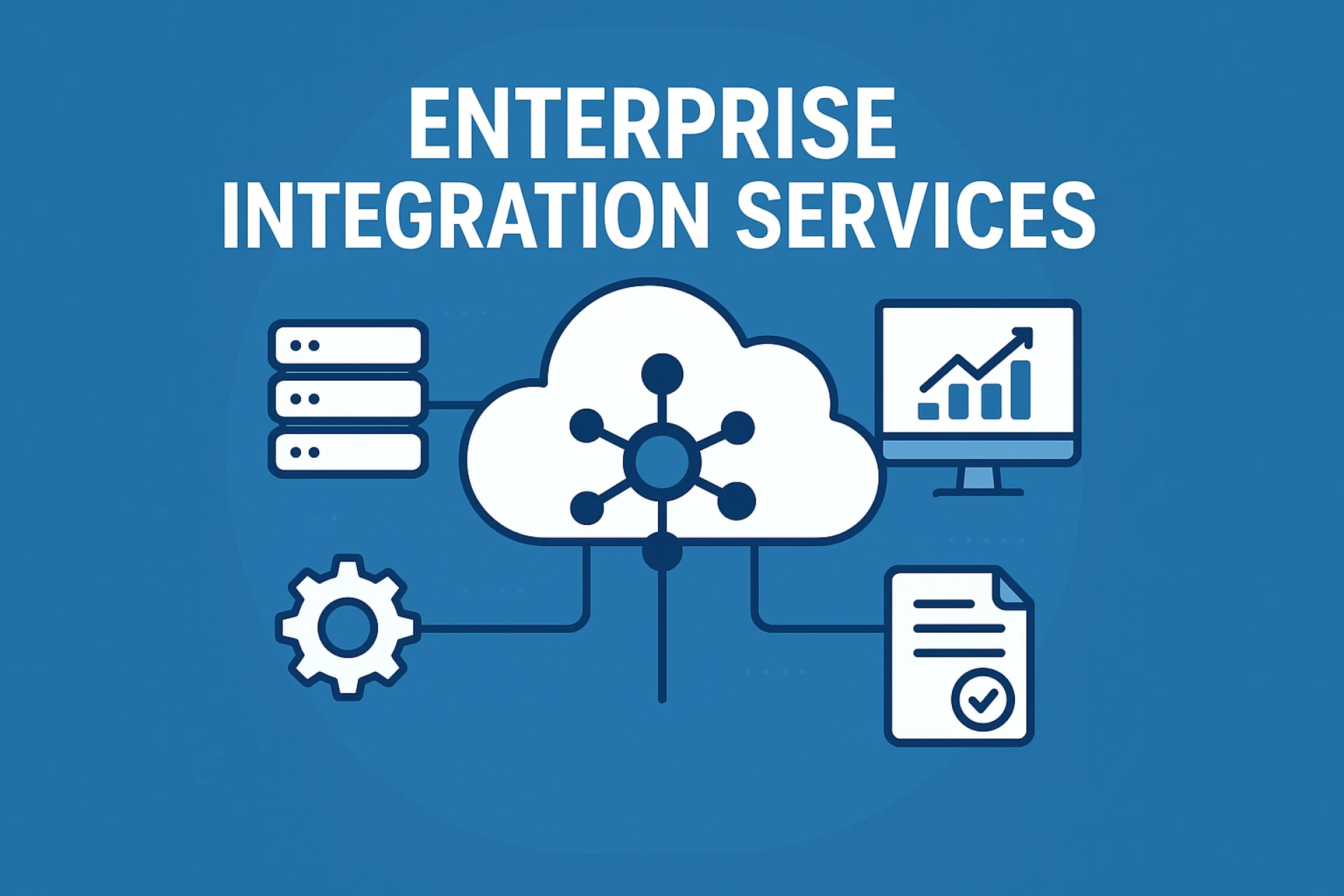
Integration Support: Seamlessly connect with ERPs, CRMs, Microsoft 365, Google Workspace, and other business platforms.
Cloud or On-Premises Deployment: Flexible hosting options to fit organizational needs.
How Enterprise Content Management Services Work
Capture – Collect documents from emails, scanners, mobile uploads, or imports and convert them into usable formats.
Store & Organize – Index files with metadata (date, author, department) for easy search and retrieval.
Manage Access – Assign role-based access so only authorized users handle sensitive files.
Automate Processes – Trigger workflows like legal reviews or finance approvals.
Archive & Retain – Securely store inactive files according to compliance requirements.
Retrieve & Audit – Use advanced search to instantly access content with full audit trails.
Benefits of Enterprise Content Management Services
Improved Efficiency – Faster workflows and reduced time spent searching for documents.
Cost Savings – Lower paper, printing, storage, and infrastructure costs.
Enhanced Collaboration – Real-time co-authoring and document sharing.
Compliance & Risk Management – Built-in security, audit trails, and retention rules.
Remote Accessibility – Anytime, anywhere access—ideal for hybrid teams.
Better Customer Experience – Quick document access enables faster, more accurate service.
Use Cases of ECM Services
Finance: Automating invoice approvals and audits.
Human Resources: Managing resumes, onboarding, and compliance forms.
Healthcare: Digitizing patient records and lab results with HIPAA compliance.
Legal: Secure, version-controlled storage for contracts and case files.
Manufacturing: Managing certifications, manuals, and regulatory documents.
ECM Services vs. Traditional Document Management
Document Management = Store + Retrieve
Enterprise Content Management Services = Store + Retrieve + Automate + Analyze + Govern
Why ECM Services Matter
In a data-driven world, Enterprise Content Management Services act as the foundation for structure, compliance, and accessibility of critical business information. From HR and finance to customer service and manufacturing, ECM services simplify workflows, improve decision-making, and safeguard your organization’s most valuable asset—information.























Sign in to leave a comment.