

The Museum Got a Wi-Fi Signal
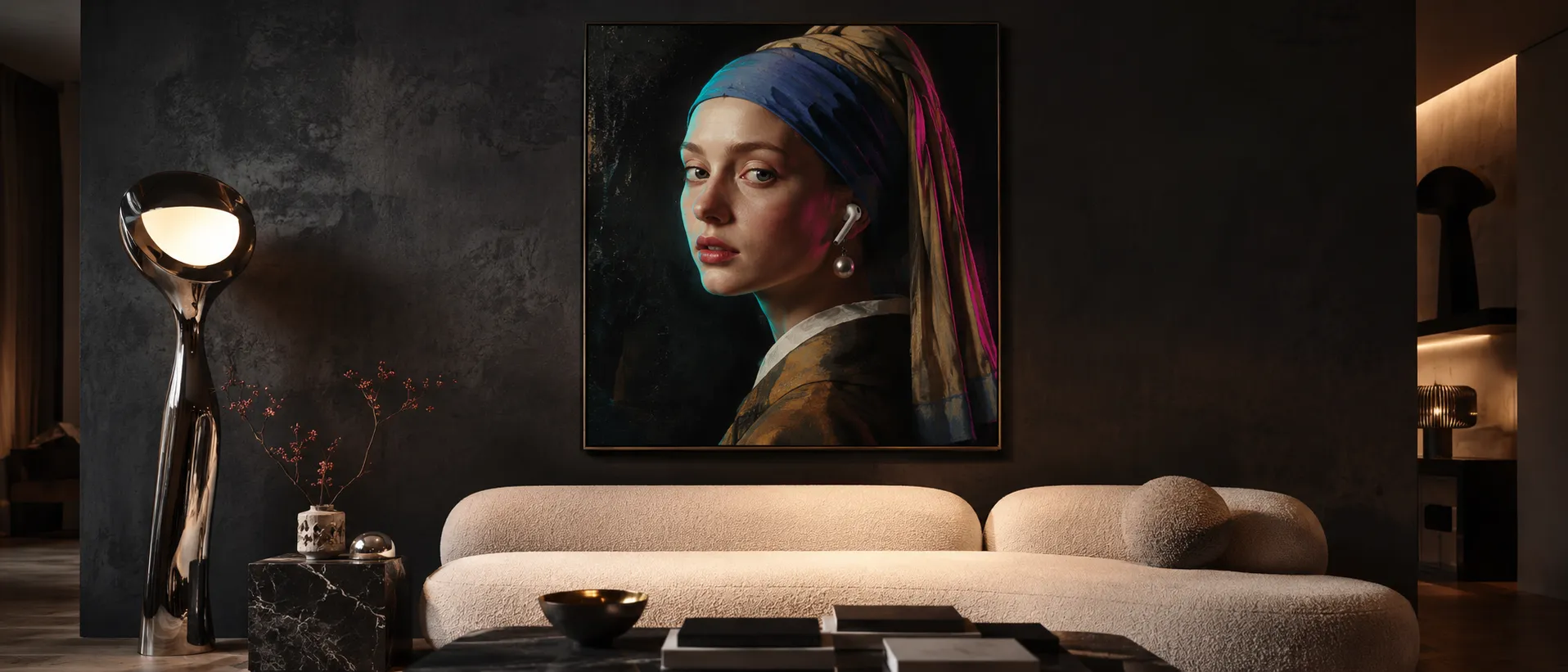
Mona Lisa blowing a perfect pink bubblegum bubble. Vermeer’s girl with the pearl earring wearing AirPods. Michelangelo’s David half-hidden inside an oversized black hoodie. Botticelli’s Venus stepping out of her shell with chrome sunglasses and the kind of attitude usually reserved for fashion week.
At first, it feels like a joke. A smart one, maybe. A little cheeky. The kind of image that makes you stop scrolling for half a second longer than usual.
But the best modern twists on classic art are not just jokes. They work because they touch something deeper: our strange relationship with the past. We are told to admire the old masters from a respectful distance — quiet museum rooms, polished floors, soft lighting, no touching, no laughing too loudly. Yet the images themselves were never meant to be frozen in silence forever. They were bold in their own time. They carried desire, power, vanity, beauty, religion, money, status, scandal, and ego.
When a famous painting gets pulled into the present — with neon color, streetwear, smartphones, tattoos, graffiti, bubblegum, luxury styling, or digital-age chaos — it does not necessarily cheapen the original. Sometimes, it wakes it up.
That is the real magic of reimagined classic art. It creates a collision between two worlds: the museum and the street, the antique frame and the phone screen, the grand portrait and the meme, the old master and the modern mood. The viewer recognizes the original instantly, then notices the interruption. That interruption is where the fun begins.
A girl with a pearl earring is no longer just a quiet 17th-century beauty. Add AirPods, and suddenly she becomes someone caught between centuries — still mysterious, but now possibly listening to a podcast, ignoring a group chat, or pretending not to hear you. David in a hoodie is not only a marble icon of heroic beauty. He becomes a modern symbol of cool detachment, confidence, maybe even rebellion. Mona Lisa with bubblegum turns that famously unreadable smile into something sharper: bored, playful, maybe fully aware that she has been stared at for 500 years and is finally staring back.
This is why classic art with a modern twist feels so natural in today’s interiors. It gives a room history without making it feel stiff. It gives personality without shouting. It feels cultured, but not precious. Stylish, but not cold. Familiar, but just wrong enough to be interesting.
And maybe that is exactly what modern wall art needs right now. Not another polite print that disappears into the background. Not another safe decorative piece chosen only because it matches the sofa. Something with a wink. Something with memory. Something that knows the rules — and breaks them with style.
The Classics Were Never as Polite as We Pretend

The funny thing about classic art is that we often treat it as if it was born old.
We see a Renaissance portrait in a museum and instantly wrap it in silence. We imagine it has always belonged behind velvet ropes, under careful lighting, with a guard standing nearby and someone whispering, “Please don’t get too close.”
But that is not how most of these works began.
Many of the paintings we now call masterpieces were once bold commissions, status symbols, private flexes, religious statements, political theater, or straight-up vanity projects. Portraits were not just portraits. They were power moves. Mythological scenes were not just pretty bodies in soft light. They were desire, drama, money, taste, and social positioning dressed up as culture.
So when a modern artist takes one of these images and gives it a new attitude, it can feel less like vandalism and more like returning the artwork to its original temperature.
A hoodie on David is not really that strange. David was already a symbol of youth, beauty, confidence, and threat. Add a hoodie, and the meaning shifts, but the energy is still there. He becomes less marble statue, more street-corner icon. Less ancient hero, more cool guy who knows everyone is looking and refuses to care.
The same goes for Mona Lisa. She has been turned into everything: a meme, a poster, a parody, a logo, a Halloween costume, a luxury reference, a classroom print, a tourist magnet. At this point, pretending she belongs only to the Louvre feels almost dishonest. She belongs to the world’s visual memory. She is everywhere. The question is not whether artists should remix her. The question is whether they can do it with enough wit to make us look twice.
That is where the good work separates itself from the cheap trick.
Because yes, a famous painting with sunglasses can be lazy. A pearl earring plus AirPods can easily become a one-second joke. A Renaissance woman holding an iPhone can feel like something made for a novelty mug.
But when the idea has taste, tension, and a little bite, the remix becomes something better. It does not just decorate the old image. It argues with it.
It asks: What would beauty look like now? What would status look like now? What would mystery look like in an age where everyone is online, over-photographed, and constantly performing a version of themselves?
That is why the best reimagined classic art does not feel like a costume party. It feels like a conversation across centuries.
Recognition Is the Hook. The Twist Is the Bite.
A modern twist on a classic artwork works because your brain gets two rewards at once.
First comes recognition. You know the face. You know the pose. You know the composition, even if you cannot remember the artist’s name. The image arrives with history already attached to it.
Then comes the interruption.
A glowing phone screen. A gold chain. A tattoo sleeve. Neon light across a Renaissance cheekbone. A bubblegum bubble where a mysterious smile used to be. A pair of wireless earbuds tucked into the ear of a girl who should technically be living in the 1600s.
That little interruption is the spark.
It makes the viewer pause because something is “wrong,” but wrong in a way that feels deliberate. The old image gives the piece weight. The modern detail gives it movement. One part says museum. The other says now.
This is exactly why these pieces work so well in interiors. A totally traditional classic print can sometimes make a room feel too formal, especially in a modern apartment. A purely trendy print can age quickly. But a classic artwork with a modern twist sits in the middle. It has cultural memory and personality. It can be stylish without becoming cold. Funny without becoming childish. Bold without needing to shout across the room.
That balance is hard to fake.
A Vermeer-inspired portrait with earbuds, for example, is not just “old plus new.” It is quiet versus noisy. Mystery versus constant connection. A face from candlelit Europe wearing the symbol of modern distraction. That contrast gives the artwork its pulse.
A Venus with chrome sunglasses works for a different reason. The original is about beauty being revealed. The remix turns beauty into performance. She is not just being seen. She knows she is being seen. She owns the gaze.
A Mona Lisa blowing bubblegum changes the entire mood of the painting. The original smile has been analyzed to death. Is she happy? Is she bored? Is she hiding something? Add bubblegum and the mystery becomes more mischievous. Suddenly she feels like she has heard every theory about herself and finds the whole thing mildly ridiculous.
That is the pleasure of this kind of art. It takes an image we thought we understood and gives it a fresh expression.
The Room Matters Too
There is also a reason this trend belongs on walls, not just on screens.
On Instagram, a reimagined masterpiece is a quick visual hit. You see it, you smile, you scroll. But in a room, the piece has more work to do. It has to live with furniture, light, texture, mood, and the personality of the person who chose it.
That is where it becomes interesting.
A classic portrait with a modern twist above a velvet sofa says something very different from a beige abstract print. It says the owner has taste, but also a sense of humor. It says they like beauty, but not the kind that behaves too well. It suggests they know the reference, but they are not trying to impress anyone with a history lecture.
This is the charm of rebellious classic art in interiors: it gives a room a wink.
Not every home needs to look like a gallery. Not every wall needs to be calm, neutral, and obedient. Sometimes the best piece in the room is the one that slightly misbehaves.
That might be a Dutch-style portrait with neon color bleeding across the face. A Baroque figure in streetwear. A Roman bust with graffiti behind it. A Renaissance muse holding a cocktail. A classical goddess styled like a fashion editorial. The idea is not to make the room look chaotic. The idea is to give it a small shock of personality.
Because the truth is, a lot of modern interiors have become too polite. Beautiful, yes. Expensive-looking, yes. But sometimes so carefully styled that they feel like no one actually lives there. A reimagined classic artwork can break that perfection in the right way.
It adds a story. It adds friction. It makes the room feel chosen, not copied.
And that is where the whole trend becomes more than decoration. It becomes a statement about how we live with culture now. We do not just inherit images. We remix them. We joke with them. We put them in new clothes. We drag them into our apartments, our feeds, our moods, our strange little rituals of identity.
The old masters are still in the room.
They just finally got better lighting, better sneakers, and a little less patience for being treated like saints.
Frequently Asked Questions
What is the significance of modern twists on classic art?
Modern twists on classic art serve to bridge the gap between historical significance and contemporary culture. They allow viewers to engage with classic pieces in a fresh way, often highlighting themes of beauty, status, and identity within today's context.
Do modern interpretations of classic artworks disrespect the originals?
Not necessarily. While some may view them as disrespectful, many modern interpretations aim to revive the original energy and intent of the artworks. Instead of cheapening the original, they can create a conversation that honors both the past and the present.
How can reimagined classic art enhance home decor?
Reimagined classic art adds personality and cultural depth to home interiors without feeling overly formal. These pieces can serve as conversation starters, injecting a sense of humor and rebellion into spaces that might otherwise feel too polished or muted.
What makes a modern twist on classic art effective?
An effective modern twist combines recognition of the original artwork with a thoughtful interruption that provokes thought. It should engage viewers by merging historical significance with contemporary relevance, encouraging a dialogue between the two worlds.
Can reimagined classic art be considered high art?
Yes, reimagined classic art can certainly be considered high art if it employs creativity, wit, and a deeper commentary on culture. The best works go beyond mere visual novelty and challenge viewers to reconsider their perceptions of beauty, identity, and history.
How do reimagined artworks reflect current societal issues?
These artworks often address contemporary themes such as consumerism, identity, and the impact of technology on our lives. By placing classic figures in modern contexts, they highlight how societal values and aesthetics evolve while still connecting to our shared cultural heritage.
What role does humor play in modern interpretations of classic art?
Humor plays a crucial role by making the art more relatable and accessible. A playful twist can invite viewers to engage with the artwork more openly, often prompting them to reflect on their own experiences and the absurdities of modern life.



























Sign in to leave a comment.