
Construction projects today move much faster than they used to. Deadlines are tighter, labor costs are higher, and nobody wants workers standing around trying to “make things fit” on-site. That’s one big reason many contractors and OEM manufacturers now prefer working with a PVC extrusion profile supplier in India instead of depending on standard off-the-shelf sections.
A lot of standard PVC sections still work fine for simple jobs. But once projects become larger or more technical, small fitting problems start showing up everywhere. One profile may need trimming. Another may leave sealing gaps. Sometimes the dimensions are just slightly off, but even that becomes annoying during installation.
And honestly, these problems usually cost more in labour than people expect.
That’s why custom solutions are becoming more common across construction projects in India and the USA. Engineers now prefer designing the profile around the project instead of adjusting the project around a ready-made section.
What Are Custom PVC Profiles?
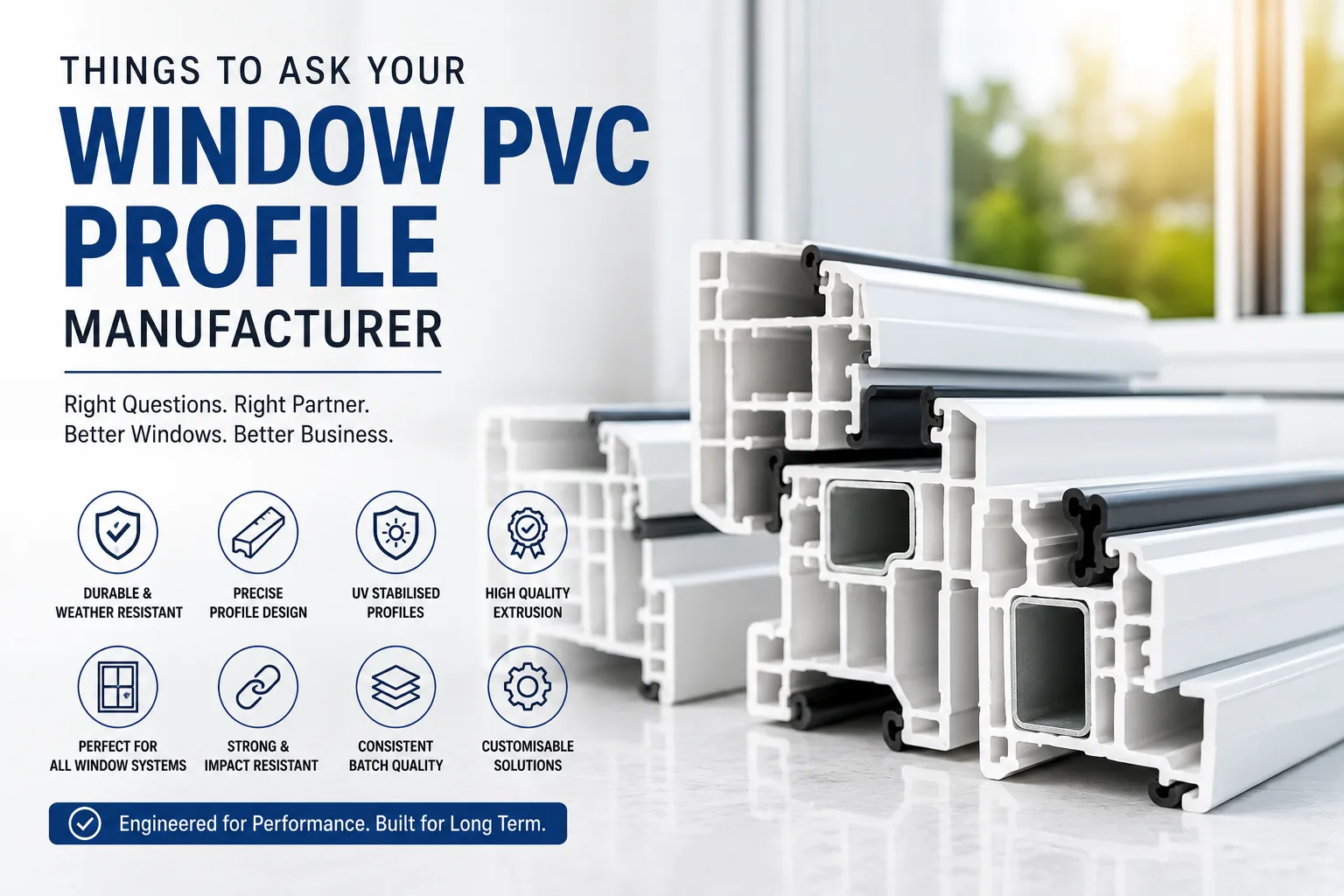
Custom PVC profiles are plastic sections made for a specific use instead of general applications. They are produced through extrusion, but the shape, thickness, and dimensions are based on actual project requirements.
These profiles are commonly used in:
1. Window and door systems
2. Curtain wall structures
3. Electrical cable channels
4. HVAC systems
Edge protection and sealing applications
Most PVC profiles are developed using CAD drawings or technical specifications shared by engineers and procurement teams. The biggest difference is pretty simple.
Standard sections are built for “average” applications. Custom-designed profiles are built for one exact job. That usually makes installation much smoother later.
Why Standard Sections Often Create Problems on Construction Sites
Standard sections are not bad products. The problem is that modern construction has become too precise for generic components.
What usually fails on-site is not the material itself. It’s the fit.
Here’s what happens quite often:
1. Profiles need cutting before installation
2. Alignment does not match the system properly
3. Sealing gaps that appear near joints
4. Workers spend extra time adjusting parts manually
None of these issues sounds huge individually. But together, they slow projects down badly.
I’ve personally seen installers spend half a day adjusting profiles that were only “slightly wrong". That kind of delay frustrates everyone because the issue could have been avoided earlier during the design stage.
This is exactly why many contractors now avoid generic sections for important systems.
Why Custom PVC Profiles Work Better in Modern Construction
Custom profiles solve most fitting issues before production even starts. Instead of fixing problems during installation, engineers fix them during design. That approach usually works much better.
1. Better dimensional accuracy
Custom profiles are made according to exact measurements. This reduces alignment problems later.
2. Faster installation
Workers don’t spend hours trimming or modifying sections on-site.
3. Less material waste
Because the profile already matches the requirement, there’s less leftover scrap.
4. Better sealing performance
Custom designs usually improve fit around windows, façade systems, and insulation assemblies.
From my experience, this is where custom extrusion starts paying for itself. Not necessarily through cheaper material costs, but through smoother installation and fewer headaches.
Why Engineers Prefer Application-Specific PVC Designs
Construction systems today are more connected than before. Window systems connect with insulation layers. Façade assemblies connect with drainage systems. Electrical routing has to stay cleaner and more organised. A generic profile often struggles in these situations.
Custom designs help engineers:
1. Match exact dimensions
2. Improve sealing around joints
3. Reduce fitting pressure during assembly
4. Maintain cleaner finishes
5. Support modular construction systems
Many buyers researching the advantages of rigid PVC profiles eventually realise something important. Strong material alone is not enough. The profile design matters just as much. And honestly, I think many projects underestimate this part.
Real Example: Where Standard Profiles Usually Fail
Façade systems are a good example.
In large commercial buildings, even small profile mismatches can cause:
1. Water leakage
2. Air gaps
3. Uneven panel alignment
4. Delays during installation
The frustrating part is that these issues often appear after installation starts. Fixing them later costs much more.
Application-specific extrusion profiles reduce this risk because they are designed around the actual structure instead of forcing installers to “adjust somehow” on-site. That usually works better in real conditions.
How a Custom PVC Profile Supplier Adds Value
A good supplier does much more than simply manufacture profiles.
An experienced PVC profile supplier usually helps with:
1. Design reviews
2. Material recommendations
3. Prototype development
4. Tooling support
5. Consistency during bulk production
6. Final quality inspections
This support matters a lot in larger projects because inconsistent profiles can delay entire installation schedules.
Companies like M3 Extrusion work closely with industrial buyers because many modern projects now need application-specific profiles rather than standard catalog products.
Industries Driving Demand for PVC Extruded Profiles
Demand for PVC extruded profiles is growing quickly across several industries.
1. Construction and infrastructure
Used in windows, wall systems, cable management, and façade assemblies.
2. HVAC and refrigeration
Profiles help with insulation and airflow systems.
3. Electrical applications
Used for insulation, routing channels, and protective coverings.
4. Modular construction
Custom profiles improve installation speed and precision.
One thing I’ve noticed is that modular construction companies rarely want generic sections anymore. Precision matters too much in pre-fabricated systems.
Why This Shift Is Growing Faster in India and the USA
Both India and the USA are pushing toward faster and more efficient construction systems.
In India
1. Infrastructure projects are growing rapidly
2. Modular construction is increasing
3. Builders want faster installation with less rework
In the USA
1. Energy efficiency standards are stricter
2. Commercial projects need tighter tolerances
3. Maintenance costs are under more scrutiny
In both markets, custom extrusion usually helps solve installation problems before they become expensive site issues.
Key Takeaways
1. Standard PVC sections often create fitting problems on-site
2. Custom profiles reduce installation delays and waste
3. Modern construction systems need better dimensional accuracy
4. PVC extruded profiles improve sealing and system compatibility
5. A reliable PVC profile supplier helps avoid repeat installation issues
Conclusion
Construction projects today need better accuracy, faster installation, and fewer on-site adjustments. That’s why many contractors and OEM manufacturers are moving away from standard sections and choosing custom PVC profiles instead.
In real projects, custom profiles usually reduce fitting issues, material waste, and installation delays. From my experience, once teams start using application-specific profiles, they rarely want to return to generic sections for important systems.
Companies like M3 Extrusion help industrial buyers develop custom PVC solutions that fit modern construction requirements more accurately and efficiently.
FAQs
1. Why are these profiles preferred in construction projects?
They improve fitting accuracy, reduce installation issues, and help minimize on-site adjustments.
2. What is the difference between standard sections and custom-made profiles?
Standard sections come in fixed designs, while custom-made profiles are built for specific project requirements.
3. Are custom-made extrusion profiles expensive?
They may cost more initially, but they often reduce waste, labour costs, and installation delays.
4. Where are PVC extruded profiles commonly used?
They are used in construction systems, HVAC units, electrical routing, refrigeration equipment, and façade assemblies.
5. Why do standard PVC sections fail during installation?
They are designed for general use, which can cause fitting issues and sealing gaps on-site.
6. How does a custom PVC profile supplier help projects?
They support design, prototyping, tooling, and production consistency for smoother installation.






















Sign in to leave a comment.