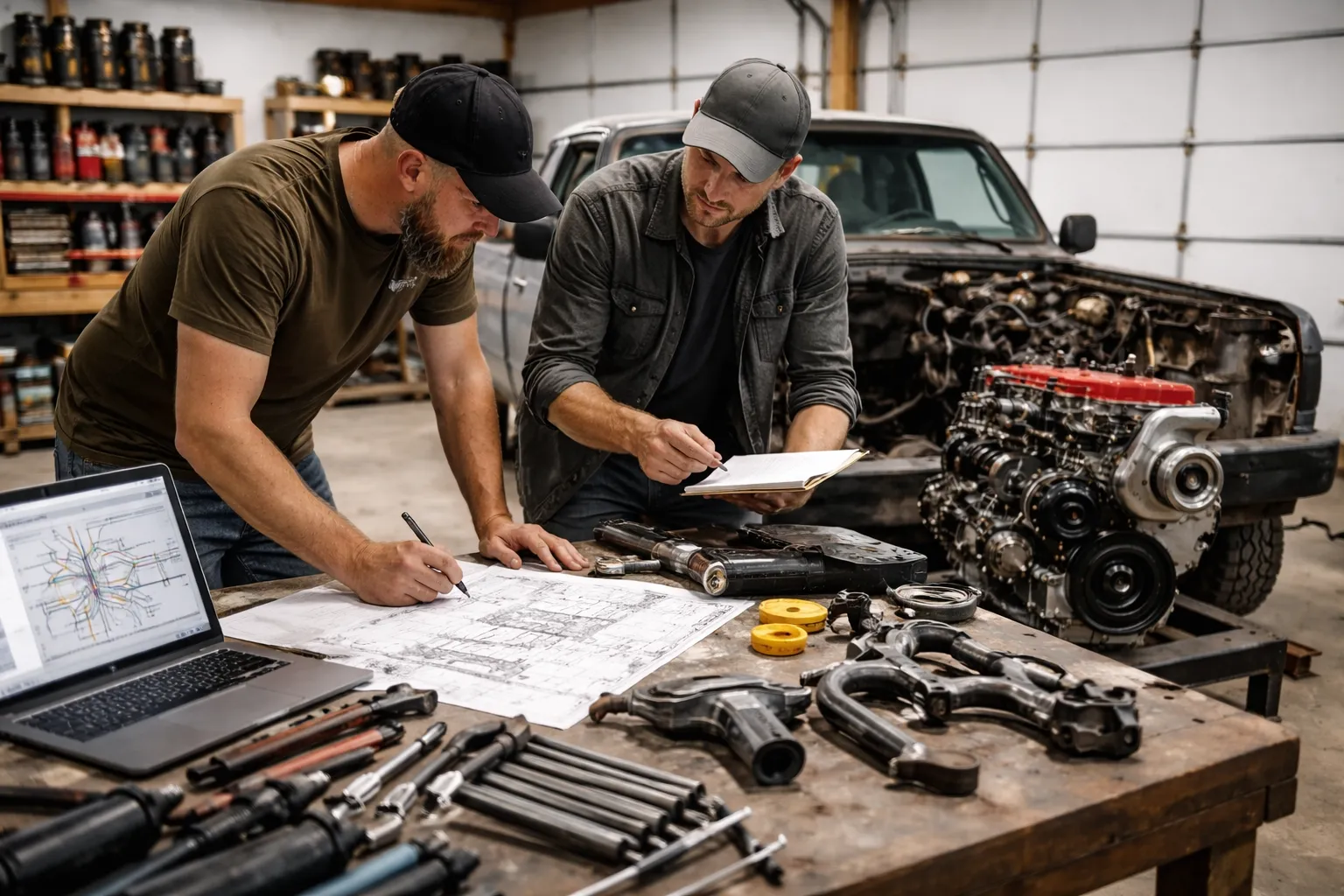

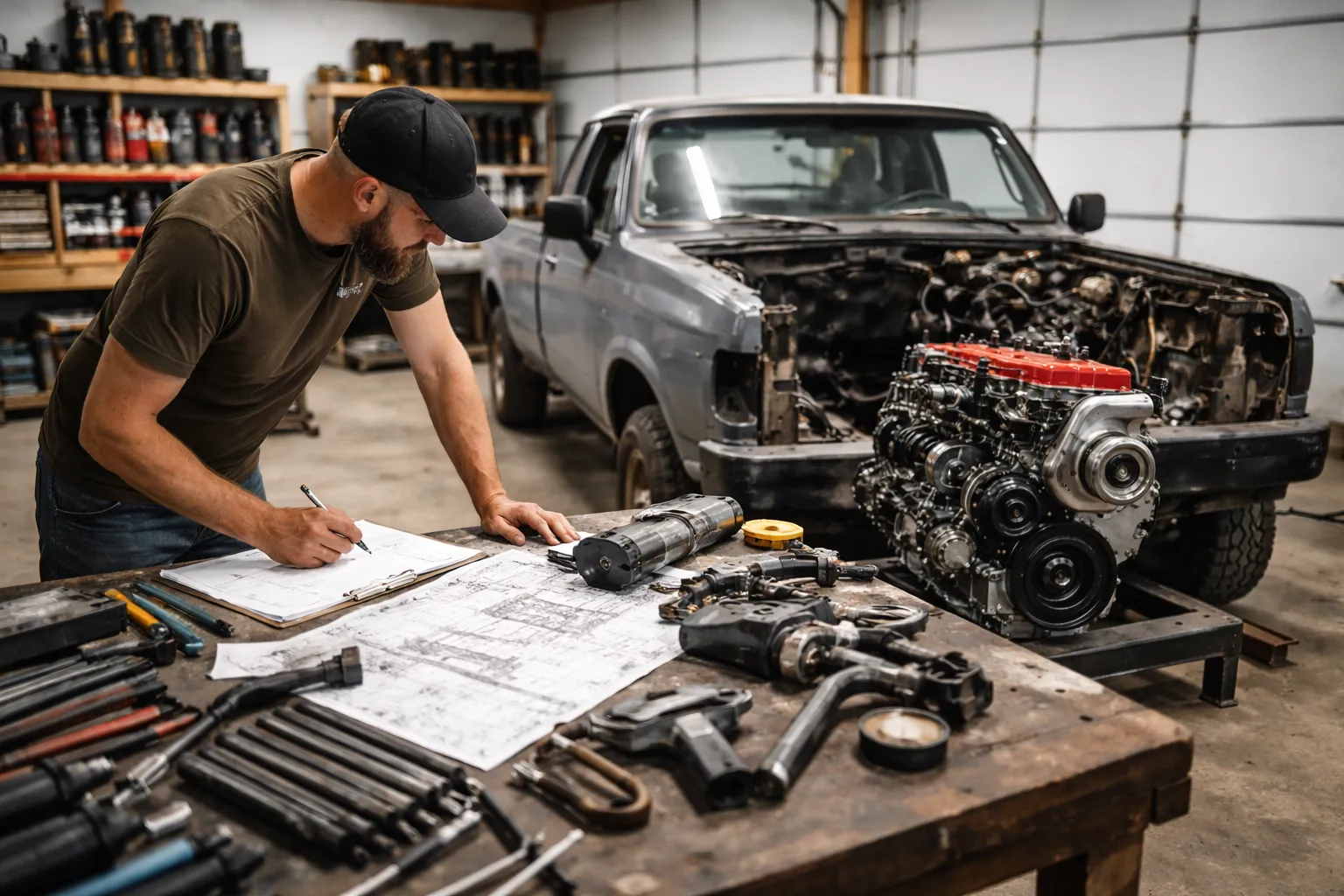
A successful diesel conversion is often judged by the finished truck, the power output, the drivability, and the durability that follows. But many projects do not fail after installation. They fail much earlier, long before the first test drive, and sometimes before the engine is even lowered into place. The most expensive problems usually begin in the planning stage, when owners underestimate the full scope of the work.
A conversion is not just an engine replacement. It is a chain of mechanical decisions that affect mounting, transmission compatibility, cooling, wiring, fuel delivery, instrumentation, and long-term service access. When those parts are treated as separate tasks rather than as one connected system, delays and setbacks follow. That is why project failure often begins with assumptions, not tools.
The first mistake is treating the engine as the whole project
Many owners begin with the engine itself. They focus on the source, condition, mileage, and cost. Those details matter, but the engine is only one piece of a larger equation. A diesel conversion also depends on crossmember placement, adapter solutions, exhaust clearance, driveline alignment, and the ability to support the engine with the right combination of parts.
An engine that looks ideal on paper may not work well in a real chassis without substantial modification. Clearance around the firewall, steering components, suspension, and front accessories can change the entire build plan. If these issues are discovered late, the result is often reworking, custom fabrication, and added downtime.
This is where many projects begin to drift. Once the vehicle is partially disassembled, every overlooked issue becomes more expensive to correct. Good planning reduces that risk by evaluating the complete vehicle, not just the replacement engine.
Budget problems usually come from overlooked systems
A conversion budget often starts with visible costs. People price the engine, major hardware, and labor, then assume the rest will be minor. Supporting systems are often where the budget expands. Cooling upgrades, revised hoses, throttle linkage, transmission adapters, gauges, wiring adjustments, and fuel system changes can add up quickly.
Labor costs also rise when parts do not fit together as expected. A project that requires repeated trial fitting, modified brackets, or revised routing will consume time far beyond the original estimate. Even small oversights can create delays when one unfinished system prevents progress on another.
This is one reason owners often search for Cummins® conversion specialists during the research phase rather than after purchasing parts. The need is not limited to installation. It often begins with avoiding unnecessary expenses by understanding which parts work together, which combinations create problems, and where the budget is most likely to expand.
Fitment errors can ruin otherwise strong builds
Not all project failures are dramatic. Some conversions are completed, start properly, and even drive well in short tests, yet still suffer from avoidable problems. Vibration, overheating, hard-to-service components, poor gauge function, or driveline stress can all appear after the vehicle returns to regular use.
These issues usually trace back to fitment and integration. Engine position affects more than clearance. It can influence transmission angle, driveshaft geometry, fan spacing, and service access. Exhaust routing is not just a matter of getting around obstacles. It can affect heat control, future maintenance, and how comfortably other systems fit around it.
When fitment decisions are rushed, the finished truck may work, but not work well. A project that should deliver durability instead becomes a permanent troubleshooting exercise. That outcome is common when the build is treated as a collection of parts rather than a complete mechanical package.
A good plan protects serviceability later
One of the least-discussed parts of a conversion is maintenance after the build is complete. A truck may run well on day one, but a poor layout can make future service difficult. If common maintenance points are blocked, hose routing is too tight, or electrical components are placed in high-heat areas, the vehicle becomes harder to maintain over time.
That matters because conversions are usually done to extend useful life. Owners often choose this path to keep a trusted truck on the road, reduce dependence on a failing platform, or build something simpler to support for years to come. If the conversion itself creates new service headaches, that long-term advantage weakens.
Careful planning improves serviceability by accounting for access, heat exposure, replacement parts, and maintenance intervals before assembly begins. That type of planning rarely happens by accident. It comes from experience, repeatable processes, and a full understanding of how one change affects the rest of the vehicle.
The strongest builds start with fewer assumptions
The most successful conversions are rarely the ones driven by excitement alone. They are the ones built around preparation. The difference shows up in the early stages, before parts are ordered and before labor starts. Strong projects begin with realistic expectations, chassis-specific research, compatible component choices, and an understanding that the supporting systems matter as much as the engine.
That is why so many failed conversions share the same pattern. The engine choice may be solid, the goal may be practical, and the budget may appear reasonable, yet the project still collapses under poor sequencing and incomplete planning. Mechanical work can solve many problems, but it cannot fully compensate for the wrong assumptions at the start.
In the end, conversion success is determined long before installation day. The trucks that last are usually built from a better process, one that respects fitment, compatibility, serviceability, and the real cost of doing the job correctly.




























Sign in to leave a comment.