
A simple way to see a very big shift
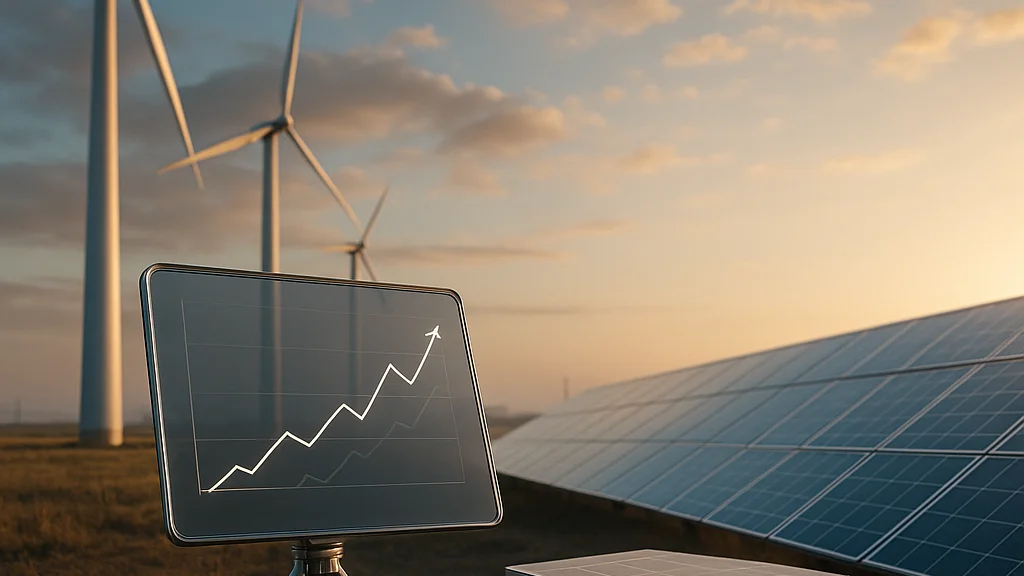
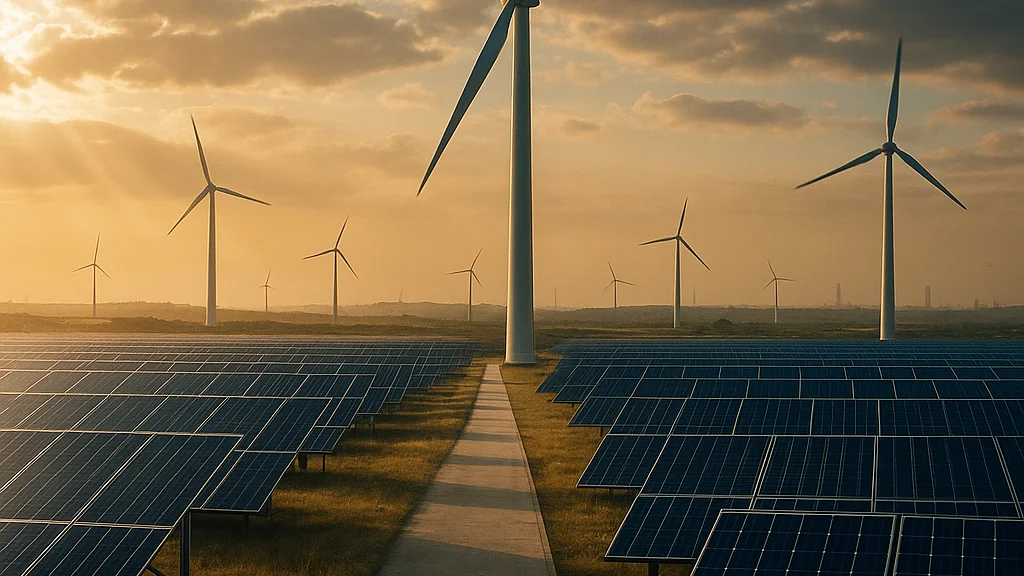
On some afternoons now, whole stretches of electricity demand are being met by sunlight and wind that cost nothing to fuel. That sentence would have sounded optimistic, even dreamy, not very long ago. Yet the global power system has moved with surprising speed. For a beginner, the first thing to understand is that the story is not really about futuristic gadgets. It is about scale. Wind turbines and solar panels have gone from niche technologies to mainstream power plants, and they are being added faster than most people realize.
The easiest place to start is with one distinction that often gets muddled: capacity is not the same thing as generation. Capacity means how much power a wind farm or solar park can produce at maximum output, measured in kilowatts, megawatts, or gigawatts. Generation is the electricity actually produced over time, usually measured in megawatt-hours or terawatt-hours. A solar project may have large capacity but only generate when the sun is available. A wind farm can have strong overnight output but variable production by season. If you keep that difference in mind, the rest of the conversation becomes much less intimidating.
Recent reporting has made the pace of change harder to ignore. According to pv magazine International’s coverage of global power growth in 2025, wind and solar dominated new electricity capacity additions. Recharge also reported that solar overtook wind after unprecedented growth, a milestone that tells you where momentum is strongest. If you want a broader companion read after this primer, WriteUpCafe’s Global Surge in Wind and Solar Energy Capacity Fuels Clean Power Transition offers a useful big-picture snapshot.
Capacity growth is the clearest sign that a technology has moved from experiment to infrastructure.
That is why this topic matters far beyond climate policy circles. Electricity powers homes, data centres, public transit, electric vehicles, heat pumps, factories, and increasingly the industrial systems countries hope to clean up next. If wind and solar are the fastest-growing sources of new power capacity, they shape what electricity costs, where grids need upgrades, which regions attract investment, and how quickly transport can electrify. It sounds technical, but at heart it is a human story about how societies build the next version of everyday life.
How the world got here: from expensive alternatives to default new build
Wind and solar did not arrive at this moment by accident. Their rise has been built over decades of policy support, manufacturing learning curves, engineering improvements, and market reform. Early solar panels were expensive, and early wind turbines were smaller, less efficient, and harder to integrate into power systems. Governments in Germany, Denmark, Spain, China, the United States, and others helped create demand through feed-in tariffs, tax credits, auctions, renewable portfolio standards, and public research support. Those policies were not glamorous, but they were foundational.
Then came the compounding effect that beginners should remember: every time more equipment is produced and installed, industries learn how to do it cheaper and better. Solar module prices fell dramatically over the past two decades as manufacturing expanded, especially in China. Wind turbines grew taller, blades grew longer, and developers became better at siting projects in stronger resource areas. Financing also matured. Banks and pension funds became more comfortable with renewable projects once they saw years of operating data and stable revenue contracts.
The result is that wind and solar are no longer mainly “green alternatives.” In many markets, they are now among the cheapest sources of new electricity. That does not mean they are simple to deploy everywhere. Land access, permitting delays, transmission bottlenecks, local opposition, and supply chain stress can all slow projects. Still, the economics changed the conversation. Instead of asking whether countries should build wind and solar, planners increasingly ask how fast they can add them without overloading grids or starving projects of interconnection access.
China has been especially important in this transition, both as a manufacturer and as a builder. Reporting from China Daily on growing green energy capacity highlighted solar’s central role in the country’s expansion. Europe, meanwhile, accelerated renewable deployment after the energy price shock that followed Russia’s invasion of Ukraine, treating domestic wind and solar as tools for both decarbonization and energy security. The United States added another push through incentives in the Inflation Reduction Act era, though implementation has been uneven across states and grid regions.
For a beginner, the key historical lesson is gentle but important: capacity growth looks sudden only at the end of a long build-up. By the time headlines announce a surge, the manufacturing, policy, and finance machinery has usually been turning for years.
What “capacity growth” actually means in practice
When analysts say wind and solar capacity is growing worldwide, they are usually talking about annual additions of new generating equipment. That includes utility-scale solar farms, rooftop solar systems, onshore wind projects, and offshore wind farms. It can also include hybrid projects, such as solar paired with battery storage. Capacity growth matters because it expands the ceiling of what clean electricity systems can produce, even if actual output depends on weather, time of day, and grid conditions.
Here is the beginner’s mental model that helps most. Imagine a city adding buses to its transit fleet. That increases transport capacity, even if not every bus runs full all day. Electricity works similarly. More solar panels and turbines mean more potential supply. Whether that supply turns into delivered electricity depends on sunlight, wind speeds, curtailment, transmission availability, and demand patterns.
Three terms come up again and again:
- Installed capacity: the total nameplate power rating of equipment connected to the grid.
- Capacity factor: the share of time a plant effectively produces relative to its maximum possible output.
- Generation: the actual electricity produced over a period, typically a month or year.
Solar usually has a lower capacity factor than wind because it only generates in daylight and output varies with season and cloud cover. Offshore wind often has a higher capacity factor than onshore wind because winds are stronger and more consistent at sea. That is why one gigawatt of solar does not produce the same annual electricity as one gigawatt of offshore wind. Beginners often hear giant capacity numbers and assume they translate directly into equivalent power output. They do not. Capacity is the headline figure; generation is the lived result.
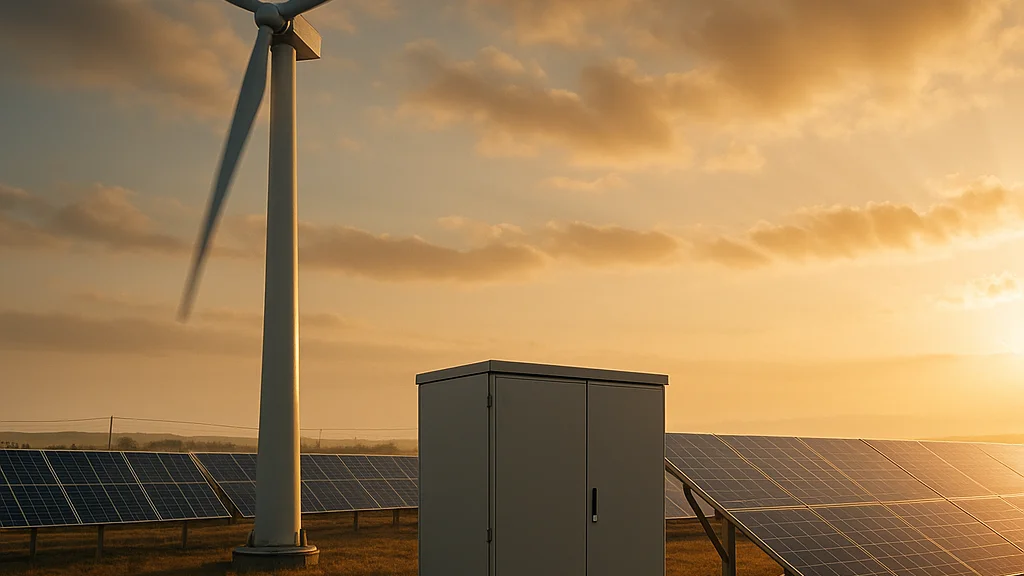
Another practical point is that not all capacity additions are equally easy to absorb. A region with strong midday solar output may still need transmission lines to move power to cities, batteries to shift energy into the evening, flexible demand to soak up cheap electricity, or gas and hydro plants to cover weather-driven gaps. That does not weaken the case for renewables. It simply means capacity growth is only one layer of the transition.
Adding wind and solar is not just about building turbines and panels. It is about building the grid, storage, market rules, and flexibility that let those assets do their best work.
If you want a more targeted follow-up on the mechanics of faster deployment, WriteUpCafe’s Expert Tips to Accelerate Wind and Solar Capacity Growth is a useful next step after mastering the basics.
The numbers behind the boom
Now to the part many readers really want: how big is this growth? The broad answer is very big, with solar leading the charge and wind still expanding, though more unevenly. According to Reuters-cited industry data and multiple sector reports through 2025 and into 2026, solar has become the single largest source of new power capacity additions globally. The pv magazine International report on 2025 additions described wind and solar as taking over global power growth, while Recharge emphasized solar’s outperformance relative to wind after exceptionally strong expansion.
One reason this matters is that annual additions tell you where investment confidence sits. Developers build what they believe they can finance, permit, connect, and sell into markets. Solar has had advantages on several of those fronts. It is modular, quick to install, and increasingly cheap. A utility can build a very large solar park, but households and businesses can also add rooftop systems. Wind remains critical, especially where land, resource quality, and policy support are strong, but it has faced more friction in some markets from permitting delays, local resistance, and higher project complexity.
Politifact, in an April 2026 fact-check discussing the role of wind and solar in global energy, made a useful distinction for beginners: while wind and solar still represent a smaller share of total global energy than many people assume, they are a rapidly growing share of electricity additions and are increasingly visible in power systems. You can read that context in Politifact’s analysis. That distinction matters because “energy” includes transport fuels, industrial heat, and other sectors that are harder to decarbonize than electricity.
Several patterns stand out in the data:
- Solar is scaling fastest. Utility-scale projects and distributed rooftop installations are both contributing.
- China remains the largest growth engine. Its manufacturing base and domestic build-out shape global totals.
- Wind growth is still substantial but less smooth. Offshore wind faces cost and supply chain pressures, while onshore wind depends heavily on permitting and local acceptance.
- Emerging markets are becoming more important. India, parts of Latin America, the Middle East, and Southeast Asia are adding significant renewable capacity.
- Storage is beginning to matter more in the headline numbers. Batteries are not generation, but they improve the value of solar and wind capacity by shifting output and reducing curtailment.
Canada offers an instructive example of how strong resources do not automatically become fast deployment. CBC reported on a major renewables assessment arguing that wind and solar are central to the future of electricity, while also noting that Canada has been lagging behind peers in some respects. As a Calgarian, I read that with mixed feelings. We have extraordinary wind and solar potential in parts of the country, especially in Alberta and Saskatchewan, yet policy uncertainty and grid planning choices can still slow what should be a very practical build-out.
For beginners, the most useful takeaway is this: the boom is real, but it is uneven. Growth is not a tidy upward line. It is a rush of additions in some places, pauses in others, and a constant race between cheap technology and slower-moving infrastructure.
Why solar is pulling ahead, and where wind still shines
Solar’s recent edge over wind does not mean wind is fading. It means the two technologies have different strengths, and today’s market conditions happen to favor solar in many regions. Solar projects can often be developed more quickly. Modules are standardized. Installation can be highly repeatable. Systems can be built at many scales, from a home rooftop to a desert installation large enough to power a city. That flexibility matters when countries are trying to add capacity fast.
Cost is another factor. Solar’s manufacturing ecosystem has become vast, though not without controversy over trade disputes, supply chain concentration, and margins so thin they can destabilize producers. Even with those issues, buyers have benefited from low module prices. For utilities and businesses under pressure to secure new electricity supply, solar is often the fastest shovel-ready option.
Wind, though, brings something precious: it often generates at different times than solar. In many regions, wind output is stronger overnight or in winter, when solar is weaker. Offshore wind in particular can provide high-capacity-factor generation near coastal demand centres, although recent years have shown how vulnerable the sector can be to inflation, financing costs, and turbine supply chain stress. Several high-profile offshore projects have been renegotiated or repriced because contracts signed in a lower-cost era no longer pencilled out.
A beginner-friendly comparison looks like this:
- Solar advantages: faster deployment, modularity, lower upfront complexity, strong cost declines, rooftop potential.
- Solar challenges: midday concentration, lower winter output in some regions, land use questions for large projects, need for storage or flexible demand.
- Wind advantages: stronger nighttime and seasonal complementarity, higher output per unit in good resource areas, valuable winter generation in some markets.
- Wind challenges: permitting friction, visual and wildlife concerns, more complex construction, offshore cost inflation.
The healthiest electricity systems increasingly use both. Solar can flood the grid with cheap midday power. Wind can carry more of the load after sunset or during colder months. Add hydro where available, batteries for short-duration balancing, demand response, interregional transmission, and some dispatchable backup, and you start to see why planners talk less about one perfect technology and more about portfolios.
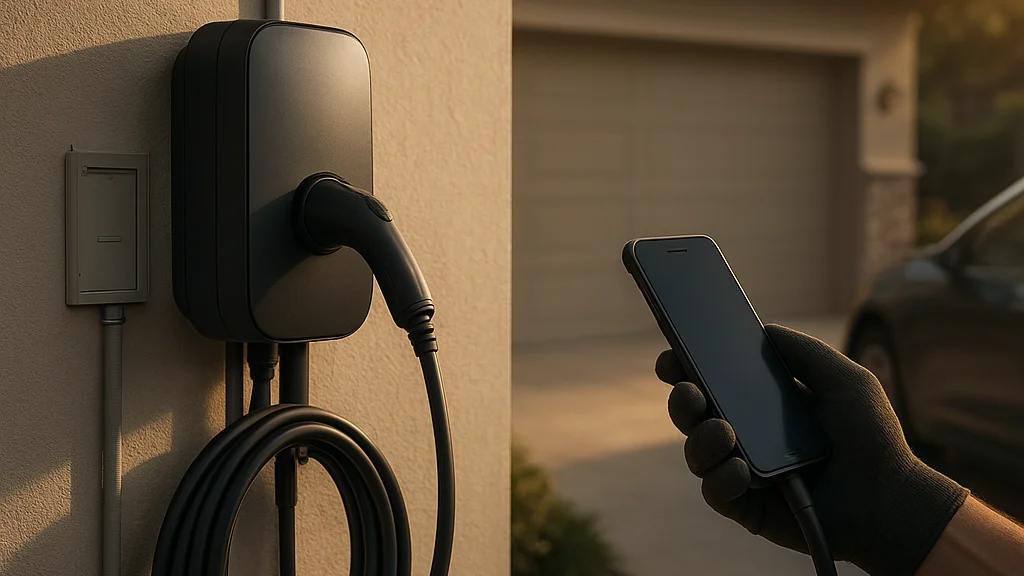
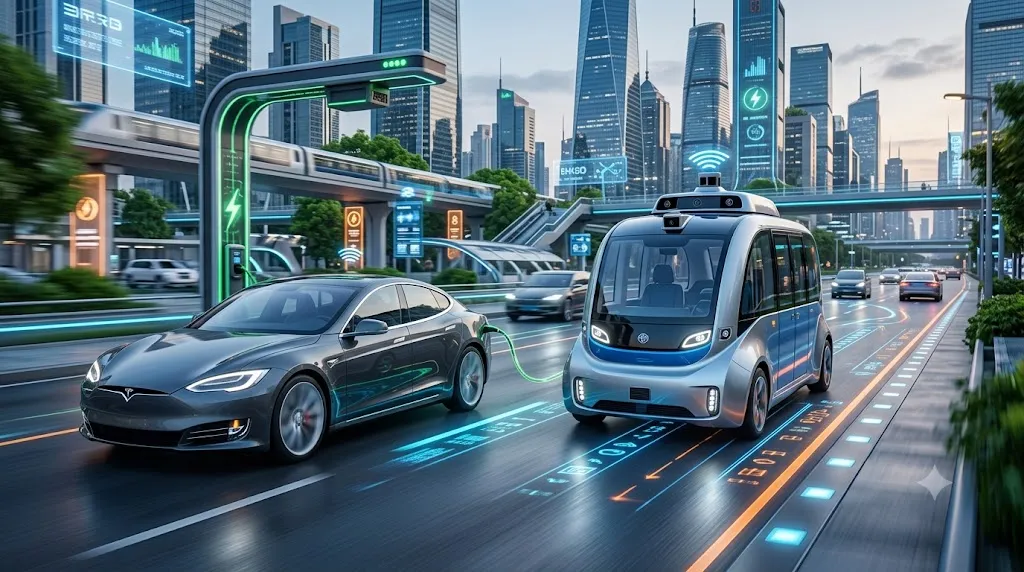
That portfolio thinking is especially relevant for electric vehicles. As EV adoption rises, the value of cheap daytime solar and smart charging grows too. Fleets, workplaces, and homes can shift charging to periods when renewable output is abundant. Clean power and clean transport are not separate stories anymore. They are becoming one system.
What changed recently in 2026
The 2026 conversation feels more mature than the one even two or three years ago. The old argument about whether wind and solar are “real” power sources has largely given way to more grounded questions: how fast can grids be expanded, where will storage be added, which markets can manage curtailment, and how should policymakers balance industrial strategy with affordability? That is progress. It means the technologies are being treated as infrastructure, not novelty.
Several developments stand out this year. First, the evidence that solar has become the dominant source of new power capacity is now difficult to dismiss. Industry reporting from pv magazine International and Recharge has reinforced that shift with concrete market tracking. Second, countries are paying closer attention to domestic manufacturing and supply chains. The pandemic years, trade tensions, and geopolitical risk all left a mark. Governments want clean energy growth, but many also want local factories, secure mineral supply, and less dependence on a single manufacturing hub.
Third, the bottleneck has moved. In many places the challenge is no longer technology cost; it is interconnection queues, transmission delays, and planning rules built for a slower, more centralized power system. Projects can sit in line for years waiting for grid access studies or network upgrades. That is one reason storage and hybrid plants are attracting more interest: developers are trying to squeeze more usable value from limited grid connections.
Canada’s debate in 2026 captures this tension beautifully and a little painfully. The resource quality is there. Investor interest often appears when policy is stable. Yet uncertainty over regulation, market design, and transmission planning can cool momentum quickly. CBC’s reporting on renewables and Canada’s slower pace compared with leading markets has resonated because it reflects a wider truth: countries do not win this race just by having wind and sunshine. They win by making projects buildable.
Meanwhile, China continues to set the tempo of global additions, and that matters for everyone else. When China scales manufacturing or deployment, prices, supply availability, and global totals all move. Europe is still pressing ahead, though with sharper concern about industrial competitiveness. The United States remains a giant market, but policy durability and tariff structures are under close watch from developers and manufacturers alike.
If you want a more current, tightly focused companion piece, WriteUpCafe’s Wind and Solar Energy Capacity Growth Worldwide in 2026 gives a timely update on the latest momentum.
The obstacles beginners should not ignore
There is a tender kind of honesty needed here. Clean energy growth is real, but it is not frictionless, and pretending otherwise helps no one. The biggest misconception beginners often absorb is that once wind and solar become cheap, the transition more or less takes care of itself. In practice, the hard work moves elsewhere.
Transmission is the first obstacle. The best wind and solar resources are often far from cities and industrial demand. New lines can take a decade or more to permit and build. Local opposition can be fierce, and cost allocation fights are common. Without transmission, capacity growth can lead to curtailment, where renewable electricity is available but cannot be delivered.
Permitting is another hurdle. Wind projects in particular can face lengthy reviews over visual impact, noise, aviation issues, Indigenous rights, wildlife concerns, and land-use disputes. Those concerns should not be brushed aside. Communities deserve a meaningful voice. But systems also need clearer timelines and fairer processes, because indefinite delay is its own kind of policy choice.
Then there is the matter of system balance. A power grid with lots of solar may experience very low midday prices and steep evening ramps. A grid with large wind swings may need reserves and flexible generation. Batteries help, and their growth has been remarkable, but long-duration storage and expanded transmission are still needed in many regions. Gas plants, hydro reservoirs, demand response, and interconnections continue to play important roles during the transition.
Here are the constraints most often shaping real-world growth:
- Grid connection queues that keep ready projects waiting.
- Transmission shortages that trap cheap power far from demand.
- Policy instability that raises financing costs.
- Supply chain concentration that creates geopolitical and commercial risk.
- Community acceptance challenges that can delay or halt projects.
- Need for flexibility through storage, demand response, and smarter market design.
None of this cancels the progress. It simply explains why headlines about record additions can coexist with stories about rising curtailment, congested grids, or stalled offshore wind contracts. The transition is not a straight road. It is more like a long northern drive after fresh snow: beautiful, promising, and much safer when you respect the conditions.
What to watch next, especially if you care about clean transport
For readers in the Electric Vehicles & Clean Energy space, the next phase of wind and solar growth is about integration. Capacity additions will remain important, but the deeper question is how renewable electricity reshapes transport, buildings, and industry. EVs are a perfect example. As more drivers plug in, they add demand to the grid, but they also add flexibility. Smart charging can steer electricity use toward hours of high renewable output. Commercial fleets can become especially valuable here because charging schedules are easier to manage than millions of individual household decisions.
Watch for five trends over the next few years. First, solar-plus-storage will keep expanding because it turns cheap midday generation into more useful evening power. Second, grids will increasingly reward flexibility, whether through dynamic pricing, demand response, or capacity markets that value reliability services. Third, industrial policy will matter more. Countries are no longer competing only on deployment; they are competing on who makes modules, inverters, turbines, cables, batteries, and transformers. Fourth, permitting reform will become a decisive battleground. And fifth, electricity demand growth from data centres, cooling, electrified heating, and EVs will make renewable expansion feel less optional and more like basic economic planning.
Beginners sometimes ask whether the world can really build enough wind and solar to meet rising demand while also replacing fossil generation. The honest answer is that it depends less on physics than on institutions. The technologies exist. Capital exists. Resource potential is abundant. What often lags are planning systems, public consent processes, workforce development, and grid investment.
Still, there is plenty of reason for grounded optimism. Wind and solar have already moved from the margins to the centre of new power investment. That shift changes what is imaginable. A decade ago, many countries were still debating whether these technologies could matter at scale. Now the debate is about how to manage abundance, variability, and speed. That is a much better problem to have.
If you are just beginning to follow this field, keep your eye on a few reliable indicators: annual capacity additions, renewable share of electricity generation, battery deployment, interconnection queue reforms, and transmission approvals. Those tell you more about the future than any single political speech. And if the numbers feel overwhelming, take them one layer at a time. Capacity. Generation. Flexibility. Infrastructure. Once those pieces settle into place, the global story becomes much easier to read.
Wind and solar growth worldwide is not a miracle, and it is not hype. It is the result of policy, engineering, manufacturing, finance, and public pressure meeting real economic opportunity. For beginners, that is the most comforting truth of all: big change is often built from many ordinary decisions, repeated patiently. Make a tea, keep asking good questions, and be gentle with yourself while you learn. The grid is changing quickly, but you do not have to understand it all in one sitting.





























Sign in to leave a comment.