
Harnessing the Winds of Change: A Snapshot of Global Clean Energy Expansion
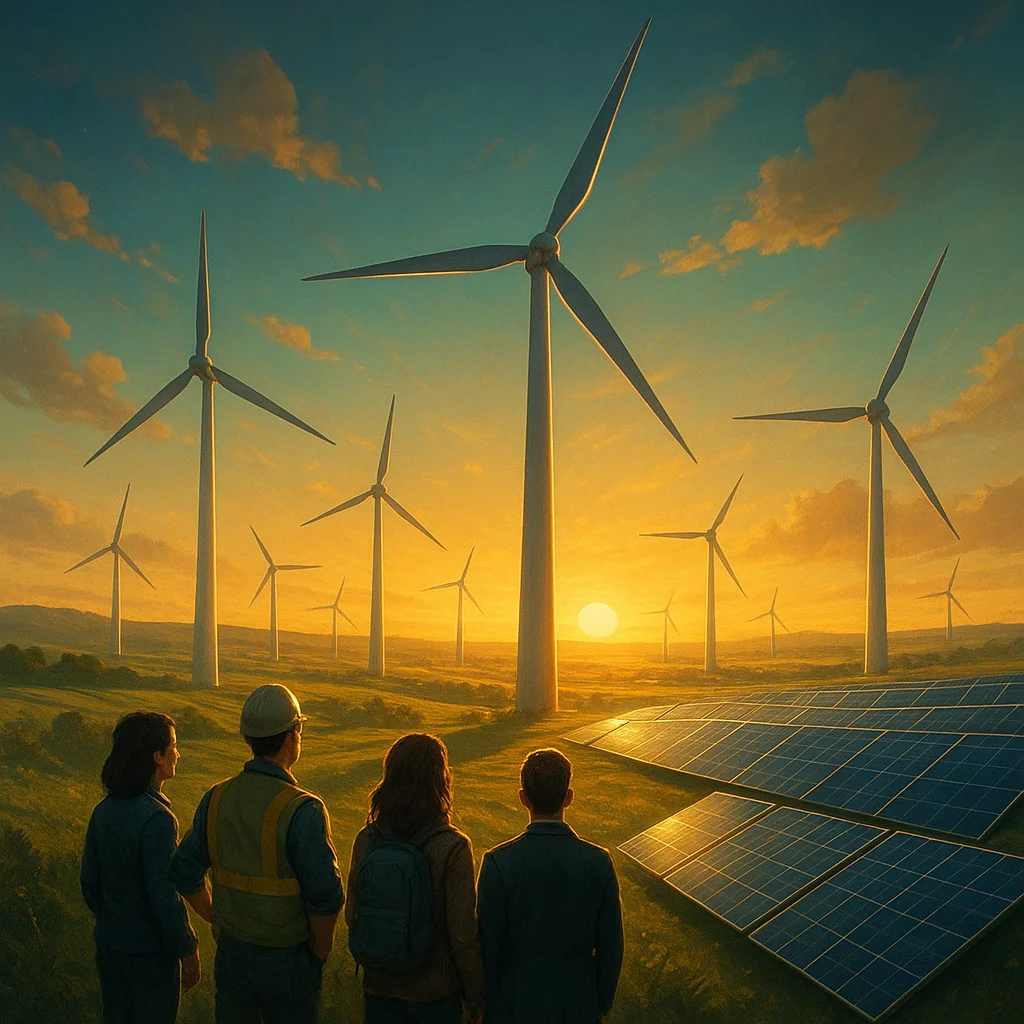
On a bright morning in early 2026, a vast solar farm in Saudi Arabia’s Al Jouf region hums quietly, its thousands of photovoltaic panels capturing the relentless desert sun. Nearby, towering wind turbines spin steadily, their blades slicing the desert air with a soft whir. This scene is no longer exceptional but symbolic of a worldwide surge in renewable energy capacity. The rapid growth of wind and solar power installations is reshaping the global energy map, marking an inflection point in how societies generate electricity. These sources, once niche and expensive, now drive the lion’s share of new power capacity additions worldwide.
According to pv magazine International, solar energy led global capacity additions in 2025, while wind energy growth accelerated significantly, signaling a robust momentum toward decarbonization. This growth is not solely about volume; it reflects technological advances, policy shifts, and evolving market dynamics that promise to redefine energy systems in the coming decades. Particularly for regions like the Middle East, where sunlight is abundant and wind corridors untapped, this transformation offers opportunities aligned with strategic visions such as Saudi Vision 2030.
“Solar and wind energy are shielding the world from the worst impacts of geopolitical crises, offering stability and sustainability,” noted an analyst in The Independent.
From Roots to Rise: Historical Context of Wind and Solar Capacity Growth
The journey of wind and solar energy from experimental prototypes to mainstream power sources spans several decades. Solar photovoltaic (PV) technology began attracting commercial interest in the 1970s, while wind turbines emerged in the 1980s as viable alternatives to fossil fuels. However, early adoption was limited by high costs, low efficiency, and infrastructural challenges, confining them to niche applications and off-grid use.
The early 2000s marked a turning point. Declining costs driven by mass manufacturing, especially in China, coupled with international climate commitments, fueled larger deployments. Governments worldwide introduced incentives, feed-in tariffs, and renewable portfolio standards that accelerated adoption. By the 2010s, solar panels and wind turbines became increasingly cost-competitive against coal and gas. The International Renewable Energy Agency (IRENA) reports that between 2010 and 2020, global solar capacity grew nearly 20-fold, while wind capacity more than quadrupled.
Saudi Arabia’s own renewable journey began modestly but gained impetus following Vision 2030’s launch in 2016, which emphasized sustainability and energy diversification. Aramco began investing in renewables, while several large-scale solar parks such as the Sakaka PV plant provided proof of concept for the region’s renewable potential. The Middle East’s unique resources—high solar insolation and favorable wind corridors—set it apart as a future renewable powerhouse.
Capacity Growth in Numbers: A Data-Driven Analysis
As of early 2026, wind and solar energy capacity globally have surpassed remarkable milestones. The US Energy Information Administration (EIA) projects that new solar and wind installations, bolstered by storage solutions, will exceed new fossil fuel capacity by a significant margin this year. The combined installed capacity of wind and solar across the globe is now estimated to be over 2,000 gigawatts (GW), representing nearly 15% of global electricity generation capacity.
- Solar power accounts for approximately 1,200 GW, with utility-scale solar farms leading the expansion.
- Wind energy contributes around 850 GW, split almost evenly between onshore and offshore installations.
- Energy storage capacity linked to these renewables has grown over 100 GW, providing critical grid stability.
China remains the dominant player, contributing over 40% of new global solar capacity and nearly a third of wind capacity additions last year. The European Union has also accelerated offshore wind development, with countries like Germany, the Netherlands, and Denmark expanding their fleets. In the United States, solar capacity growth is buoyed by both residential rooftop systems and large-scale solar parks, supported by federal tax incentives.
Meanwhile, the Middle East, led by Saudi Arabia and the United Arab Emirates, is rapidly scaling up its renewable portfolio. The Kingdom’s ambitions include reaching over 100 GW of renewable capacity by 2030, with a large share from solar and wind. Projects like the Dumat Al Jandal wind farm, the largest in the region, exemplify this effort.
“The rapid cost decline in solar modules and wind turbines, combined with advancements in battery storage, is enabling renewables to meet 99% of new electricity demand globally,” explained analysts in RenewEconomy.
2026: Current Developments Accelerating the Clean Energy Surge
As we move through 2026, several key developments highlight the evolving landscape of wind and solar capacity growth. Technological breakthroughs in photovoltaic efficiency and turbine design have pushed performance metrics higher, while economies of scale continue to drive costs downward. Notably, bifacial solar panels and floating offshore wind farms are gaining traction, unlocking new potential in diverse geographies.
Storage integration has become a game changer. Lithium-ion battery costs have dropped significantly, enabling solar and wind farms to deliver power beyond daylight hours and calm winds. This trend is visible in projects worldwide, including Saudi Arabia’s NEOM city plans, which integrate renewables with large-scale storage and smart grid technologies.
Policy frameworks have also evolved. Many countries have moved beyond simple capacity targets toward comprehensive decarbonization strategies that incorporate grid modernization and demand-side management. The Gulf Cooperation Council (GCC) countries, for instance, are collaborating on regional renewable energy grids that increase resilience and optimize resource sharing.
- International financing for renewables has surged, with green bonds and climate funds channeling billions into new projects.
- Corporate procurement of renewable energy is rising, with global companies pledging 100% renewable power in their operations.
- Hybrid projects combining wind, solar, and storage are becoming standard to maximize generation and reliability.
These developments are not only expanding capacity but also enhancing the quality and reliability of clean energy, ensuring that it can meet rising electricity demands and support electrification trends such as electric vehicles, which are also advancing rapidly—explore more on WriteUpCafe’s electric vehicle charging infrastructure analysis.
Industry Impact and Expert Insight
Industry leaders and energy experts recognize the transformative impact of wind and solar capacity growth. Fatih Birol, Executive Director of the International Energy Agency, has described this era as the “renewable revolution,” emphasizing that the pace and scale of clean energy deployment exceed even the most optimistic projections from a decade ago.
In the Middle East, traditional energy giants like Saudi Aramco are increasingly integrating renewables into their portfolios while leveraging their capital and expertise to lead energy transition efforts. This strategic shift aligns with Saudi Vision 2030’s goals, reflecting an understanding that future energy security depends on diversification and sustainability.
“Renewables are no longer just an alternative; they are the backbone of the future energy system,” said a senior Saudi energy official in a recent conference.
Investors are also recalibrating. The risk profile of fossil fuel projects is rising amid tightening global climate commitments and market volatility. In contrast, renewable energy investments offer attractive returns coupled with social and environmental benefits. This shift is evident from the surge in green financing instruments and growing interest from sovereign wealth funds in renewable projects.
Another significant impact lies in job creation and economic diversification. Renewable energy sectors are labor-intensive in construction and manufacturing, creating millions of jobs globally and supporting industrial development. Countries in the Middle East and North Africa are positioning themselves as manufacturing hubs for solar panels and wind turbines, leveraging their strategic location and industrial ambitions.
Looking Ahead: What the Future Holds for Wind and Solar Capacity
Looking forward, the trajectory of wind and solar energy capacity growth appears robust but not without challenges. Grid integration, land use concerns, and supply chain bottlenecks require continuous innovation and policy support. However, the outlook is optimistic, especially with ongoing advances in artificial intelligence and digital grid management that enhance forecasting and operational efficiency.
Key trends to watch include:
- Expansion of offshore wind: Deep-water floating wind farms could unlock vast untapped resources far from coastlines.
- Hybrid renewable hubs: Combining solar, wind, storage, and green hydrogen production to create fully integrated clean energy ecosystems.
- Energy equity initiatives: Ensuring that renewable growth benefits underserved communities and supports global energy access goals.
For the Middle East, these developments resonate strongly with national ambitions to become global clean energy leaders. Saudi Arabia’s upcoming projects are expected to feature cutting-edge technologies and regional grid interconnections, setting new benchmarks.
Inshallah, the continuous growth of wind and solar capacity worldwide will not only reduce carbon emissions but also foster resilient, diversified economies that can sustain prosperity amid global uncertainties. For those interested in broader sustainability themes, you might enjoy exploring innovative applications of AI in industry on WriteUpCafe.






























Sign in to leave a comment.