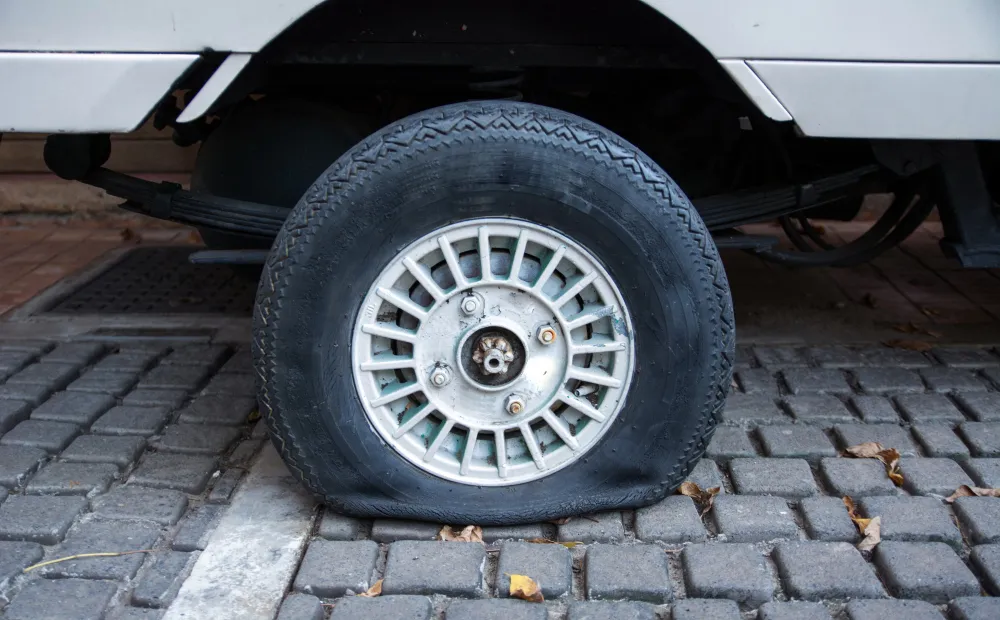

You fix a flat. A week later, same tire goes flat again. You fix it again. Then it happens on a different tire. At some point, it stops feeling like bad luck and starts feeling like something is actually wrong.
Most drivers in Whitby deal with this more than they should. The problem is rarely just a nail in the road. Repeated flat tires almost always point to something deeper that keeps getting ignored. You can’t always find yourself at a tire shop Whitby.
Here is what is actually causing it and what you can do about it.
The Most Common Reasons Flat Tires Keep Happening
Your stress around flat tire can have many reasons. Here are some of them:
1. Your Tires Are Already Too Worn
Worn tires are thin tires. Thin tires puncture easily. If your tread depth is below 2/32 of an inch, even a small piece of debris can cause a flat.
Many drivers patch a flat on a tire that should have been replaced months ago. The patch holds for a while, then something else gets through. The cycle continues.
Check your tread depth regularly. If the wear indicators are flush with the tread surface, the tire needs replacing, not repairing.
2. Wrong Tire Pressure Is Making Things Worse
Both overinflation and underinflation damage tires over time.
- Underinflated tires flex too much while driving. That extra movement builds heat inside the tire and weakens the structure.
- Overinflated tires become rigid and more vulnerable to impact damage from potholes or curbs.
Whitby roads, especially after winter, are not smooth. Driving on incorrectly inflated tires on rough roads accelerates damage significantly. Check your pressure at least once a month and always after a big temperature drop.
3. Valve Stems Are Easy to Overlook
The valve stem is that small rubber or metal piece where you add air. It is small, but it causes a surprising number of slow leaks.
Rubber valve stems crack with age and exposure to heat and cold. Metal ones can corrode. A damaged valve stem lets air escape slowly, which means you keep topping up the tire without fixing the actual problem.
Next time you get a flat repaired, ask them to inspect the valve stem too. It is a quick check that most people skip.
4. Bead Leaks Go Unnoticed for a Long Time
The bead is where the tire sits against the wheel rim. If that seal is not tight, air leaks out gradually.
Bead leaks usually happen because of:
- Corrosion on the rim surface
- A bent or damaged rim
- Improper mounting during a previous tire change
This type of leak is slow and sneaky. Your tire goes flat overnight but looks fine by morning after you add air. If this sounds familiar, get the bead and rim inspected properly.
5. Road Hazards in Specific Areas
Some streets in Whitby have construction zones, gravel patches, and debris that make punctures more likely. If you regularly drive the same routes and keep getting flats, pay attention to where it happens.
Sharp gravel, metal scraps near construction sites, and broken glass in parking lots are common culprits. Knowing your problem zones helps you avoid them or at least drive through more carefully.
What Whitby Drivers Should Do Differently
Most people treat flat tires as a one-time inconvenience. The ones who stop having repeated flats treat it as a pattern worth investigating.
Here is a simple approach that works:
- After every flat, ask why it happened. Nail, screw, valve, bead, or worn tread? Each answer points to a different fix.
- Do not just patch and move on. If the tire is old or worn, replace it. A patch on a weak tire is a temporary fix at best.
- Get your rims inspected if you hit a pothole hard. Bent rims cause bead leaks that look like mysterious slow flats.
- Replace valve stems when you replace tires. They are cheap and often forgotten.
When you search for a tire repair near me, choose a shop that actually diagnoses the cause instead of just plugging the hole and sending you off.
When to Stop Repairing and Start Replacing
Not every flat tire deserves a repair. A puncture in the sidewall cannot be safely fixed. A tire with multiple previous repairs in the same area is a risk. A tire with less than 2/32 tread depth should be replaced outright.
If you are in Whitby and unsure whether your tire is worth repairing, visit a tire shop Whitby locals actually trust, one that will give you an honest answer instead of just taking your money for a patch.
And if you ever find yourself stranded and searching for a tire change near me in a hurry, save a reliable local shop in your contacts now before that moment comes. Being prepared costs nothing.





























Sign in to leave a comment.