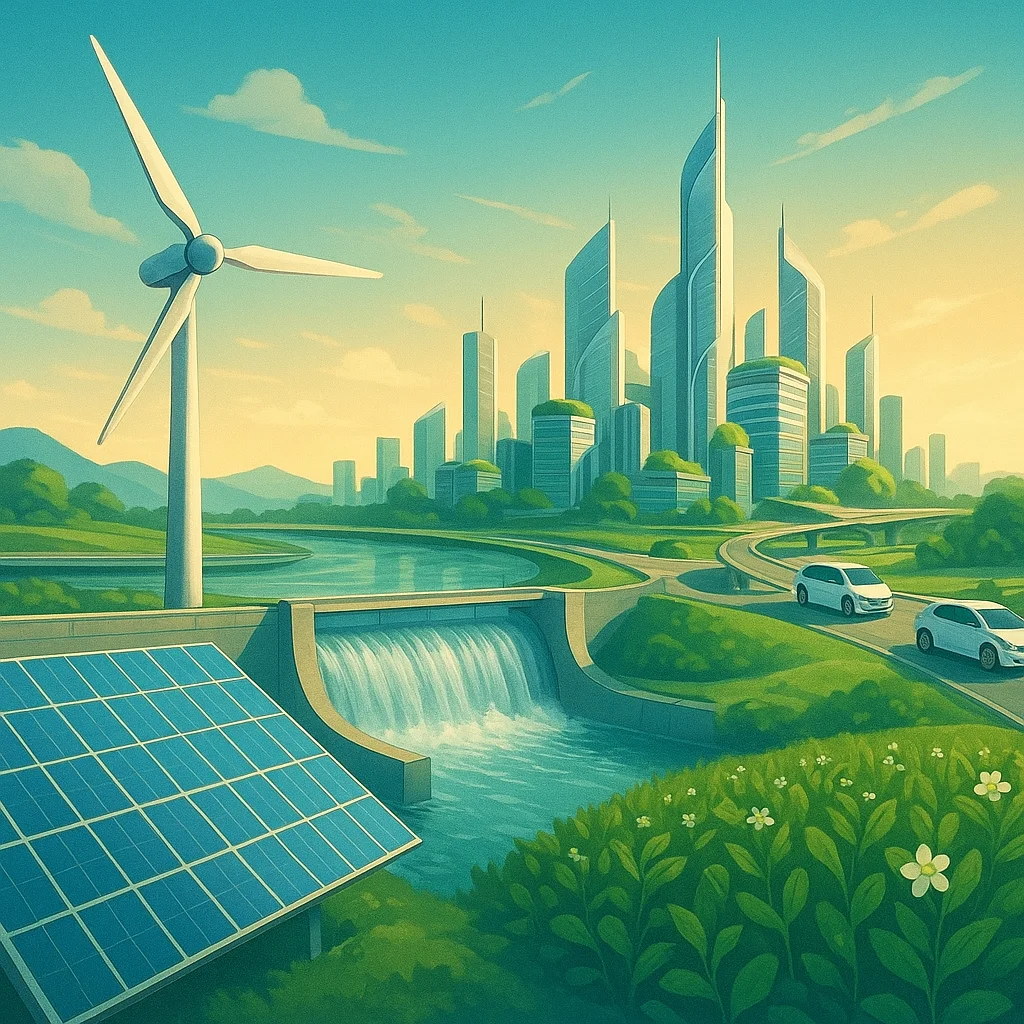

Renewable Energy Investment Landscape: Opening Horizons in 2026
As the world confronts the urgent need to transition away from fossil fuels, 2026 stands out as a pivotal year for renewable energy investments. Globally, capital flows into clean energy projects have surged, propelled by technology advances, favourable policies, and growing corporate commitments to carbon neutrality. In the Middle East, this momentum aligns with strategic visions like Saudi Vision 2030, which emphasize diversification and sustainability. Investors now face a broad spectrum of opportunities that promise both financial returns and significant environmental impact.
Among these, solar and wind remain the backbone of global renewable capacity expansion, but emerging sectors such as green hydrogen, energy storage, and electric vehicle infrastructure are rapidly gaining ground. According to Forbes, the renewable sector saw a record $1.2 trillion investment in 2025 alone, signaling robust confidence from institutional and private investors alike.
"Renewable energy investments are not just about environmental responsibility but have become a cornerstone of economic strategy worldwide," notes leading clean energy analyst Dr. Amal Al-Harthy.
Understanding the nuances behind these trends helps investors identify where to focus their capital for maximum impact and growth. This comprehensive guide explores the top 10 renewable energy investment opportunities of 2026, dissecting their current status, growth drivers, and regional relevance.
Historical Context: From Oil Reliance to Clean Energy Ambitions
The trajectory towards renewable energy investment has been shaped by decades of environmental concerns and economic shifts. The early 2000s saw solar and wind technologies emerge from niche markets into mainstream energy portfolios. Initially hampered by high costs and limited infrastructure, their rapid cost reductions, driven by innovations and economies of scale, transformed the sector.
In the Middle East, traditional oil wealth funded early experiments in renewables, but only recently have these efforts scaled significantly. Saudi Arabia’s landmark announcement in 2021 to invest over $150 billion in renewable projects and green hydrogen plants marked a turning point. Aramco, the kingdom’s oil giant, also began diversifying its portfolio, investing in carbon capture and sustainable fuels.
This shift is not isolated; globally, the Paris Agreement and subsequent net-zero commitments have accelerated clean energy deployment. However, regulatory uncertainty and supply chain disruptions—exacerbated by geopolitical tensions—have sometimes slowed progress. Still, 2026 benefits from improved policy clarity and technology readiness, especially in energy storage and grid integration.
"The energy investment landscape is transforming from fossil dependency to an integrated clean system, with renewables at the core," explains energy strategist Youssef Al-Mansour.
These historical pillars set the stage for the current investment climate, where opportunities diversify beyond traditional solar and wind.
Core Analysis: The Top 10 Renewable Energy Investment Opportunities
Evaluating investment potential requires examining market size, technology maturity, policy support, and scalability. Here are the top 10 sectors attracting capital in 2026:
- Utility-Scale Solar Photovoltaics (PV): Still the dominant renewable power source, utility-scale solar projects benefit from declining module costs and innovative tracking systems. Markets in the Middle East, India, and parts of Africa are especially fertile due to high solar irradiance.
- Onshore and Offshore Wind: Wind energy, particularly offshore, is expanding with larger turbines and floating platforms opening new regions. Europe and China lead, but the Middle East and North Africa (MENA) are emerging players.
- Green Hydrogen Production: Using renewable electricity to produce hydrogen via electrolysis, green hydrogen is gaining traction for industrial decarbonization and as a clean fuel alternative. Saudi Arabia’s NEOM project exemplifies this trend.
- Energy Storage Systems: Batteries, pumped hydro, and emerging storage technologies address renewable intermittency, essential for grid stability and EV charging infrastructure.
- Electric Vehicle (EV) Infrastructure: Charging networks, smart grid integration, and battery swapping stations are critical as EV adoption accelerates globally, including in the Gulf region.
- Distributed Energy Resources (DERs): Rooftop solar, microgrids, and community energy projects empower consumers and reduce transmission losses, appealing to urban and rural investors.
- Floating Solar Farms: Deploying PV panels on reservoirs and coastal waters optimizes land use and enhances capacity, with pilot projects underway in Asia and MENA.
- Waste-to-Energy (WtE) Technologies: Converting municipal and industrial waste into energy supports circular economy principles and reduces landfill reliance.
- Geothermal Energy: Though location-specific, geothermal offers stable baseload power; new drilling technologies are lowering costs and expanding potential.
- Advanced Bioenergy and Synthetic Fuels: Second-generation biofuels and synthetic hydrocarbons from renewable feedstocks address sectors hard to electrify, such as aviation and shipping.
Investment returns vary, but diversifying portfolios across these sectors can mitigate risks associated with technological or regulatory shifts.
Current Developments in 2026: Emerging Trends and Regional Dynamics
2026 is marked by significant advancements and strategic shifts. For example, South Australia recently opened new zones for renewable development, as reported by pv magazine International, signaling continued global expansion of clean energy zones.
In the Middle East, governments are accelerating renewable auctions and creating green finance instruments. Saudi Arabia’s Public Investment Fund (PIF) is channeling billions into green hydrogen and solar projects, aiming to balance oil exports with clean energy leadership. The region’s vast deserts offer unparalleled solar potential, but grid infrastructure and water scarcity remain challenges.
On the technology front, battery costs have dropped further, with solid-state batteries nearing commercial viability, enabling longer EV ranges and storage durations. Also, digitalization and AI optimize energy management, lowering operational costs and enhancing yield forecasts.
Financially, Stafford Capital Partners introduced a dedicated renewable energy investment team, reflecting institutional appetite for targeted clean energy portfolios (Yahoo Finance).
- Increased public-private partnerships drive infrastructure projects.
- Carbon markets mature, incentivizing low-carbon investments.
- Energy transition funds focus on emerging markets, with Africa’s renewables boom highlighted by The Independent.
These developments indicate a richer, more diversified investment ecosystem than ever before.
Expert Perspectives: Navigating Risks and Unlocking Value
Insights from industry leaders provide clarity on how investors can approach these opportunities. Fatima Al-Rashid, a clean energy analyst based in Riyadh, emphasizes the importance of aligning investments with strategic national priorities like Saudi Vision 2030, which supports renewable infrastructure and local manufacturing.
"Investors must consider not only the technology but also the political and economic frameworks that will sustain these projects over decades," Al-Rashid advises.
Experts highlight three critical factors for success:
- Policy Stability: Renewables require long-term regulatory certainty to secure returns.
- Technological Integration: Combining storage, grid modernization, and digital tools enhances project viability.
- Local Partnerships: Collaborations with regional firms and governments reduce operational risks.
Furthermore, the integration of electric vehicles with renewable grids is a promising synergy. EVs not only reduce transport emissions but also act as mobile storage units, balancing supply and demand fluctuations.
"The fusion of EV infrastructure and renewables creates a virtuous cycle, amplifying the impact of each investment," notes energy consultant Karim Al-Saleh.
These expert views underscore the complexity and promise of the renewable sector in 2026.
Future Outlook and Strategic Takeaways for Investors
Looking ahead, renewable energy investment will continue to evolve, shaped by technological breakthroughs, geopolitical shifts, and climate imperatives. Key trends to watch include:
- Decentralization: Growth in microgrids and prosumer models will democratize energy and open new markets.
- Green Hydrogen Scale-up: As cost reductions continue, green hydrogen will become a major fuel source for industry and transport.
- Energy Storage Innovation: Beyond lithium-ion, alternatives like flow batteries and hydrogen storage will diversify options.
- Cross-Border Power Trade: Regional grids enabling renewable energy exchange will improve resource utilization.
- Climate Finance Expansion: New instruments will channel more capital into sustainable infrastructure, especially in developing economies.
Investors should also consider risk diversification and environmental-social governance (ESG) metrics, which increasingly influence funding availability and public support.
For those interested in more detailed analyses of clean energy investments, the article Renewable Energy Investment Opportunities in 2026: A Comprehensive Analysis offers valuable insights. Additionally, exploring effective strategies for carbon footprint reduction can complement investment decisions, as explained in Effective Carbon Footprint Reduction Strategies in 2026: Insights and Innovations.
Inshallah, the synergy of technology, capital, and policy will usher a sustainable energy future, offering investors not only returns but a role in reshaping global energy.































Sign in to leave a comment.