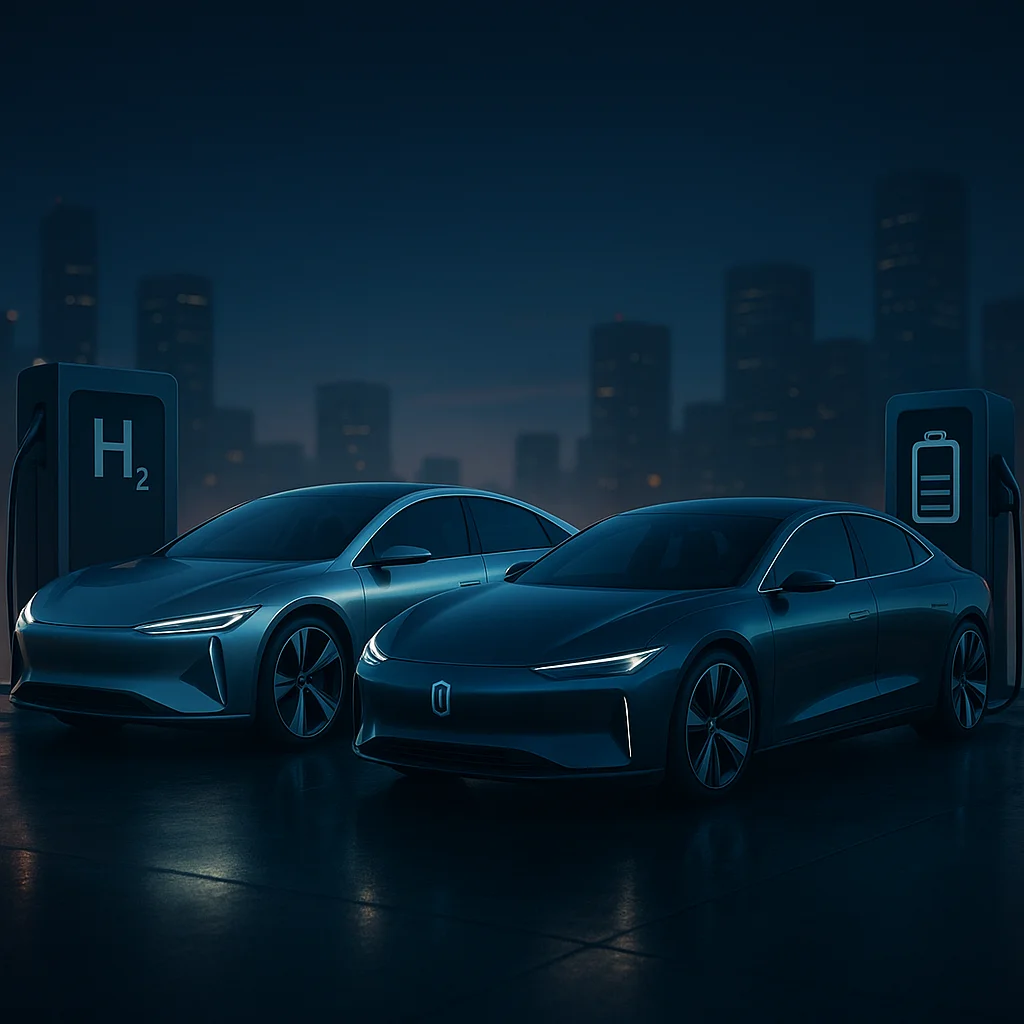

Setting the Scene: A Quiet Revolution on the Roads
Imagine a busy city street in 2026 where the air feels noticeably cleaner, quieter. Electric vehicles (EVs) glide past, yet not all are powered the same way. Among them, hydrogen fuel cell vehicles (FCEVs) hum softly alongside battery electric vehicles (BEVs). Both promise a sustainable future but differ in technology, infrastructure, and user experience. This quiet revolution is more layered than it appears at first glance. Why do some automakers persist with hydrogen despite the widespread popularity of battery electrics? What expert advice can help consumers and industry watchers navigate this evolving terrain?
The global push for zero-emission vehicles is reshaping transport, with hydrogen and battery power as leading contenders. But the choice between these technologies isn’t merely technical; it touches economics, policy, environmental impact, and practical usability. The SeoulTech study revealing strong public support for hydrogen fuel cell trucks hints at shifting perceptions, especially in commercial sectors. Yet, BEVs continue to dominate passenger vehicles worldwide.
To understand this better, it’s worth recalling how each technology fits into the broader clean energy puzzle and what experts recommend for drivers, fleet operators, and city planners. This article aims to unfold these layers, informed by recent developments and grounded in data.
Background: The Road to Hydrogen and Battery Electrification
How did hydrogen fuel cells and batteries emerge as the front runners for clean vehicle propulsion? The story begins decades ago, with the oil crises pushing research toward alternatives. Battery electric vehicles gained early attention in the 1990s but struggled with limited range and long charging times. Meanwhile, hydrogen fuel cells offered a promise of clean energy conversion with water vapor as the only emission.
By the early 2000s, companies like Toyota, Honda, and Hyundai invested heavily in FCEVs, aiming for longer range and fast refueling. Yet, battery technology advanced rapidly. Lithium-ion batteries became cheaper and more energy-dense, helping BEVs gain mass-market appeal. Governments worldwide backed battery electric infrastructure, creating a cycle of adoption and innovation.
Meanwhile, hydrogen’s pathway has been more complex. Producing, storing, and distributing hydrogen at scale requires significant infrastructure investment. Recent breakthroughs in green hydrogen production via electrolysis — powered by renewable energy — promise cleaner supply chains but remain costly.
Thus, the race between FCEVs and BEVs is shaped by technology maturity, infrastructure readiness, and policy support. This context explains why BEVs dominate passenger cars while hydrogen finds niches in heavy-duty and commercial vehicles.
Core Analysis: Comparing Hydrogen Fuel Cell and Battery Electric Vehicles
Experts often highlight the need to consider multiple factors when comparing FCEVs and BEVs. Let’s break down the crucial points into performance, refueling/recharging, environmental impact, and costs.
1. Performance and Range
Hydrogen fuel cell vehicles typically offer ranges of 300 to 400 miles per fill-up, comparable with many battery electric vehicles. However, FCEVs refuel in under 5 minutes versus BEVs, which generally require 30 minutes to several hours depending on charger type. This rapid refueling makes hydrogen attractive for commercial fleets and long-haul trucking.
2. Infrastructure Availability
Here lies a major difference. BEV charging stations have proliferated globally, supported by widespread electrical grids and government incentives. In contrast, hydrogen refueling stations remain sparse, concentrated in regions like California, Japan, and parts of Europe. The high cost of building and maintaining hydrogen stations limits their expansion.
3. Environmental Impact
Both vehicle types produce zero tailpipe emissions. Still, lifecycle emissions depend heavily on energy sources. Green hydrogen — produced from renewables — offers very low emissions, but currently, most hydrogen is grey or blue, generated from natural gas with varying carbon footprints. Battery production involves mining critical minerals, with environmental and ethical concerns. Recycling and second-life battery technologies are improving but not yet fully scaled.
4. Cost Considerations
BEVs have seen dramatic price drops, making them increasingly affordable. Battery costs fell below $100 per kWh in recent years, a crucial tipping point. FCEVs remain more expensive due to costly fuel cells and hydrogen storage tanks. Hydrogen fuel is also pricier per mile compared to electricity, though prices have marginally decreased with new production methods.
To summarize these points, here’s a quick comparison list:
- Range: FCEVs and BEVs both 300-400 miles, FCEVs refuel faster
- Infrastructure: BEVs have broader charging networks; hydrogen stations limited
- Environmental: BEVs depend on grid cleanliness; FCEVs depend on hydrogen source
- Cost: BEVs cheaper upfront and operationally; FCEVs more expensive but improving
Current Developments in 2026: What Has Changed?
2026 has brought notable shifts in both technologies. Toyota, a pioneer in FCEVs, has doubled down on hydrogen for commercial vehicles, collaborating with Isuzu to launch Japan’s first fuel cell electric light truck, according to MSN autos. This signals a strategic pivot focusing on sectors where hydrogen’s advantages — fast refueling and weight considerations — are most valuable.
Meanwhile, battery electric vehicles continue to diversify. Solid-state batteries are entering limited production, promising faster charging and higher energy density. Charging infrastructure is expanding with ultra-fast chargers becoming more affordable and widespread.
Hydrogen’s public perception is evolving too. The SeoulTech research highlighted strong support for hydrogen fuel cell trucks among fleet operators and the general public, reflecting greater awareness of hydrogen’s role in decarbonizing heavy transport. Indian policymakers, as reported by Indiatimes, are envisioning hydrogen as transformative for their clean energy future, emphasizing the fuel’s potential in diverse climates and geographies.
These developments illustrate a nuanced landscape where hydrogen is carving out strategic niches while battery electric technology advances in mass-market appeal. The dual approach may continue for years, each technology complementing the other.
Expert Perspectives and Industry Impact
What do industry insiders and analysts say about this evolving balance? According to a Just Auto report, Toyota’s shift to focus hydrogen on commercial vehicles reflects realistic assessments of where FCEVs can outcompete BEVs. The challenges of battery weight and charging time in heavy-duty logistics make hydrogen a compelling alternative.
“Hydrogen fuel cells offer a practical solution for long-haul transport where downtime must be minimized,” says an industry analyst quoted by Just Auto.
Yet, experts also caution about the scale of infrastructure investments needed for hydrogen to become mainstream. The auto industry’s cautious optimism matches government strategies that favor a mix of solutions. For passenger cars, BEVs remain the primary choice due to consumer convenience and cost-effectiveness.
The environmental community debates the best path forward. Some advocate for prioritizing BEVs to leverage existing electric grids, while others emphasize hydrogen’s potential for sectors less suited to batteries. This debate shapes policy incentives and funding allocations worldwide.
“Hydrogen’s promise lies not just in cars but in creating a sustainable energy ecosystem that includes industry, heating, and transport,” notes a clean energy expert.
For anyone following these shifts, the interplay between market forces, technology advancements, and policy frameworks is fascinating. The choice between hydrogen and battery electric vehicles is not a binary one but a spectrum of solutions adapting to different needs.
What to Watch: Future Outlook and Practical Takeaways
Looking ahead, several trends will influence the trajectory of hydrogen fuel cell and battery electric vehicles. For consumers and fleet operators, understanding these can inform smart choices.
- Infrastructure Expansion: Watch for increased investment in hydrogen refueling networks, especially in Asia and Europe. This will be critical for FCEV adoption beyond niche markets.
- Technological Innovations: Advances in green hydrogen production and fuel cell efficiency could lower costs and emissions. Simultaneously, breakthroughs in battery chemistry may extend BEV range and reduce charging times.
- Regulatory Policies: Governments will continue incentivizing clean vehicles but may tailor support based on vehicle type and use case. Monitoring policy shifts helps predict market directions.
- Market Segmentation: Expect hydrogen to dominate heavy-duty, commercial, and possibly aviation sectors, while BEVs lead passenger cars and light-duty trucks.
- Environmental Metrics: Lifecycle assessments will guide consumer and corporate decisions, emphasizing renewable energy sourcing for both hydrogen and electricity.
For readers interested in a deeper dive, WriteUpCafe offers extensive resources such as the comparative analysis of hydrogen fuel cell vehicles vs battery electric and the complete guide to both technologies. These provide detailed insights into the evolving ecosystem.
Ultimately, the best vehicle choice depends on individual needs, geography, and values. Are you prioritizing fast refueling and longer-range hauling? Hydrogen might be your ally. Are upfront cost and available charging infrastructure your main concerns? Battery electrics likely fit better.
One lingering question remains: can the two technologies converge or complement each other in hybrid solutions? Some research suggests fuel cells could act as range extenders for BEVs, blending strengths. As the clean transport puzzle unfolds, staying curious and informed is key.
After all, the future of mobility might not be a choice between hydrogen fuel cell vehicles and battery electric cars but an integrated system where each plays a vital role.





























Sign in to leave a comment.