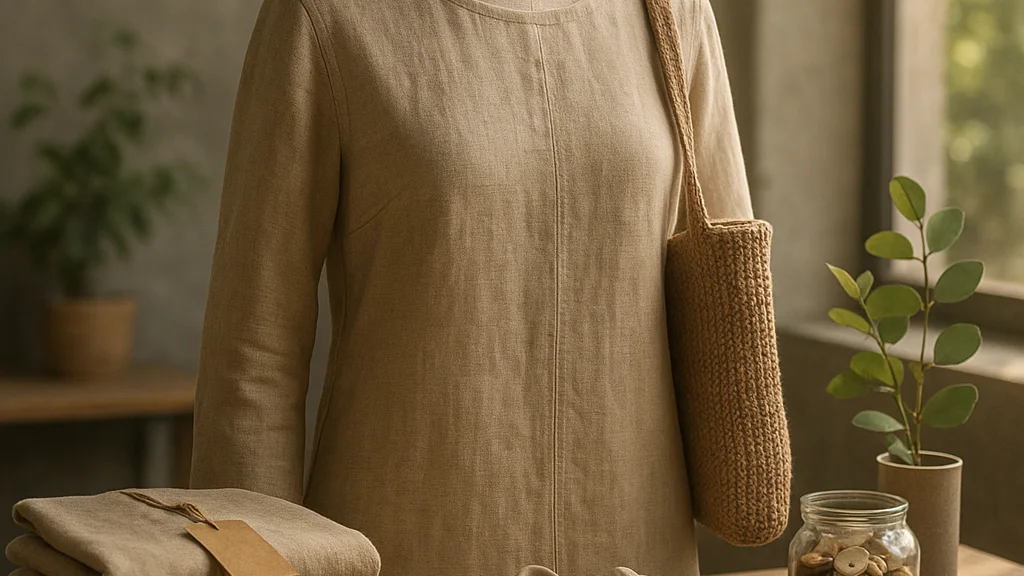

Why this conversation feels more urgent now
A cotton T-shirt can look innocent on a hanger. Soft, simple, familiar. Yet behind that one basic garment sits a chain of water use, chemical processing, shipping, labor conditions, and end-of-life waste that most shoppers never see. The fashion industry has spent decades perfecting invisibility: invisible extraction, invisible emissions, invisible disposal. What has changed is that the curtain is lifting. Consumers are asking harder questions, regulators are sharpening standards, and a growing group of sustainable fashion brands is trying to prove that clothing does not have to be made through quiet damage.
The scale of the problem is not abstract. The European Environment Agency has repeatedly warned that textiles carry significant environmental burdens across material production, consumption, and waste. The Ellen MacArthur Foundation has long argued that the linear take-make-waste model in fashion is economically and ecologically unsound. Meanwhile, Reuters and other major newsrooms have documented how pressure is mounting on brands to substantiate environmental claims rather than simply market them. That matters, because sustainable fashion is no longer a niche mood board. It is a test of whether business models can change fast enough to meet social and planetary limits.
Some brands are making a real effort. They are investing in traceable supply chains, lower-impact fibers, repair services, resale channels, wage transparency, and circular design. Others are still operating in the gray zone, where a capsule collection made from recycled polyester is used to distract from a larger volume-driven system. The difference between those two approaches is the heart of this story.
If you have read How Sustainable Fashion Brands Are Reshaping the Industry, you will recognize a familiar tension: progress is visible, but it is uneven. This piece goes further by looking at which brands are moving beyond slogans, what measurable practices matter most, and why 2026 may be remembered as a year when sustainability in fashion became less about aspiration and more about accountability.
“A sustainable brand is not defined by one eco-friendly product. It is defined by how honestly it confronts its full footprint.”
How fashion arrived at this turning point
To understand why certain brands stand out, it helps to be honest about how the industry got here. Fast fashion compressed design, manufacturing, and retail cycles so aggressively that clothing became cheaper, more disposable, and more abundant than at any point in modern history. That model rewarded speed and novelty. It also encouraged overproduction, underpaid labor, and a flood of low-cost garments with short useful lives.
By the late 2010s and early 2020s, a broader sustainability reckoning began to hit fashion from several directions at once. Climate reporting made textile emissions harder to ignore. Investigations into labor abuses kept surfacing. Consumers, especially younger ones, became more skeptical of vague claims like “conscious” and “green.” Brands that once relied on soft-focus marketing language were suddenly expected to disclose factory lists, material sourcing, and emissions reduction plans.
That scrutiny intensified because the policy environment changed. Europe moved toward stricter rules around green claims, product durability, waste, and producer responsibility. The idea that companies could market sustainability without evidence became less tenable. Even outside the EU, those regulatory currents mattered because global brands sell across borders and increasingly build systems that can survive multiple compliance regimes.
At the same time, the technical side of sustainable fashion matured. A decade ago, many brands treated sustainability as a materials story alone: organic cotton, recycled polyester, maybe Tencel. By 2026, serious operators understand that materials are only one layer. Dyeing and finishing, logistics, repairability, packaging, resale, and garment longevity all shape impact. So does labor. A shirt made from lower-impact fiber is not meaningfully ethical if the people making it are underpaid or unsafe.
That is why the most credible brands today tend to share a few habits. They publish impact reports. They admit trade-offs. They treat resale and repair as revenue streams rather than side projects. They build smaller, steadier assortments instead of chasing endless microtrends. And they accept that sustainability is not a destination reached through branding; it is a discipline of continuous proof.
For readers who want a broader companion piece, Sustainable Fashion Brands Making a Difference in 2026 offers another useful angle on how this category is evolving in public view.
What actually separates meaningful brands from greenwashed ones
The phrase “making a difference” can become mushy if it is not tied to evidence. A sustainable fashion brand deserves attention when it changes the economics and operations of clothing production, not merely the language around it. That means looking for systems, targets, and transparency.
According to the Forbes Earth Day feature on how fashion brands build sustainability into business, the strongest companies are integrating environmental and social goals into sourcing, manufacturing, and customer engagement rather than treating sustainability as a marketing department function. That distinction is essential. When sustainability is built into procurement contracts, design briefs, and executive incentives, it is far more likely to survive a rough quarter.
There are several markers that deserve close attention.
- Material integrity: use of certified organic, recycled, regenerative, or responsibly forest-derived fibers with traceability, not vague references to “eco fabrics.”
- Supply-chain disclosure: publication of factory lists, supplier standards, and audit frameworks.
- Chemical management: evidence of safer dyeing, finishing, and wastewater controls.
- Durability and repair: product design intended for long wear, plus repair services or spare parts.
- Resale and take-back: systems that keep garments in circulation and reduce landfill disposal.
- Labor commitments: measurable progress on wages, worker protections, and grievance mechanisms.
- Climate targets: emissions accounting across Scopes 1, 2, and where possible 3, with reduction pathways rather than offsets alone.
Brands that consistently appear in serious sustainability discussions often include Patagonia, Eileen Fisher, Stella McCartney, People Tree, and smaller mission-led labels built around deadstock, repair, or artisan supply chains. Their models differ, but the common thread is that they have chosen friction over convenience. Repairing garments costs money. Mapping suppliers takes time. Choosing better fibers can complicate margins. Those are precisely the kinds of decisions that signal sincerity.
Then there is the other side of the market. Greenwashing often shows up through selective disclosure: a brand promotes a recycled capsule while remaining silent on total production volume, fossil-fuel-derived synthetics, or labor conditions. Another warning sign is language that sounds warm but says very little, such as “planet-friendly” without standards or verification. A third is overreliance on carbon offsets to neutralize a business model built on overconsumption.
“The most useful sustainability claim is the one a company can explain, measure, and update when it falls short.”
For shoppers, journalists, and investors, the practical question is simple: does the brand make fewer, better, longer-lasting clothes in a more accountable system? If the answer is murky, the claim probably is too.
Brands and business models that are moving the needle
Not every sustainable fashion brand looks the same, and that is part of the story. Some are legacy pioneers that have spent years refining supply chains. Others are digital-first marketplaces or specialist labels trying to solve one piece of the puzzle exceptionally well. The healthy shift in 2026 is that impact is increasingly tied to business model design, not just product aesthetics.
Patagonia remains one of the clearest examples of a company that made durability central to its identity. Its repair culture, resale efforts, and public willingness to tell customers not to buy what they do not need helped establish a template that many others now borrow from. Eileen Fisher has long invested in take-back and remade programs, showing that circularity can work in premium apparel when design consistency and material quality are high. Stella McCartney, though operating in luxury, has influenced conversations around animal-free materials and innovation partnerships, pushing the high end of fashion to treat material science as a creative frontier rather than a compromise.
Smaller labels matter too. Brands focused on deadstock textiles, made-to-order production, or localized manufacturing can reduce excess inventory and transport emissions, though their scale is limited. Marketplaces also play a role by curating better options for consumers who do not have time to investigate every label from scratch. The WriteUpCafe feature Fractured Redefines Sustainable Style as a Curated Online Sustainable Marketplace for Fashion and Lifestyle Brands is useful here because it illustrates how discovery itself has become part of the sustainability challenge. If shoppers cannot easily find vetted brands, the lowest-friction purchase often remains the least responsible one.
Three business approaches look especially promising in 2026.
- Slow assortment models: fewer drops, seasonless staples, and tighter inventory planning reduce markdown waste and overproduction.
- Circular revenue streams: repair, resale, rental, and refurbishment add profit channels while extending product life.
- Traceability-led branding: brands that can identify farms, mills, factories, and logistics partners are better positioned for regulation and consumer trust.
Still, scale complicates everything. A small label can maintain pristine standards more easily than a multinational with thousands of suppliers. Yet large companies also have the leverage to push mills, dye houses, and manufacturers toward cleaner practices at industrial scale. The brands making the biggest difference are not always the most perfect. Often, they are the ones using their influence to change upstream systems that dozens of other labels also depend on.
That is why the conversation should not become a purity contest. It should remain a performance test. Who is reducing virgin material use? Who is publishing supplier information? Who is designing for longevity? Who is building resale into the main business rather than the side door? Those questions reveal more than any campaign image ever will.
What changed recently and why 2026 matters
The sustainable fashion conversation in 2026 feels sharper because the market has moved from broad promises to evidence-based scrutiny. According to the Fashion Times report on MSN about mindful fashion and conscious closets, a “third wave” is taking shape, one that blends consumer intentionality with more mature brand practices around transparency, longevity, and mindful consumption. That framing rings true. The first wave was awareness. The second was branding. The third is verification.
One notable shift is the rise of wardrobe reduction as a cultural ideal rather than a sacrifice. Consumers are increasingly comfortable buying fewer items if they trust the quality, fit, and ethics behind them. That is partly economic. Years of inflation and cost sensitivity have made impulse shopping less attractive. But it is also emotional. Many people are tired of clutter, tired of trend churn, tired of clothes that disappoint after three washes. Sustainable brands that offer repair, clear care guidance, and consistent sizing are benefiting from that fatigue.
Another development is regulatory pressure on environmental claims. Across Europe and beyond, brands are preparing for stricter rules on how sustainability language can be used. That means terms like “eco,” “green,” and “climate neutral” face greater scrutiny unless backed by robust methodology. In practical terms, this favors companies that have already invested in life-cycle analysis, supplier mapping, and audited reporting.
Technology is changing the field as well. Digital product passports, fiber-tracing tools, and better inventory forecasting are helping some brands reduce waste and improve accountability. Material innovation continues, though with mixed results. Recycled fibers, lower-impact cellulosics, and next-generation alternatives to leather and synthetics are advancing, but cost, scalability, and performance still matter. A material cannot transform the industry if it remains too expensive or too scarce for broad use.
Meanwhile, resale is becoming normalized rather than novel. Brand-operated resale platforms once looked experimental; now they are increasingly viewed as a sensible extension of product stewardship. Repair is following a similar path. What once sounded quaint now looks commercially intelligent, especially when customer acquisition costs remain high and retention matters more.
2026 matters because the mood has shifted. Sustainability is being pulled closer to finance, compliance, and operations. That may sound less romantic than a glossy campaign about conscious style, but it is where durable change usually begins.
The hardest truths: where even good brands still struggle
There is a temptation to tell this story as a clean march toward better fashion. Real life is messier. Even brands with strong reputations face compromises that deserve honest discussion. Sustainable fashion is constrained by agricultural systems, global trade, consumer price expectations, and the stubborn reality that most clothing is still made in a highly fragmented supply chain.
One major challenge is materials. Natural fibers are not automatically low impact. Conventional cotton can be water-intensive and chemically heavy depending on where and how it is grown. Wool raises questions around methane, land use, and animal welfare. Synthetics can be durable and practical, but they are usually fossil-fuel-derived and linked to microfiber pollution. Recycled polyester reduces virgin input but does not solve shedding or dependence on plastic infrastructure. There is no perfect fiber. The better question is whether a brand uses each material intentionally, transparently, and sparingly.
Labor remains another unresolved frontier. Environmental progress can outpace social progress because carbon accounting is often easier to standardize than wage justice. A brand may know its emissions profile more precisely than whether workers across tiers of its supply chain earn a living wage. That gap matters. Sustainability without dignity for workers is a partial story.
Then there is scale. If a company sells millions of garments a year, efficiency improvements can be meaningful, but overproduction can still overwhelm those gains. A T-shirt made with better cotton is still a problem if it is produced in volumes that assume waste. Some critics argue that the true test of sustainability is whether brands decouple revenue from ever-rising unit sales through services like repair, resale, customization, and refurbishment.
Consumers also play a role, though the burden should not fall solely on them. A beautifully made garment cannot deliver its full environmental benefit if it is worn twice and forgotten. Care, repair, and repeat use are part of the impact equation. That is why the best brands educate customers on washing less, mending early, and styling pieces across seasons.
- Persistent obstacles in 2026 include: fragmented supplier data, uneven labor visibility, high costs for next-gen materials, consumer demand for low prices, and the sheer speed of trend culture on social platforms.
- Encouraging signs include: more resale integration, stronger claim scrutiny, wider acceptance of wardrobe repetition, and growing investor interest in operational resilience rather than hype.
I find this part oddly hopeful. Not because the problems are small; they are not. But because the strongest brands are no longer pretending that sustainability is easy. They are showing their work. In a field crowded with polished language, that kind of honesty feels refreshing.
How to identify brands making a real difference
For readers trying to shop with care, the abundance of claims can feel exhausting. A gentle rule helps: do not start with the label’s adjectives. Start with its systems. A meaningful sustainable fashion brand should be able to explain where its materials come from, who makes its products, how it reduces waste, and what happens when the garment reaches the end of its first life.
Look first for transparency pages, impact reports, and factory disclosures. If a brand says it values sustainability but offers almost no specifics, pause there. Next, examine the product itself. Is it designed for long wear? Are the materials clearly named? Are care instructions practical? Is there a repair option or take-back program? Good brands respect the full life of a garment, not just the sale moment.
Price deserves nuance too. Sustainable fashion often costs more upfront because better materials, smaller runs, and fairer labor are not cheap. Yet expensive does not automatically mean ethical. Luxury brands can still be opaque, and affordable brands can still make thoughtful improvements. The question is value over time. A well-made shirt worn for years usually beats three flimsy replacements, financially and environmentally.
Here is a practical checklist worth keeping close:
- Read the materials list and look for specificity, certifications, or traceability.
- Check for supplier transparency beyond a polished mission statement.
- Search for repair, resale, or take-back services that extend garment life.
- Review impact reporting for targets, updates, and setbacks.
- Notice production rhythm; endless drops can signal a volume-first model.
- Assess garment versatility because the most sustainable piece is often the one you will wear often and love kindly.
There is also room for secondhand, swapping, tailoring, and simply buying less. Sustainable fashion brands matter, but they are only one part of a healthier clothing culture. The broader goal is a relationship with clothing that feels steadier, more intentional, and less frantic. A smaller closet can still be expressive. A repaired cuff can still be beautiful. A repeated outfit can still carry confidence.
The brands making a difference are helping normalize that mindset. They are proving that style and responsibility do not have to sit in separate rooms. They can share a table, perhaps with a cup of tea nearby and a little patience for imperfection.
What to watch next
The next phase of sustainable fashion will likely be less about grand declarations and more about infrastructure. Expect more emphasis on digital product passports, stronger green-claims enforcement, and clearer expectations around durability and end-of-life responsibility. Brands that have invested early in traceability and circular services should be better positioned than those still relying on broad lifestyle messaging.
Watch resale closely. As quality-conscious consumers seek value, brand-run resale can become a loyalty engine, not just a sustainability gesture. Keep an eye on repair as well, especially for outerwear, denim, knitwear, and footwear. If more brands make repairs easy and visible, garment life extension could become one of the simplest high-impact shifts in the sector.
Materials innovation will continue, though not every breakthrough will scale. The winners may be less glamorous than headlines suggest: better recycling systems, lower-impact dye processes, and stronger data tools for supplier management. Quiet improvements often matter more than dazzling prototypes.
Most of all, pay attention to whether brands become calmer businesses. Fewer drops. Better forecasting. More enduring design. Less dependence on urgency as a sales tactic. Those are not just commercial choices; they are cultural ones. They ask both companies and customers to step out of panic buying and into something steadier.
Sustainable fashion brands making a difference are not saving the world one tote bag at a time. The credible ones are doing something harder and more useful. They are rebuilding parts of an industry so that clothing can be made with less waste, more honesty, and greater respect for the people who make it. That work is unfinished. It will stay unfinished for years. But unfinished does not mean unimportant.
If you are choosing where to place your money, your attention, or your reporting, follow the brands that publish the uncomfortable details, not just the pretty ones. Follow the ones that repair, disclose, and improve in public. Those are usually the companies worth trusting a little more.
And if your own closet feels complicated, be gentle with yourself. One thoughtful choice at a time still counts. That is often how lasting change begins.































Sign in to leave a comment.