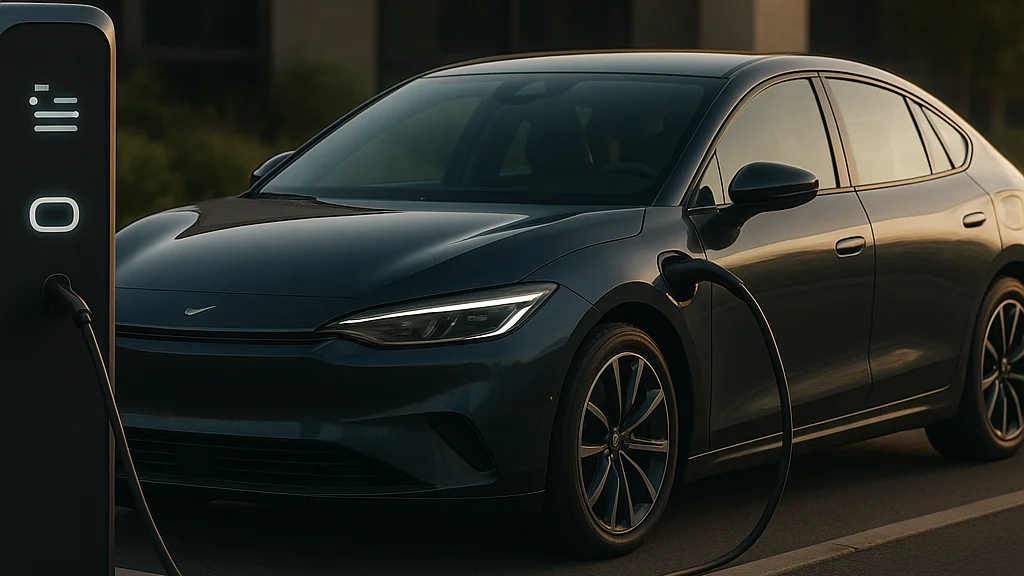

A family in Calgary can make this decision in a single snowy weekend. One spreadsheet open, one dealership tab half-read, one parent asking whether the advertised range will survive a January cold snap on Deerfoot Trail. The question sounds simple: which EV gives you the most range for the money? The answer, gently, is not simple at all.
Range still dominates EV shopping because it feels like security. Value matters because electric cars remain a major household purchase even as prices have become more competitive. Yet the smartest buyers in 2026 are looking past headline numbers. They are comparing battery chemistry, charging curves, winter efficiency, software reliability, warranty terms, and resale resilience. A car with a huge official range figure can still be a poor value if it charges slowly, depreciates hard, or costs more to insure. Meanwhile, a slightly shorter-range model can become the better buy if it is efficient, well-equipped, and easy to live with.
That is why any serious guide to the best electric vehicles for range and value has to separate marketing from lived reality. EPA estimates remain useful in North America, but they are only one part of the story. So are lease incentives, federal and provincial rebates where available, and recent pricing shifts from Tesla, Hyundai, Kia, Ford, General Motors, BMW, Mercedes-Benz, and emerging Chinese brands in markets outside the United States and Canada.
If you want a quick companion piece before settling in, Best Electric Vehicles for Range and Value Compared offers a useful comparison lens, while Beginner’s Guide to the Best Electric Vehicles for Range and Value is a softer on-ramp for first-time EV shoppers. Here, though, we are going deeper: what range really means, which models tend to deliver value rather than just spectacle, and what changed in 2026 that buyers should not ignore.
Key insight: The best EV for range and value is rarely the one with the biggest battery. It is usually the one that balances usable range, charging speed, efficiency, price, and real-world ownership costs.
Why range became the headline metric, and why that can mislead
Electric vehicles inherited a psychological burden from the earliest mass-market models. Back then, 120 to 160 kilometres of real-world driving could feel normal, and public fast charging was patchy enough to make every errand feel strategic. That history still shapes consumer behavior even though the market has moved on. In 2026, many mainstream EVs now clear 400 kilometres of rated range, and several premium models stretch much farther. Still, shoppers remain anxious because they remember the old constraints, or they know someone who does.
Automakers understand this deeply. A large range number is easy to advertise, easy to compare, and emotionally reassuring. But range is produced by a mix of battery size and efficiency, not battery size alone. A heavy SUV with a giant pack may post an impressive estimate while consuming far more energy per kilometre than a lighter sedan or hatchback. That matters because efficiency affects charging costs, cold-weather performance, and how often you need to stop on a road trip.
Outside the brochure, several factors compress real-world range:
- Cold weather, which reduces battery efficiency and increases cabin heating demand
- High sustained highway speeds, especially above 110 km/h
- Wheel and tire choices that prioritize style over efficiency
- Towing, roof boxes, and heavy cargo loads
- Battery preconditioning and charging habits
According to The Conversation, buyers should think carefully about where and how they charge, not just how far a vehicle can theoretically travel. That point sounds almost modest, but it is central. An EV that you can charge cheaply and consistently at home often feels more convenient than a nominally longer-range model that relies on crowded public infrastructure.
SBS made a similar point in its explainer on switching to electric, noting that purchase decisions should account for charging access, driving patterns, and total ownership costs rather than sticker price alone. Those are the quiet variables that determine whether a car feels freeing or frustrating after the excitement of delivery day fades.
Another useful rule: Buy enough range for your hardest regular week, not your most anxious hypothetical day.
How to measure value beyond sticker price
Value in the EV market is a layered thing. A lower MSRP can be genuinely attractive, but it can also hide slower charging, fewer safety features, weaker software support, or a smaller battery warranty cushion. On the other side, a more expensive EV can still be a better value if it holds its resale value, includes heat-pump efficiency, and comes with strong route-planning software that reduces travel stress.
For practical buyers, value usually sits at the intersection of five measurements:
- Purchase price after incentives: rebates, dealer discounts, lease support, and financing terms can change the ranking dramatically.
- Rated and real-world range: not just the official number, but how much of it remains in winter or at highway speed.
- Charging performance: peak charging speed matters less than the full charging curve from 10% to 80%.
- Efficiency: lower energy use means lower operating cost and less dependence on giant batteries.
- Ownership durability: warranty, software updates, service network, and expected depreciation all matter.
Tesla has shaped this conversation for years because the Model 3 and Model Y combined strong range with broad fast-charging access through the Supercharger network. Even as more brands gained access to Tesla’s charging standard in North America, that ecosystem advantage remained meaningful. A car is more valuable when the infrastructure around it works predictably. Yet Tesla is no longer alone in offering credible range-value math. Hyundai’s Ioniq 5 and Ioniq 6, Kia’s EV6, Chevrolet’s Equinox EV and Blazer EV, Ford’s Mustang Mach-E, and several BMW and Mercedes entries have all sharpened the field depending on trim and market.
Shoppers who want a broader framework can compare notes with Best Electric Vehicles for Range and Value: An Expert Guide, which usefully breaks down segment differences. The larger point is that value is not a trophy handed to the cheapest car. It is a relationship between capability and cost over time.
Insurance deserves a mention here too. Premiums for EVs can vary sharply because repair costs, parts availability, and battery-related claims histories differ by model. A vehicle that looks inexpensive on paper can become less compelling once insurance and tire costs are included. The same goes for home charging setup. A buyer who needs panel upgrades or a more expensive Level 2 installation may face a different payback timeline than a buyer with a garage already wired for easy charging.
Which EVs tend to stand out for range and value in 2026
The market in 2026 is broad enough that there is no single champion for everyone, but a few patterns are clear. Sedans generally offer the strongest range efficiency because they cut through air more cleanly than SUVs. Crossovers, meanwhile, often win on family practicality and cargo flexibility. Trucks remain the hardest category for value because their size, weight, and towing expectations demand large batteries and bring higher prices.
Among mainstream standouts, the Tesla Model 3 Long Range continues to be difficult to ignore when range-per-dollar is the main metric. It pairs strong efficiency with mature software and widespread charging compatibility. The Hyundai Ioniq 6 also remains one of the most aerodynamically efficient EVs on sale, which helps it deliver substantial range without needing an oversized battery. For buyers who prefer crossover packaging, the Tesla Model Y and Hyundai Ioniq 5 remain central reference points, though the exact value equation depends heavily on local pricing and incentives.
General Motors has become more serious in the value conversation through the Chevrolet Equinox EV, which pushed the idea that a practical long-range EV does not have to live only in the premium price bands. The Ford Mustang Mach-E still offers a balanced package, though pricing and trim complexity require careful comparison. Reuters and other industry reporting over the past two years have repeatedly shown how price cuts, tariff shifts, and supply-chain adjustments can quickly reorder this field.
Here is the more useful way to think about the current contenders:
- Best efficiency-led value: Tesla Model 3, Hyundai Ioniq 6
- Best family crossover balance: Tesla Model Y, Hyundai Ioniq 5, Kia EV6
- Best mainstream affordability push: Chevrolet Equinox EV
- Best premium long-range comfort: BMW i4, Mercedes EQE in the right trim
- Most caution required: large electric trucks and luxury SUVs with huge batteries but weaker efficiency
Notice what is missing from that list: blind worship of battery size. A 100-kWh-plus pack can be useful, especially for towing or very long highway routes, but it often raises price and mass enough to damage value. Buyers who commute, run errands, and take occasional road trips are often better served by a well-engineered 75 to 85 kWh class vehicle with excellent efficiency and fast charging.
If you want another internal read after this one, Best Electric Vehicles for Range and Value Explained complements these trade-offs nicely, especially for shoppers comparing body styles.
What changed recently: the 2026 market is about charging access and platform maturity
The most important shift since the early EV boom is that charging access now matters almost as much as the vehicle itself. In North America, the industry’s move toward Tesla’s North American Charging Standard changed the practical value of many vehicles. Brands that secured access to the Supercharger network strengthened their ownership proposition overnight, even before native ports became universal across lineups. That is not a small convenience. It changes route confidence, holiday travel planning, and resale appeal.
At the same time, several manufacturers have moved from first-generation experimentation to more mature EV platforms. Faster 800-volt architectures from Hyundai Motor Group products demonstrated the benefit of shorter charging stops. GM’s Ultium-based strategy, despite some rollout stumbles, broadened EV choices in more affordable segments. Ford signaled that its next wave of EVs would focus more clearly on cost discipline and platform efficiency; AOL’s report on Ford’s next-generation EV plans highlighted how investors and buyers alike are watching for lower-cost, more scalable products rather than expensive halo projects.
Battery chemistry is changing the value conversation too. Lithium iron phosphate, or LFP, has become more common in entry and standard-range trims because it can reduce cost and tolerate frequent charging to 100% better than some nickel-rich chemistries. The trade-off is generally lower energy density, which can mean less range in a given package size. For many drivers, though, the lower cost and charging durability make LFP a sensible value choice.
Then there is the policy layer. Trade restrictions, tariffs, and domestic-content rules have continued to shape which models qualify for incentives in the United States, while Canadian buyers have had to watch federal and provincial programs alongside supply constraints. These policy details can swing effective pricing by thousands of dollars. A vehicle that looked merely competitive at launch can become a standout once incentives and lease support are applied. The reverse is also true.
One more subtle 2026 development deserves attention: software maturity now separates good EVs from tiring ones. Route planning that automatically preconditions the battery before a fast-charge stop, accurate state-of-charge predictions, and stable over-the-air updates all contribute to real value. They save time, lower stress, and reduce those small ownership frictions that never appear in glossy advertisements.
Real-world ownership: winter, road trips, and the math people forget
If you live somewhere with seasons, official range numbers need translation. In Canadian winters, EV range can drop materially depending on temperature, trip length, tire choice, and whether the car uses a heat pump. Short urban trips in deep cold can be especially punishing because the cabin must warm up before efficiency stabilizes. That does not make EVs unsuitable for winter. It simply means buyers should add margin.
A healthy approach is to estimate your hardest recurring use case, then buffer it. If your weekly routine includes a 220-kilometre round trip in sub-zero conditions without reliable charging at the destination, a vehicle rated for 350 kilometres may feel tighter than expected. A model rated above 450 kilometres, especially one known for winter efficiency, will likely feel calmer and more sustainable over several years of ownership.
Road trips introduce a different discipline. Here, charging speed often matters more than maximum range. A car that can repeatedly charge from 10% to 80% quickly may complete a long journey faster than a longer-range model with a slower curve. This is where platform engineering shows up in ordinary life. Hyundai and Kia’s 800-volt models built a strong reputation because they could turn shorter stops into a meaningful advantage. Tesla retained strength through charger availability and software integration, even when peak numbers alone did not tell the whole story.
There are also costs people forget to include:
- Winter tires, which many EVs need to preserve traction and safety
- Tire wear from higher vehicle weight and instant torque
- Public fast-charging rates, which can narrow fuel savings if used constantly
- Home charger installation and possible electrical upgrades
- Potential depreciation differences between fast-moving and slower-moving models
According to SBS, buyers considering the switch should map their charging habits before buying. That advice sounds almost domestic, the kind of thing you would jot in a notebook over tea, but it is excellent. Your charging routine is the heart of EV convenience. If you can charge at home overnight, even a moderate-range EV becomes deeply practical. If you rely on public charging alone, the best value may actually be a model with stronger charging speed and network access rather than the lowest sticker price.
Practical takeaway: For most households, the right EV is the one that makes ordinary weeks feel easy, not the one that wins the spec-sheet argument online.
How to shop smarter: a buyer’s framework for range and value
When friends ask me where to start, I suggest a small ritual. Write down your longest regular drive, your coldest month, whether you can charge at home, and your real budget after taxes, insurance, and installation. That short list is more revealing than hours of doom-scrolling owner forums.
From there, narrow your decision through a practical sequence:
- Step one: Choose body style based on life, not aspiration. Sedans usually deliver better efficiency; crossovers usually deliver easier family use.
- Step two: Set a minimum real-world winter range, not just official range.
- Step three: Compare charging curves and route-planning software.
- Step four: Verify incentive eligibility and lease terms in your region.
- Step five: Call your insurer before you test-drive.
- Step six: If possible, test the seats, cargo area, and visibility on a normal errand route.
This process often leads buyers away from flashy extremes. They realize they do not need the most expensive trim to feel secure. Or they discover that a modestly pricier model is worth it because the charging experience is smoother and the efficiency stronger. The best electric vehicles for range and value reward this kind of calm comparison.
There is also wisdom in timing. EV pricing can move quickly due to incentives, inventory pressure, and competitive responses. If a model is due for a refresh, dealers may become more flexible on outgoing inventory. Conversely, a newly updated version may justify a higher price if it improves battery preconditioning, charging speed, or software stability. Buyers tracking future shifts may also appreciate The Future of Best Electric Vehicles for Range and Value in 2026, which looks ahead at how the next product cycle may reshape this market.
One final note on emotion, because cars are never purely rational. Some EVs feel serene in a way that changes how you move through a week. Quiet cabin, low running costs, easy one-pedal driving, no gas station detours. Those comforts matter. Value is not only arithmetic. It is also the relief of a machine that fits your life without making you think too hard about it.
The bottom line: range matters, but usefulness matters more
The EV market in 2026 is mature enough that shoppers can be choosy, and that is good news. You no longer have to accept a compromise vehicle just to drive electric. There are credible options across price bands, with stronger range, better charging, and more thoughtful software than the category offered only a few years ago.
Still, the cleanest way to judge the best electric vehicles for range and value is to resist single-number thinking. Range matters because confidence matters. But value comes from the whole ownership picture: purchase price after incentives, efficiency, charging speed, winter behavior, infrastructure access, insurance, and resale. In that fuller picture, efficient sedans and well-sorted compact crossovers often outperform larger, more expensive EVs that look impressive but ask too much of your budget.
If you can charge at home, many mid-range EVs will feel abundant. If you road-trip often, prioritize charging speed and network reliability. If you live in a cold climate, buy more range than the brochure suggests you need. And if you are torn between two trims, the one with better efficiency and software will often age more gracefully than the one with the largest battery.
That may be the gentlest truth in this whole conversation: the best EV is not the one that promises the most. It is the one that quietly keeps its promises in February, on a family errand, on a long drive home, on the ordinary Tuesday when nobody is watching. Be kind to yourself when you compare. The right answer is usually the one that leaves the least friction in your day.




























Sign in to leave a comment.