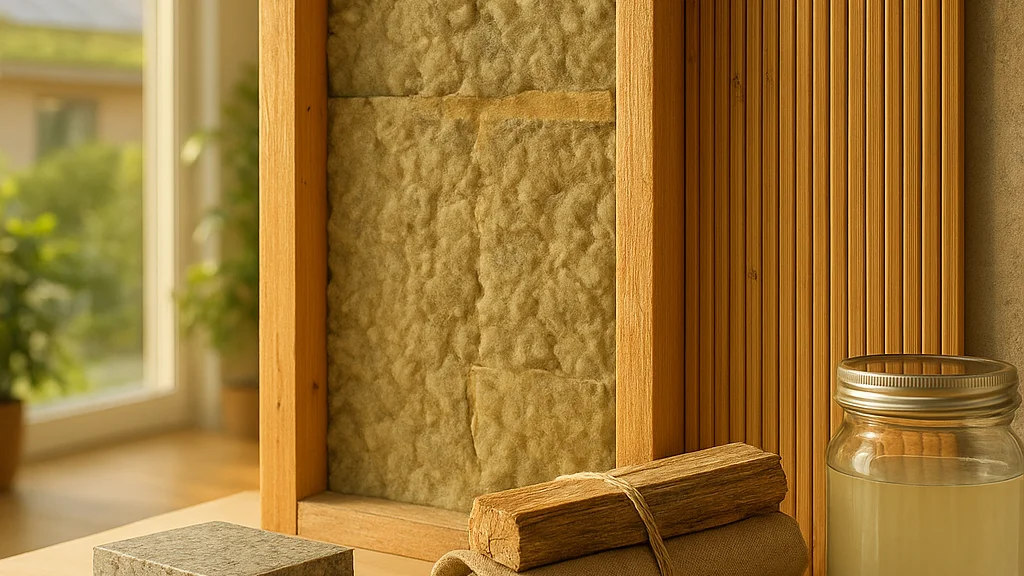

A new home can smell like cut lumber, fresh paint, and possibility. Increasingly, it also carries a quieter question: what did it cost the planet before anyone turned the key? That question matters because buildings are not a side story in the climate discussion. They are central to it. The materials used to extract, manufacture, transport, assemble, maintain, and eventually replace the components of a house shape emissions for decades. For homeowners, builders, and policymakers, green building materials are no longer a niche preference tucked into design magazines. They are becoming a practical response to energy volatility, insurance anxiety, tighter building codes, and a broader understanding that healthy homes begin long before the furniture arrives.
The shift is happening in plain view. According to a Yahoo Finance report on MarkNtel Advisors’ market analysis, the global green building materials market is projected to reach USD 563.5 billion by 2032, reflecting sustained demand for lower-impact construction products and better-performing buildings. That projection is not just about idealism. It captures a market reality: developers want materials that can help meet performance standards, households want lower operating costs, and cities want structures that can withstand heat, smoke, flood, and cold with more grace than conventional builds often manage.
If you have followed this subject through related coverage such as Exploring Green Building Materials and the Rise of Eco-Friendly Homes or Green Building Materials for Smarter Eco-Friendly Homes, you will have seen a familiar pattern: sustainability works best when it is measured, not merely marketed. A bamboo floor, a recycled steel beam, or a cellulose-insulated wall is not automatically “green” because it sounds natural or modern. The deeper story lives in lifecycle assessment, embodied carbon, toxicity, durability, maintenance, and whether a product genuinely reduces harm over time.
Green homes are not defined by one photogenic feature. They are defined by systems thinking: material sourcing, energy demand, indoor air quality, resilience, and end-of-life recovery all have to be part of the same conversation.
That is where this topic becomes both technical and deeply human. A house is a climate object, yes, but it is also where children sleep through wildfire seasons, where older adults manage summer heat, where families try to keep utility bills from swallowing grocery money. Eco-friendly homes matter because they can reduce emissions and because they can offer more stable, healthier daily life. There is something quietly hopeful in that. The best green materials do not ask people to choose between conscience and comfort. They try to deliver both.
How green building moved from fringe idea to mainstream strategy
For much of the late twentieth century, “green building” was often treated as an expensive add-on, associated with custom homes, experimental architecture, or small pockets of environmentally minded clients. The core construction industry remained anchored to familiar materials and lowest-bid procurement. Concrete, steel, fiberglass, vinyl, and petroleum-heavy products dominated because supply chains were established, code officials knew them well, and builders could price them quickly. Sustainability existed, but often at the margins.
That changed as several pressures converged. Energy prices made inefficient buildings more expensive to live in. Public-health research sharpened attention on volatile organic compounds, moisture problems, and poor ventilation. Climate policy pushed embodied carbon into discussions once focused almost entirely on operational energy. Certification systems such as LEED, Passive House, BREEAM, and Living Building Challenge helped standardize performance language, giving lenders, municipalities, and developers a clearer framework for comparison. At the same time, product transparency tools such as Environmental Product Declarations and Health Product Declarations became more common, making it harder for vague eco-claims to go unchallenged.
The pandemic years also altered priorities. People spent more time indoors and noticed how homes actually felt: stale air, overheating rooms, winter drafts, chemical odors after renovations. Builders heard more questions about filtration, insulation, heat pumps, low-toxicity finishes, and backup resilience. Then extreme weather added urgency. Heat domes, wildfire smoke, floods, and freeze-thaw volatility changed what “good housing” means. A home that wastes energy or relies on fragile materials is now understood as a financial and health risk, not merely an environmental drawback.
Policy has accelerated the shift. Municipal and national codes in many jurisdictions now reward or require better envelopes, higher energy efficiency, electrification readiness, or lower-emission materials. Large public projects increasingly include embodied-carbon criteria. Manufacturers, in turn, have expanded lines of low-carbon concrete mixes, recycled-content insulation, engineered timber products, and low-emission adhesives and coatings. The point is not that every product on the shelf is suddenly sustainable. It is that the market now has a stronger incentive to prove performance.
- Energy efficiency standards have pushed demand for better insulation, air sealing, windows, and HVAC integration.
- Embodied carbon accounting has brought attention to concrete, steel, aluminum, and high-impact finishes.
- Health concerns have elevated low-VOC paints, formaldehyde-free panels, and moisture-resilient assemblies.
- Climate resilience has increased interest in fire-resistant cladding, flood-tolerant materials, and passive survivability.
That broader context matters because eco-friendly homes are not built from one miracle product. They emerge from a more disciplined way of choosing materials and assembling them.
What makes a building material genuinely green
The phrase “green material” can be slippery, and that is where a lot of consumer confusion begins. A product can be recyclable but energy-intensive to produce. It can be bio-based but shipped halfway around the world. It can be marketed as natural while still relying on adhesives or flame retardants that undermine indoor air quality. Serious evaluation asks several questions at once.
First comes embodied carbon: the emissions associated with extraction, manufacturing, transport, and installation. Cement is a prime example of why this matters. Conventional concrete is durable and ubiquitous, but Portland cement production is emissions-heavy. That has driven innovation in supplementary cementitious materials, lower-clinker formulations, carbon-injected concrete, and alternative binders. Similarly, steel is highly recyclable, but virgin steelmaking carries a large carbon footprint, making recycled-content steel and cleaner production pathways important distinctions.
Second is operational performance. A material that dramatically improves insulation or airtightness may reduce energy use for decades, potentially offsetting a higher manufacturing footprint. Cellulose insulation, mineral wool, wood fiber board, high-performance windows, and carefully detailed air barriers all shape the long-term energy story of a home. Third is human health. Low-VOC paints, non-toxic sealants, formaldehyde-free cabinetry, and moisture-managed wall systems can reduce respiratory irritation and mold risk. For many families, that benefit is immediate and personal.
Durability belongs in the same conversation. A countertop or siding product that must be replaced in ten years is rarely greener than one that lasts thirty or forty with minimal maintenance. Resilience matters too. In fire-prone areas, certain cladding, roofing, and window assemblies may outperform “natural” options. In flood zones, moisture-tolerant materials can reduce demolition waste after an event. Green building is not about purity. It is about informed trade-offs.
A sustainable home is not the one with the most eco-labels. It is the one whose materials are fit for place, long-lived, low in harm, and part of a building that performs well under real conditions.
When professionals compare options, they often look at a cluster of criteria:
- Source: Is the material recycled, rapidly renewable, responsibly harvested, or locally produced?
- Manufacturing impact: How much energy, water, and pollution are involved?
- Toxicity: Does it emit harmful compounds or require hazardous treatments?
- Performance: Does it improve thermal comfort, airtightness, or moisture control?
- Longevity: How often will it need repair or replacement?
- End of life: Can it be reused, recycled, composted, or safely disassembled?
That framework helps sort substance from branding. It also explains why some of the most effective green choices are not glamorous at all. Air sealing tapes, smart vapor control membranes, and better subfloor adhesives rarely make the cover shot, but they often do more for performance than decorative eco-finishes ever will.
The materials shaping eco-friendly homes now
Several material categories are leading the current transition, each with strengths and caveats. Wood, when responsibly sourced, remains one of the most important. Mass timber products such as cross-laminated timber and glulam have gained attention in larger buildings, but even at the single-family scale, engineered wood can reduce waste and improve structural efficiency. Timber also stores carbon, though the climate benefit depends heavily on forestry practices, manufacturing energy, and the lifespan of the building.
Insulation is another major frontier. Cellulose, typically made from recycled paper treated for fire resistance, has become a widely discussed low-embodied-carbon option. Mineral wool offers excellent fire performance and moisture tolerance. Wood fiber insulation, more common in parts of Europe and increasingly watched in North America, is valued for vapor openness and lower embodied impact. Hemp-based insulation and hemp-lime assemblies continue to attract interest, though supply chains and code familiarity still vary by region.
Concrete innovation deserves close attention because there is so much concrete in the built environment. Lower-carbon mixes can incorporate fly ash, slag, calcined clay, or other supplementary materials, though availability differs and some traditional SCM sources are tightening as coal use declines. Carbon mineralization technologies, which inject captured carbon dioxide into concrete during production, have also expanded in commercial use. None of these approaches erase concrete’s footprint, but they can reduce it meaningfully when specified well.
Recycled steel and aluminum remain important where strength, durability, and fire resistance are priorities. Glass has improved through better coatings and multi-pane assemblies that sharply reduce heat loss and gain. Finishes have also evolved. Low-VOC paints and sealants are now far more accessible than they were a decade ago, and cabinet makers increasingly offer formaldehyde-free composite wood products.
For readers wanting a broader companion perspective, Inside Green Building Materials and Eco-Friendly Homes and Green Building Materials and Eco-Friendly Homes: Innovations in 2026 both reflect how quickly performance expectations are maturing. The common thread is not novelty for its own sake. It is integration.
- Structure: responsibly sourced timber, engineered wood, recycled steel
- Envelope: cellulose, mineral wool, wood fiber, high-performance membranes
- Openings: triple-pane or advanced double-pane windows with low-emissivity coatings
- Finishes: low-VOC paints, natural linoleum, recycled tile, formaldehyde-free millwork
- Hardscape: permeable pavers, lower-carbon concrete, reclaimed stone where available
The best homes mix these materials according to climate, budget, code, and skill level. A cold-climate Canadian build will not look identical to a humid subtropical retrofit or a wildfire-conscious California infill project. That is not a flaw. It is the point.
2026 developments changing the market right now
By mid-2026, the green materials conversation is more sophisticated than it was even two or three years ago. The first notable shift is that embodied carbon has moved closer to the procurement mainstream. Large developers and public agencies are asking for product-specific environmental data more often, and manufacturers that once relied on broad sustainability claims are under pressure to provide clearer documentation. Environmental Product Declarations are not perfect, but they have become a more familiar part of the buying process.
The second development is a stronger connection between decarbonization and resilience. Builders are no longer speaking only about annual energy savings. They are talking about homes that stay safer and more habitable during grid stress, smoke events, and temperature extremes. That has increased demand for assemblies that combine insulation, airtightness, non-combustible detailing where needed, better filtration, and durable exterior materials. In practical terms, a green home in 2026 is expected to do more than lower a utility bill. It is expected to hold up.
Market forecasts reinforce the momentum. The Yahoo Finance coverage of MarkNtel Advisors’ analysis points to broad growth in the green building materials sector, tied to urbanization, policy support, and rising consumer preference for sustainable construction. While forecasts should always be read with caution, they matter because they influence manufacturing investment. If producers believe lower-carbon materials will command durable demand, they are more likely to expand capacity, improve pricing, and normalize availability.
Another 2026 shift is the rise of circularity language in residential construction. Deconstruction, material salvage, modular components, and design-for-disassembly principles are showing up more often in professional discussions. This remains early-stage in many markets, especially compared with the scale of conventional demolition, but it signals a broader rethink: a home should not be treated as future landfill by default.
There is also a financing angle. Insurers and lenders are looking more carefully at climate exposure, and that scrutiny may eventually favor homes built with better envelopes, lower maintenance risk, and stronger resilience features. The economics are still uneven, and green premiums remain real in some product categories, but the old assumption that sustainable materials are automatically cost-prohibitive is less convincing than it once was. Some choices still cost more upfront. Others save money quickly. Many depend on sequencing, local supply, and whether the project team knows how to build well with them.
Where eco-friendly homes succeed, and where they still struggle
The strongest green homes do not merely substitute one material for another. They coordinate design, detailing, and operation. A house with premium insulation but poor air sealing can underperform. A low-carbon wall assembly that traps moisture can create durability problems. Expensive windows installed without attention to thermal bridging may disappoint. This is why integrated design matters so much. Architects, engineers, builders, and trades need to agree early on what the envelope is trying to do and which layers are responsible for structure, water control, air control, vapor management, and thermal performance.
Retrofits are especially revealing. In older housing stock, eco-friendly upgrades often deliver the greatest climate benefit because they reduce demand in buildings that were never designed for modern efficiency. Dense-pack cellulose in walls, attic air sealing, window replacements where justified, smart heat-recovery ventilation, and low-toxicity finish upgrades can transform comfort and emissions. Yet retrofits are also where mistakes happen fastest. Adding insulation without addressing moisture pathways can create hidden rot. Tightening a house without improving ventilation can worsen indoor air. Good intentions need building science behind them.
Affordability remains the hardest question. Some green products carry a premium because they are newer, imported, or produced at smaller scale. Skilled labor can be scarce. Certification paperwork can burden smaller builders. And renters, who often have the least control over building quality, may not benefit from premium materials unless policy and landlord incentives align. There is a justice issue here. Sustainable housing cannot become a luxury language spoken only in high-end neighborhoods.
Still, several strategies are proving effective:
- Prioritize the building envelope first, because insulation, airtightness, and moisture control affect every future energy decision.
- Choose fewer, higher-impact material upgrades rather than scattering budget across decorative eco-features.
- Use local products where possible to reduce transport emissions and simplify maintenance or replacement.
- Ask for third-party documentation, including EPDs or emissions certifications, instead of relying on packaging claims.
- Design for durability and repair, especially in kitchens, baths, roofs, and exterior cladding.
That last point feels almost old-fashioned, but it matters. A repairable home is often a greener home. There is wisdom in materials that age honestly and can be maintained with ordinary tools rather than ripped out wholesale every trend cycle.
What homeowners, builders, and cities should watch next
The next phase of eco-friendly housing will likely be less about singular innovations and more about standardization. Better data, clearer code pathways, and larger manufacturing volumes can turn smart but uncommon materials into ordinary choices. That is often how real change happens: not with one dramatic breakthrough, but with boring reliability. When low-carbon insulation, healthier finishes, and lower-emission structural products become easy to source, easy to finance, and easy to permit, adoption accelerates.
Watch for three developments in particular. First, embodied carbon limits may become more common in public procurement and eventually influence residential expectations. Second, climate resilience standards are likely to shape material selection more directly, especially in regions facing wildfire, flood, or extreme heat. Third, disclosure will keep improving. Homebuyers may increasingly expect to know not just square footage and appliance age, but also air quality features, insulation levels, and the environmental profile of major materials.
For homeowners planning a new build or renovation, the most practical approach is to begin with questions rather than products. What climate stresses does this home face? Where does it currently lose energy? Which materials are hardest to replace later? What will make the indoor environment healthier for the people who live here every day? Those questions can guide better spending than chasing whichever product is trending on social media.
For builders, the opportunity is partly educational. Clients often want sustainable homes but do not know how to distinguish meaningful upgrades from expensive symbolism. Teams that can explain lifecycle trade-offs clearly will stand out. For municipalities, the challenge is to support adoption without making compliance so complex that only large firms can participate. Incentives, training, and consistent code interpretation matter.
There is a quiet maturity settling over this field now. Green building materials are no longer just a hopeful sidebar to architecture. They are becoming part of the core grammar of responsible housing. Some products will disappoint. Some claims will prove thin. But the direction is unmistakable: homes are being judged more seriously by what they are made of, how they perform, and how gently they carry people through uncertain weather and expensive energy.
If you are reading this while planning your own project, take a breath before the spreadsheets take over. Start with the shell, ask difficult questions early, and choose materials that will still make sense when the paint smell is long gone. A good home should care for the earth a little better, and care for the people inside it too. I hope yours does both, kindly.



























Sign in to leave a comment.