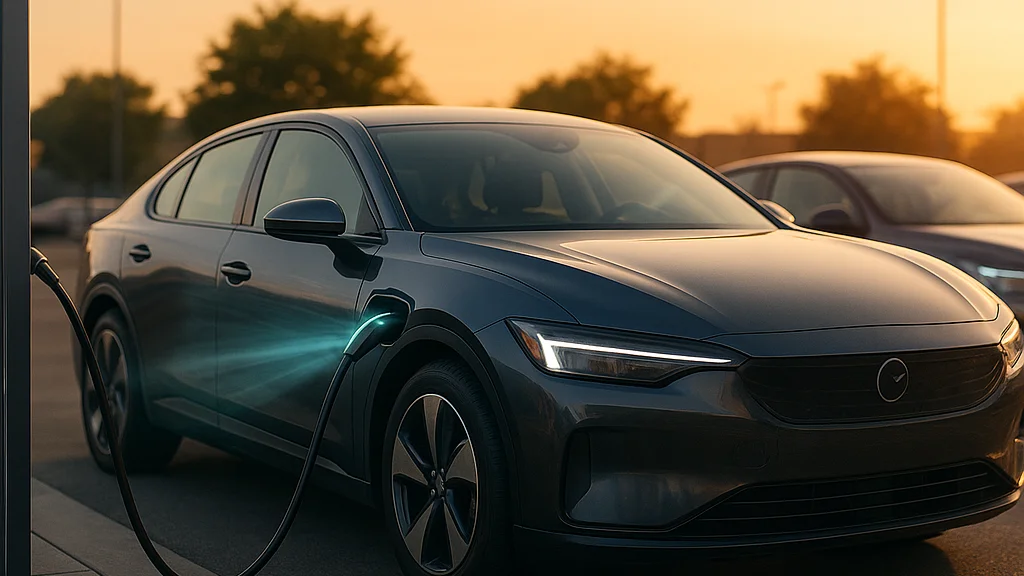

A few winters ago in Calgary, I stood in a grocery store parking lot watching two very different kinds of driver anxiety play out. One family was brushing snow off an SUV while quietly debating whether they had enough gas to get across town before the light turned serious. A few spaces over, an EV owner checked her phone, saw the battery percentage, and shrugged. She had charged overnight at home and had more than enough range for the week. That small scene captures why the electric-car conversation has matured. The question is no longer whether battery vehicles can work for ordinary life. The sharper question is which models offer the best balance of range and value once you look past glossy launch headlines.
That balance matters because range still shapes confidence, while value determines whether confidence is affordable. A long-range EV that stretches a household budget too far is not a practical win. A cheap EV with weak real-world endurance may work as a city runabout, but it can become stressful on cold days, highway trips, or for families without reliable home charging. The sweet spot sits in the middle: enough usable range to reduce friction, efficient charging performance, manageable ownership costs, and a purchase price that does not feel detached from reality.
By 2026, the market is far richer than it was even three years ago. Battery costs have eased from earlier peaks, Chinese manufacturers continue to pressure global pricing, and legacy automakers have finally produced more convincing dedicated EV platforms. At the same time, insurance costs, depreciation, charging access, and software reliability have become harder to ignore. If you are shopping carefully, it helps to think like an accountant and a road-tripper at once.
For readers who want a companion overview, Best Electric Vehicles for Range and Value Explained offers a useful primer, while Best Electric Vehicles for Range and Value Compared is a good side-by-side reference. Here, I want to go deeper: what range really means, which vehicles stand out, what changed recently, and how to avoid paying for battery capacity you may never actually use.
The best EV for range and value is rarely the one with the biggest battery. It is the one that turns battery size, efficiency, charging speed, and price into the least stressful ownership experience.
What range really means once marketing leaves the room
Manufacturers love to headline maximum range figures, and to be fair, range estimates do matter. EPA ratings in the United States remain one of the most useful apples-to-apples tools, while WLTP numbers in Europe tend to look more generous. But shoppers get into trouble when they treat a laboratory estimate as a fixed promise instead of a planning tool. Temperature, tire choice, speed, elevation, passenger load, and HVAC use can all move the number in meaningful ways. In prairie winters, anyone who has preheated a cabin while the wind cuts sideways knows this instinctively.
That is why value-focused buyers should care about efficiency almost as much as outright range. A car that travels farther per kilowatt-hour often saves money twice: first at the charger, and later in reduced battery-size premiums. It may also recover more quickly on road trips if its charging curve is strong. This is one reason some midsize EVs with moderate battery packs can feel more livable than larger, heavier models that advertise huge numbers but charge less gracefully.
Recent consumer roundups reflect this shift. Auto Express's best electric cars list has emphasized overall excellence rather than simple battery bragging rights, and MSN's 2026 consumer EV roundup similarly points readers toward models that blend practicality, comfort, and efficiency. Those lists are not identical, but the editorial trend is revealing: mature EV advice now treats range as one pillar among several, not the whole building.
There is also a psychological piece to this. Many households overbuy range because they imagine their hardest day rather than their normal week. If your daily driving is 40 to 80 kilometres and you can charge at home, a 500-kilometre-rated vehicle may already provide generous breathing room. Pushing to 650 kilometres can add cost and weight without changing your life very much. By contrast, if you make frequent intercity trips in sparse charging corridors, paying for more battery and faster charging can be sensible insurance.
- Urban commuter with home charging: efficiency and purchase price often matter more than maximum range.
- Suburban family with mixed use: 300 to 400 miles of EPA-rated range can be a comfortable middle ground.
- Frequent highway traveler: charging speed, route coverage, and winter performance become just as important as official range.
- Used-EV buyer: battery health, warranty status, and depreciation may outweigh every headline spec.
So when we talk about the best electric vehicles for range and value, we are really asking a broader question: which models deliver the most useful miles for the money, not merely the most advertised ones.
The standout value equation: which EVs earn their keep
If you zoom out across the 2026 market, several patterns emerge. Tesla still matters because the Model 3 and Model Y remain benchmarks for efficiency, software integration, and charging convenience in many regions. Hyundai and Kia continue to be serious contenders because the E-GMP platform brought fast charging and competitive range into more attainable price bands. Chevrolet's Equinox EV and Blazer EV pushed General Motors deeper into the mainstream battery market, while the Silverado EV and other large-format entrants proved that range leadership can exist in trucks too, albeit often at a higher price. Meanwhile, Lucid still commands attention at the top end for extraordinary range, though value is harder to argue there unless your budget is already expansive.
For pure range-per-dollar, the strongest candidates often sit in the compact and midsize crossover or sedan segments. The Tesla Model 3 Long Range remains difficult to ignore because its EPA range, efficiency, and access to a mature fast-charging ecosystem create a compelling ownership package. The Hyundai Ioniq 6 has also stood out for slipperiness and real efficiency, often delivering impressive distance from a modestly sized battery. Kia's EV6, especially in its longer-range trims, continues to offer an appealing mix of design, charging speed, and everyday usefulness. The Hyundai Ioniq 5 trades a little aerodynamic efficiency for hatchback practicality and remains one of the easiest EVs to recommend to families.
Then there are the value disruptors. Chevrolet's Equinox EV arrived as the kind of vehicle the market needed: a recognizable crossover shape, competitive range in certain trims, and pricing intended to reach households that had been priced out of the conversation. Depending on incentives, local dealer behavior, and trim selection, it can make a stronger financial case than more fashionable rivals. Nissan, after years of looking cautious, has had to rethink its position as battery competition intensified. Used-market options have become especially interesting here.
Coverage of the used segment reflects that affordability turn. Both The Mirror and the Daily Express recently highlighted budget used EVs under the £10,000 mark in the UK, a reminder that value is no longer confined to new-car showrooms. The exact models and local economics vary by market, but the larger point travels well: depreciation has made some older EVs surprisingly accessible, especially for buyers whose driving patterns do not demand huge battery packs.
- Best all-round range and value: Tesla Model 3 Long Range, because efficiency and charging access still carry real weight.
- Best aerodynamic efficiency play: Hyundai Ioniq 6, especially for drivers who do regular highway mileage.
- Best family-friendly fast charger: Kia EV6 or Hyundai Ioniq 5, depending on cargo and design preferences.
- Best mainstream budget crossover case: Chevrolet Equinox EV in well-priced trims.
- Best premium range leader: Lucid Air, though this is more a range champion than a value champion.
Value is not the cheapest sticker. It is the total price of confidence: purchase cost, charging time, efficiency, insurance, depreciation, and how calmly the car fits into your week.
Why some long-range EVs are better buys than others
Two cars can advertise similar range and still represent very different value propositions. The first reason is charging architecture. An EV that can add substantial range quickly on a DC fast charger may save enough time over years of travel to justify a slightly higher purchase price. Hyundai and Kia understood this early with their 800-volt-capable models, which earned praise for brisk charging under the right conditions. That matters because road-trip convenience is not just about how far you can go before stopping; it is about how long the stop lasts and how predictable that stop feels.
The second factor is software and route planning. Tesla has long held an advantage here by integrating charging stops into navigation with a level of polish many rivals spent years trying to match. Some competitors have improved significantly, but the gap has not vanished everywhere. For a buyer who does frequent long drives, that software layer can be the difference between a relaxing trip and a mildly annoying one. This is one reason a vehicle with a slightly lower range figure can still deliver a better ownership experience than a nominally longer-range rival.
Third comes battery chemistry and trim strategy. Lower-cost EV variants increasingly use lithium iron phosphate, or LFP, chemistry, which can be excellent for longevity and cost control even if energy density is lower than some nickel-rich chemistries. That can make standard-range versions particularly attractive for commuters who charge regularly and do not need maximum distance. At the same time, some automakers bundle long-range batteries with luxury features, larger wheels, or dual-motor systems that raise the price sharply. Buyers should ask whether they are paying for the battery, the drivetrain, or a whole package of extras they do not actually want.
Even the premium market illustrates this tension. AOL noted several EVs with more range than a Tesla Model 3, but outranging a Model 3 does not automatically make a car a better value. A larger, more expensive luxury sedan may win the spec-sheet contest while losing badly on affordability, efficiency, and long-term cost. Numbers need context.
One practical way to compare vehicles is to calculate a rough range-per-dollar ratio and then adjust for charging speed and expected incentives. Another is to estimate annual electricity spending using local utility rates and your typical mileage. Insurance quotes are also essential. In some markets, EV insurance remains unexpectedly high for certain brands or body styles, and that can quietly erase a purchase-price advantage. If you want a broader framework before you shop, Beginner’s Guide to the Best Electric Vehicles for Range and Value breaks down the basics, while Best Electric Vehicles for Range and Value: An Expert Guide gives a more technical lens.
What changed recently: the 2026 market is more practical, and more crowded
The biggest shift by 2026 is not simply that there are more EVs. It is that the market has become more segmented, which is healthier for consumers. A few years ago, buyers often had to choose between expensive premium cars and compromised budget options. Now there are more credible middle-class EVs with enough range to satisfy real families. That is a structural change, not a marketing flourish.
Competition has also sharpened pricing discipline. Chinese manufacturers, whether directly present in a market or influencing it indirectly, have put pressure on global brands to justify their margins. European and North American automakers have responded with more tactical pricing, improved lease deals, and in some cases simplified trim structures. Reuters and industry analysts have repeatedly pointed to this pressure as one of the defining business stories in the auto sector. Even where tariffs or trade barriers limit direct market share, the competitive signal is impossible to ignore.
Charging access has evolved too. Tesla's charging standard and network strategy reshaped the North American conversation, with more automakers embracing NACS compatibility. That matters for value because infrastructure uncertainty carries a hidden emotional cost. A car that can use a wider, more reliable network may command a premium on paper while still saving time, stress, and route-planning friction in practice. For many shoppers, especially those outside dense urban cores, that convenience is part of the value equation whether accountants like the term or not.
Battery technology has improved in quieter ways as well. Thermal management is better than it used to be in many models. Heat pumps are more common. Software updates increasingly refine charging behavior and efficiency after purchase. None of this makes headlines like a concept car reveal, but it improves day-to-day ownership. There is also growing maturity in the used market, where buyers can now compare several generations of EV design rather than taking a leap into the unknown.
Still, 2026 is not frictionless. Public charging reliability remains uneven depending on geography. Repair networks for some newer brands are still developing. And lower sticker prices can be offset by weak resale values if a model struggles to build trust. The market is better, yes, but careful buying still matters.
New versus used: where the smartest value may actually be hiding
There is a tender little thrill in buying a new car, the same kind of feeling as opening a fresh notebook and believing this time your handwriting will stay neat forever. But for value, used EVs deserve serious attention. Early depreciation on electric cars can be steep, especially when newer models arrive with better range or when price cuts hit the new market. That can be painful for first owners and very helpful for second ones.
The used sweet spot often depends on your tolerance for compromise. If you need a single household vehicle that must handle winter, school runs, and occasional road trips, a newer used model with at least moderate range and strong battery management is the safer bet. If you want a second car for commuting and errands, older short-range EVs can be astonishingly affordable. The UK press has been especially active on this point. The Mirror and the Daily Express both recently covered sub-£10,000 used EV options, signaling how quickly entry barriers have fallen in some segments.
Buyers should, however, inspect the details with care. Battery health reports are valuable when available. Remaining warranty coverage matters. So does charging speed: an older EV with limited DC fast charging may still be perfect for a city household with home charging, but frustrating for regional travel. Software support, replacement parts, and tire costs also deserve a look. A cheap used EV with uncommon tires or weak dealer support can become less cheap over time.
- Best case for buying new: when incentives are strong, financing is favorable, and you want the latest charging standard or warranty coverage.
- Best case for buying used: when your driving is predictable, you can charge at home, and depreciation has already done the heavy lifting.
- Biggest used-EV watchouts: battery degradation, outdated charging hardware, limited software support, and insurance surprises.
- Biggest new-EV watchouts: dealer markups, rapid price cuts after purchase, and paying for unnecessary battery size.
For households trying to minimize total transport costs, a used EV can be the most rational choice of all. The trick is to match the car to the life you actually have, not the fantasy life where every weekend becomes a 600-kilometre road trip.
How to choose the right EV for your life, not someone else’s spreadsheet
There is no universal winner because value changes with context. A condo resident who relies on public charging faces a different equation than a homeowner with a garage outlet. A rural driver in Alberta, a family in suburban Ohio, and a London commuter dealing with congestion rules will not rank the same priorities in the same order. That is why the most reliable shopping method starts with habits, not horsepower.
Begin with your weekly mileage and charging access. If you can charge at home or at work, you may need less battery than you think. Then map your longest common trip, not your rarest heroic one. Check whether the vehicles on your shortlist can comfortably do that route with a weather buffer. After that, compare real costs: purchase price after incentives, insurance, expected electricity rates, tire replacement, and financing. If you are considering a premium trim only to get more battery, calculate how many years of public charging or rental-car road trips that price difference could buy instead.
It also helps to test the cabin and software with unusual honesty. Does the navigation make sense? Are physical controls available for the things you use every day? Is rear-seat space enough for the actual people in your life, including the lanky teenager who somehow keeps growing? These details shape satisfaction more than a spec-sheet victory ever will.
One final note on winter. Cold-weather performance is not a reason to avoid EVs, but it is a reason to shop thoughtfully. Heat pumps, battery preconditioning, efficient HVAC design, and strong route planning can materially improve winter usability. If you live somewhere that treats January as a character test, look for owner reports from similar climates rather than relying on mild-weather reviews.
Readers who want a forward-looking perspective can also see The Future of Best Electric Vehicles for Range and Value in 2026, which explores where pricing, batteries, and charging standards may head next. My own view is simple: the best electric vehicles for range and value are increasingly the ones that make themselves boring in the nicest possible way. They start each morning ready, cost less to run, and stop asking for emotional labour.
The bottom line: the best picks right now, and what to watch next
If I were narrowing the field for most buyers in 2026, I would start with a few practical archetypes. For a balanced sedan, the Tesla Model 3 Long Range and Hyundai Ioniq 6 remain especially persuasive. For a family crossover, the Hyundai Ioniq 5, Kia EV6, and well-priced Chevrolet Equinox EV deserve close attention. For buyers who care more about price discipline than maximum distance, used EVs have become a serious lane of their own rather than a compromise corner. And for those shopping in the premium bracket, long-range luxury options can be wonderful, but they should be judged honestly against how much that extra range really changes daily life.
What should you watch next? Battery chemistry will keep shifting, with LFP likely to remain important for affordability. Charging standards will continue to consolidate, especially in North America. Software, once treated as a shiny extra, will become even more central to value because route planning, battery conditioning, and energy management all depend on it. The used market will also become more sophisticated as buyers learn how to assess battery health and as independent inspection tools improve.
For now, the most sensible advice is refreshingly human. Buy enough range to feel calm, not enough to impress strangers. Pay attention to charging speed and ecosystem, not just the headline number. Compare insurance before you fall in love. And if a gently depreciated used EV fits your life, do not let old myths talk you out of a good decision.
Cars are intimate machines. They carry groceries, tired children, awkward silences, and the little relief of getting home before the soup overcooks. The best EV for range and value is the one that serves those quiet ordinary moments with the least fuss and the most grace. Be kind to your budget, and a little kind to yourself too.


























Sign in to leave a comment.