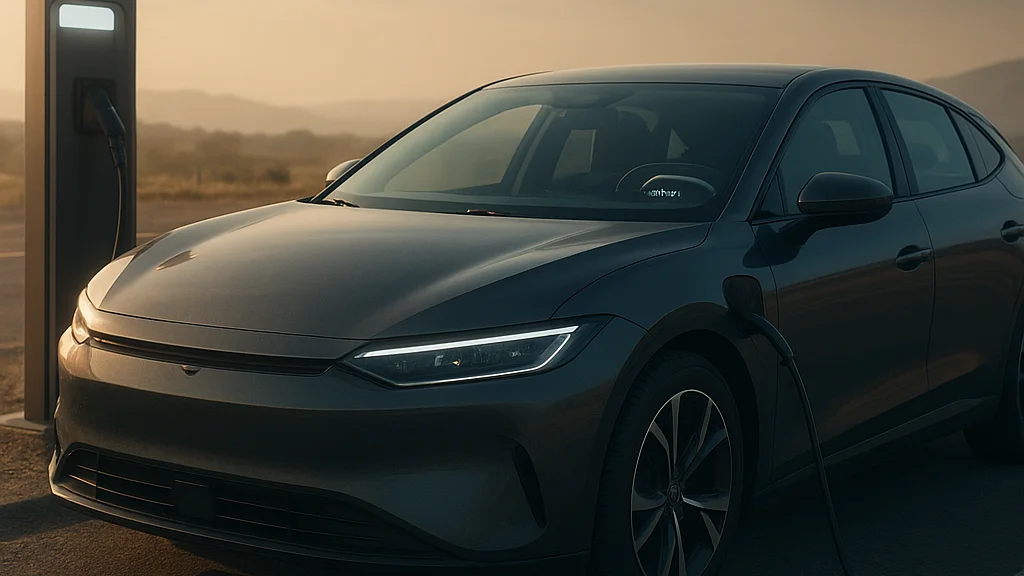

A few winters ago, a neighbour in Calgary told me she loved the idea of an electric vehicle right up until the first deep freeze. Her question was simple and completely fair: if range drops in the cold and prices still feel high, where is the value? That question sits at the centre of the EV market in 2026. Buyers are no longer dazzled by novelty alone. They want proof. They want miles, charging speed, battery durability, software that behaves, and a monthly payment that does not quietly undo the fuel savings.
The good news is that the market has matured enough to give real answers. Range has improved in several mainstream models, charging networks are broader than they were even two years ago, and price pressure from competition has made some EVs far easier to justify. At the same time, the cheapest sticker price is not always the best deal, and the longest-range vehicle is not always the smartest buy. Value lives in the relationship between purchase price, usable range, efficiency, charging access, depreciation risk, and how a car actually fits daily life.
That is why the strongest EV recommendations in 2026 tend to cluster around a few standouts rather than the entire field. Publications such as Car and Driver, AutoExpress, MSN, and Forbes have all highlighted a similar truth: the best EVs are increasingly the ones that balance real-world range with sensible ownership costs, not simply the ones chasing headline numbers. If you are still sorting the basics, WriteUpCafe has a practical primer in How to Get Started With Electric Vehicles for Range and Value. Here, I want to go further and answer the harder question with more care: which electric vehicles genuinely offer the best range and value, and what should buyers watch before signing anything?
The strongest EV purchase in 2026 is rarely the one with the biggest battery. It is the one that gives you enough range, dependable charging, and a total cost that still feels kind six months later.
What “range and value” really mean in an EV purchase
Range is the easiest number to market and the easiest one to misunderstand. Official estimates, whether from the EPA in the United States or WLTP figures in Europe, are useful benchmarks, but they are not promises. Temperature, speed, wheel size, cargo, elevation, and driving style all matter. A vehicle rated at 320 miles may feel excellent in spring commuting and much less magical on a January highway trip with the heater running. That does not make the rating dishonest; it means buyers need to think in terms of usable range rather than brochure range.
Value is even broader. A lower-priced EV with mediocre charging speed can become frustrating on road trips. A premium EV with impressive range may lose too much value if resale softens or if software support ages badly. Then there is efficiency, measured in miles per kilowatt-hour or energy use per 100 miles. Efficient EVs often need smaller batteries to travel similar distances, which can help with both cost and charging time. In practical terms, a well-priced, efficient car with 280 to 330 miles of range may be a better value than a heavier, more expensive model claiming 400 miles.
Consumer guidance has shifted accordingly. MSN’s 2026 roundup and Car and Driver’s rankings both reflect a market where buyers reward complete packages: comfort, charging confidence, software usability, and price discipline. That is also why internal comparisons matter. If you want a broader framework for weighing tradeoffs, Best Electric Vehicles for Range and Value: An Expert Guide complements this discussion nicely.
- Range: official estimate plus likely real-world performance in weather and highway use
- Value: purchase price, incentives where available, insurance, charging costs, maintenance, and depreciation
- Charging: peak charging speed, charging curve, and network access
- Efficiency: how much energy the vehicle consumes to cover distance
- Fit: cabin space, cargo room, ride quality, and software reliability
Seen this way, “best” becomes less about hype and more about calm arithmetic. That tends to lead buyers toward a handful of consistent winners.
The strongest mainstream picks: where range meets affordability
If the goal is to identify EVs that most convincingly combine range and value, a few names keep rising. Tesla’s Model 3 and Model Y remain difficult to ignore because they pair long range with broad charging access and mature software. The Hyundai Ioniq 5 and Kia EV6 continue to earn respect for their fast charging and competitive pricing in many trims. Chevrolet’s Equinox EV and Blazer EV have strengthened General Motors’ position in the value conversation, especially for buyers who want crossover practicality without stepping into luxury pricing. Meanwhile, the Hyundai Ioniq 6 deserves more attention than it often gets, particularly for efficiency-minded drivers who care more about miles per charge than SUV fashion.
The Tesla Model 3 has long been a benchmark because it offers strong efficiency and a relatively straightforward ownership proposition. Depending on trim and market, it often sits in the sweet spot where range is comfortably above what most households need and charging infrastructure is one of the least stressful in the segment. The Model Y extends that formula into a crossover body style and remains one of the most compelling family EVs for buyers who value cargo space and road-trip convenience.
Hyundai and Kia answer from a different angle. The Ioniq 5, Ioniq 6, and EV6 have earned praise for 800-volt-class fast-charging capability on supported infrastructure, meaning shorter charging stops in ideal conditions. That matters more than many first-time buyers realize. A vehicle that recovers substantial range quickly can feel more liberating than one with a slightly larger battery but slower charging. AutoExpress and Car and Driver have repeatedly treated these models as serious class leaders for precisely that reason.
General Motors’ newer Ultium-based entries have made the market more interesting. The Equinox EV, in particular, has been watched closely because it aims at a more attainable price bracket while still promising respectable range. If execution holds up over time, that formula could matter more for mass adoption than any halo car ever did.
- Tesla Model 3: excellent efficiency, mature software, strong charging ecosystem
- Tesla Model Y: practical family packaging, good range, broad charger access
- Hyundai Ioniq 5: fast charging, roomy interior, balanced price-to-feature ratio
- Hyundai Ioniq 6: standout efficiency, long-range appeal, aerodynamic design
- Kia EV6: strong performance across trims, quick charging, attractive warranty reputation
- Chevrolet Equinox EV: promising value-oriented positioning in a popular crossover format
For most households, the best-value EV is not the cheapest one on the lot. It is the one that makes charging and daily use feel almost boring, because boring is what reliability looks like.
Why charging speed and infrastructure matter almost as much as range
There is a gentle trap in EV shopping: focusing so hard on battery size that you forget the lived experience of replenishing it. A car with 350 miles of range but middling fast-charging performance can still feel cumbersome on long trips. Another with 280 or 300 miles, but a strong charging curve and dependable network access, may fit real life far better. This is one reason Tesla has maintained a value advantage beyond sticker price. Its charging ecosystem reduced friction for years, and even as other networks expand, ease still counts.
Recent adoption of the North American Charging Standard by a growing list of automakers has also changed the conversation in 2025 and 2026. Access, adapters, and future compatibility now matter in purchase decisions in a way they did not a few years earlier. Buyers are asking not just “How far can it go?” but “Where can I charge it next winter when I am tired and just want to get home?” That is a wiser question.
Hyundai, Kia, and Porsche have shown how powerful high-voltage architectures can be when paired with capable stations. The difference between a 15-to-20-minute stop and a 35-to-45-minute stop is not abstract over years of ownership. It shapes whether a family road trip feels manageable or irritating. Reuters and industry analysts have repeatedly noted that charging reliability remains one of the biggest barriers to broader EV confidence, which means a car’s value should always be assessed alongside the charging environment it will use.
For urban drivers with home charging, this issue shrinks. For apartment dwellers or frequent long-distance drivers, it grows. A buyer who cannot charge overnight at home should be especially careful. Public charging prices can also narrow the operating-cost advantage versus efficient hybrids, depending on region and provider.
- Home charging available: range anxiety drops sharply, and even mid-range EVs become practical
- Frequent highway travel: prioritize charging speed and network reliability over maximum battery size
- Cold climate use: look for heat pump availability, battery preconditioning, and strong winter efficiency
- Apartment living: map nearby chargers before purchase, including pricing and uptime patterns
This is where range and value stop being abstract and become personal. The same vehicle can be a brilliant bargain for one household and a source of low-grade stress for another.
The premium edge: when paying more actually buys meaningful value
Luxury EVs complicate the value conversation because they are, by definition, not cheap. Still, some premium models do justify their higher prices better than others. According to Forbes’ look at luxury electric vehicles, the upper end of the market increasingly rewards brands that can pair refinement with range, software polish, and a charging experience that does not feel experimental. The best premium EVs are not selling leather alone. They are selling confidence.
Lucid remains central to any discussion of range leadership. Its longest-range configurations have posted some of the most impressive official figures in the market, and that engineering achievement deserves respect. Yet value is not determined by range alone. Lucid’s proposition makes the most sense for buyers who will actually use that range and who are comfortable with premium pricing and a younger brand’s support footprint. For some, that is worth it. For many mainstream households, it is excess.
BMW’s i4 has become a more grounded premium recommendation because it offers a familiar sport-sedan feel, solid range in key trims, and interior quality that many buyers still find more intuitively premium than some rivals. The Mercedes-Benz EQE and Porsche Taycan also have strong cases depending on use case, though they serve different priorities: comfort and brand prestige in one corner, driver engagement in another. The issue is that once transaction prices climb, the value test becomes stricter. Buyers should expect meaningful advantages in comfort, charging, ride quality, and support.
That is why some shoppers who can afford a luxury EV still choose a well-equipped mainstream model. An Ioniq 5, EV6, or upper-trim Model Y may deliver 80 to 90 percent of the daily usefulness for much less money. There is no shame in that choice. Sometimes restraint is the most elegant form of value.
What changed recently: the 2026 market is more competitive and less forgiving
The EV market in 2026 feels different from the exuberant phase that defined the early decade. Growth continues, but buyers are more skeptical, financing costs have mattered, and manufacturers have learned that not every electric model can command a premium simply because it has a battery. Price cuts, incentives, lease support, and strategic repositioning have all become tools in a more disciplined market.
Tesla’s earlier price resets reshaped expectations across the sector, and the aftershocks are still visible. Legacy automakers have had to think more carefully about margins, trim structures, and production pacing. At the same time, Chinese manufacturers continue to influence global pricing and technology expectations, even in markets where they are not dominant sellers. Reuters reporting over the past two years has repeatedly highlighted the pressure that lower-cost EV manufacturing and intense competition are placing on established brands.
Another important shift is consumer maturity. Buyers now ask harder questions about battery chemistry, software update cadence, repair costs, and resale value. They have seen enough first-generation compromises to know what they do not want. They are also more alert to the difference between launch promises and dealership reality. This has helped vehicles with proven track records and transparent ownership costs stand out more clearly.
Charging interoperability is also improving, though unevenly. The spread of NACS access and adapter plans has the potential to reduce one of the market’s most persistent anxieties. If that transition continues smoothly, it may increase the value of non-Tesla EVs that gain easier access to a wider charging footprint. If it stumbles, buyers will continue to reward the brands with the least friction.
For readers thinking beyond today’s shortlist, The Future of Best Electric Vehicles for Range and Value in 2026 offers a useful look at the next phase of the category. The short version is simple: competition is improving the product, but it is also exposing weak value propositions much faster than before.
How to choose wisely: practical filters for real-world buyers
When friends ask me which EV to buy, I try to begin with lifestyle before brand. That sounds obvious, yet many expensive mistakes come from shopping identity rather than use case. A compact, efficient sedan may be the perfect answer for a commuter couple with home charging. A family of five doing regular ski trips might need a crossover with stronger winter range, battery preconditioning, and a more forgiving cargo area. Someone in a condo without reliable charging access may still be better served by a hybrid for now. There is no moral prize for forcing the wrong technology into the wrong life.
The first filter is daily distance. If your usual day is 30 to 60 miles, almost any modern EV with home charging will feel easy. The second filter is long-distance frequency. If you road-trip monthly, charging speed and network quality rise sharply in importance. Third comes climate. Cold weather can meaningfully reduce range, so Canadian and northern U.S. buyers should build margin into their calculations. Fourth is total ownership cost: financing, insurance, tire wear, electricity rates, and expected depreciation. Fifth is ergonomics. A beautiful spec sheet cannot rescue a frustrating interface.
Buyers should also be careful with incentives. Tax credits, rebates, and lease structures can alter the value equation dramatically, but rules can change and eligibility is often complicated. Verify current local and national programs before treating them as guaranteed savings. If you are comparing options, WriteUpCafe’s Common Mistakes When Choosing Electric Vehicles for Range and Value is a helpful companion because many bad purchases begin with assumptions about charging or incentives that do not hold up.
- Map your weekly driving, not your most anxious hypothetical trip
- Check whether you can charge at home or work consistently
- Compare charging speed and network access, not just total range
- Price insurance before purchase; some EVs surprise buyers here
- Read owner feedback on software, service, and winter efficiency
- Test the interface, visibility, and cargo space in person
A careful EV purchase feels less like chasing a trend and more like building a quiet household system that works. That is usually the right instinct.
The shortlist that makes the most sense right now
If I had to narrow the field to the EVs that most convincingly balance range and value in mid-2026, I would separate them into three groups. For many buyers, the Tesla Model 3 and Model Y still set the practical benchmark because they combine efficiency, usable range, and charging confidence in a way rivals are still trying to fully match. For buyers who dislike Tesla’s design choices or simply want alternatives, the Hyundai Ioniq 5, Hyundai Ioniq 6, and Kia EV6 are among the most persuasive all-rounders on sale. For value-conscious crossover shoppers, the Chevrolet Equinox EV is one of the most important vehicles to watch because it targets the heart of the market rather than the edges.
There are, of course, caveats. Lease deals can transform the ranking in your region. Dealer markups or discounts can make one car suddenly more sensible than another. Software updates can improve or sour an ownership experience over time. And the best answer for a household with easy home charging may be very different from the best answer for a renter relying on public stations. That is why broad rankings from outlets like Car and Driver, AutoExpress, and MSN are useful starting points, not final verdicts.
Still, the broad shape of the market is clear. The best EVs for range and value are no longer niche experiments. They are increasingly normal, capable family cars and commuter cars that happen to be electric. That is progress of the most meaningful kind. Not flashy. Not breathless. Just practical.
If you are shopping now, aim for an EV that leaves margin in both battery and budget. A little extra range for winter. A little extra patience for charging transitions. A little extra honesty about how you actually drive. Those softer choices tend to age well. And if the process feels noisy, take a breath, make some tea, and trust careful numbers over loud marketing. You deserve a car that makes life easier, not one more thing to worry about. Be gentle with yourself while you choose.































Sign in to leave a comment.