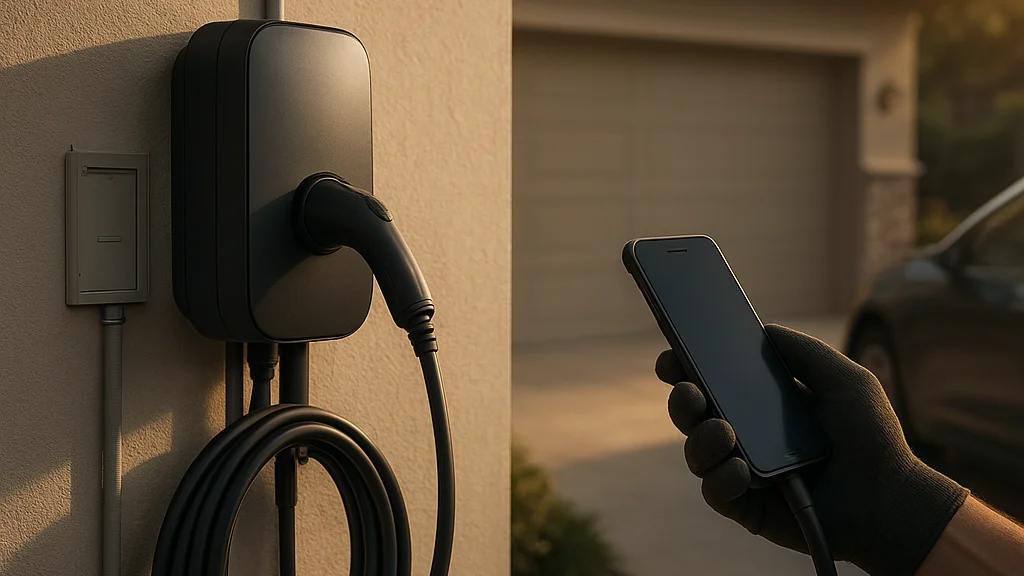

On a narrow street in Barcelona’s Eixample district, where Gaudí’s curves still seem to challenge the straight logic of the grid, the quiet revolution of transport is no longer theoretical. It happens at night, behind garage doors and along apartment walls, when electric vehicles refill while their owners sleep. Home charging has become the center of the EV ownership experience because convenience, cost control, and energy planning all start there. Public charging matters, certainly, but for most drivers the decisive question is simpler: can I charge reliably at home, and can I install a system that will still make sense five or ten years from now?
The answer is yes, but only if the installation is approached with the same seriousness as any other long-term electrical upgrade. A home EV charger is not merely a box on a wall. It is a load-management decision, a safety project, a property-value upgrade, and increasingly an entry point into smarter energy use. Publications such as The Independent’s EV charging guide and The Irish News overview of home charger installation both stress the same point: buying the charger is only one part of the equation. The electrical capacity of the home, charger placement, smart tariff compatibility, and installer quality often matter more than brand marketing.
What follows is a practical, expert-level guide to the top seven steps that determine whether a home EV charging installation performs well in real life. I am writing from the perspective of clean mobility, where the charger is not a gadget but infrastructure. For readers who want additional context, WriteUpCafe has also published useful companion pieces such as Complete Guide to Home EV Charging Station Installation and Home EV Charging Station Installation Guide for Smart Owners. This article builds on that foundation and focuses on what matters most in 2026: safety, cost efficiency, future readiness, and integration with a smarter home energy system.
“The best home charger is not always the fastest one. It is the one that matches your vehicle, your electrical service, and your daily routine without creating avoidable cost or risk.”
1. Start with your driving pattern, not the charger brochure
Many installation mistakes begin before any electrician arrives. They start when the buyer assumes that higher power automatically means a better setup. In practice, charger choice should begin with daily mileage, parking duration, and the battery acceptance rate of the vehicle itself. A commuter driving 35 to 60 kilometers a day has a very different charging profile from a household with two EVs, no workplace charging, and frequent weekend motorway travel.
Most home installations revolve around AC Level 2 charging, though terminology varies by region. In Europe and the UK, many home wallboxes commonly deliver around 7 kW on single-phase supply, while some properties with three-phase service can support 11 kW or 22 kW depending on the vehicle and local regulations. In North America, many residential chargers are discussed in amperage terms, often around 32 to 48 amps. The technical label matters less than the practical result: how many hours will it take to recover your typical daily use?
According to consumer guidance from MSN’s guide to smarter home EV charging, the biggest savings often come from charging at the right time rather than charging at the highest possible speed. That is a crucial distinction. If your car sits parked from 10 p.m. to 7 a.m., you have a long charging window. A moderate-power charger on a cheap overnight tariff can outperform a more expensive high-power unit that forces panel upgrades and adds little daily benefit.
Before selecting hardware, map your actual needs:
- Daily distance: calculate your normal weekday consumption, not your once-a-month road trip.
- Vehicle charging limit: some EVs cannot accept the full output of higher-capacity AC chargers.
- Parking time: overnight charging windows reduce the need for oversized equipment.
- Household growth: a second EV may justify load sharing or a higher-capacity circuit.
There is also a behavioral side. Drivers who plug in every night can live comfortably with lower charging speeds than those who habitually run the battery low and expect a rapid refill. In Spanish cities, where many households are only now shifting from street parking to dedicated residential charging arrangements, that habit change is often more important than the hardware itself.
2. Assess your home’s electrical capacity before buying anything
This is the step people try to skip, and it is the one that most often creates delays and unexpected invoices. Your home’s main electrical panel, service capacity, earthing arrangement, and spare breaker space determine what can be installed safely and legally. A charger may be advertised as simple, but the building rarely is.
An electrician or certified installer should evaluate the available load headroom in the home. In detached houses with modern electrical systems, this can be straightforward. In older urban properties, especially apartment blocks or shared garages, it can become more complicated. Barcelona offers a familiar example: handsome older buildings often conceal electrical infrastructure that was never designed for simultaneous EV charging, induction cooking, heat pumps, and rooftop solar integration.
The Irish News and Yahoo News UK both emphasize that installation costs can rise significantly when consumer units, cabling routes, or protective devices need upgrading. That is not a sales tactic. It is a reflection of electrical reality. If the panel is already near capacity, adding a continuous high-load device may require one or more of the following:
- A dedicated circuit for the charger
- Residual current protection or equivalent safety hardware
- Load-balancing equipment to prevent overload
- A main panel or service upgrade
- Long cable runs through walls, ceilings, or underground conduit
In 2026, dynamic load management has become one of the most useful tools in residential charging. Instead of assuming the charger always draws maximum power, these systems monitor household demand and automatically reduce charging speed when ovens, heat pumps, or other major loads are active. That can help owners avoid expensive electrical service upgrades. It is especially valuable in homes pursuing electrification across multiple systems.
“A home charger should fit the house as much as it fits the car. Electrical compatibility is the foundation of affordability.”
There is a policy dimension too. Across Europe, building codes and grid modernization efforts increasingly recognize EV charging as core residential infrastructure. The European Union has steadily pushed for more charging-ready buildings, and national implementation varies, but the trend is unmistakable. Homes that can accommodate managed EV charging are better positioned for the next decade of electrification.
If you want a broader planning framework, WriteUpCafe’s The Future of Home EV Charging Station Installation: A Comprehensive Guide is a useful companion read because it places panel capacity and future expansion in a wider ownership context.
3. Choose the right charger type: smart features now matter as much as power
A decade ago, buying a home charger was mostly about amperage, cable length, and weather resistance. By 2026, software and energy intelligence have become just as important. Smart chargers can schedule charging for off-peak hours, track energy use by session, integrate with utility tariffs, and in some cases coordinate with solar generation or home batteries. For many households, those capabilities justify the price premium.
The Independent’s reporting highlights how smart tariffs can materially reduce running costs when charging is shifted to low-cost periods. That aligns with what we see across European markets: electricity pricing is no longer static enough to ignore timing. A charger that can automate charging windows saves money with little effort from the driver. Some systems also let users cap charging current, prioritize one vehicle over another, or lock the charger against unauthorized use.
When comparing units, focus on these practical features rather than glossy app screenshots:
- Scheduled charging: essential for time-of-use tariffs.
- Load balancing: critical if the home has limited spare electrical capacity.
- Solar integration: useful for households with rooftop PV, especially in sunny markets such as Spain.
- Access control: relevant for shared driveways, apartment parking, or visible outdoor installs.
- Over-the-air updates: increasingly important as standards and utility programs evolve.
One area attracting more attention in 2026 is bidirectional charging, especially vehicle-to-home, or V2H. The technology is still not universal, because compatibility depends on the car, charger, and local regulation, but interest has accelerated as households look for backup power resilience. Techtimes’ practical guide to V2H charging captures why this matters: an EV battery can potentially support home loads during outages or help optimize energy use. That does not mean every homeowner should buy bidirectional hardware today. It does mean buyers should ask whether their chosen charger ecosystem has a credible roadmap.
I am cautious about overbuying, but I am equally cautious about false economy. A very cheap “dumb” charger can still work safely if installed correctly. Yet if it cannot communicate with tariffs, solar output, or household load management, it may become the weak link in a modern electrified home. In the same way that Barcelona’s superblocks changed mobility by coordinating systems rather than merely adding vehicles, home charging works best when it is part of a broader energy design.
4. Installation location can determine both cost and everyday usability
Ask installers where customers most often express regret, and many will point to charger placement. The unit may function perfectly, yet still be awkward every single day. The right location depends on cable reach, weather exposure, parking orientation, and the route from the electrical panel to the charger. A few meters of poor planning can add years of annoyance.
For detached homes with private driveways, the charger is often mounted near the usual parking position of the charge port, not simply near the front door or wherever wall space is available. That sounds obvious, but EV ports vary by vehicle. Front-left, rear-right, center-front. The cable should reach comfortably without stretching across walkways or forcing the driver into a precise, frustrating parking alignment. In narrow garages, cable management becomes even more important to avoid wear and trip hazards.
Outdoor installations need weather-rated equipment and careful attention to ingress protection. Reputable chargers are designed for exterior mounting, but exposure still matters. A unit under partial shelter generally ages better than one facing direct sun, standing water, or repeated impact risk. In Mediterranean climates, heat can be as relevant as rain. Extended summer temperatures affect both electronics and charging comfort, even if the unit remains within specification.
Location also drives cost because cable runs are expensive. Drilling through masonry, trenching to a detached garage, or routing conduit around finished interiors can quickly turn a routine installation into a substantial project. According to consumer installation guides in The Irish News and Yahoo News UK, distance from the electrical supply point is one of the clearest variables in final cost. Homeowners should request a site-specific quote, not a generic headline number.
Think through these placement questions before the installer visit:
- Where does the EV normally park?
- Which side of the vehicle contains the charge port?
- Will the cable cross a pedestrian path?
- Is the wall structurally suitable and weather-exposed?
- Could a second EV need access later?
Apartment dwellers face a harder challenge. Shared garages may require permission from the building association, metering arrangements, or a designated power route from the individual residence. Progress is improving across Europe, but bureaucracy remains part of the process. That is one reason early planning matters. For more on long-term setup logic, WriteUpCafe’s The Future of Home EV Charging Station Installation: A Deep Dive offers helpful perspective on how placement choices affect scalability.
5. Hire a qualified installer and insist on a documented scope of work
A home EV charger is not a DIY experiment for most households. The installation involves continuous high electrical loads, protective devices, code compliance, and sometimes utility notification. Using a qualified, experienced installer is not just prudent. It is often required for warranty validity, insurance confidence, and access to certain rebates or tariff programs.
What separates a strong installer from a merely available one? First, site assessment quality. A good professional asks about your vehicle, panel capacity, desired charging schedule, and future plans. Second, transparency. The quote should specify charger mounting location, circuit rating, cable route, protective hardware, any civil work, commissioning steps, and whether permits or inspections are included. Vague quotes produce expensive surprises.
Third, they should understand smart charging, not only wiring. In 2026, installation increasingly includes app setup, Wi-Fi or Ethernet configuration, firmware checks, and tariff scheduling. A charger that is physically installed but not properly configured is only half-finished. According to MSN’s smarter charging guide, optimizing charging schedules can be one of the biggest contributors to lower operating costs. That benefit disappears if the owner is left with a confusing app and no commissioning support.
When evaluating installers, ask for clear answers on the following:
- What electrical upgrades, if any, are likely required?
- Is load balancing included or optional?
- Which protective devices will be installed?
- Who handles permits, inspections, or utility paperwork?
- What is the warranty on both labor and hardware?
- Will they test charging with your actual vehicle after commissioning?
There is another reason to choose carefully: standards are changing. As more homes combine EV charging with heat pumps, batteries, and rooftop solar, installers need a systems view. Spain’s rapid solar expansion has made this especially visible. A charger installer who understands PV self-consumption can help a household align charging sessions with midday solar surplus or configure export-aware behavior where supported. That kind of advice has real economic value.
Scientists and energy researchers often make the same broader point. The challenge is not merely adding clean technologies but coordinating them. As physicist Amory Lovins has argued for years in different contexts, efficiency and smart system design frequently outperform brute-force capacity expansion. Home charging is a perfect example.
6. Optimize for cost: tariffs, solar, and total ownership economics
The installation invoice gets the attention, but the larger financial story unfolds over years of use. A well-chosen charger can reduce energy costs, protect the home from overload, and improve the economics of rooftop solar. A poorly chosen one can lock the owner into unnecessary electricity expense or trigger upgrades that never pay back.
Start with tariffs. Time-of-use pricing has become central to EV charging economics in many markets. Charging overnight during lower-rate periods can sharply reduce the cost per kilometer compared with peak-hour charging. The Independent’s guide emphasizes charging “without breaking the bank,” and that is exactly the right framing. The charger should be selected and configured around the tariff, not treated as separate from it.
Then consider solar. In Spain, where household solar adoption has expanded significantly over recent years, the marriage between rooftop PV and daytime EV charging is increasingly attractive for households with flexible schedules or home working patterns. Smart chargers that can track solar surplus may allow partial or full charging from self-generated electricity during sunny periods. Even if overnight charging remains cheaper on some tariffs, solar-aware charging adds resilience and optionality.
Total cost should be assessed across these categories:
- Hardware cost: charger unit, accessories, cable management.
- Installation labor: electrician time, mounting, testing.
- Electrical upgrades: panel work, breakers, load management, service changes.
- Operating cost: electricity price by charging time.
- Future flexibility: second EV readiness, solar integration, bidirectional potential.
There is also a subtle property-value angle. As EV adoption rises, homes with established charging infrastructure become more attractive to buyers who do not want the friction of arranging installation themselves. The premium will vary by market, of course, but charging readiness is increasingly part of modern residential desirability in the same way broadband quality or efficient heating once became expected.
One caution: do not assume the most expensive charger delivers the best economics. If a modestly priced smart unit paired with load management avoids a costly service upgrade, it may be the financially superior option. Conversely, if a bargain charger prevents participation in smart tariff optimization, the “savings” may disappear over a few years. Cost must be measured over the charger’s life, not just on purchase day.
7. Future-proof the installation for two EVs, backup power, and grid interaction
The final step is the one most often overlooked because it asks the homeowner to think beyond the first vehicle. Yet the market is moving quickly. Households that buy one EV often add a second. Utilities are expanding managed charging programs. Bidirectional charging is advancing, unevenly but unmistakably. The charger installed today should not become tomorrow’s bottleneck.
Future-proofing does not always mean buying the most advanced hardware on the shelf. It means preserving options. If the budget allows, oversizing conduit, planning cable routes for a second charger, or choosing a platform that supports load sharing can save major expense later. In family homes, dual-EV scenarios are already common enough to justify planning for them from the start.
Vehicle-to-home and vehicle-to-grid remain the most discussed frontier. Techtimes’ 2026 V2H guide reflects growing consumer interest in using EV batteries as backup power assets. The concept is compelling: the car becomes part of the home energy system rather than just a transport device. But compatibility remains fragmented. Homeowners should ask three separate questions: does the vehicle support bidirectional operation, does the charger support it, and do local rules or utility conditions allow it? A “yes” to one does not guarantee a complete solution.
Recent developments in 2026 make this planning more relevant than it was even two years ago:
- More automakers are discussing home-energy integration in product roadmaps.
- Utilities are refining demand-response and managed-charging programs.
- Smart-home platforms are becoming better at coordinating major electric loads.
- Consumers are more aware of outage resilience after repeated extreme-weather events in several regions.
The practical takeaway is simple. Install with tomorrow in mind, but spend with discipline. If bidirectional charging is not yet realistic for your vehicle or region, choose a charger ecosystem with a credible upgrade path rather than paying a premium for unused capability. If a second EV is likely within three years, ask for conduit or panel planning now. If rooftop solar is part of your strategy, verify integration options before the electrician leaves.
Barcelona teaches an urban lesson here. The best mobility systems are not built one isolated component at a time. They are designed so each piece can connect to the next. Home charging should follow the same principle. The top seven steps are not separate checkboxes; they are one coherent installation strategy.
For homeowners, the shortlist is clear: understand your driving needs, verify electrical capacity, prioritize smart features that match your tariff and energy goals, choose the location carefully, hire a qualified installer, model the long-term costs, and leave room for the next phase of electrification. Do that well, and the charger on your wall becomes more than a convenience. It becomes a quiet, efficient anchor for cleaner living.































Sign in to leave a comment.