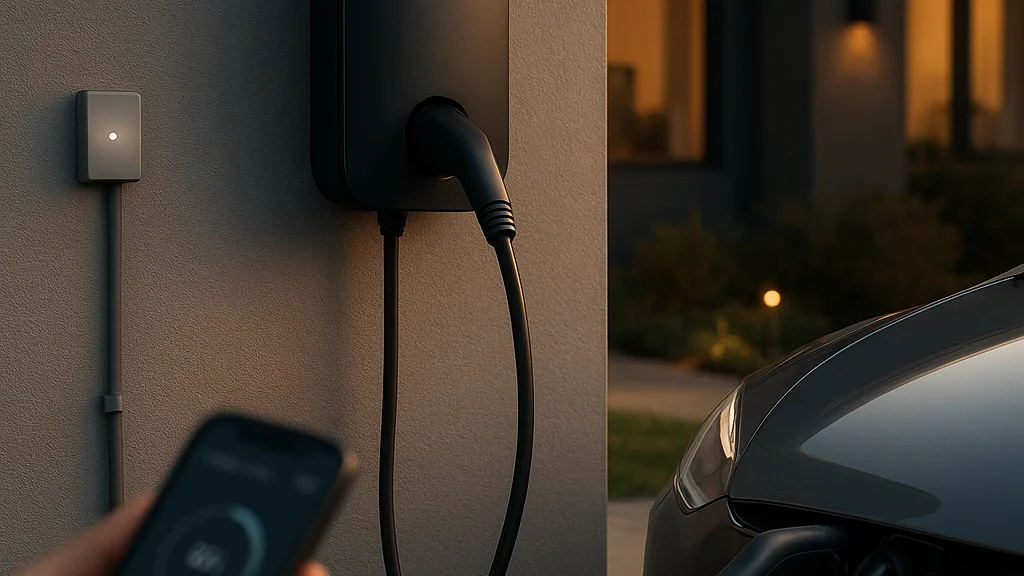

The first decision is not the charger, it is the house
When people buy first electric vehicle, many imagine charging as simple act, plug in at night, wake up with full battery, drive away. In practice, home EV charging station installation begins much earlier, with the electrical reality of the property. A modern battery EV can add meaningful range overnight even from a basic outlet, but for most households a dedicated Level 2 charger changes ownership experience completely. The question is not only speed. It is safety, panel capacity, cable routing, weather protection, software controls, and future proofing. If installation is done carelessly, the charger becomes daily irritation. If done correctly, it becomes invisible infrastructure, same as reliable air conditioning in Riyadh summer.
The market has matured fast. According to the International Energy Agency, global electric car sales continued rising strongly through 2024 and 2025, and the need for dependable residential charging has followed same path. That matters in Gulf region as well, where EV adoption is still earlier than Europe or China, but momentum is visible under broader diversification strategies tied to Saudi Vision 2030, urban electrification, and cleaner mobility. For many households, the garage wall is now part of energy transition.
Home charging also has efficiency advantage in many cases. BGR reported on why home EV chargers can be more efficient than some public charging options, especially when charging losses are managed through moderate power levels, shorter cable runs, and battery conditioning aligned with daily use. The lesson is practical, not theoretical. The best installation is one designed around your car, your load profile, and your home’s electrical limits.
If you are still comparing approaches, useful context can be found in WriteUpCafe’s Complete Guide to Home EV Charging Station Installation and Essential Guide to Installing Your Home EV Charging Station. Both help frame the big picture, but the critical step remains same, inspect the house before buying the hardware.
A home EV charger is not only accessory for car. It is permanent electrical appliance, and it should be planned with the seriousness of any major home circuit.
Understand charging levels, connector standards, and your real daily demand
Too many buyers choose charger by headline amperage alone. This is one of the most common mistakes. A home EV charging station installation guide should start with realistic energy needs. If you drive 40 to 60 kilometers per day, your requirement is very different from a family running two EVs, one large SUV and one sedan, with long suburban commute. Most homes do not need the fastest wallbox available. They need the right balance between charging speed, electrical capacity, and cost.
Level 1 charging, usually from standard household outlet, can work for plug-in hybrids or very low-mileage use. But for full battery EV ownership, Level 2 is the normal target. Depending on voltage and current, Level 2 can add roughly 20 to 50 or more kilometers of range per hour, though exact result depends on vehicle efficiency and onboard charger limits. A 7 kW or 11 kW setup is often enough for overnight replenishment. Jumping to higher power makes sense only if the vehicle supports it and the home electrical service can carry it safely.
Connector type matters too. In North America, J1772 for AC charging remains common for many non-Tesla vehicles, while NACS has expanded rapidly and is becoming more relevant across brands. In Europe and many other markets, Type 2 is standard for AC charging. This is why buyers should confirm three things before purchase:
- Vehicle AC charging limit in kilowatts
- Connector compatibility and cable length needs
- Whether the charger has fixed cable or socket-only design
The Irish News, in its explainer on EV home charger installation, emphasized another overlooked issue, charger placement can shape the whole ownership experience. If the cable barely reaches the charging port, or crosses walking path, frustration begins from day one. In villas and compounds, this becomes more important where parking patterns can change between drivers.
There is also software side. Smart chargers can schedule charging for lower tariff periods, limit current, record usage by user, and in some cases integrate with solar or home energy systems. MSN’s guide to smarter home EV charging highlighted how timing and load control can reduce cost without changing driving habits. For households with dynamic pricing or demand charges, this can save meaningful money over time.
The best charger is not the one with biggest number on the box. It is the one matched to the battery, the building, and the way the family actually drives.
The electrical assessment: panel capacity, load calculation, and safety rules
This is the section where many installations succeed or fail. Before any wallbox is ordered, a licensed electrician should evaluate the home’s main panel, service amperage, grounding condition, and spare breaker capacity. A charger may draw power for many hours continuously, so this is not like adding decorative lighting or another kitchen socket. EV charging is considered continuous load in many jurisdictions, which affects breaker sizing and conductor selection. A 40-amp charger, for example, may require a 50-amp circuit depending on code and equipment rating.
Load calculation is essential. The electrician must consider air conditioning, water heaters, ovens, pool pumps, elevators if present, and any other heavy loads. In Gulf homes, cooling demand is often dominant. During summer evenings, charging may overlap with peak AC use. That means the panel must be assessed under realistic conditions, not ideal assumptions. If the service is undersized, there are several options, and not all require expensive full upgrade.
- Install a lower-amperage EV charger that still meets overnight needs
- Use dynamic load management, where charger reduces output when house demand rises
- Add a subpanel dedicated to garage or driveway charging
- Upgrade the main service, meter, or panel if long-term demand justifies it
Yahoo’s report on mistakes to avoid when installing an EV charging station in your garage pointed to familiar errors: ignoring ventilation and heat, underestimating cable management, and assuming any nearby outlet can support EV charging equipment. These are not small details. Heat buildup, nuisance breaker trips, and poor mounting can shorten equipment life and create hazard.
A proper installation usually includes dedicated circuit, code-compliant breaker, correct wire gauge, weather-appropriate enclosure if outdoors, and residual current protection where required by local standards. Surge protection is also wise, especially in areas with grid instability or lightning risk. Some chargers include built-in protection features, but that should not replace whole-home electrical discipline.
For detached homes, cable run length can affect both cost and performance. Long runs from panel to driveway may require trenching, conduit, wall penetrations, or larger conductors to manage voltage drop. This is why the cheapest charger on paper can become expensive after labor. The property layout often matters more than the product brochure.
If you want broader planning ideas, WriteUpCafe’s The Future of Home EV Charging Station Installation: A Comprehensive Guide and The Future of Home EV Charging Station Installation: A Deep Dive both discuss how electrical upgrades and smart controls are becoming central, not optional.
Choosing the right location: garage, carport, driveway, or multi-car setup
Location choice affects convenience every single day, and this is why it deserves more attention than many buyers give it. A charger mounted in the wrong place can force awkward parking, expose cable to sun and dust, or create trip risk for children and visitors. In hot climates, equipment durability becomes serious issue. Direct exposure to high heat, blowing sand, and occasional rain can reduce lifespan unless the charger is rated properly and mounted thoughtfully.
Garage installation remains the easiest in many cases because the environment is controlled, cable can stay cleaner, and proximity to panel is often better. Yet not every home has enclosed garage. In carports or open driveways, the charger enclosure should have appropriate ingress protection rating, secure mounting, and shaded position if possible. A simple canopy or careful wall orientation can help reduce thermal stress. This matters in Saudi Arabia and across wider Middle East where summer surface temperatures can become punishing.
Think also about vehicle replacement. Today you may own one compact EV with front charging port. Tomorrow it may be larger SUV with rear-side port, or two cars in same household. Cable length and mounting height should account for that. Most installers recommend avoiding stretched cables and keeping the connector holster easy to reach without bending sharply. If parking is shared or tight, a central position between bays may be better than placing the charger at far corner.
For two-EV homes, there are three common strategies:
- One smart charger with load sharing and alternating schedules
- Two chargers connected to an energy management system
- One higher-capacity circuit split dynamically between vehicles
The best option depends on commute patterns and panel limits. If one car drives much more than the other, scheduled charging can avoid unnecessary hardware cost. If both vehicles return low every night, dual-port or managed dual-charger setup may be more practical.
Beyond convenience, security matters. Outdoor chargers should be mounted where they are visible enough to discourage tampering but protected enough to avoid accidental impact. In compounds and apartment parking areas, access control may be needed so electricity is not used by unauthorized drivers. Smart chargers with app-based authentication are increasingly useful for this reason.
Permits, installer selection, and the true cost of installation
People often ask one number, how much does home EV charging station installation cost? The honest answer is that hardware is only part of the bill. Cost depends on charger brand, amperage, cable run length, wall material, trenching, permit fees, panel work, and whether service upgrade is required. A straightforward garage installation near existing panel may be moderate. A detached parking area with long conduit run and panel expansion can cost several times more.
The installer matters as much as the equipment. Choose electrician or contractor with direct EV charger experience, not only general residential wiring practice. Ask for examples of previous installations, knowledge of local code, familiarity with your charger brand, and whether commissioning, app setup, and load management configuration are included. Some installers mount the unit and leave. Better installers test under load, verify breaker labeling, confirm Wi-Fi or Ethernet connection if needed, and explain operating limits clearly.
Before signing, request itemized quote covering:
- Charger hardware and accessories
- Breaker, wiring, conduit, mounting materials
- Labor, trenching, drilling, patching, and cleanup
- Permit or inspection charges if applicable
- Any exclusions such as panel upgrade or civil work
Another useful question is warranty responsibility. If the charger fails after three months, who diagnoses the issue, manufacturer or installer? If the breaker trips repeatedly, will the installer return? Clarity here avoids conflict later.
Recent consumer guidance has become more detailed because poor installations remain common. The Yahoo piece mentioned earlier warned against selecting undersized circuits or hiding the charger in impractical corners simply to reduce labor. That may save money on day one and create annoyance for years. The Irish News also underlined the need to understand permissions and property constraints before work begins, especially in shared buildings or rented homes.
For apartment residents, the challenge is larger. Building management approval, metering arrangement, fire safety rules, and parking assignment all matter. Some newer developments now prepare conduit pathways and electrical rooms for future EV rollout, but older buildings may need case-by-case engineering review. In the Gulf, where many residents live in compounds or towers, this is one of the next big infrastructure questions, inshallah solved with better planning standards.
Smart charging in 2026: solar integration, energy management, and V2H
By 2026, home EV charging is no longer only about filling battery. It is becoming part of broader household energy system. Smart chargers can coordinate with rooftop solar, battery storage, time-of-use tariffs, and utility signals. For homes with daytime solar generation, charging during sun hours can be attractive if one vehicle stays at home. For most working families, however, overnight charging remains the norm, so software scheduling is the practical tool that delivers value immediately.
What has changed recently is the move toward bi-directional capability. Vehicle-to-home, or V2H, is still not mainstream for every brand and every region, but it is advancing. Techtimes published a practical guide to vehicle-to-home charging in February 2026, explaining how some EVs can act as backup power source during outages when paired with compatible hardware. This is significant for households facing grid interruptions or seeking resilience. Yet consumers should be careful, V2H requires compatible car, inverter architecture, transfer equipment, and local regulatory acceptance. It is not feature you can assume from charger marketing alone.
MSN’s guidance on smarter charging also reflected another 2026 shift, software intelligence is becoming expected. Features now commonly discussed include scheduled charging windows, dynamic current adjustment, solar-only mode, tariff optimization, and remote diagnostics. These tools help avoid overbuilding the electrical system. A house that cannot support full 11 kW continuously may still operate very well with managed charging that responds to other loads.
There is also strategic value for energy systems in oil-producing countries. Saudi Arabia, the UAE, and neighbors are all balancing electricity growth, renewable integration, and transport modernization. Home charging, if unmanaged, can add evening peaks. Managed charging, by contrast, can support more efficient use of generation assets. This is where the conversation meets Vision 2030 logic, electrification is strongest when it aligns with smarter infrastructure, not only more devices.
In 2026, the charger on the wall is becoming part of home energy management. It is no longer only a plug, it is a control point.
A practical installation roadmap for homeowners
For readers who want clear sequence, the safest path is structured planning. Many installation problems happen because people buy charger first and ask electrical questions later. Reverse that order. Start with the vehicle, then the house, then the charger, then the installer. This process reduces both cost surprises and technical mismatch.
A practical roadmap looks like this:
- Confirm your EV’s AC charging limit, connector type, and average weekly driving distance
- Inspect parking pattern, cable reach, wall space, sun exposure, and future second-EV possibility
- Hire licensed electrician for panel assessment and load calculation
- Choose charger power level based on need, not marketing maximum
- Review permit, landlord, or homeowners association requirements if relevant
- Request itemized quote and ask about warranty, commissioning, and software setup
- Install dedicated circuit with proper protection and test under actual charging load
- Configure schedules, current limits, and user access before daily use begins
After installation, spend first two weeks observing behavior. Does the breaker remain stable during peak AC periods? Does the connector stay cool? Is the cable route comfortable at night? Does the app report realistic power draw? Small adjustments early can improve long-term reliability.
Maintenance is usually light, but not zero. Keep connectors clean, inspect cable for wear, check mounting hardware occasionally, and update firmware if the manufacturer supports it. Outdoor units should be checked after storms or extreme heat periods. If charging speed suddenly drops, do not assume the car is at fault. The issue may be thermal throttling, software settings, or electrical derating.
Readers wanting another reference point can compare planning approaches with WriteUpCafe’s Home EV Charging Station Installation Guide 2026, which complements this article with broader ownership considerations. The strongest installations are usually boring after they are finished, no drama, no tripped breakers, no cable wrestling, no confusion over charging windows. That is success.
What smart owners should watch next
The next phase of home EV charging will likely be shaped by three forces, standardization, energy management, and housing design. Standardization is improving, though connector transitions and brand ecosystems still create confusion in some markets. Energy management is accelerating because utilities and households both want more control over when electricity is consumed. Housing design is perhaps most important in emerging EV regions. New homes, compounds, and apartment towers should be built EV-ready from the start, with conduit paths, spare panel capacity, and parking layouts that assume electrified transport.
Traditional energy giants are also watching closely. Companies such as Aramco are part of wider regional conversation about transport fuels, power demand, and low-emission mobility pathways. Whether the future mix includes battery EVs, hybrids, hydrogen, or synthetic fuels, residential charging infrastructure is already becoming real consumer need. That means electricians, developers, and regulators must move faster than before.
For homeowners, the takeaway is simple but important. Do not treat charger installation as gadget purchase. Treat it as small energy project. The right setup saves time, reduces charging losses, supports battery-friendly routines, and prepares your property for future vehicles. The wrong setup creates hidden cost and daily inconvenience.
The strongest home EV charging station installation guide is one that respects local conditions. In hot climates, thermal resilience matters. In large family homes, load management matters. In apartments, governance matters. In all cases, planning matters most. Buy carefully, install professionally, and configure intelligently. Then the charger fades into background, exactly where good infrastructure belongs.


































Sign in to leave a comment.