

A battery race that now defines the car business
On a summer afternoon in Riyadh, the most interesting part of an electric car is not visible from outside. It is under the floor, sealed, cooled, monitored by software, and carrying much of the vehicle’s cost, performance, and resale value. For years, battery discussion was reduced to one question, range. By 2026, that is far too simple. The real contest is now about charging speed, safety under harsh climates, material supply, durability over many cycles, and whether automakers can cut cost enough to make electric vehicles truly mass market.
This is why battery breakthroughs matter more than flashy concept cars. A battery pack can account for roughly a third, and sometimes more, of an EV’s production cost depending on chemistry and segment. Small improvements in cell design can change the economics of an entire model line. Better thermal management can preserve range in Gulf heat. Faster charging can make intercity travel more practical. Longer cycle life can make fleets, taxis, and delivery vans much more attractive investments.
The pace of change has become intense. Chinese giants such as CATL and BYD continue to push manufacturing scale and chemistry innovation. Tesla, Panasonic, LG Energy Solution, Samsung SDI, SK On, Northvolt’s remaining technology influence despite restructuring pressures, and a long list of emerging sodium-ion and solid-state developers are all trying to shape the next decade. According to IDTechEx research on lithium-ion batteries and battery management systems, the industry is moving not only toward better cells, but toward smarter pack integration and more advanced software control.
For Middle East markets, this discussion has extra weight. Saudi Vision 2030 is pushing industrial diversification, advanced manufacturing, and cleaner mobility, while traditional energy leaders including Aramco are also exploring lower-carbon fuels, materials, and transport ecosystems. The battery story is no longer distant, it is becoming regional industrial policy. Readers who want a parallel perspective can also see Battery Technology Breakthroughs Reshaping Electric Cars, which looks at how design choices are changing vehicle architecture itself.
The battery is no longer a component inside the car, it is the platform on which the modern electric car is built.
That shift explains why every serious automaker now speaks the language of chemistry, cathodes, silicon anodes, pack-to-body structures, and charging curves. Breakthroughs are real, but they are uneven. Some are already in cars on the road. Others remain promising lab stories. Distinguishing between the two is where the market conversation becomes useful.
How the industry got here, from nickel obsession to chemistry pluralism
A decade ago, much of the premium EV market was built around high-nickel lithium-ion cells, mainly because energy density was the prized metric. More energy in less weight meant more range, and more range was the strongest answer to consumer anxiety. Chemistries such as NCA and NMC earned attention because they could deliver that. Yet they also came with trade-offs, higher sensitivity to raw material prices, thermal management complexity, and dependence on minerals with geopolitical and ethical questions attached.
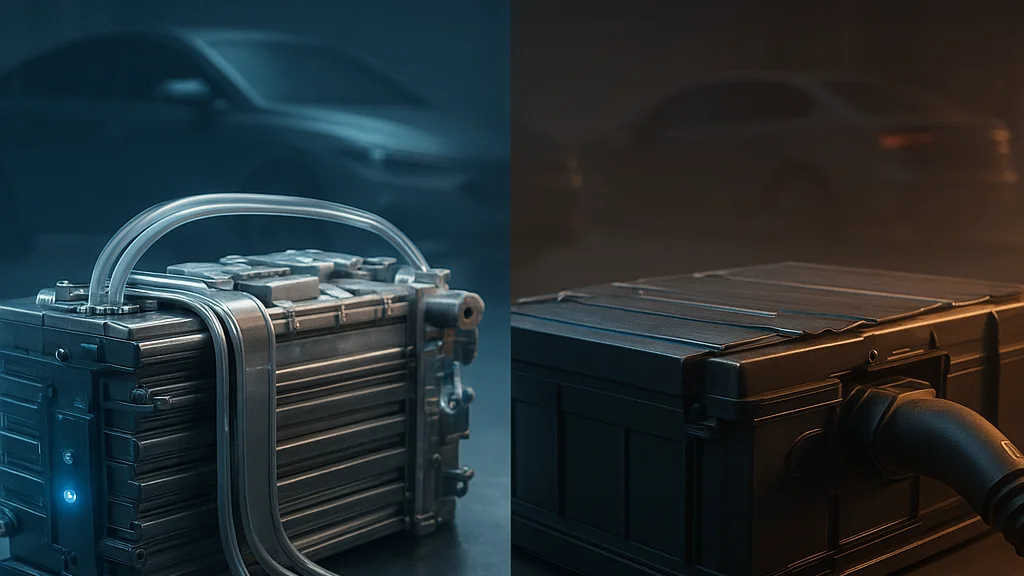
The next stage was not a single breakthrough, but a broad correction. Lithium iron phosphate, or LFP, returned to center stage. It offered lower cost, longer cycle life, and generally better thermal stability, even if energy density was lower than the best nickel-rich cells. For many compact cars, entry crossovers, buses, and commercial fleets, this was a very acceptable trade. Chinese manufacturers especially proved that smart packaging could offset some density disadvantage. Cell-to-pack and blade-style formats reduced wasted space and improved system efficiency.
That change has been one of the most important battery stories of the 2020s. Instead of one chemistry dominating all segments, the market is fragmenting by use case. Premium long-range vehicles may still favor nickel-rich batteries in some cases. Urban vehicles, fleets, and value-focused models increasingly use LFP. New work on manganese-rich cathodes, sodium-ion cells, silicon-enhanced anodes, and semi-solid architectures suggests that this pluralism will continue.
Battery management systems have also become much more important than many casual observers realize. According to IDTechEx, the intelligence layer around the battery, state-of-charge estimation, thermal balancing, safety controls, and predictive diagnostics, is becoming a major differentiator. A mediocre cell with excellent management can outperform expectations in real-world durability. A strong cell with poor software can disappoint owners very quickly in extreme climates.
Another important development is manufacturing know-how. Yield rates, dry coating methods, electrode thickness, and formation processes often matter as much as chemistry headlines. Investors like dramatic announcements, but factories decide winners. This is why some companies with famous prototypes still struggle to commercialize at scale, while others quietly improve existing lithium-ion lines and win contracts.
For a complementary take on this transition, Rethinking Battery Technology Breakthroughs for Electric Cars frames the same issue well, breakthroughs are not only about exotic materials, but about making proven chemistries cheaper, safer, and easier to manufacture.
The breakthroughs that matter most in real vehicles
When industry executives speak about breakthroughs, the public often imagines one miracle battery solving every problem. That is not how this sector is developing. Progress is arriving through several parallel advances, each addressing a different bottleneck. Some improve cost, others durability, others charging, and some mainly improve manufacturability.
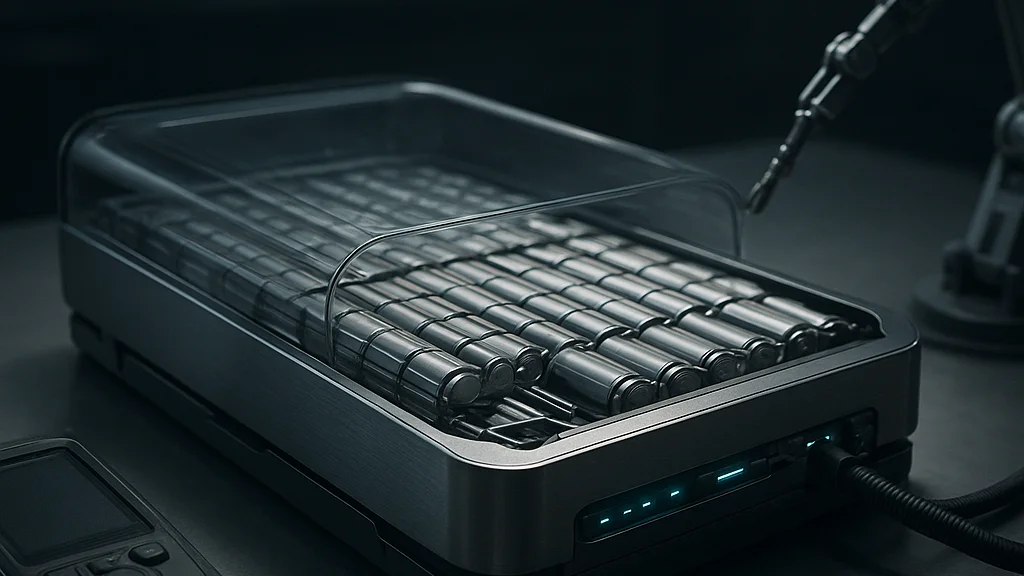
The first major area is pack integration. Cell-to-pack and cell-to-body designs reduce the amount of inactive material in a battery system. Fewer modules, fewer connectors, and more structural use of the pack can improve energy density at the vehicle level, not just at the cell level. This matters because drivers buy cars, not cells. A slightly less dense chemistry can still deliver competitive range if the pack is packaged very efficiently.
Second is fast-charging performance. Charging speed is not only a maximum kilowatt figure on a brochure. The charging curve, how long the battery can sustain high power, is what shapes user experience. Silicon-rich anodes, improved electrolytes, and better thermal control are helping some next-generation packs accept charge faster without severe degradation. This is especially valuable for highway corridors and commercial fleets where downtime is expensive.
Third is cycle life. A battery that retains useful capacity after many charge-discharge cycles can transform economics for taxis, logistics vans, and ride-hailing fleets. LFP has already shown strength here, and newer variants continue to improve. In hot regions, degradation resistance is not luxury, it is central requirement.
Fourth is safety. Thermal runaway remains the issue critics return to most often, but battery design has improved significantly. Better separators, stronger monitoring, more stable chemistries, and more careful pack isolation reduce risk. Deutsche Welle examined the broader environmental debate in its report on whether EV batteries are as dirty as critics claim, and one useful takeaway is that battery criticism often ignores fast progress in both manufacturing efficiency and end-of-life management.
- LFP batteries are strong on cost, safety, and cycle life, making them attractive for mass-market cars and fleets.
- Nickel-rich batteries still offer high energy density, useful for premium and long-range applications.
- Sodium-ion batteries are drawing attention for lower material cost and reduced lithium dependence, though energy density remains lower.
- Silicon-enhanced anodes can improve charging and energy density, but swelling and durability challenges still need careful engineering.
- Solid-state and semi-solid designs promise major gains, yet large-scale commercialization remains gradual rather than immediate.
Fifth is recycling and second life. A breakthrough is not complete if it creates a waste problem. The market is learning that recovery of lithium, nickel, cobalt, copper, and graphite can become a strategic supply source. This is especially relevant as countries seek more secure industrial chains.
The best battery breakthrough is not always the most futuristic one, often it is the one that survives scale, cost pressure, and summer heat.
This is why many 2026 winners are not the loudest science projects. They are the technologies that can be built by the millions, financed by cautious automakers, and trusted by fleet operators who calculate every riyal per kilometer.
What changed recently, the 2026 picture is more competitive
The battery market in 2026 looks more crowded and more segmented than it did even two years ago. One reason is that manufacturers now understand that different users need different battery solutions. Another is that price pressure in the EV market has become intense, especially because Chinese automakers continue to scale quickly and export more aggressively.
A major recent talking point is battery swapping for commercial vehicles. This idea has appeared many times before, but execution was often weak. Now there are more serious attempts in heavy-duty and fleet applications where routes are predictable and downtime carries measurable cost. The Independent reported on Octopus and CATL-backed battery swapping for electric trucks, describing systems designed to replace batteries in minutes rather than relying only on charging stops. The report, covering electric trucks using Chinese swapping technology, is important because it shows how breakthroughs are not limited to chemistry. Sometimes the innovation is logistical architecture.
Another notable development is the growing confidence around market scale. A Yahoo Finance report on the U.S. battery electric vehicle market points to expectations for continued growth through the early 2030s, reflecting demand across vehicle types and battery capacities. Even if regional adoption rates differ, the message for battery producers is clear, scale remains the central prize. The report is available here on Yahoo Finance. Scale then feeds back into lower cost, better supplier bargaining power, and more room for chemistry experimentation.
Meanwhile, solid-state batteries remain the most discussed future breakthrough, but the market has become more realistic. Automakers and suppliers continue pilot lines and prototype demonstrations, yet broad high-volume deployment is still selective. Semi-solid and hybrid designs may arrive earlier in meaningful numbers because they ask less dramatic changes from manufacturing systems.
There is also stronger attention on battery passports, traceability, and lifecycle accounting. This matters not only in Europe, but globally, because large fleet buyers and investors increasingly want proof of sourcing and emissions performance. Middle East producers looking to enter battery materials or downstream manufacturing will need to align with these expectations if they want export relevance, inshallah.
For readers following ongoing sector changes, Battery Technology Breakthroughs Powering Better Electric Cars offers another useful angle on how these commercial pressures are shaping technical choices.
Numbers that explain why chemistry choices are becoming strategic
Battery technology can sound abstract until one follows the money, the weight, and the time. Cost per kilowatt-hour remains a defining metric, even if exact numbers vary by chemistry, contract, and region. Industry analysts broadly agree that lower pack costs are what make EV price parity possible in more segments. But cost alone is not enough. A cheaper battery that charges slowly, degrades fast, or performs poorly in heat can destroy total ownership economics.
Consider the main strategic trade-offs now facing automakers:
- Energy density versus cost: Higher density can reduce vehicle weight and increase range, but it often comes with more expensive materials or tighter thermal constraints.
- Charging speed versus longevity: Very aggressive fast charging can be attractive for marketing, yet repeated high-power sessions may accelerate wear if cell chemistry and cooling are not optimized.
- Material security versus peak performance: Sodium-ion or LFP may not always match the best nickel-rich cells on range, but they can reduce exposure to volatile raw material markets.
- Manufacturing novelty versus bankable scale: A revolutionary prototype may impress engineers, while automakers still choose the chemistry they can source reliably in millions of units.
These trade-offs are why no single battery will dominate every segment. Small city cars, premium SUVs, heavy trucks, ride-hailing sedans, and desert delivery vans all have different operating profiles. In Saudi Arabia and wider Gulf markets, battery thermal resilience deserves more attention than it often receives in Western commentary. Vehicles parked in very high ambient temperatures, then used with air conditioning loads, ask a lot from pack cooling and software calibration.
According to DW’s reporting, criticism of EV batteries often exaggerates their environmental burden without comparing full lifecycle emissions against combustion vehicles. The better question is not whether batteries are impact-free, they are not. The better question is whether newer chemistries, cleaner manufacturing, and stronger recycling are improving the equation. The answer appears to be yes, though pace differs by region and power grid mix.
There is also an industrial policy angle. Countries that secure refining, precursor production, cell assembly, pack integration, and recycling each capture different slices of value. Saudi Vision 2030 has made diversification central, and batteries fit naturally into that ambition, whether through materials, manufacturing partnerships, charging infrastructure, or fleet electrification. Traditional energy companies, Aramco included in the broader mobility conversation, understand that transport energy systems are becoming more varied, not less.
- Commercial fleets prioritize uptime, cycle life, and predictable charging or swapping.
- Mass-market consumers care most about purchase price, practical range, and warranty confidence.
- Premium buyers still reward high performance and long-distance capability.
- Governments and regulators increasingly focus on supply security, recycling, and localized value creation.
Seen this way, battery breakthroughs are strategic choices about who the car is for, where it will operate, and how capital will be deployed around it.
Why the Middle East should pay close attention
Too many discussions about battery innovation are framed only through American, European, or East Asian demand centers. That misses a large opportunity. The Middle East, and Saudi Arabia especially, is positioned to become not only a consumer of electric mobility, but also a serious participant in the industrial chain around it. This is where battery breakthroughs intersect with policy, logistics, mining strategy, and energy system planning.
First, the region has strong incentive to electrify urban transport where air quality, fuel diversification, and smart-city planning matter. Second, it has capital available for industrial partnerships. Third, it has growing interest in advanced manufacturing under national transformation agendas. Saudi Vision 2030 is not only about replacing one technology with another, it is about building capabilities that can export value.
Battery manufacturing itself is energy-intensive, and regions with competitive energy costs can become attractive if they also build the right skills and supply links. There is room for the Gulf to participate in cathode materials, pack assembly, thermal systems, charging infrastructure, and recycling. Heat management expertise could even become regional competitive advantage. A battery platform optimized for Gulf summers may prove useful in many hot-climate markets across Africa and South Asia.
There is another reason this matters. Traditional oil and gas producers are not outside this story. They are increasingly inside it, through chemicals, materials, power, hydrogen, and industrial logistics. Aramco and other regional giants understand that future mobility will not be one simple winner-takes-all transition. It will be a portfolio. Electric vehicles are a large part of that portfolio, and batteries are the anchor technology.
Consumers in the region should also watch resale value and warranty design closely. A battery breakthrough is only meaningful if it holds value over time. Automakers that provide transparent degradation data, robust thermal warranties, and local service competence will win trust faster than those who market only headline range. This is one reason software diagnostics and battery health reporting are becoming commercially important.
For a more pointed look at where the sector may move next, Battery Technology Breakthroughs Accelerating Electric Cars discusses how speed of deployment can matter as much as scientific novelty.
What to watch next, from solid-state hope to practical deployment
The next few years will likely separate battery ideas into three groups, technologies already scaling, technologies entering selective premium deployment, and technologies that remain mostly developmental. LFP is clearly in the first group. It is established, improving, and likely to remain a major force in affordable EVs and fleets. Nickel-rich lithium-ion also stays important, especially where range and performance are central. Sodium-ion is entering the conversation more seriously, particularly for lower-cost vehicles and stationary applications where energy density penalties are manageable.
Solid-state remains the symbol of long-term ambition. If commercialized at scale with strong safety and high energy density, it could reshape premium EV packaging and charging. Yet investors and buyers should keep expectations disciplined. Large-scale automotive manufacturing is unforgiving. Lab success is only the first gate. Yield, cost, durability, and supply chain compatibility are the harder tests.
Three signals will tell us which breakthroughs are becoming real:
- Named production partners: When a battery developer signs supply with a major automaker and confirms factory plans, credibility rises sharply.
- Independent durability data: Cycle life, fast-charge retention, and hot-climate performance matter more than prototype range claims.
- Deployment beyond halo models: A technology that appears in mainstream vehicles or fleet contracts is much closer to true industry impact.
Watch also for software-led battery gains. Better estimation of state of health, predictive maintenance, adaptive charging, and thermal optimization may produce surprisingly large real-world benefits even without dramatic chemistry changes. This is less glamorous than a new periodic-table headline, but often more valuable to owners.
The broad conclusion is encouraging. Battery technology is improving on multiple fronts at once, and that is exactly what electric cars need. No single miracle is required if cost falls, charging gets faster, safety improves, and lifespan extends together. For markets in the Middle East, the opportunity is not only to import better cars, but to help shape the supply chains, thermal solutions, and industrial ecosystems behind them. If policy remains steady and investment stays patient, inshallah, the next chapter of battery innovation will not belong only to the old manufacturing centers. It can have a Gulf chapter too.
The future of electric cars will be decided less by one dramatic invention, and more by thousands of disciplined improvements that make batteries cheaper, tougher, faster, and easier to trust.
That is the real breakthrough story in 2026. It is not fantasy. It is industrial progress, one chemistry choice, one software update, and one factory line at a time.





























Sign in to leave a comment.