

On a cold morning in Calgary, the battery question feels less abstract than it does in investor decks or glossy launch videos. You notice it when a parked EV has sat overnight in deep winter, when a family weighs whether a road trip will include one charging stop or three, and when a buyer quietly asks the same practical thing people have asked about cars for generations: will this machine fit the rhythm of my life? That is why rethinking battery breakthroughs matters. The story is not only about laboratory milestones or headline-grabbing claims of a 10-minute charge. It is about whether electric cars can become easier to live with, cheaper to build, safer to own, and less punishing on mineral supply chains.
For years, battery coverage has leaned on a familiar script: more range, faster charging, bigger factories. Those metrics still matter, but they can flatten a more interesting truth. A real breakthrough in 2026 is not necessarily a single miracle chemistry that sweeps away lithium-ion overnight. More often, it is a stack of improvements across cell design, thermal management, software, charging architecture, manufacturing yield, and recycling. According to Reuters reporting over the past several years, that layered approach is how the industry usually advances: unevenly, expensively, then all at once in public perception.
If you have been following broader discussions such as Battery Technology Breakthroughs Reshaping Electric Cars, you will recognize the central tension. The sector wants batteries that are denser, cheaper, safer, and quicker to charge, yet physics and cost accounting rarely hand out all four at once. The deeper question, then, is not simply what the next battery is. It is which trade-offs the market is finally willing to accept, and which old assumptions no longer deserve to survive.
The next era of EV batteries will be defined less by a single wonder material and more by disciplined engineering choices that solve real-world pain points.
Why the old battery narrative is too narrow
Range anxiety dominated the first decade of mainstream EV adoption for understandable reasons. Early mass-market models often offered modest driving distance, sparse charging networks, and slow refill times. Automakers responded by chasing larger packs. That strategy worked up to a point, but it also made vehicles heavier, more expensive, and more resource-intensive. Bigger batteries can mask charging gaps and efficiency weaknesses, yet they are not always the smartest answer.
By 2026, the conversation has matured. Consumers in many markets now care just as much about charging speed consistency, winter performance, battery longevity, insurance costs, and resale value. Fleet operators care about uptime. Carmakers care about manufacturing yield and warranty risk. Grid planners care about when and where charging happens. Suddenly, the best battery is not always the one with the highest theoretical energy density. It may be the one that degrades more slowly under repeated fast charging, or the one that uses fewer constrained materials, or the one that can be built at scale without a punishing defect rate.
This is where lithium iron phosphate, or LFP, changed the market. Once treated as a lower-tier chemistry because of its lower energy density versus nickel-rich chemistries, LFP proved deeply useful for affordable EVs and stationary storage. It offered lower cost, improved thermal stability, and freedom from nickel and cobalt. Chinese manufacturers, especially CATL and BYD, helped normalize it at scale. Western automakers, after some hesitation, increasingly followed. The lesson was humbling and healthy: a battery can be strategically superior even if it loses one headline metric.
That shift also reframed what counts as innovation. Cell-to-pack designs, structural batteries, better battery management software, and faster charging curves now deserve as much scrutiny as exotic chemistry announcements. Readers interested in that broader systems view may also appreciate Expert Tips on Battery Technology Breakthroughs for EVs, which touches on the practical side of evaluating battery claims. The industry is learning, slowly, that the battery is not just a component. It is an ecosystem of compromises.
The chemistries that matter now, not just the ones that sound futuristic
There is a tendency in battery coverage to leap from today’s lithium-ion packs straight to solid-state as if nothing meaningful exists in between. Reality is more layered. The dominant commercial battle in 2026 still sits within the lithium-ion family, especially among LFP, lithium manganese iron phosphate, often shortened to LMFP, and nickel-manganese-cobalt chemistries, including lower-cobalt variants. Silicon-enhanced anodes are also gaining attention because they can increase energy density without requiring an immediate leap to fully new cell architectures.
LFP remains central because it solves several headaches at once. It is generally cheaper, less prone to thermal runaway than some nickel-rich alternatives, and well suited to daily charging patterns. Its weakness is energy density, which can limit range or force heavier packs. LMFP is watched closely because it aims to improve on LFP’s energy density while preserving some of its cost and safety advantages. That may sound incremental, but incremental changes can be transformative when multiplied across millions of vehicles.
Nickel-rich chemistries still matter for premium and long-range vehicles because they pack more energy into less weight. Yet they come with higher material sensitivity and often tighter thermal management demands. Carmakers have become more selective about where to use them. Rather than treating one chemistry as the universal winner, many manufacturers now segment by vehicle class, price point, and use case. That is a sign of maturity, not fragmentation.
Solid-state batteries remain the most discussed future candidate because replacing the liquid electrolyte with a solid one could improve safety and potentially increase energy density. The science is compelling, but the manufacturing challenge is stubborn. The Conversation recently explored this safety angle in its analysis of how solid-state batteries could reduce fire risk. That point deserves care, though. Reduced risk is not the same as zero risk, and laboratory promise is not the same as mass-market durability after thousands of cycles in heat, cold, vibration, and imperfect charging conditions.
- LFP: lower cost, stronger thermal stability, lower energy density, increasingly common in mainstream EVs.
- Nickel-rich lithium-ion: higher energy density, better for long-range models, but more material and thermal complexity.
- LMFP and silicon-enhanced designs: promising middle-ground improvements that may arrive faster than fully disruptive chemistries.
- Solid-state: potentially safer and denser, but still facing scale, cost, and manufacturability hurdles.
Battery progress is often evolutionary in factories long before it looks revolutionary in marketing.
Charging speed is becoming a design problem, not only a battery problem
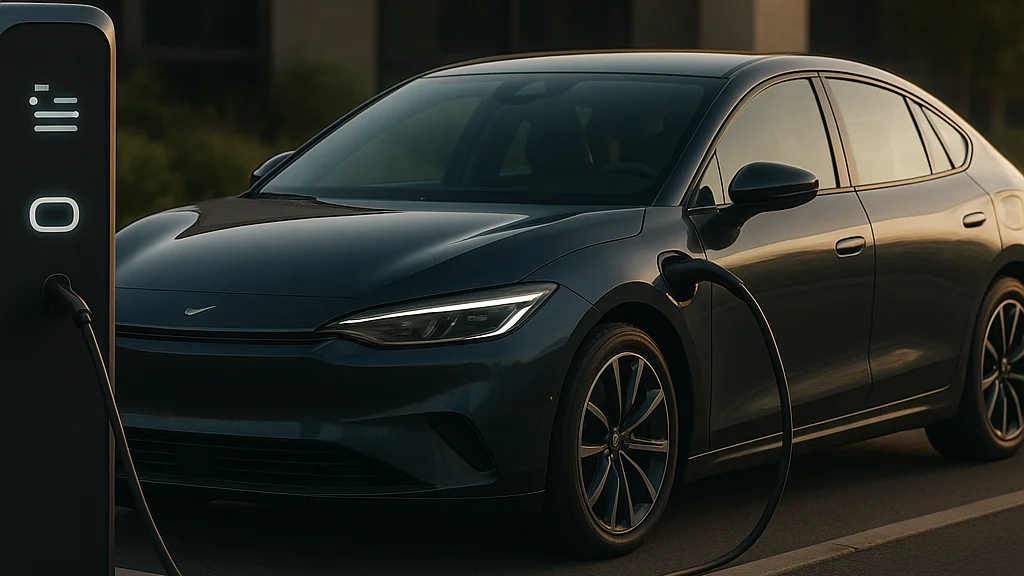
One of the most emotionally powerful promises in the EV market is the near-gasoline refuel experience: pull in, plug in, leave in minutes. That promise is no longer fantasy, but it still depends on more than a clever cell. Faster charging requires a battery that can accept high current without excessive degradation, a vehicle architecture capable of handling it, robust thermal management, and charging infrastructure that can actually deliver the power. If any one of those pieces falters, the headline collapses into a footnote.
Recent coverage has highlighted how quickly this area is moving. MSN reported in its piece on shrinking EV charging times that battery advances are helping close the convenience gap that once discouraged buyers. Digital Trends also covered a major launch in its report on battery technology promising a full charge in about 10 minutes. Claims like these matter because they signal where competition is focused: not just range, but refill speed.
Still, there is a difference between peak charging and useful charging. Many automakers advertise the best-case time from 10% to 80% under ideal conditions. Drivers, however, experience weather, queueing, battery preconditioning failures, and chargers that do not always perform at rated output. The practical breakthrough is a flatter, more reliable charging curve across a broader state-of-charge window. That is less glamorous than a single record number, but much more important.
Battery architecture is part of the answer. Higher-voltage systems, including 800-volt platforms, reduce current for the same power and can support faster charging with less heat. Improved cathode and anode materials help, but so do better separators, cooling plates, software controls, and predictive route-based battery preconditioning. In other words, a fast-charging EV is not simply carrying a better battery. It is carrying a better philosophy of energy management.
- Cell chemistry determines how quickly ions can move without causing harmful side reactions.
- Thermal management keeps temperatures in the safe operating window during high-power charging.
- Vehicle voltage architecture influences how efficiently power can be delivered.
- Battery management software controls charging curves, preconditioning, and long-term pack health.
- Infrastructure quality decides whether the promised charging speed is even available to the driver.
Safety, durability, and winter performance deserve equal billing
Battery safety tends to surface in public debate only after a fire, a recall, or a dramatic video clip. That is understandable, but it can distort the issue. The better question is not whether batteries can fail. Any energy-dense system can fail. The better question is how different chemistries, pack structures, and management systems reduce the probability and severity of failure over years of actual use. This is one reason LFP gained credibility beyond cost. Its thermal stability gave manufacturers and regulators a more forgiving platform for high-volume deployment.
Solid-state research attracts attention partly because of this safety angle. The Conversation’s reporting on reduced fire risk captured why the field remains so compelling. A solid electrolyte could lower the chance of flammable liquid-related incidents and enable different cell designs. But the road from safer cell concept to safer vehicle fleet is long. Interfaces between solid materials can degrade. Manufacturing defects can still happen. Mechanical stress remains real. Safety is a systems outcome, not a chemistry slogan.
Durability is just as important, especially as used EV markets expand. Buyers want to know whether a battery will still perform well after eight or ten years, after repeated DC fast charging, and after winters that test every weak point in the pack. Cold weather remains a particular challenge because low temperatures slow electrochemical reactions and reduce available power. Carmakers have improved heat pumps, thermal routing, and preconditioning, but winter losses still shape public trust in colder regions across Canada, northern Europe, and parts of the United States.
There is also a quieter financial dimension. Insurance pricing, warranty reserves, and residual values all depend on confidence in battery behavior. A pack that charges quickly but degrades unpredictably is not a breakthrough for consumers. It is a liability dressed up as progress. That is why the industry’s most meaningful advances may be the least theatrical: better diagnostics, tighter manufacturing tolerances, stronger quality control, and pack designs that isolate failures before they cascade.
For readers tracking where these practical concerns meet broader market trends, Battery Technology Breakthroughs Accelerating Electric Cars offers a useful companion view. The future belongs to batteries that drivers can trust on ordinary Tuesdays, not only on launch day.
What has actually changed in 2026
The battery landscape in 2026 looks more grounded than it did even two or three years ago. Hype has not disappeared, but investors and automakers are asking harder questions about scale, cost per kilowatt-hour, charging behavior, and mineral exposure. Several trends stand out. First, LFP has become even more entrenched in mainstream segments. Second, automakers are increasingly mixing chemistries across lineups rather than betting on one universal solution. Third, the race for faster charging has intensified, especially among Chinese manufacturers and suppliers pushing high-rate cells and ultra-fast charging ecosystems.
BYD and CATL remain central names because they influence both chemistry choices and manufacturing direction. Tesla continues to shape expectations through platform decisions and scale, even as rivals narrow the technology gap in specific areas such as charging speed or integrated pack design. Hyundai, Kia, Mercedes-Benz, BMW, General Motors, Ford, and Stellantis are all making chemistry and sourcing decisions that reflect a more segmented market. Some are localizing supply chains more aggressively in North America and Europe to satisfy policy incentives and reduce geopolitical exposure.
Policy still matters enormously. The Inflation Reduction Act in the United States and parallel industrial strategies in Europe have pushed manufacturers to think about where batteries are built, where minerals are processed, and how eligibility rules affect consumer pricing. At the same time, Chinese firms continue to set the pace in cost discipline and manufacturing scale. That tension is shaping the next decade of competition as much as any laboratory breakthrough.
Another notable 2026 development is the widening link between batteries for cars and batteries for adjacent sectors. Yahoo Finance recently highlighted in its report on drones as an unlikely catalyst for battery breakthroughs how innovations in one mobility segment can spill into another. That matters because high-performance batteries are no longer being optimized only for passenger cars. Lessons from drones, commercial vehicles, and grid storage can accelerate materials science, manufacturing methods, and thermal controls that eventually benefit EVs too.
Perhaps the biggest change, though, is psychological. The market is less enchanted by moonshots for their own sake. There is more respect now for battery technologies that can be produced reliably, serviced sensibly, and recycled economically. That is not a retreat from ambition. It is ambition growing up.
The supply chain question may decide which breakthroughs survive
Every battery breakthrough eventually meets a less glamorous gatekeeper: supply chains. A chemistry can look brilliant on paper and still fail commercially if its materials are too expensive, too concentrated geographically, too difficult to refine, or too volatile in price. This is why the industry’s movement toward LFP was more than a technical story. It was a strategic response to the complications surrounding nickel and cobalt. Material choice is now inseparable from industrial policy, trade friction, and environmental scrutiny.
Lithium itself remains essential across most leading chemistries, and the market has already shown how quickly sentiment can swing between shortage fears and oversupply concerns. That volatility makes automakers wary of building plans around narrow assumptions. Manganese-rich variants, sodium-ion research, and recycling improvements all attract attention partly because they offer pathways to diversify risk. Sodium-ion, while still limited by lower energy density for many passenger-car applications, remains relevant for smaller vehicles or stationary storage, where cost and material abundance can outweigh range needs.
Recycling has also shifted from nice-to-have rhetoric toward industrial necessity. Recovering lithium, nickel, cobalt, copper, and other materials from end-of-life packs can reduce dependence on virgin extraction and soften future supply shocks. Yet recycling economics depend on chemistry mix, pack design, collection systems, and commodity prices. An LFP-heavy future complicates some traditional recycling business models because lower-value material recovery can squeeze margins. That does not make recycling less important. It means the industry must redesign the economics rather than assuming old models will carry forward.
There is a human dimension here too. Communities near mines, refineries, and factories bear the consequences of battery demand. A technology is not truly clean if its harms are merely outsourced and obscured. Better traceability, stronger labor oversight, and lower-intensity chemistries are part of the breakthrough conversation whether marketers mention them or not. If the first wave of EV enthusiasm was about escaping the tailpipe, the next wave needs to care just as seriously about what happens upstream.
- Material availability shapes whether a chemistry can scale beyond pilot programs.
- Refining capacity often matters as much as raw mineral extraction.
- Trade policy and subsidies influence where factories are built and which vehicles qualify for incentives.
- Recycling economics will change as chemistry mixes shift toward lower-cobalt and LFP-heavy fleets.
How drivers, investors, and policymakers should read the next wave
For drivers, the healthiest approach is to stop asking which battery is best in the abstract. Ask which battery is best for a specific life. A city commuter with home charging may benefit more from a durable, lower-cost LFP pack than from a premium chemistry built for long-distance performance. A frequent highway traveler may place a premium on charging curve consistency and winter resilience. A used-car buyer should pay attention to warranty terms, thermal management reputation, and software support just as much as official range figures.
For investors, battery stories deserve a little skepticism and a long memory. Manufacturing scale-up has humbled many promising ventures. Yield losses, equipment bottlenecks, and cost overruns can erase the advantage of a clever chemistry. The companies most likely to shape the market are not always the ones with the boldest announcements. They are often the ones that can control defects, secure materials, integrate software, and survive price wars. Reuters and Bloomberg reporting over recent years has repeatedly underscored that industrial execution matters as much as scientific novelty.
Policymakers face a subtler challenge. Public incentives should not reward battery production on volume alone. They should encourage safety, transparency, recycling readiness, and grid-aware charging behavior. Fast charging is useful, but unmanaged peaks can strain local infrastructure. Domestic production is politically attractive, but it needs environmental standards and workforce planning to earn public trust. Good policy can speed adoption; careless policy can simply move bottlenecks around.
The most durable takeaway is that the battery race is no longer a single finish line. It is a set of overlapping contests: cost, charging, safety, longevity, mineral resilience, and manufacturability. Some companies will win one and lose another. Some chemistries will dominate one segment and disappear in another. That complexity can feel messy, but it is also a sign that the field is becoming more honest.
If you want one final lens for reading future announcements, hold onto this: ask whether the claim solves a lived problem at scale. Does it lower cost without quietly raising risk? Does it charge faster without accelerating degradation? Does it reduce mineral pressure rather than shifting it elsewhere? Those questions are less flashy than a launch-stage promise, but they are kinder to reality.
And reality, usually, is where the most hopeful progress begins. Be gentle with the hype, and kinder still with your expectations. The good changes are coming piece by piece, which is often how the most lasting things arrive.






























Sign in to leave a comment.