

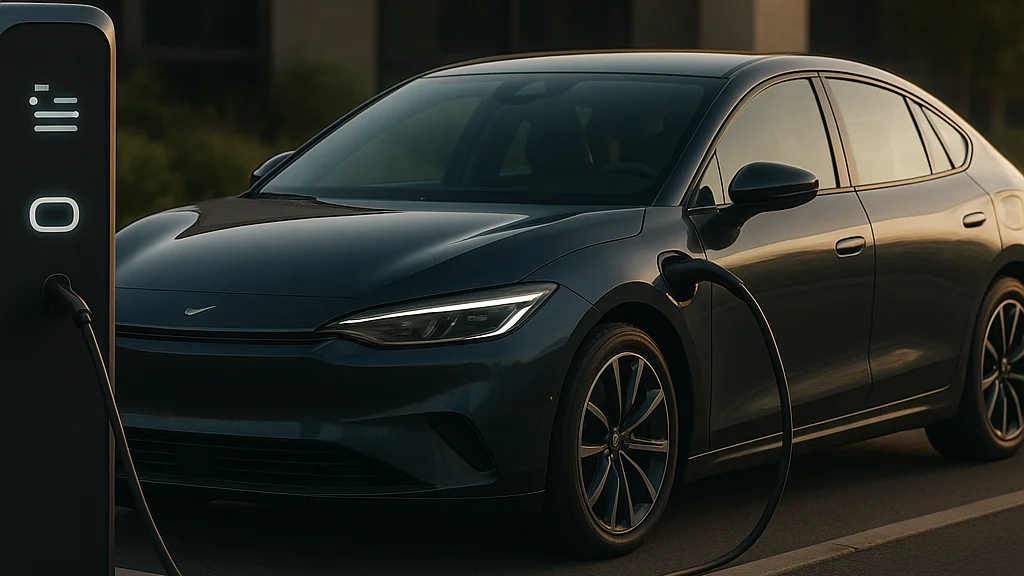
On a cold prairie morning, the difference between a battery electric vehicle and a hydrogen fuel cell vehicle can feel less like a policy debate and more like a practical question: how quickly can you get moving, how far can you go, and what had to happen upstream to make that trip clean? That is the real heart of the hydrogen fuel cell vehicles vs battery electric discussion. One technology stores electricity directly in a battery pack. The other turns hydrogen into electricity onboard through a fuel cell stack, with water vapor as the tailpipe output.
Both are often grouped under the same low-emissions banner, but they solve transport in very different ways. Battery electric vehicles, or BEVs, have surged into the mainstream because charging networks, battery costs, and model availability improved quickly through the early 2020s. Hydrogen fuel cell electric vehicles, or FCEVs, have remained niche in passenger cars, even as they continue to attract serious interest for buses, heavy trucks, fleet depots, and long-haul applications.
That split matters more in 2026 than it did a few years ago. Carmakers are no longer speaking about hydrogen and batteries as though they are equal contenders in every segment. They are becoming more specific. Toyota has shifted more of its hydrogen attention toward commercial use, as reported by Just Auto. In parallel, battery electric sales continue to dominate zero-emission passenger vehicle growth in major markets, helped by expanding charging options and maturing supply chains.
If you are trying to understand where hydrogen truly competes and where battery electric has already won, the answer requires more than slogans. It requires looking at energy efficiency, infrastructure economics, vehicle weight, refueling time, cold-weather behavior, grid constraints, and what manufacturers are actually building now. There is room here for nuance, and nuance is healthy. Some technologies are better companions than rivals.
For readers who want a broader side-by-side primer, WriteUpCafe has also explored the topic in Hydrogen Fuel Cell Vehicles vs Battery Electric: The Real EV Divide and Expert Tips for Choosing Between Hydrogen Fuel Cell and Battery Electric Vehicles. What follows goes deeper into the evidence, the trade-offs, and the quiet realities behind the headlines.
How we got here: one race, two very different paths
For years, automakers treated hydrogen and battery electric as parallel futures. The thinking was understandable. Batteries offered simplicity and high drivetrain efficiency, but early packs were expensive, heavy, and slow to charge. Hydrogen promised fast refueling and long range, echoing the convenience of gasoline while avoiding combustion at the tailpipe. In the 2010s, that promise produced landmark vehicles such as the Toyota Mirai and Hyundai Nexo, while battery pioneers pushed the BEV market from novelty to volume.
Then economics began to separate the two paths. Battery costs declined sharply over the previous decade as manufacturing scaled in China, Europe, and North America. Charging infrastructure, while still uneven, expanded across cities, highways, workplaces, and homes. The result was not perfection, but momentum. Consumers could increasingly buy a BEV in multiple body styles and price bands, charge it overnight, and access public fast charging for longer trips.
Hydrogen had a harder road. Building a hydrogen station network is capital-intensive. Producing low-carbon hydrogen at scale is also expensive, especially when using renewable electricity to make green hydrogen through electrolysis. There is also blue hydrogen, produced from natural gas with carbon capture, but that raises separate questions about methane leakage and capture rates. None of this makes hydrogen unworkable. It simply makes it harder to deploy quickly for mass passenger use.
The strategic tone from manufacturers has become more candid. According to Just Auto, Toyota is emphasizing fuel cell systems for commercial vehicles rather than betting primarily on private passenger adoption. BMW continues to test hydrogen concepts, and CarsGuide reported on progress around the iX5 Hydrogen program in a piece about future ambitions, linked here. But the center of gravity in consumer markets remains battery electric.
The market has not rejected hydrogen outright. It has narrowed hydrogen's most credible use cases.
That distinction is important. A technology does not need to dominate passenger sedans to matter. Freight, ports, municipal fleets, backup power, and industrial transport can support a hydrogen economy in ways private cars never could. By 2026, that is where much of the serious conversation has moved.
The efficiency question: why battery electric usually wins on energy
If you strip away marketing and look at physics, BEVs hold the cleaner engineering hand in most light-duty situations. Electricity from the grid goes into a battery and then to an electric motor with relatively few conversion losses. Hydrogen vehicles add extra steps: electricity may be used to produce hydrogen through electrolysis, the hydrogen must be compressed or liquefied, transported and stored, and then converted back into electricity inside the fuel cell before reaching the motor. Each step consumes energy.
That chain is why many analysts describe hydrogen passenger cars as less efficient than BEVs on a well-to-wheel basis. Exact percentages vary by production pathway and assumptions, so careful writers should avoid pretending there is one universal number. Still, the broad conclusion is consistent across industry and academic discussions: direct electrification is usually more energy-efficient than making hydrogen first and using it later in a car.
For a household driver, that matters because efficiency tends to show up as lower operating costs. If electricity is available at home or work, a BEV can often be fueled more cheaply per kilometer than a hydrogen vehicle, especially in markets where hydrogen retail prices remain high. The convenience factor is equally powerful. Charging while sleeping is not glamorous, but it is deeply practical.
Here is where BEVs generally hold the advantage in passenger use:
- Energy conversion: fewer steps between electricity source and wheel.
- Fueling access: home charging removes many weekly station visits.
- System simplicity: fewer specialized components than a hydrogen storage and fuel cell system.
- Market scale: larger model variety and stronger manufacturing momentum.
Hydrogen supporters respond, fairly, that efficiency is not the only metric. A truck operator with tight turnaround windows may care more about refueling speed and payload than about absolute energy conversion. That is a legitimate distinction. The problem comes when hydrogen is presented as equally sensible for every driver. In 2026, it plainly is not.
For most personal vehicles, battery electric does the same job with less energy, less infrastructure complexity, and far more market support.
That does not diminish hydrogen's strengths. It simply places them where they are strongest rather than where they are most romantic.
Infrastructure is destiny, and the gap is still enormous
Every clean transport technology eventually runs into the same blunt test: can people actually use it without reorganizing their lives? This is where battery electric and hydrogen part ways most dramatically. A BEV can charge at home from a wallbox, at work, at destination chargers, and increasingly at public fast chargers along major corridors. A hydrogen vehicle depends on a hydrogen station network that is still sparse in most countries and often concentrated in a handful of metro areas.
That scarcity creates a loop. Consumers hesitate to buy hydrogen cars without stations. Investors hesitate to build stations without cars. Fleet use can break that loop because a depot can centralize demand. Passenger markets struggle more because private drivers expect geographic freedom. Even where stations exist, reliability and maintenance have historically been concerns in some regions.
The economics are unforgiving. A charger can often be installed incrementally, from slow AC units to high-power DC sites. Hydrogen fueling infrastructure requires compression, storage, safety systems, and dependable hydrogen supply logistics. That makes station deployment expensive and operationally demanding. It also means the network cannot grow as organically as charging has.
Battery electric infrastructure is not problem-free. Fast charging queues, rural gaps, apartment access, and grid upgrade delays remain real frustrations. Yet the direction of travel is clear. More automakers are adopting charging standards, utilities are planning for managed charging, and governments continue to support corridor build-out. The ecosystem is imperfect but moving.
Hydrogen infrastructure, by contrast, is being built more selectively around commercial corridors and industrial clusters. That is a sign of realism, not failure.
- For passenger cars: charging infrastructure is already broad enough to support mainstream adoption in many markets.
- For commercial fleets: hydrogen can work where routes are predictable and centralized fueling is feasible.
- For long-haul freight: the infrastructure question is still open, but hydrogen has a stronger argument than it does in private cars.
If you want a companion read on how this strategic divide is showing up in industry commentary, WriteUpCafe's Hydrogen Fuel Cell Vehicles vs Battery Electric: A 2026 Comparative Analysis and 2026 Trends in Hydrogen Fuel Cell Vehicles vs Battery Electric Cars both trace that shift in useful detail.
Where hydrogen still makes a serious case: trucks, fleets, and hard-duty work
This is the part of the story that often gets flattened. Hydrogen may be losing the consumer-car popularity contest, but it remains technically appealing in several demanding transport categories. Heavy trucks are the clearest example. Large battery packs add weight, and long charging sessions can complicate utilization for operators who need vehicles moving almost constantly. Hydrogen's faster refueling and potentially longer range become more valuable there.
Recent developments support that framing. In May 2026, electrive.com reported that Dongfeng unveiled a hydrogen truck with a 400 kW fuel cell. Trak.in also highlighted a Chinese 49-ton hydrogen truck claim involving a 15-minute refuel and a 1,700-kilometer range, linked here. Claims around prototype or early commercial vehicles should always be read carefully, especially when range figures depend on route, payload, and test conditions, but the direction is notable: hydrogen investment is clustering around heavy-duty mobility.
Toyota's strategic repositioning fits this pattern. Just Auto reported that the company is shifting hydrogen fuel cell focus toward commercial vehicles. That is a meaningful signal from one of hydrogen's most persistent champions. Rather than insisting that fuel-cell sedans will soon rival battery crossovers in mainstream demand, the industry is moving toward use cases where hydrogen's characteristics are more obviously valuable.
These applications tend to share a few traits:
- High daily mileage and limited downtime tolerance
- Centralized depots or fixed routes
- Payload sensitivity, where battery mass can become a commercial drawback
- Operations in sectors already handling industrial gases or large fueling logistics
Buses, drayage trucks, mining vehicles, and regional freight all fit somewhere on that spectrum. None of this guarantees hydrogen dominance. Battery trucks are improving too, and charging depots are being built. But if hydrogen is going to earn its keep, these are the battlegrounds where the argument is strongest and the romance gives way to spreadsheets.
Passenger cars in 2026: battery electric has the volume, hydrogen has the niche
For ordinary drivers shopping for a private vehicle, the comparison is much less balanced. Battery electric cars now span compact hatchbacks, family SUVs, luxury sedans, pickups in some markets, and delivery vans. They benefit from scale, policy support, and a growing used market. Drivers can compare charging curves, battery chemistry, winter range, software, and resale value across dozens of models. That breadth matters because mainstream adoption is built on choice.
Hydrogen passenger vehicles remain rare. The Hyundai Nexo is still one of the best-known examples, and media coverage continues to emphasize its long range and quick refueling. An AUTOPOST story on MSN described a 447-mile range figure for the Nexo and framed it as a possible vision for green mobility, available here. Range and refuel time are genuine strengths. The problem is that range is only useful if the fueling network is there when you need it.
Battery electric cars have also improved in the places critics once hit hardest. Fast charging speeds are better than they were five years ago. Thermal management is more sophisticated. Heat pumps are more common. Software now plans charging stops with increasing competence. Battery chemistry diversification, including LFP in many vehicles, has helped lower costs and improve durability in mass-market segments.
That does not mean BEVs are frictionless. Apartment dwellers without dedicated parking still face hurdles. Long winter trips can require more planning. Grid congestion and charger reliability remain live issues. Yet the practical answer for most consumers in 2026 is still battery electric if they want a zero-emission-capable passenger vehicle and have reasonable charging access.
Hydrogen passenger cars may survive in specific geographies with strong station support, fleet partnerships, or government backing. They may also persist as technology demonstrators that keep fuel-cell expertise alive for larger applications. But on the evidence available now, they are not winning the mainstream consumer race.
Cost, climate impact, and the uncomfortable upstream questions
A tailpipe view can be emotionally reassuring, but climate math happens upstream too. A battery electric vehicle charged from a coal-heavy grid is not as clean as one charged from hydro, wind, solar, or nuclear. A hydrogen vehicle using green hydrogen can be very low-carbon. A hydrogen vehicle using hydrogen derived from fossil gas with limited carbon capture is a different story. So the real environmental comparison depends on how the energy is made, moved, and used.
This is where the discussion becomes less tidy. Green hydrogen has enormous promise for sectors that are hard to electrify directly, including some industrial processes, shipping fuels, and possibly aviation derivatives. But green hydrogen is still relatively costly, and many energy systems do not have abundant surplus renewable electricity waiting to be converted into transport fuel for passenger cars. Using that electricity directly in BEVs often yields more mobility per unit of clean power.
Cost follows the same logic. Consumers care about sticker price, fuel price, maintenance, and residual value. Fuel-cell systems remain expensive, and hydrogen fuel pricing has often been a barrier where retail markets exist. BEVs, while not universally cheap, have benefited from scale and competition. Maintenance can also be lower because electric drivetrains have fewer moving parts than internal combustion, though battery degradation, tire wear, and out-of-warranty electronics still matter.
When comparing the two, these are the questions that matter most:
- What is the source of the electricity or hydrogen?
- Can the vehicle be fueled conveniently where it operates?
- What is the total cost over five to ten years?
- Is uptime more important than energy efficiency?
- Does the vehicle carry heavy loads over long distances every day?
Those questions often lead private motorists toward BEVs and push commercial operators into a more nuanced decision tree. That may sound less thrilling than a single winner-takes-all verdict, but transport systems are messy. Honest answers usually are.
Clean mobility is not one technology. It is a portfolio, and the smartest portfolio matches the tool to the task.
What has changed recently, and what to watch next
The most important change in 2026 is not a dramatic consumer pivot toward hydrogen. It is the growing clarity around segmentation. Carmakers, suppliers, and policymakers are becoming more disciplined about where hydrogen belongs. Passenger BEVs continue to absorb the bulk of mainstream zero-emission attention. Hydrogen is increasingly framed as a strategic option for commercial transport, industrial energy systems, and regions looking to build broader hydrogen economies.
That shift has several implications. First, hydrogen success no longer depends on beating BEVs in suburban driveways. It can justify itself through freight corridors, buses, ports, and depot fleets. Second, battery electric vehicles still need policy and infrastructure support, especially for renters, rural drivers, and grid integration. Winning the passenger market does not mean the work is finished. Third, the clean-energy debate is moving upstream, toward power generation, electrolysis economics, transmission build-out, and industrial demand.
Watch BMW's hydrogen experimentation, but read it in context. Watch Toyota's commercial push even more closely. Watch Chinese heavy-duty pilots because scale can arrive there faster than in Western consumer markets. And watch whether hydrogen station build-out increasingly follows freight logic rather than retail convenience logic.
For readers making personal decisions, the takeaway is fairly grounded:
- If you are buying a private car and have dependable charging access, a BEV is usually the stronger choice.
- If you run a commercial fleet with high utilization and fixed routes, hydrogen deserves a serious evaluation alongside battery trucks.
- If your region lacks both chargers and hydrogen stations, the debate is premature until infrastructure catches up.
I think that is the gentlest honest answer. Battery electric has won the broad consumer contest for now because it is more efficient, more available, and easier to support at scale. Hydrogen has not disappeared. It has simply found the places where its strengths are less theoretical and more necessary. There is wisdom in that narrowing. Not every promising idea needs to be universal to be valuable.
And if this whole transition sometimes feels noisy and overconfident, you are not imagining it. Energy stories often arrive dressed as certainty long before the roads agree. It helps to stay close to the practical questions: where does the energy come from, how does the vehicle get refueled, who can afford it, and what problem is it actually solving? Ask those softly, and the picture gets clearer. Be kind to yourself while you sort through the claims.

































Sign in to leave a comment.