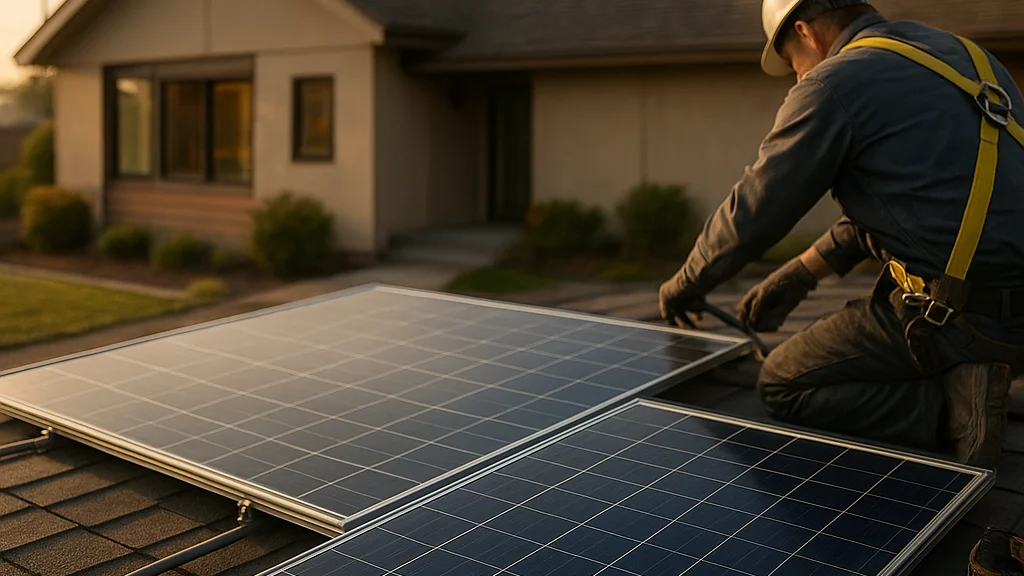

A quiet roofline can change a household budget
There is a particular kind of relief that comes from opening a summer power bill and not feeling your shoulders rise to your ears. For many homeowners, that relief is the real beginning of the solar conversation. Not the glossy brochure. Not the polished sales pitch. The moment when electricity stops feeling abstract and starts landing in monthly numbers that shape family decisions.
Home solar has moved well beyond its early-adopter phase. According to the U.S. Energy Information Administration, small-scale solar has expanded steadily over the past decade, while the International Energy Agency has repeatedly described solar PV as one of the cheapest sources of new electricity in many markets. That broad trend matters at the kitchen-table level: equipment has improved, financing has diversified, and installers have become more specialized. Still, buying a system for your home is not like buying an appliance. It is closer to commissioning a small power plant that has to fit your roof geometry, local weather, utility rules, insurance obligations, and household habits.
A careful guide helps because the market is crowded with half-truths. Some homes are excellent candidates. Others need electrical upgrades, roof work, or a simpler expectation about payback. If you are just starting, Beginner’s Guide to Solar Panel Installation at Home is a useful orientation. If you already know the basics, this piece is meant to go deeper: how to assess your roof, how to compare quotes, what batteries really add, and what has shifted recently in 2026.
The best home solar decision is rarely the biggest system. It is the system sized to your roof, your load profile, and your local rules.
That may sound unromantic, but it is where the real savings live. A good installation should lower costs, reduce volatility, and age gracefully. A rushed one can lock you into underperformance for 25 years. So this guide treats solar with the same care I would bring to a Sunday batch of soup: gather the right ingredients first, understand the timing, and do not let anyone rush the pot.
Start with the house you actually have
The first discipline in residential solar is honesty about the building itself. Installers can model output beautifully, but your roof still has the last word. Orientation matters. In the Northern Hemisphere, south-facing roofs usually produce the most annual energy, though east- and west-facing arrays can still perform well, especially when time-of-use rates reward afternoon generation. Shade matters even more. A single tree that throws moving shadows across modules can drag output down far more than many homeowners expect, particularly if the system lacks module-level power electronics such as microinverters or optimizers.
Roof age is another quiet deal-breaker. If your shingles are nearing the end of their life, replacing them after installing panels means paying to remove and reinstall the array. That can erase years of expected savings. Most reputable installers will flag this early, but it is wise to ask directly. The same goes for structural capacity. Panels are not excessively heavy, yet snow loads, older framing, and local code requirements can trigger an engineering review.
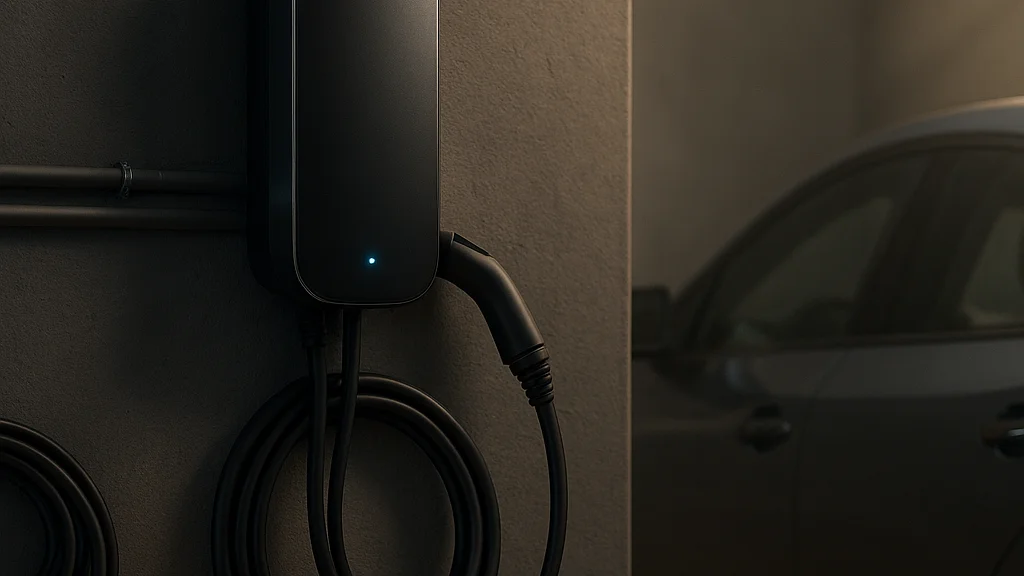
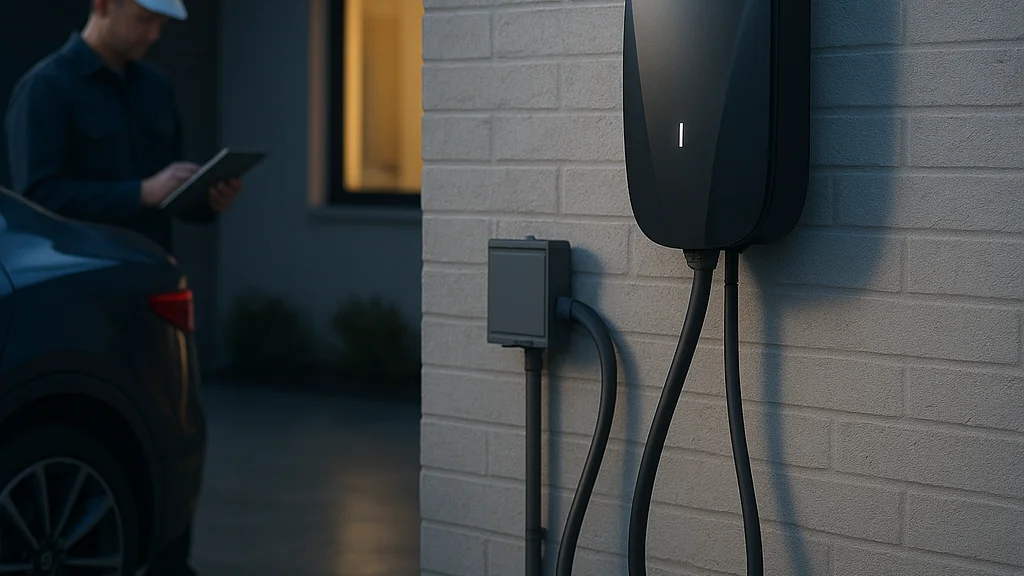
Then there is your electrical panel. Many homes built decades ago need service-panel upgrades before solar can be interconnected safely. That adds cost, but it is not necessarily bad news. A panel upgrade can also support future electrification, including heat pumps, induction cooking, and EV charging. Solar works best when it is planned as part of a larger household energy strategy, not treated as a decorative bolt-on.
Before requesting quotes, gather these details:
- 12 months of utility bills, so installers can see seasonal consumption patterns.
- Roof age and material, including any known leak history or planned replacement dates.
- Electrical service size, typically 100A, 150A, or 200A.
- Future load changes, such as an EV, heat pump, pool pump, or home office expansion.
- Shading conditions at different times of day and in different seasons.
BGR’s guide to what to know before installing solar panels emphasizes this same point from a consumer angle: your roof, utility structure, and local incentives matter more than broad national averages. That is exactly right. Solar economics are local, and the house in front of you deserves more attention than the trend line on social media.
How system sizing really works
One of the most common misunderstandings is that installers simply cover the roof with as many panels as fit. Good firms do not work that way. They start with annual electricity use, measured in kilowatt-hours, then compare that load with expected solar production based on your location, roof orientation, tilt, shading, and equipment efficiency. The goal is usually to offset a meaningful portion of consumption, not necessarily 100% of it. In some utility territories, oversizing a system makes poor financial sense because exported electricity is credited at a lower rate than retail power.
Panel wattage has risen over time, which means homeowners can now install more capacity in less space than they could a decade ago. Residential modules in the 400-watt range are common, though exact offerings vary by brand and installer. Efficiency differences between premium and standard panels matter most when roof space is tight. If you have a large, unshaded roof, the cheapest path to the same production may be using slightly less efficient modules and a few more of them. If your usable roof area is limited, premium panels can justify their price.
Inverters deserve equal attention. String inverters are typically less expensive and can work very well on simple, unshaded roofs. Microinverters and power optimizers add module-level performance benefits, especially where shading, multiple roof planes, or panel-level monitoring are important. These are not just technical preferences; they affect long-term output, troubleshooting, and replacement costs.
A sensible quote should spell out at least the following:
- System size in kW DC and estimated annual production in kWh.
- Panel brand and model, including wattage and product warranty.
- Inverter type and warranty length.
- Assumptions about degradation, usually a gradual decline in output over time.
- Monitoring platform and whether panel-level data is available.
- Total installed cost, before and after incentives if applicable.
- Estimated utility bill offset, with assumptions clearly stated.
If those items are vague, keep asking. A phrase like “up to” can hide a lot. Forbes, in How To Plan And Install Your Home Solar System, stresses the importance of planning around actual energy use rather than aspiration. That advice is practical and kind to your wallet. There is no medal for buying more capacity than your tariff structure can reward.
Solar panels do not save money in theory. They save money only when production, tariff rules, and household demand line up in the real world.
If you want a second layer of background before comparing proposals, What You Need to Know About Solar Panel Installation: A Home Guide offers a helpful foundation. Think of that as the warm-up stretch; quote review is where the serious muscles come in.
The money question: cost, incentives, and payback
Ask ten neighbors what solar costs and you may hear ten different stories, because system pricing depends on region, installer scale, roof complexity, equipment choice, and whether batteries are included. Pricing is often discussed in dollars per watt, which allows apples-to-apples comparison across quote sizes. A 7 kW system priced at $21,000 is roughly $3.00 per watt before incentives. That rough metric is useful, but it is not the whole story. A lower price can still be a worse deal if the installer uses weaker warranties, unrealistic production estimates, or a financing package loaded with fees.
For U.S. homeowners, the federal residential clean energy credit remains one of the biggest drivers of affordability, though tax-credit eligibility depends on individual tax circumstances and policy timelines. Local rebates, state incentives, sales-tax exemptions, and property-tax treatments can also materially change the economics. Outside the U.S., support varies sharply. In the UK, for example, policy attention has increasingly focused on solar deployment in new housing, as covered by Yahoo News UK in its report on plans to install solar panels on all new homes. That signals something broader: governments are no longer treating rooftop solar as niche infrastructure.
Payback periods are equally local. They depend on five moving parts:
- Installed price after incentives and tax effects.
- Electricity rates and how fast they rise over time.
- Net metering or export compensation rules.
- System performance relative to estimates.
- Financing cost, if the system is not purchased in cash.
Cash purchases usually produce the strongest lifetime return because there is no loan interest. Loans can still make sense, especially when monthly loan payments come in below prior utility bills, but buyers should inspect dealer fees carefully. Some “low-interest” solar loans bury substantial origination costs inside the project price. Leases and power purchase agreements reduce upfront cost but often limit savings and complicate home resale. They are not automatically bad, yet they deserve extra scrutiny because the homeowner does not own the equipment.
Electrek’s Tesla solar pricing guide is useful not because every homeowner should choose Tesla, but because it illustrates how pricing conversations often center on standardized package economics, battery bundling, and online quote transparency. The lesson is not brand worship. It is comparison discipline. Ask every installer to present cash price, financed price, warranty terms, production estimate, and assumptions in the same format. Your future self will thank you.
Choosing an installer without getting charmed into a mistake
Solar sales can be polished, and that is not always a red flag. The problem begins when polish replaces evidence. A trustworthy installer should be able to explain permitting, utility interconnection, roof attachment methods, warranty coverage, and service response in plain language. If a representative becomes slippery when you ask who handles warranty claims, who performs the actual installation, or what happens if annual production falls short, pause there.
The Independent’s review of Heatable’s solar installation service highlights something consumers sometimes overlook: customer experience is part of system value. Communication, scheduling, aftercare, and clarity around premium equipment can matter almost as much as the headline quote. A cheap system is not cheap if support disappears when an inverter fault appears three winters later.
When comparing installers, ask for these specifics:
- Licensing and insurance in your jurisdiction.
- Who installs the system: in-house crews or subcontractors.
- Workmanship warranty length and what it covers.
- Roof penetration details and leak-remediation process.
- Expected project timeline from contract to permission to operate.
- Monitoring access and service contact procedures.
- References from recent local customers with similar roof types.
It also helps to understand the three layers of warranty. Panel product warranties cover manufacturing defects. Performance warranties address output decline over time. Workmanship warranties cover installation quality, including mounting and, in some cases, roof penetrations. These are separate promises from separate parties. If one document is strong and the others are thin, the overall package may still be weak.
Homeowners often focus on panel brand because it feels tangible. Yet installer quality can matter more. A premium module installed poorly will still underperform. A mid-tier module installed carefully on the right roof can be a lovely long-term asset. If you want another perspective on comparing systems and offers, Solar Panel Installation Home Guide: Everything You Need to Know pairs well with quote review. Sometimes reading one more sober explanation is enough to quiet the sales fog.
Batteries, backup power, and the 2026 reality check
By 2026, batteries are no longer a fringe add-on for affluent hobbyists. They are becoming a strategic choice in places with unstable grids, punitive peak rates, or weak compensation for exported solar. Still, many households do not need one. A battery adds resilience and load-shifting capability, but it also raises project cost significantly. The right question is not “Should I get a battery?” It is “What problem am I trying to solve?”
If your utility offers full retail net metering and outages are rare, a battery may have a long payback. If your area has frequent blackouts, wildfire shutoffs, storm risk, or time-of-use pricing with expensive evening peaks, the economics improve. Modern home batteries can keep essentials running, but most cannot back up an entire all-electric home indefinitely unless the system is generously sized and loads are managed carefully. Backup planning should name specific circuits: refrigerator, internet, lights, medical devices, sump pump, maybe a small heat source. Precision is gentler than fantasy here.
Recent policy and market shifts have also changed the battery conversation. In several markets, export rates for excess solar have become less generous, pushing homeowners toward self-consumption strategies. That means using more of your own solar directly or storing it for evening use. At the same time, virtual power plant programs and utility demand-response offerings are beginning to pay some battery owners for grid support, though availability is highly location-specific.
Three 2026 developments matter most for homeowners:
- More variable export compensation, which makes battery arithmetic more relevant.
- Stronger interest in home resilience after repeated weather-related outages in many regions.
- Broader electrification, with EVs and heat pumps increasing household load and shifting the value of daytime generation.
Battery buyers should ask for clear information on usable capacity, continuous power output, round-trip efficiency, warranty throughput, and backup configuration. Not all batteries perform the same job. Some are excellent for bill management. Others are better suited to resilience. A few can do both well, but not cheaply.
A battery is not a moral upgrade to solar. It is a technical and financial choice that should answer a specific household need.
That framing can save a lot of money and a lot of disappointment. If the need is peace of mind during outages, say that plainly. If the goal is maximum return, run the numbers with and without storage. Both are valid paths.
Permits, interconnection, and the parts nobody posts on Instagram
The least glamorous phase of a solar project is often the one that determines whether the experience feels smooth or maddening. Permitting, utility approval, inspections, and permission to operate can take longer than homeowners expect. Even when equipment is in stock and crews are available, paperwork can stretch timelines by weeks or months depending on local authority and utility backlog.
A typical residential sequence looks something like this:
- Site assessment and design, including roof measurements and electrical review.
- Contract signing and financing approval, if relevant.
- Permit submission to the local authority having jurisdiction.
- Utility interconnection application, sometimes in parallel with permitting.
- Installation day, often one to three days for a standard system.
- Inspection by local officials.
- Utility meter work and permission to operate.
None of this is dramatic, but each step matters. Homeowners should ask who owns the administrative burden. Strong installers handle most of it and keep clients updated. Weak ones go quiet, then blame the city, then the utility, then “industry delays.” Sometimes those delays are real. Silence is the bigger warning sign.
Insurance also deserves a quick phone call before installation begins. Many insurers will cover rooftop solar under a standard homeowners policy, but they may want updated replacement values or documentation. If you are financing the system, your lender may have separate requirements. And if you live in an HOA-governed community, confirm the review process early. State protections for solar access exist in some places, but procedural friction can still slow a project.
Monitoring should be set up before the installer leaves. A modern system that cannot be easily monitored is a bit like a slow cooker with no lid: technically functional, but missing the reassurance you need. Monthly performance checks help catch inverter faults, tripped breakers, or unexpected shading changes before they quietly erode savings for a whole season.
What a successful home solar project looks like over 25 years
The happiest solar owners are usually not the ones who expected miracles. They are the ones who understood the system they bought. Over a 25-year horizon, panels gradually degrade, inverters may need replacement depending on type and warranty, roofs age, utilities revise rate structures, and households change. Children grow up. Someone buys an EV. A basement becomes an office. A gas furnace gives way to a heat pump. Solar should be flexible enough to live through those changes.
That is why the smartest projects are often paired with efficiency upgrades first. Air sealing, insulation, smart thermostats, and efficient appliances can reduce the size of the solar system required. Every kilowatt-hour you do not need is the cheapest one. There is a quiet elegance to that sequence: trim waste, electrify thoughtfully, then generate clean power to cover the refined load.
For homeowners in rapidly changing policy environments, staying informed matters almost as much as the original purchase. Export rates, incentive windows, and battery programs can shift. Local installers may consolidate or leave the market. Keep a digital folder with contracts, permits, equipment datasheets, warranties, and monitoring login details. If you sell the home, that folder becomes part of the value story.
There is also a broader social dimension. Rooftop solar does not solve every climate or grid challenge. It is not available equally to renters, apartment residents, or households without financing access. Community solar, grid modernization, and building standards remain essential. But for homeowners with a suitable roof, solar can be one of the most direct ways to cut household emissions while improving long-term energy predictability.
If you are still sorting through options, compare your plans against a broader roundup like Top 8 Solar Panel Installation Home Guide for 2026. Not because listicles hold all wisdom, but because seeing recurring themes across multiple guides can sharpen your instincts. Good advice usually sounds calm. It does not need confetti.
The simple takeaway is this: a strong solar project begins with your roof, your bills, and your local rules, then moves outward to equipment and financing. Slow the process down enough to understand what you are buying. Ask for assumptions in writing. Compare like with like. And make room for the fact that the best savings often come from a system that feels almost boring after it is installed. Quiet roofline. Lower bills. Fewer surprises. That is a lovely kind of progress.
I hope your next utility statement feels a little lighter, and that whatever choice you make leaves your home steadier and your mind gentler.






























Sign in to leave a comment.