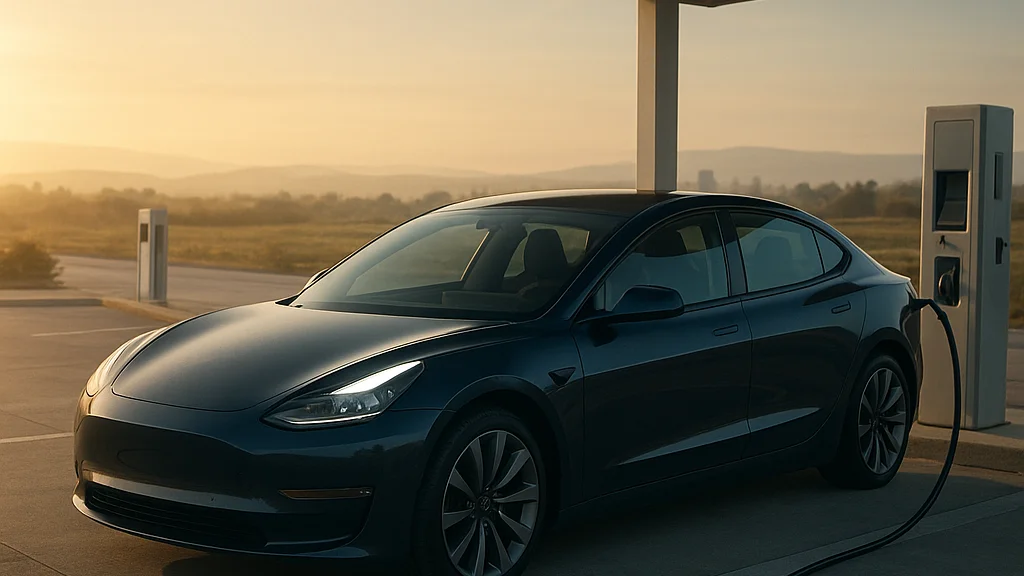

The first time a new EV buyer asks me, “How much range do I really need?” I usually answer with another question: how often do you actually drive more than 200 miles in a day? That gap between perceived need and real-world use is where most electric-vehicle confusion lives. In California, where I spend a lot of time watching charging habits, commuter patterns, and the latest startup pitches, the most satisfied owners are rarely the ones chasing the biggest battery at any price. They are the ones who matched range, charging speed, and monthly cost to their actual lives.
That matters because the market has matured fast. A few years ago, buying an EV often meant accepting trade-offs—limited charging networks, high prices, or range anxiety that felt very real outside major metro corridors. By August 2026, the equation looks different. More models sit below premium price points, battery efficiency has improved, and public charging coverage is broader than it was in the early adoption phase. Yet beginners still face a noisy marketplace full of headline numbers, tax-credit caveats, and marketing language that can obscure the best value choices.
If you have been comparing spec sheets and feeling overwhelmed, you are not alone. Range claims, battery sizes, lease offers, and charging curves can make simple shopping feel technical. The goal here is to simplify without dumbing anything down. I will focus on what beginners should prioritize, which types of EVs tend to offer the best balance of range and value, and how recent 2026 developments have changed the buying calculus. For readers who want a broader companion read, Best Electric Vehicles for Range and Value Compared and Best Electric Vehicles for Range and Value: An Expert Guide provide useful side-by-side context.
The best beginner EV is rarely the one with the biggest battery. It is the one that covers your weekly routine cheaply, charges reliably, and does not punish you on price.
Start with the three numbers that actually matter
For a first-time buyer, the smartest way to shop is not by brand prestige or raw battery size. It is by three practical metrics: usable range, efficiency, and total transaction cost. Usable range is what the car can deliver in your climate, at your speed, with your driving habits. Efficiency, usually expressed in miles per kilowatt-hour or MPGe, tells you how effectively the vehicle turns stored energy into motion. Transaction cost includes purchase price, lease terms, financing, insurance, and expected charging expense.
Many shoppers overemphasize EPA range and underemphasize charging behavior. A 320-mile EV sounds better than a 260-mile EV, but if the 260-mile car charges faster, costs thousands less, and covers 95 percent of your driving without stress, it may be the better value by a wide margin. This is particularly true for apartment dwellers and urban commuters who rely on a mix of home, workplace, and public charging. The cheapest energy still tends to come from home charging, but the convenience premium of fast charging can matter if you road-trip regularly.
Battery chemistry also deserves attention. Lithium iron phosphate, or LFP, has become more common in entry-level and mid-priced EVs because it can lower cost and often supports frequent charging to 100 percent with less long-term concern than some nickel-rich packs. The trade-off can be somewhat lower energy density, which affects weight and range. For beginners, that is not automatically bad. A slightly shorter-range EV with durable chemistry and lower sticker price may be a stronger ownership proposition than a longer-range model that stretches the budget.
Here is the quick screen I recommend before looking at any badge:
- Daily driving need: Add your normal round-trip commute, errands, and a 20 percent buffer.
- Home charging access: If yes, you can often live comfortably with less range than you think.
- Road-trip frequency: More long-distance travel increases the value of fast DC charging performance.
- Budget ceiling: Compare monthly outlay, not just MSRP.
- Weather penalty: Cold climates can cut effective range noticeably in winter.
That framework sounds basic, but it prevents expensive mistakes. A beginner who gets these three numbers right is already ahead of a surprising number of shoppers.
Why range alone can mislead value-focused buyers
Range is emotionally powerful because it speaks to freedom. Nobody wants to feel constrained. But range is also where marketing can distort value. A bigger battery usually adds cost, weight, and in some cases slower charging economics if you are paying for capacity you rarely use. Silicon Valley loves the “max everything” instinct—more software, more sensors, more battery—but ownership reality is usually more grounded.
Consider how EVs are used in the United States. The Federal Highway Administration has long shown that average daily driving is far below the range offered by most modern EVs. That means the jump from roughly 240 miles to 320 miles may deliver psychological comfort more than practical necessity for many households. If that jump costs $8,000 to $12,000, the value case weakens quickly.
Charging speed complicates the story further. Two EVs with similar EPA ranges can feel very different on the road. One may sustain a strong fast-charging curve from 10 to 80 percent, while another peaks briefly and tapers hard. Beginners often miss this because window stickers do not explain it well. A car that adds roughly 150 to 180 miles in a short charging stop can be more useful on intercity trips than a nominally longer-range rival with weaker charging behavior.
Depreciation matters too. Some EVs lose value faster because of fleet exposure, software support concerns, or intense price competition. Others hold up better due to strong charging access, efficient packaging, or broad consumer trust. According to reporting in The Mirror’s look at the best used electric car under £10,000, lower-cost used EVs are increasingly attracting buyers who want affordable electrification without premium-brand pricing. That is a reminder that value is not only about new vehicles; the used market is becoming a serious entry point.
Range gets attention. Efficiency and charging speed determine whether that range is useful, affordable, and repeatable in daily life.
For many beginners, the better question is not “What EV goes the farthest?” but “What EV gives me enough range at the lowest real cost with the least friction?” That shift in mindset opens up far more sensible choices.
Which EV types currently offer the best range-to-value balance
By mid-2026, the sweet spot for beginners generally sits in compact and midsize crossovers plus a handful of efficient sedans and hatchbacks. These vehicles benefit from scale, mainstream pricing pressure, and battery improvements that have pushed practical range into a comfortable zone. You no longer need to shop the luxury tier to get a usable long-range EV.
The strongest value candidates tend to share a few traits: EPA-rated range around 250 to 320 miles, competitive DC fast charging, efficient thermal management, and pricing that does not drift too far beyond the low-to-mid $30,000s before incentives or lease support. Some lower-priced EVs under $40,000 have become especially compelling. CarBuzz’s roundup, republished by MSN on the best electric cars under $40K for 2026, reflects how much broader the affordable EV field has become.
Rather than fixate on a single “best” model, beginners should think in categories:
- Compact crossover EVs: Often the best all-around answer. They combine family-friendly packaging, manageable pricing, and enough range for road trips.
- Efficient sedans: Usually better aerodynamics mean better efficiency, which can translate into more miles per charge at a lower battery cost.
- Used EV bargains: Earlier-generation premium and mainstream models can offer excellent value if battery health and charging compatibility check out.
- City-focused hatchbacks: Best for drivers with short commutes and tight budgets, especially where home charging is available.
There is an important caveat here: not every inexpensive EV is a value buy. Some budget models save money upfront but compromise too heavily on charging speed, software reliability, or winter performance. Others are great lease candidates but less compelling purchases if resale looks weak. That is why I encourage readers to pair this article with Beginner’s Guide to the Best Electric Vehicles for Range and Value and Best Electric Vehicles for Range and Value Explained, both of which help frame the trade-offs in plain language.
The practical takeaway is simple: for beginners, the best value usually lives in the middle of the market, not at the extremes. Ultra-cheap EVs can feel limiting; ultra-long-range EVs can be financially inefficient. The middle is where the technology now feels mature.
What changed recently and why 2026 buyers have more leverage
The EV market in 2026 is not just a larger version of 2023 or 2024. It is structurally different. Price competition has intensified in several segments, battery supply chains have become more localized in North America, and charging access has improved as more automakers align around broader fast-charging compatibility. For consumers, that means more negotiating room, more lease experimentation, and a wider spread between “good enough” and “excellent” deals.
One major shift is that range expectations have normalized. A few years back, crossing 300 miles was a headline. Today, many buyers recognize that 250 to 300 miles is fully adequate when paired with decent charging speed. That has allowed automakers to position lower-cost trims more intelligently. Instead of forcing buyers into expensive top batteries, several brands now offer mainstream versions that hit the value target more cleanly.
Another change is the growing significance of charging ecosystems. Access to reliable public charging used to be a brand differentiator in a way that overshadowed nearly every other metric. It still matters, but the field is broader now. More vehicles support charging standards and network access that make long-distance use less intimidating than it was for first-wave adopters. For beginners, that lowers the penalty for not buying the most expensive option.
Policy has also continued to influence the market. Federal and state incentives in the United States remain important, though eligibility rules tied to sourcing, assembly, and income can complicate the picture. Lease structures have sometimes become the workaround, allowing consumers to capture value even when direct purchase incentives are less straightforward. This is one of the clearest examples of why monthly cost can matter more than sticker price.
Meanwhile, the used market is becoming more rational. Early depreciation waves have made some secondhand EVs significantly more accessible, especially for buyers who can charge at home and are comfortable with 180 to 250 miles of range. That is not a universal bargain zone—battery condition and software support still matter—but it is a real opportunity. If you want a forward-looking perspective on how these trends may evolve, The Future of Best Electric Vehicles for Range and Value in 2026 is a useful companion piece.
How beginners should compare new EVs without getting lost
The cleanest way to compare EVs is to build a shortlist and score each model across six categories: price, range, efficiency, charging speed, practicality, and ownership confidence. Ownership confidence includes warranty coverage, service access, software reputation, and resale expectations. This sounds methodical because it should be. EV buying gets easier when you convert hype into a checklist.
When I speak with first-time buyers, I often suggest assigning weights based on lifestyle. A suburban family with a garage may put less weight on public charging and more on cargo space. A renter who uses DC fast charging weekly may do the opposite. That personalized weighting matters more than any universal top-10 list.
Here is a beginner-friendly scoring model:
- 25 percent price and incentives: Include lease support, financing, taxes, and local rebates where available.
- 20 percent real-world range: Look beyond EPA figures and read owner reports from similar climates.
- 15 percent efficiency: Better efficiency lowers operating cost and often improves winter usability.
- 15 percent charging performance: Consider peak speed and how the curve holds from 10 to 80 percent.
- 15 percent practicality: Rear-seat space, cargo room, visibility, and comfort count.
- 10 percent ownership confidence: Warranty, network access, service footprint, and software stability.
Notice what is not on that list: acceleration. Instant torque is fun—I love it—but for a beginner shopping for range and value, it should not drive the decision. Likewise, oversized wheels may look great and hurt efficiency. Premium audio is nice; lower monthly cost is nicer. The discipline is to separate wants from needs.
There is also a subtle but important point about battery size and charging habits. If you can plug in overnight at home, a slightly smaller battery can be a feature, not a flaw. It may reduce purchase cost while still keeping the car ready every morning. If you cannot charge at home, however, you should place a premium on both range and fast-charging convenience. Same technology, different answer.
The beginner advantage in 2026 is choice. You do not have to settle for a compliance-car experience. You can shop strategically and still end up with a vehicle that feels modern, capable, and financially sensible.
New versus used: where the smartest value may be hiding
Used EVs deserve far more attention than they get in mainstream conversations. For budget-conscious buyers, they can be the shortest path to affordable electric driving—provided you inspect the right variables. The used market now includes retired lease vehicles, earlier long-range trims, and city-focused EVs that have already taken their steepest depreciation hit. That creates opportunities, especially for households with a second car or modest daily mileage.
The used-buying checklist is not the same as the internal-combustion checklist. Battery health comes first. Ask for a battery state-of-health report if available, and verify whether the manufacturer’s battery warranty still applies. Then confirm charging compatibility, software updates, and whether the car’s route planning and thermal management remain competitive enough for your use. Some older EVs are excellent local commuters but weak road-trip machines because of slower charging or limited network integration.
Price can be compelling. Reporting from The Mirror on low-cost used EVs underlines how the secondhand segment is broadening beyond niche buyers. In the U.S., while exact pricing varies by region and condition, the same pattern is visible: depreciation has made several once-expensive EVs accessible to first-time buyers. This is especially true for drivers who can charge at Level 2 overnight and do not need 300-plus miles of range.
New EVs, however, still have strong arguments. Better software, stronger charging performance, longer warranties, and more favorable lease deals can offset a higher MSRP. In some cases, incentives or subsidized financing narrow the gap enough that buying new becomes the smarter long-term move. If battery chemistry, warranty certainty, and road-trip confidence matter more than the absolute lowest entry price, new may win.
A used EV can be a brilliant value purchase, but only if the battery, charging speed, and warranty align with your actual driving pattern.
The right answer depends on your tolerance for trade-offs. If you want the lowest-cost doorway into EV ownership, used is worth serious research. If you want the least friction and the most future-proof charging experience, new vehicles often justify the premium.
Common beginner mistakes that quietly destroy EV value
Most poor EV purchases are not disasters. They are subtler than that. A buyer overspends on range they never use. Another ignores insurance quotes until after signing. Someone else buys a bargain model with slow DC charging, then discovers weekend travel is a chore. These are avoidable mistakes, and beginners can dodge them with a little discipline.
The first mistake is shopping emotionally around peak range. Bigger is not always better. If your daily driving is 40 miles and you charge at home, paying heavily for 350 miles of range may not improve your life. The second mistake is ignoring charging context. A condo resident without reserved charging should evaluate public infrastructure before anything else. The third is forgetting tires and wheel size. Large wheels can reduce efficiency and replacement costs can sting.
Another trap is misunderstanding incentives. Tax credits, state rebates, and lease pass-through benefits are not interchangeable. Some buyers assume they will receive a full federal incentive and later learn they do not qualify. Others miss a favorable lease structure that would have lowered effective cost. Always verify the current rules before making assumptions.
Software and service are frequently underrated. A technically impressive EV with weak service support can become frustrating quickly. Likewise, a polished user interface and dependable trip planning may be worth more over three years than an extra 20 miles of rated range. Reuters and other mainstream outlets have repeatedly highlighted how charging access, software integration, and supply-chain strategy are shaping EV competitiveness more than raw acceleration figures.
To avoid the most common missteps, remember this short list:
- Test your real commute and weekly mileage before deciding how much range you need.
- Get insurance quotes before placing a deposit.
- Confirm home-charging installation cost, if applicable.
- Read about winter performance in your region.
- Check battery warranty terms and fast-charging capability.
- Compare lease and purchase scenarios side by side.
Beginners who do these six things usually end up with a vehicle they enjoy rather than merely tolerate. That distinction matters because EV ownership is best when it fades into the background—plug in, drive, repeat.
What to watch next if you want maximum value from your first EV
The next phase of EV value will be shaped less by headline range jumps and more by ecosystem improvements. Battery costs are still central, but software, charging reliability, and energy integration are becoming the true differentiators. I expect beginners in the next buying wave to care more about whether a car can optimize charging around off-peak rates, precondition the battery intelligently, and integrate with home energy systems than whether it beats a rival by 15 rated miles.
That is where the clean-energy story gets more interesting. Your first EV is increasingly part of a larger electricity strategy. If you have rooftop solar, time-of-use rates, or utility-managed charging programs, the cheapest mile may come not just from efficient driving but from smart energy timing. In places like California, that connection between transportation and the grid is getting stronger every year. An EV that pairs well with those systems can deliver value long after the showroom math is forgotten.
There is also a market timing angle. As automakers continue adjusting production, pricing, and battery sourcing, buyers should expect continued promotional volatility. Some of the best deals may show up in leases, not purchases. Others may emerge in certified used inventory as early mainstream EVs cycle through second owners. Patience can pay, but so can decisiveness when a genuinely strong package appears.
For most beginners, the ideal first EV in 2026 is not a moonshot product. It is a competent, efficient car with enough range for your life, reliable charging access, and a monthly cost that leaves room for everything else. That may sound less glamorous than the futuristic hype reel, but it is exactly how mass adoption happens—through sensible choices that feel better every month you own them.
If you remember one principle, make it this: buy the EV that solves your transportation needs with the least financial friction, not the one that wins the loudest spec-sheet argument. When range, value, and charging fit together, electric driving stops being a science project and starts feeling wonderfully ordinary. That is the moment the technology has truly arrived.
























Sign in to leave a comment.