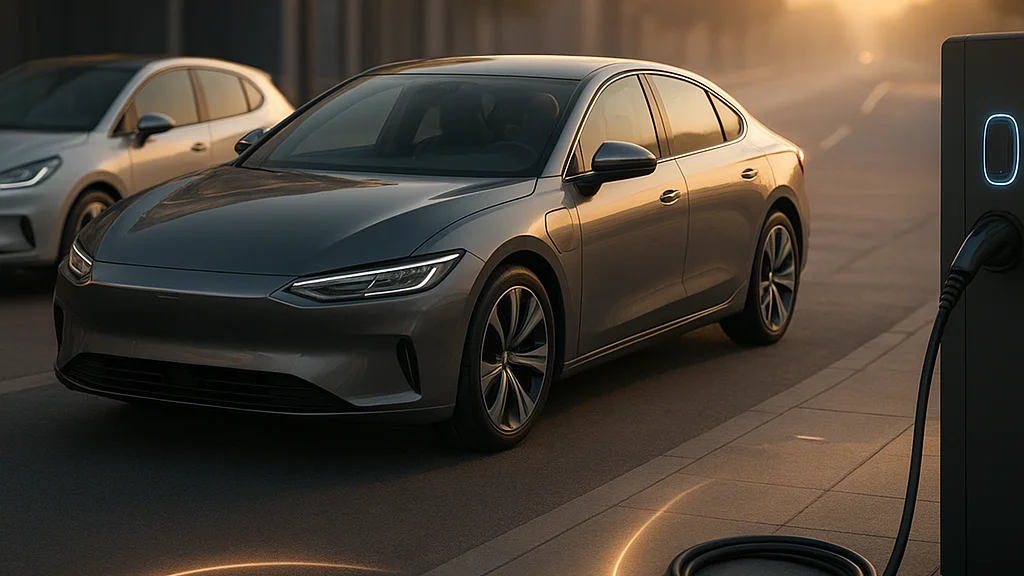

The first time you watch an EV driver stop thinking about gas stations, you notice a subtle shift. The conversation changes from price per gallon to miles per kilowatt-hour, from engine size to charging curves, from oil changes to software updates. That shift matters because buying an electric vehicle is no longer a niche experiment. It is a practical consumer decision shaped by battery chemistry, public charging access, federal and state incentives, insurance costs, and one deceptively simple question: how far can this car really go for the money?
For beginners, range and value are the two terms that cut through the marketing fog. Range tells you how much flexibility you get between charges. Value tells you whether the sticker price, charging costs, depreciation, standard features, and warranty package make sense over several years of ownership. The best EV is rarely the one with the biggest advertised number on a spec sheet. It is the one that fits your daily routine, your budget, and the charging options available where you live.
That is especially true in 2026, when the EV market is more crowded and more uneven than many shoppers expected. Some models deliver excellent efficiency and competitive pricing. Others look attractive upfront but lose their edge once you factor in charging speed, winter performance, or feature packaging. Publications such as Honest John’s EV value and range guide and MSN’s 2026 consumer EV roundup reflect that growing complexity: there is no single winner, only better fits for different buyers.
If you are just getting started, this guide is built to help you avoid the two most common mistakes I see around the Bay Area and beyond—overbuying range you do not need, and underestimating the importance of charging convenience. If you want a companion overview, WriteUpCafe’s Best Electric Vehicles for Range and Value Explained offers a useful primer, while Common Mistakes When Choosing Electric Vehicles for Range and Value is worth reading before you sign anything.
For most first-time EV buyers, the smartest purchase is not the longest-range model. It is the model with enough real-world range, strong efficiency, and easy charging access at a price you can live with.
What range and value actually mean for a first-time EV buyer
Range sounds straightforward, but beginners often treat the EPA estimate as a promise rather than a benchmark. In reality, EV range varies with speed, temperature, wheel size, cargo weight, elevation, and battery preconditioning. A vehicle rated at 300 miles may return substantially less on a cold freeway trip at 75 mph, and substantially more in moderate weather around town. That does not make the rating useless. It makes context essential.
Value is even more misunderstood. A lower-priced EV is not automatically the better value if it charges slowly, lacks heat-pump efficiency, or carries a weaker warranty. On the other side, a premium model with impressive range can be a poor value if its insurance, tire replacement, and financing costs erase the savings from cheaper electricity. Smart buyers compare total ownership economics, not just MSRP.
Here is the practical framework I recommend for beginners:
- Daily driving need: Most U.S. drivers travel far less than 100 miles per day, which means a 250- to 320-mile EV often covers normal use with margin.
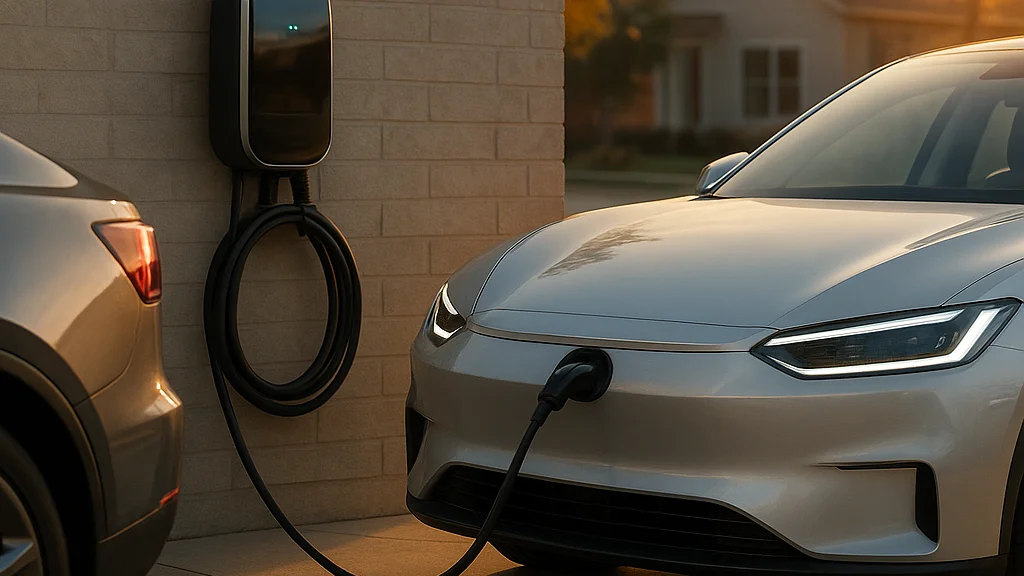
- Home charging access: A 240-volt Level 2 charger can matter more than an extra 50 miles of rated range.
- Fast-charging performance: Peak charging speed is less important than how long the battery sustains high power.
- Efficiency: A lighter, more efficient EV can cost less to run and may perform better in real conditions than a heavier model with a larger battery.
- Incentives and financing: Lease offers, tax credits where applicable, and utility rebates can dramatically alter the value equation.
There is also a psychological angle. New buyers often shop for “road-trip security” because they imagine worst-case scenarios. I get it. Range anxiety still lingers, even in tech-forward regions where chargers are increasingly visible. But in practice, charging infrastructure and route planning have improved enough that many households can prioritize efficiency and price over maximum battery size. The result is a lower monthly payment and often a better ownership experience.
That is why range and value should be evaluated together. A cheap EV with weak range may force frequent charging stops. A long-range luxury EV may be financially excessive for a commuter who charges at home. The sweet spot usually sits in the middle—strong real-world range, competitive pricing, and a charging ecosystem that does not create friction.
How the EV market reached this point in 2026
To understand which EVs make sense now, it helps to see how quickly the market matured. A decade ago, many battery-electric models were compliance cars or premium experiments. They either had limited range, limited availability, or limited appeal outside early adopters. Then battery costs fell, software improved, and public policy started nudging the market harder. California’s zero-emission push, federal incentives, stricter emissions rules in multiple regions, and expanding private charging networks all accelerated the shift.
What changed most for consumers was not just battery size. It was the combination of better batteries, more efficient motors, and more serious platform engineering. Dedicated EV architectures allowed automakers to improve cabin space, aerodynamics, and weight distribution. Vehicles such as the Hyundai Ioniq 5, Kia EV6, Tesla Model 3, Tesla Model Y, Chevrolet Equinox EV, and several Chinese-market leaders helped reset expectations around what mainstream electric cars could deliver.
By 2026, the beginner EV shopper faces a market with more segmentation than ever. There are compact city EVs, value-focused crossovers, software-heavy premium sedans, adventure-oriented SUVs, and increasingly capable pickup options. Some brands compete on battery technology and charging speed. Others compete on low lease payments or long warranties. That variety is good news, but it also means casual shoppers can be overwhelmed by claims that are hard to compare directly.
Another major shift has been charging standard consolidation in North America. The growing industry move toward Tesla’s North American Charging Standard, alongside adapters and broader access deals, has changed how buyers think about infrastructure. For years, many consumers judged an EV partly by whether its charging network felt dependable enough for long trips. In 2026, access is still uneven by region, but the direction is clearer: interoperability is improving, and that makes range less intimidating for first-timers.
Silicon Valley has influenced this dynamic in its own way. Buyers here tend to reward software polish, route planning intelligence, and energy ecosystem integration. That mindset has spread nationally. An EV is no longer just a vehicle purchase. It can also be a home-energy node, a utility-rate optimization tool, and for some households a stepping stone toward solar and storage. If you are comparing options, WriteUpCafe’s Best Electric Vehicles for Range and Value: An Expert Guide and The Future of Best Electric Vehicles for Range and Value in 2026 both capture how quickly these buying criteria have evolved.
The EV market’s biggest advance is not a single battery breakthrough. It is the growing alignment of battery range, charging access, software, and pricing into products ordinary households can actually use.
Which EVs stand out for beginners on range and value
A beginner-friendly EV should do three things well: provide enough range for flexible weekly use, maintain sensible pricing, and avoid ownership headaches. That narrows the field quickly. Based on broad market consensus, recent reviews, and consumer-oriented rankings from sources including Honest John and MSN, several nameplates consistently surface in discussions of range and value.
The Tesla Model 3 remains one of the clearest examples of the range-value formula working at scale. Its efficiency is still a benchmark in the segment, and access to a mature charging ecosystem continues to matter, especially for apartment dwellers or frequent road-trippers. The Model Y, meanwhile, offers more utility and family-friendly packaging, though buyers should compare trim pricing carefully because value can shift depending on incentives and insurance quotes.
Hyundai’s Ioniq 5 and Kia’s EV6 deserve serious attention from first-time buyers who care about charging speed and design. Their 800-volt architectures have made them standouts for DC fast charging under the right conditions, and both have generally appealed to shoppers who want something modern without stepping into the luxury bracket. Real-world value depends on local pricing and dealer behavior, but as products they remain highly competitive.
Chevrolet’s Equinox EV has drawn interest because it targets a part of the market many advocates have wanted for years: a more attainable electric crossover from a mainstream badge. If transaction prices stay disciplined, it could remain one of the most important “value EV” stories because the format is familiar and the operating costs are attractive. The larger Blazer EV can be appealing too, but beginners should make sure they are not paying a premium for size or styling they do not actually need.
For shoppers willing to consider a smaller footprint, some compact EVs and entry trims can offer stronger value than headline-grabbing long-range variants. The catch is that beginners must inspect the details. Lower trims sometimes lose heat pumps, battery preconditioning features, or faster charging capabilities that make winter use and road trips easier.
Here is a practical way to think about the leading categories rather than chasing a single “best” car:
- Best all-around sedan value: Tesla Model 3, because efficiency and charging access remain compelling.
- Best family crossover balance: Tesla Model Y, Hyundai Ioniq 5, and Kia EV6, depending on local pricing and feature preference.
- Best mainstream affordability play: Chevrolet Equinox EV, if available near its most competitive trims and financing terms.
- Best premium-range step-up: Higher-spec crossovers and sedans from established EV brands, but only if you will use the added capability.
Notice what is missing from that list: blind loyalty to battery size. A 350-mile EV is attractive, but if a 280-mile model is cheaper, more efficient, and easier to charge, it may be the better beginner purchase. That is the central discipline in this category—separating emotional reassurance from measurable value.
The numbers that matter more than headline range
When I talk with first-time EV shoppers in Northern California, they usually arrive with one number in mind: maximum range. By the end of the conversation, the more important numbers are often entirely different. Efficiency, charge time, usable cargo space, and monthly ownership cost usually determine satisfaction far more than a brochure-friendly claim.
Start with efficiency. An EV that consumes less energy per mile can save real money over time and may stretch its battery more effectively in mixed conditions. While exact ratings vary by trim and wheel package, efficient sedans often outperform heavier SUVs in cost per mile by a meaningful margin. If your utility offers time-of-use rates, the savings can widen further when you charge overnight.
Then there is charging speed. Many brands advertise a high peak DC fast-charging number, but battery charging is a curve, not a constant. What matters is how quickly the car goes from roughly 10% to 80% under realistic conditions. A model that briefly peaks high but tapers aggressively may be less convenient than one with a steadier curve. Software matters here too—battery preconditioning before arrival can save time, especially in cold weather.
Cost should be broken down with discipline:
- Purchase price or lease payment: Compare actual dealer and lender offers, not just MSRP.
- Electricity cost: Home charging is usually cheaper than public fast charging, sometimes dramatically so.
- Insurance: Premiums can vary sharply by model, repair network, and region.
- Tires and maintenance: EVs often need less routine service, but heavier models can wear tires faster.
- Resale or residual value: Leasing can protect beginners from market volatility if used EV pricing is uncertain.
Another overlooked metric is charging convenience per week. If you can plug in at home and recover your weekly miles overnight, a moderate-range EV may feel effortless. If you rely entirely on public charging, the equation changes. In that case, network reliability, charger density, and fast-charge speed deserve extra weight.
According to consumer-oriented rankings highlighted by MSN and Honest John, the strongest value picks tend to combine respectable range with practical ownership economics rather than chasing extremes. That aligns with what many of us in clean transport have argued for years: the best EV is often the one that minimizes friction. A vehicle that saves you 20 minutes on every long trip and $60 per month in charging and insurance can outperform a nominally more advanced rival in the real world.
What changed recently and why 2026 buyers should care
The 2026 EV market is not simply a larger version of 2023 or 2024. Several recent changes have altered the beginner buying experience. The first is infrastructure access. In North America, more brands have moved toward compatibility arrangements and charging-standard alignment that reduce the old fear of being locked into a weaker network. That does not mean every route is painless. Rural reliability and urban queueing can still be issues. But the strategic direction is positive, and it lowers the penalty for choosing among major EV brands.
The second change is pricing pressure. After years when some EVs carried inflated premiums, the market has become more competitive. Incentives, lease support, and inventory dynamics have pushed several automakers to sharpen their offers. This is one reason value-focused crossovers matter so much right now. If you are buying your first EV in 2026, there is a good chance you can secure more range, more features, or a better monthly cost than a buyer could just a couple of years ago.
Third, software has become a bigger differentiator. Route planning that accounts for charger availability, battery temperature, and arrival state of charge can transform a long trip from stressful to routine. Over-the-air updates now influence resale perception too. Buyers increasingly expect their cars to improve after purchase, or at least to remain current in charging and navigation behavior.
Battery technology is also evolving, though not always in ways consumers notice immediately. Some manufacturers are using lithium iron phosphate chemistry in specific trims because it can lower cost and improve durability characteristics, even if energy density tradeoffs remain. Others are refining thermal management and pack integration to improve efficiency and charging consistency. The result for beginners is subtle but important: range quality matters as much as range quantity.
There is another 2026 reality worth highlighting. Used EVs are becoming a more serious value channel, but beginners need to be selective. A discounted older EV can be a bargain if battery health, charging capability, and software support remain solid. It can also be a false economy if the car lacks modern route planning, has slower DC charging, or no longer qualifies for the charging access you expected. That is why current-market guides such as Top Electric Vehicles for Range and Value in 2026 are useful as reference points even for used shoppers—they help you understand what newer benchmarks look like.
Real-world buying scenarios for different kinds of beginners
One of the biggest myths in EV shopping is that all beginners need the same car. They do not. The right answer depends on where you charge, how often you travel long distance, and whether you value cargo flexibility, efficiency, or upfront affordability most.
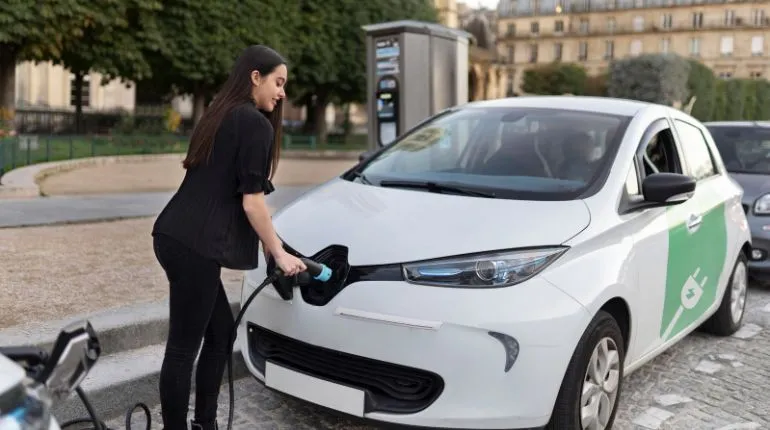
Consider the apartment dweller with no dedicated home charger. This buyer should prioritize dependable public charging access, strong route planning, and efficient energy use. A vehicle tied to a robust charging ecosystem can be worth a higher upfront cost because it reduces weekly hassle. Range matters here, but convenience matters more. If you are charging away from home, fewer charging sessions and better charger reliability can make the difference between loving your EV and resenting it.
Now take the suburban commuter with a garage and a 240-volt charger. This is the easiest beginner case. If your daily drive is 30 to 50 miles, you probably do not need the largest battery on the lot. A mid-range EV with strong efficiency will likely recover your usage overnight while keeping monthly costs down. In this scenario, value often beats maximum capability.
Families present a third case. They usually want a crossover, enough rear-seat room, and confidence for weekend trips. Models like the Model Y, Ioniq 5, EV6, and value-oriented electric SUVs are often the sweet spot because they combine practical packaging with enough range to handle mixed use. The trick is to compare trim levels carefully. Sometimes the “middle” trim is the real value leader because it adds charging or comfort features without pushing the price into premium territory.
Then there is the road-trip-heavy buyer. This person should think less about raw EPA range and more about charging curve, route-planning intelligence, and highway efficiency. A car that charges quickly and consistently may outperform a longer-range rival on total travel time. This is where beginners often learn the hard way that battery size alone does not guarantee trip comfort.
My advice is simple: map your week before you shop. Count your regular miles, note your charging options, and identify how many long trips you realistically take each year. That exercise usually reveals whether you need a long-range crossover, a highly efficient sedan, or a lower-cost EV that covers daily life beautifully.
How to choose confidently without overpaying
The smartest beginner EV purchase is made with a spreadsheet, not a fantasy. Start by setting a monthly budget that includes payment, insurance, charging, and a cushion for tires. Then compare at least three vehicles across the same ownership window—say, three years for a lease or five years for a purchase. You are looking for cost clarity, not marketing theater.
Test-drive with purpose. Do not spend the whole drive playing with the giant screen. Check visibility, seating position, rear access, cargo floor height, and one-pedal driving smoothness. Ask how battery preconditioning works before fast charging. Ask what charging cable is included. Ask whether key features are standard or hidden in an option package. Those details shape value more than flashy acceleration numbers.
Beginners should also verify these points before signing:
- Home charging feasibility: Can you install Level 2 charging, and what will it cost?
- Public charging backup: Which networks are common on your regular routes?
- Cold- or hot-weather behavior: Does the car have thermal management features that protect efficiency?
- Warranty coverage: Review battery and powertrain terms carefully.
- Software and service support: A good app and competent local service can save endless frustration.
Leasing deserves special attention in 2026. For many first-time buyers, leasing can be the cleanest way to access incentives, manage depreciation risk, and test whether EV life suits their household. Buying can still make excellent sense—especially if you drive a lot and plan to keep the car—but the used EV market remains dynamic enough that a lease is a rational option, not a compromise.
One final point from years of watching Bay Area buyers chase the newest thing: do not confuse innovation with suitability. The most advanced EV on paper may not be the best beginner EV. The best one is the car you can charge easily, afford comfortably, and trust on an ordinary Tuesday as much as on a holiday road trip.
Electric vehicles have moved beyond the novelty phase. For beginners, that is liberating. You no longer have to buy the future as an experiment. You can buy it as a practical tool—one that, when chosen well, delivers quiet performance, lower operating costs, and a cleaner energy footprint without forcing your life into awkward new patterns. Range matters. Value matters more when range is already sufficient. Get that balance right, and the transition feels less like a leap and more like an upgrade.































Sign in to leave a comment.