

A rivalry that looks simple until you follow the energy
Stand next to a hydrogen fuel cell car while it refuels and the pitch sounds irresistible: fast fill-ups, long range, water vapor from the tailpipe. Park that next to a battery electric vehicle at a high-power charger and the counterargument lands just as hard: lower running costs, expanding infrastructure, and a drivetrain so efficient it feels almost unfair. For more than a decade, these two pathways have been framed as rival futures for clean transport. By mid-2026, the picture is much clearer than the marketing ever suggested.
The core question is not whether both technologies can move a vehicle. They can. The real question is how much energy, money, infrastructure, and industrial effort each pathway requires to move the same vehicle the same distance. Once you trace electricity from generation to wheels, battery electric vehicles usually hold a commanding advantage in passenger cars. Hydrogen still has a case in some commercial applications, but that case has narrowed as batteries improve, charging networks scale, and fleet economics get more brutally transparent.
That shift has become harder to ignore this year. A recent Electrek report on Shell’s view of hydrogen for heavy trucks captured a striking moment: even major energy players are reassessing where hydrogen makes sense. At the same time, companies still invested in fuel cells are increasingly repositioning around buses, trucks, rail, and industrial duty cycles rather than family sedans. If you want a broad primer first, WriteUpCafe’s Hydrogen Fuel Cell Vehicles vs Battery Electric: The Real EV Divide and Expert Tips for Choosing Between Hydrogen Fuel Cell and Battery Electric Vehicles are useful companion reads.
The contest is no longer about technical possibility. It is about system efficiency, infrastructure realism, and where scarce clean hydrogen creates the most value.
That is where this debate gets interesting—especially for readers who care about decarbonization as an engineering problem, not just a branding exercise.
How we got here: two zero-emission ideas took very different roads
Battery electric vehicles and hydrogen fuel cell vehicles emerged from different assumptions about what would limit clean mobility. Fuel cell advocates worried batteries would stay heavy, slow to charge, and impractical for long distances. Battery proponents argued that electric drivetrains were inherently simpler and that chemistry, software, and charging would improve faster than skeptics expected. History, so far, has favored the second camp in light-duty transport.
In a fuel cell vehicle, hydrogen stored in high-pressure tanks feeds a fuel cell stack, which generates electricity onboard to power an electric motor. In a battery electric vehicle, electricity is stored directly in the battery and delivered to the motor without first converting hydrogen back into power. Both are electric at the wheels. The difference is the number of energy conversion steps upstream. Hydrogen usually requires electricity to split water through electrolysis, then compression or liquefaction, transport, storage, and finally reconversion to electricity inside the vehicle. Each step carries losses.
That chain mattered less when charging networks were sparse and battery packs were expensive. But scale changed the math. Global battery manufacturing expanded dramatically in the 2020s, led by China but with major North American and European investments following. Charging standards matured. Fast-charging speeds improved. Thermal management, cell chemistry, and software-based route planning made battery cars more usable in real life than many early projections suggested.
Hydrogen never achieved the same consumer momentum. A handful of retail fuel cell models reached market, most notably from Toyota and Hyundai, but station networks remained thin and often fragile. California, the main U.S. retail hydrogen market, struggled with station availability and fuel pricing volatility. Those constraints damaged consumer confidence in a way that range charts and refueling-time claims could not fix.
Meanwhile, hydrogen’s strongest supporters began shifting emphasis. According to Just Auto’s report on Toyota’s hydrogen strategy, the company has increasingly focused its fuel cell efforts on commercial vehicles. That move says a lot. It reflects an industry recognition that the technology’s best chances may lie where vehicle utilization is high, routes are centralized, and depot refueling can be planned rather than improvised.
- Battery electric strength: fewer conversion losses, simpler powertrain, widespread home and public charging potential.
- Hydrogen strength: fast refueling, potentially lighter energy storage for some long-duty applications, centralized fleet fueling models.
- Battery electric weakness: charging time and payload concerns in certain heavy-duty use cases.
- Hydrogen weakness: fuel cost, infrastructure scarcity, and lower well-to-wheel efficiency.
That divergence is the backdrop for everything happening now.
Efficiency is the decisive metric most headlines miss
If you strip away the culture war around mobility and just ask how much renewable electricity is needed to move a vehicle, battery electric wins by a wide margin. Analysts phrase this differently depending on assumptions, but the direction rarely changes. A battery EV can often deliver roughly 70% or more of the original electrical energy to the wheels after charging and drivetrain losses. A hydrogen pathway using electrolysis, compression, distribution, and fuel-cell conversion may deliver closer to 25% to 40%, depending on system design. Exact figures vary, but the gap is not minor. It is structural.
That matters because clean electricity is valuable. Every extra conversion step means more wind, solar, transmission capacity, and capital expenditure to achieve the same mobility output. In a world racing to decarbonize buildings, industry, data centers, and transport all at once, efficiency is not an academic nicety. It becomes industrial policy.
Running costs reflect that reality. Battery EVs typically consume electricity directly, and even when public fast charging is expensive, the total energy cost per mile often remains favorable versus hydrogen. Hydrogen prices at retail stations have frequently been high enough to blunt one of the technology’s original selling points. In fleet contexts with dedicated supply contracts, the economics can improve, but they still depend heavily on utilization, local power prices, hydrogen production method, and station throughput.
The carbon story is equally important. Fuel cell vehicles are only as clean as the hydrogen they use. Green hydrogen from renewable-powered electrolysis can be very low carbon, but global hydrogen supply is still dominated by fossil-based production, particularly steam methane reforming. Carbon capture can reduce emissions for so-called blue hydrogen, yet performance depends on methane leakage, capture rates, and upstream assumptions. Battery EVs also vary by grid mix, but their emissions generally improve automatically as grids decarbonize.
For passenger vehicles, the battery pathway does not merely look cheaper today. It aligns better with how clean electricity systems are actually scaling.
This is why comparisons that focus only on tailpipes can mislead readers. Tailpipes tell you local air quality. They do not tell you what happened at the electrolyzer, reformer, compressor, charging station, or power plant.
- Battery EV energy chain: generate electricity, transmit it, charge battery, discharge to motor.
- Hydrogen FCV energy chain: generate electricity or produce hydrogen from gas, make hydrogen, compress or liquefy it, transport and store it, convert it back to electricity in the vehicle, then power the motor.
- Practical result: more infrastructure and more energy are usually required for hydrogen to do the same job in light-duty road transport.
That does not make hydrogen useless. It means hydrogen has to earn its place where batteries struggle, not where batteries already work extremely well.
The consumer market verdict is largely in: battery electric dominates cars
For everyday drivers, the debate is becoming less theoretical and more visible in dealership inventories, charging maps, and resale markets. Battery electric cars now span compact hatchbacks, luxury sedans, crossovers, pickup trucks, and delivery vans. Fuel cell passenger vehicles remain a niche offering in a tiny number of regions. That gap is not just about automaker preference. It reflects infrastructure economics and customer convenience.
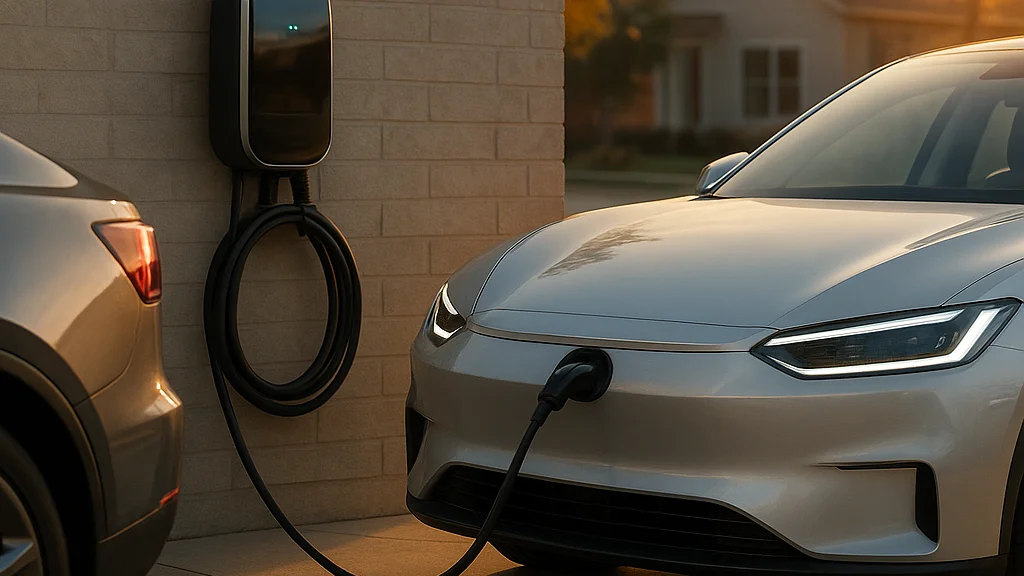
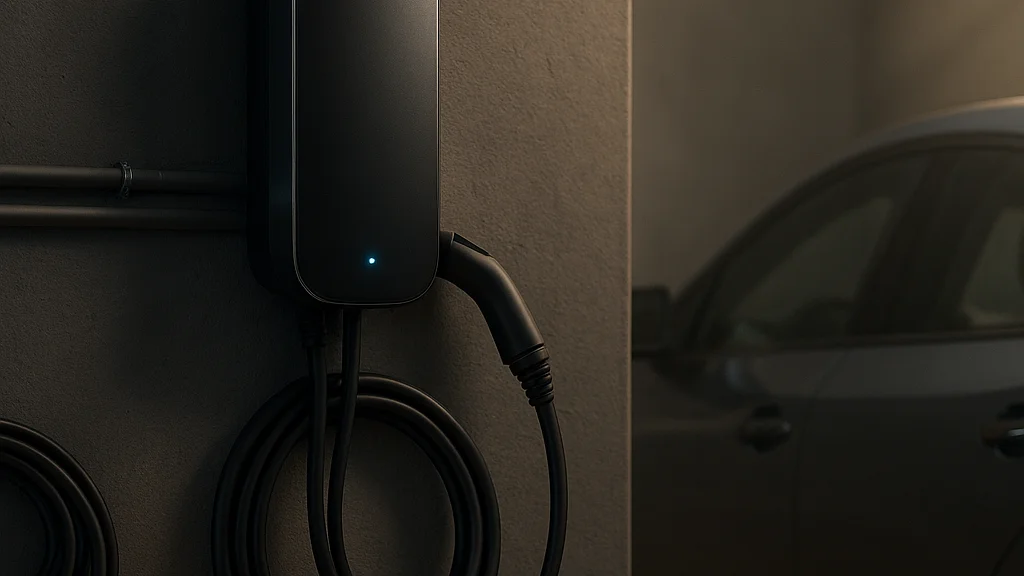
Home charging remains the silent superpower of battery electric mobility. If you can plug in where you live, a large share of your fueling happens while you sleep. Hydrogen cannot replicate that. It depends on specialized stations, high-pressure equipment, and a supply chain that needs enough throughput to be financially viable. Sparse networks create a chicken-and-egg problem: low station density discourages buyers, and low vehicle counts discourage station investment.
California illustrated the risk. Even where the most ambitious U.S. hydrogen retail buildout occurred, station outages and supply constraints repeatedly undermined confidence. Drivers do not care that a technology looks elegant on a whiteboard if the nearest pump is offline. Battery charging has its own reliability issues, but the network effect is much stronger because charging can happen at home, at work, at retail sites, and increasingly at dedicated fast-charging corridors.
Vehicle cost trends reinforce the pattern. Battery prices have fluctuated with mineral markets, tariffs, and manufacturing cycles, yet long-term scaling has still brought down pack costs and expanded model availability. Fuel cell systems, by contrast, have not reached comparable consumer-scale manufacturing volumes. Tanks, stacks, and station hardware remain expensive. That cost burden shows up somewhere—either in sticker price, subsidies, or fuel cost.
Readers looking for a broader market snapshot can compare this analysis with WriteUpCafe’s 2026 Trends in Hydrogen Fuel Cell Vehicles vs Battery Electric Cars and Complete Guide to Hydrogen Fuel Cell Vehicles vs Battery Electric in 2026, both of which track how policy and infrastructure shape adoption.
- Why battery EVs lead in consumer markets: home charging, broader model choice, better infrastructure momentum, lower energy losses.
- Why fuel cell cars lag: few models, limited stations, high hydrogen costs, weaker economies of scale.
- What still appeals about FCVs: quick refueling and long range in theory, especially for drivers who cannot charge at home.
In Silicon Valley terms, one platform found product-market fit. The other is still searching for a use case that can scale without extraordinary support.
Where hydrogen still has a serious argument: trucks, buses, rail, and fleets
The hydrogen story becomes more credible once you leave the suburban driveway and enter the world of logistics yards, transit depots, ports, and industrial rail spurs. Here, the constraints change. Vehicle uptime matters intensely. Payload sensitivity can be critical. Routes may be fixed. Refueling can happen at a central depot rather than a dispersed public network. Under those conditions, hydrogen can still compete—sometimes effectively.
That is why commercial transport has become the center of gravity for fuel cell advocates. Just Auto reported that Toyota is shifting hydrogen fuel cell focus toward commercial vehicles, a strategic move that aligns with where fuel cells may offer operational advantages. Buses and heavy-duty trucks running predictable routes can make better use of dedicated fueling infrastructure. If a fleet returns to the same depot every night, operators can optimize hydrogen delivery, storage, and maintenance in ways retail drivers cannot.
Rail is another interesting frontier. According to Hydrogen Fuel News on CRRC’s modular rail fleet, manufacturers are developing both hydrogen fuel cell and battery-electric locomotives for industrial decarbonization. That dual-track approach is revealing. It suggests operators do not see one technology as universally superior; they are matching powertrains to route length, charging opportunities, and infrastructure constraints.
Heavy trucking remains the most contested segment. A CBC.ca article distributed on MSN, Hydrogen vs. batteries: Which is winning the race to electrify heavy trucks?, highlights the central tension: hydrogen promises diesel-like refueling patterns, while battery trucks are advancing faster than many expected. Megawatt-class charging, improved pack energy density, and better route planning have narrowed the operational gap. Some routes once assumed to require hydrogen may not require it after all.
Still, there are niches where fuel cells could remain attractive:
- High-utilization fleets that cannot tolerate long charging windows.
- Cold-chain or remote operations where charging infrastructure is difficult to deploy quickly.
- Industrial campuses and ports with centralized fueling and strong decarbonization mandates.
- Non-electrified rail segments where catenary installation is uneconomic.
The caveat is brutal but simple: these are not mass-market passenger-car conditions. Hydrogen may survive—and even thrive—in pockets of transport where batteries face genuine operational penalties. The evidence increasingly suggests that is where the technology belongs.
What changed recently in 2026
This year has sharpened the debate because several strands of industry thinking are converging. First, skepticism around hydrogen in long-haul trucking has become more public. The Electrek report on Shell’s position was notable not because one company can settle the issue, but because it reflected a broader reassessment among infrastructure and energy stakeholders. When a major oil and gas company questions hydrogen’s trucking prospects, investors notice. Fleet operators notice too.
Second, fuel cell backers are becoming more selective rather than more expansive. Toyota’s commercial-vehicle emphasis, covered by Just Auto, is a practical acknowledgment that hydrogen resources should be directed where utilization can justify infrastructure. That is a more disciplined strategy than trying to force fuel cells into every transport segment.
Third, battery-electric heavy transport has improved faster than older industry assumptions allowed. Charging technology, including megawatt charging systems for trucks, is moving from concept toward deployment. Battery costs remain volatile, and grid upgrades are not trivial, but the operational envelope for battery trucks keeps expanding. Every gain in charging speed or route optimization puts additional pressure on hydrogen’s business case.
Fourth, policy support is becoming more discerning. Governments still back hydrogen as part of broader decarbonization strategies, especially for hard-to-abate sectors, but policymakers are increasingly aware that not all hydrogen applications offer equal climate value. Clean hydrogen may be more urgently needed in fertilizer, steel, shipping fuels, and industrial heat than in commuter cars. That prioritization matters.
Fifth, the market conversation has matured. A few years ago, many public discussions treated hydrogen versus batteries as a winner-take-all ideological fight. In 2026, the more serious view is sector-specific. Passenger cars? Battery electric, overwhelmingly. Urban buses? Depends on route structure and depot economics. Long-haul freight? Still contested, but batteries are stronger than once assumed. Rail and industrial mobility? Mixed portfolio.
What changed is not physics. What changed is that deployment data now exposes which narratives were wishful and which were grounded in real operating economics.
That is healthy for the clean transport sector. Capital is finite. So is engineering talent. Better to place both where they can produce measurable decarbonization rather than symbolic headlines.
The infrastructure question decides more than the vehicle itself
When people compare a fuel cell vehicle to a battery EV, they often focus on the machine in front of them. The smarter comparison is between systems. A battery EV plugs into an electricity network that already reaches homes, offices, warehouses, and shopping centers. It certainly needs upgrades, but the backbone exists. Hydrogen requires production, transport, storage, dispensing, safety systems, and enough demand concentration to keep stations economical. That is a much taller order.
Electricity infrastructure scales in layers. A driver can start with a wall outlet, move to Level 2 charging, then rely on regional DC fast charging when needed. Fleets can add depot chargers in phases. Utilities can forecast demand and upgrade feeders over time. Hydrogen infrastructure is less forgiving. Undersized demand can make stations uneconomic. Oversized investment can strand capital if vehicle adoption stalls. Reliability failures are also more visible because drivers usually have fewer alternatives nearby.
There is also a strategic resource issue. If a region has abundant renewable power, should it use that electricity directly in vehicles, or convert some of it into hydrogen first? For most cars and many trucks, direct electrification is the more efficient answer. Hydrogen may still be the right molecule for sectors where electrons are awkward to use directly, but that strengthens the case for reserving clean hydrogen for harder jobs.
From a city-planning perspective, battery charging also integrates more naturally with distributed energy trends. Solar canopies, stationary storage, demand response, and smart charging all fit into a digital grid model that California and other markets are already building. Hydrogen can be part of that ecosystem, especially for industrial resilience and long-duration storage, but not with the same plug-and-play logic as a battery EV.
- Battery infrastructure advantage: leverages existing electric grid and distributed charging options.
- Hydrogen infrastructure challenge: requires dedicated supply chain, specialized stations, and high utilization.
- System implication: infrastructure economics often matter more than vehicle specs in determining adoption.
That is why transport transitions rarely hinge on a single breakthrough. They hinge on whether the surrounding ecosystem can be built, financed, maintained, and trusted.
What buyers, fleets, and policymakers should watch next
If you are a retail buyer, the answer is already pretty straightforward. Battery electric is the practical zero-emission choice in almost every passenger-vehicle scenario where charging is available. The product range is broader, infrastructure is expanding, and the efficiency case is overwhelming. Fuel cell cars remain technically impressive, but they are trapped by station scarcity and weak market depth.
Fleet operators should be more nuanced. The right decision depends on route length, dwell time, payload sensitivity, depot configuration, utility interconnection timelines, and fuel contracts. For many urban and regional fleets, battery electric is likely to win on total cost and infrastructure simplicity. For some high-throughput operations, hydrogen may still justify pilot programs or limited deployment—especially where centralized refueling can be guaranteed.
Policymakers should resist false symmetry. Supporting hydrogen as a strategic decarbonization tool does not require pretending it is equally suitable for all road transport. Public money should follow climate impact and deployment realism. That means accelerating charging buildout for light-duty and medium-duty EVs while targeting hydrogen support toward sectors with fewer alternatives.
Over the next few years, watch five indicators closely:
- Hydrogen fuel pricing for commercial fleets and whether it falls enough to improve operating economics.
- Megawatt truck charging deployment and utility upgrade timelines.
- Commercial fuel cell orders in buses, port drayage, and rail rather than passenger cars.
- Clean hydrogen supply growth and whether green hydrogen volumes scale meaningfully.
- Policy prioritization around where limited subsidies generate the most emissions reduction.
My own view, from years of watching clean tech hype rise and crash across the Bay Area, is that hydrogen is not dead. But the broad consumer dream attached to it has mostly faded. Batteries won the mainstream road-car battle because they fit the grid, the economics, and the pace of manufacturing learning curves. Hydrogen’s future looks narrower and more industrial. That may sound less glamorous. It is also far more credible.
The clean mobility transition does not need a single winner everywhere. It needs the right tool in the right lane. For passenger cars, that tool is battery electric. For selected heavy-duty and industrial roles, hydrogen may still earn a durable place—provided it can prove itself against rapidly improving batteries, not against outdated assumptions from a decade ago.

























Sign in to leave a comment.