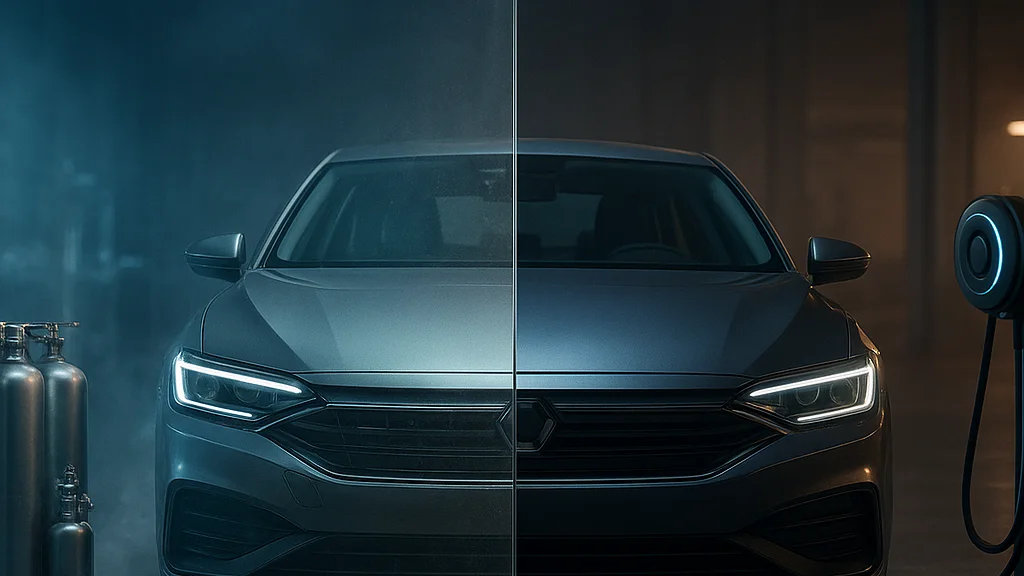

A debate that sounds simple until you look at the numbers
Walk through central Barcelona on a warm evening and the future of transport feels almost tangible. Quiet battery electric scooters slip past Gaudí-lined streets, delivery vans recharge at curbside points, and city buses increasingly operate under strict low-emission rules shaped by European policy. Yet the conversation around hydrogen fuel cell vehicles and battery electric vehicles still gets flattened into slogans. One side says hydrogen refuels fast, so it must be better. The other says batteries already won, so the discussion is over. Both positions miss the real story.
The most common mistakes in this comparison come from treating all vehicles, all routes, and all energy systems as if they were the same. A battery electric hatchback used for commuting in Madrid is not the same problem as a long-haul truck crossing northern Europe. A hydrogen fuel cell bus in a fleet depot is not the same commercial proposition as a private family SUV. When readers ask me which technology is superior, my first answer is usually: superior for whom, on which route, and with what infrastructure?
That distinction matters more in 2026 than it did a few years ago. Battery prices have continued to improve over the long term despite periodic raw-material volatility, charging networks have expanded, and heavy-duty hydrogen pilots have become more serious. At the same time, many public discussions still repeat old assumptions. According to the International Energy Agency and reporting across Reuters and industry publications, the market has not evolved evenly. Passenger cars, buses, delivery fleets, regional trucking, and long-haul logistics are moving at different speeds.
Comparing hydrogen and battery vehicles without comparing the full energy chain is like comparing two buildings by their façades while ignoring the engineering underneath.
That is why this article focuses on the mistakes people make, not just the technologies themselves. If you want a broader overview, WriteUpCafe readers can also see Hydrogen Fuel Cell Vehicles vs Battery Electric: A 2026 Comparative Analysis and Expert Tips for Choosing Between Hydrogen Fuel Cell and Battery Electric Vehicles. The goal here is sharper: identify where the public, investors, and even policymakers often get this comparison wrong.
Mistake one: assuming hydrogen and batteries compete in exactly the same use case
The first error is conceptual. People often compare hydrogen fuel cell vehicles and battery electric vehicles as if they are direct substitutes across the board. They are not. In passenger cars, battery electric models have built a commanding lead in manufacturing scale, charging access, and model availability. In heavy-duty transport, however, the question remains more open because payload, downtime, route predictability, and depot economics all matter differently.
This is why articles such as the MSN piece, Electric cars vs. hydrogen cars: Why the battery already won, resonate with many readers. For the passenger car market, that argument is largely supported by reality. Battery electric cars benefit from a much larger installed charging base, stronger consumer familiarity, and far greater production volumes from companies including Tesla, BYD, Volkswagen Group, Hyundai, BMW, and Mercedes-Benz. Hydrogen passenger cars remain niche, with only a handful of commercial offerings over the past decade and limited refueling stations in most countries.
But the same conclusion cannot simply be copied into every segment. Long-haul freight is where hydrogen advocates still see a window, particularly where operators need rapid refueling, long range under heavy load, and centralized fueling depots. The problem is that many discussions jump from “hydrogen may have a role in trucks” to “therefore hydrogen is equally viable for mainstream cars.” That leap is unsupported.
Consider how the market is actually segmented:
- Passenger cars: battery electric dominates in sales momentum, charging rollout, and consumer choice.
- Urban buses: both technologies appear, but route design and depot strategy often favor batteries in many cities.
- Regional delivery fleets: battery electric increasingly fits predictable daily mileage and overnight charging.
- Long-haul heavy trucks: hydrogen remains under active development because weight, range, and turnaround time matter more.
When analysts fail to separate those categories, they create false expectations. A family choosing its next car does not need the same solution as a logistics company moving refrigerated cargo across the continent. In energy analysis, context is not decoration. It is the whole argument.
Mistake two: ignoring well-to-wheel efficiency
The second mistake is more technical, but it has enormous practical consequences. Many comparisons focus on what happens at the vehicle: a hydrogen car emits water vapor at the tailpipe, and a battery electric car has no tailpipe at all. That is only the visible end of the chain. The more relevant question is how much renewable electricity is needed to move the vehicle a given distance.
Battery electric vehicles generally win this contest by a wide margin. Electricity can be generated, transmitted, stored in a battery, and used by an electric motor with comparatively fewer conversion losses. Hydrogen adds multiple extra steps: electricity is used to split water through electrolysis, hydrogen is compressed or liquefied, transported, stored, dispensed, and then converted back into electricity inside the fuel cell before reaching the motor. Each stage consumes energy.
CBC, in its report on truck electrification, Hydrogen vs. batteries: Which is winning the race to electrify heavy trucks?, captured this central tension well. Hydrogen can solve some operational problems, but it usually does so with a greater energy penalty. That matters in Europe, where renewable electricity is valuable and grid expansion remains politically sensitive.
In simple terms, the common misunderstanding looks like this:
- People hear that hydrogen is “clean” if made from renewable power.
- They assume that means it is equally efficient as using electricity directly.
- They overlook the conversion losses between renewable generation and the wheels.
- They then underestimate the scale of renewable power required for a hydrogen-heavy transport system.
That does not mean hydrogen has no place. It means the threshold for using it should be higher. If a battery can do the job reliably, at lower system energy cost, the battery route is usually more rational. If a battery cannot meet operational demands without unacceptable weight, downtime, or infrastructure complexity, hydrogen may become more compelling.
The cleanest molecule is not automatically the smartest transport pathway. Efficiency decides how much clean power society must build in the first place.
Spain offers a useful lens here. The country has become a major solar growth market, and policymakers understandably want to use abundant renewables to support industry and mobility. But from an energy-planning perspective, every megawatt-hour diverted into hydrogen for light-duty road transport is a megawatt-hour not used more directly elsewhere. That trade-off is often absent from public debate.
Mistake three: confusing refueling speed with total convenience
Hydrogen supporters often make a strong point that is also incomplete: refueling a fuel cell vehicle can be much faster than recharging a battery electric one. On paper, that sounds decisive. In practice, consumers and fleet managers care about total convenience, not just pump time.
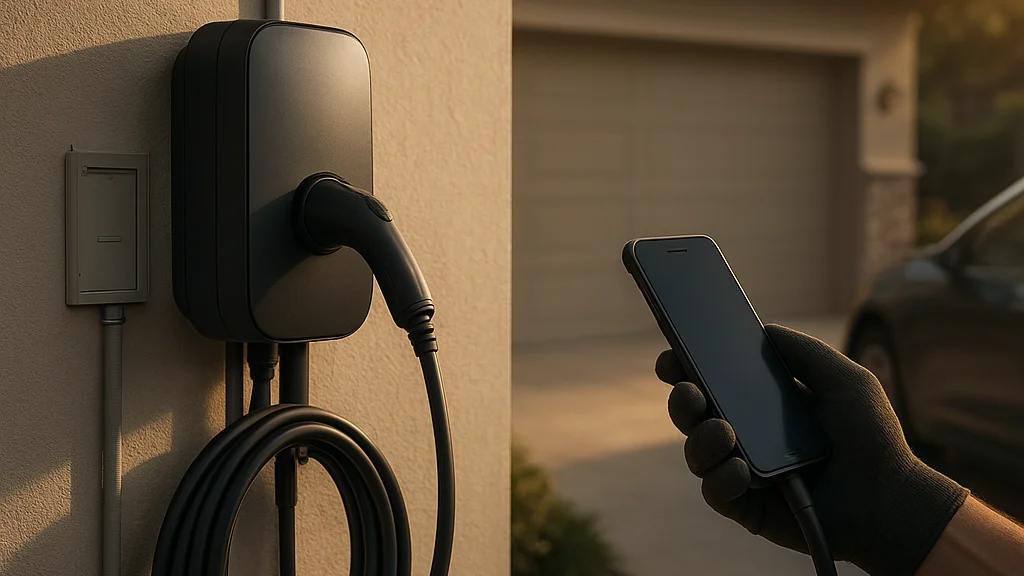
A battery electric car can charge at home, at work, in public parking, or while the driver is shopping or sleeping. That changes the meaning of time. A 25-minute fast charge is not directly comparable to a five-minute hydrogen fill if the battery vehicle starts every morning with a full charge from a private wallbox. For many urban and suburban drivers, the relevant comparison is not “minutes at station versus minutes at charger.” It is “how often do I need to stop at all?”
This is where hydrogen often loses badly in passenger transport. Refueling is quick only if a station exists nearby, is functioning, and has fuel available. In many markets, hydrogen station networks remain sparse and expensive to expand. Battery charging, by contrast, has multiplied across homes, offices, supermarkets, motorways, and fleet depots. Even when public charging frustrations remain real, the network logic is broader and more flexible.
The misconception becomes clearer when broken into real-world questions:
- Can the vehicle be energized where it is parked most of the time?
- How dense is the public infrastructure within a normal driving radius?
- What is the uptime of the fueling or charging network?
- How much detour time is required to access that network?
- Can capacity scale during holiday peaks or freight surges?
For heavy trucks, the answer may differ. Fleet depots can centralize hydrogen refueling more effectively than dispersed consumers can. That is one reason truck makers continue to test the technology. New Atlas reported on Toyota’s continued push in fuel cells and support from truck-industry partners in Toyota is still trying to make hydrogen-fueled vehicles a reality – and it's got help. The key phrase is “got help.” Hydrogen works best where infrastructure can be coordinated, financed, and utilized at high intensity.
For private cars, however, convenience is a network story before it is a refueling-speed story. That distinction explains why battery electric adoption has accelerated in cities from Oslo to Barcelona while hydrogen passenger cars remain rare sightings.
Mistake four: underestimating cost, especially outside the vehicle sticker price
A fourth mistake is focusing too narrowly on the purchase price of the vehicle while ignoring the rest of the economic system. Total cost of ownership includes fuel or electricity, maintenance, infrastructure, financing, utilization rates, and residual value. Hydrogen often struggles once that wider lens is applied.
Fuel cell systems use expensive components, and hydrogen distribution infrastructure is capital intensive. Stations must handle storage, compression, safety systems, and often low early utilization. Low utilization is deadly for economics. If too few vehicles use a station, the fuel becomes expensive. If the fuel is expensive, too few vehicles adopt the technology. It is a classic chicken-and-egg trap.
Battery electric vehicles face their own cost barriers, especially in grid upgrades and fast-charging installations for fleets. Yet their infrastructure can be deployed more incrementally. A company can start with depot charging, add chargers as the fleet grows, and benefit from falling battery costs over time. Home charging for consumers has no hydrogen equivalent. That alone changes ownership economics dramatically.
Maintenance assumptions are also frequently muddled. Many buyers hear that fuel cell vehicles are electric and therefore assume maintenance will mirror battery EV simplicity. Some components do, but hydrogen systems add tanks, thermal management complexity, and specialized fueling hardware. The comparison is not with combustion cars alone; it is with battery EVs, which are already mechanically simpler than traditional vehicles.
If you are trying to compare economics honestly, ask these questions:
- What is the delivered cost per kilometer under local energy prices?
- What infrastructure must be built before the first vehicle can operate reliably?
- How many vehicles are needed to spread that infrastructure cost?
- What happens to resale value if the local fueling network remains thin?
- Is the route predictable enough that charging can solve the problem more cheaply?
For readers who want a broader consumer-facing framework, Complete Guide to Hydrogen Fuel Cell Vehicles vs Battery Electric in 2026 and Common Mistakes in Hydrogen Fuel Cell Vehicles vs Battery Electric are useful companions. The central point remains simple: the vehicle is only one line item in a much larger equation.
Mistake five: treating 2026 as if nothing has changed since the early hype cycle
Hydrogen mobility debates are still haunted by assumptions formed years ago. In the late 2010s and early 2020s, many forecasts implied a broader consumer hydrogen rollout than what actually happened. Since then, battery electric technology has advanced faster than many expected in charging speed, software integration, thermal performance, and manufacturing scale. That shift matters.
By 2026, the strongest momentum in road transport remains with batteries, especially in passenger vehicles and medium-duty fleets. Chinese manufacturers have expanded aggressively, European automakers have deepened EV lineups, and charging networks across the EU have become denser under both market pressure and regulation. The Alternative Fuels Infrastructure Regulation has pushed member states to improve deployment planning, even if execution still varies widely.
Hydrogen, meanwhile, has not disappeared. It has narrowed. The center of gravity has moved toward heavy-duty applications, industrial corridors, and commercial pilots where centralized fueling can make sense. InsideEVs highlighted one of the clearest examples in Mercedes-Benz Is Putting This Hydrogen Electric Semi Truck Into Production. That development matters because it signals that major truck manufacturers still see potential in fuel cells for specific duty cycles. It does not mean hydrogen is suddenly poised to overtake battery EVs in the consumer market.
Recent developments have sharpened the divide rather than erased it:
- Battery electric passenger cars now benefit from far greater model diversity and production scale.
- Megawatt-class charging discussions for trucks have become more concrete, strengthening the battery case in freight.
- Hydrogen truck programs continue, but mostly in targeted commercial niches rather than mass retail.
- Governments are increasingly distinguishing between hydrogen’s role in industry and its role in road transport.
That is a healthier market signal than the old winner-take-all rhetoric. Serious planners no longer ask whether one technology will magically replace the other everywhere. They ask where each pathway can justify itself under stricter cost and energy constraints. That is progress.
Mistake six: overlooking infrastructure geography and policy design
Infrastructure is never neutral. It reflects geography, regulation, urban form, and industrial strategy. One of the most persistent analytical mistakes is discussing hydrogen and battery vehicles in abstract global terms instead of asking what works in a specific place.
Barcelona is a perfect reminder. Dense neighborhoods, shorter urban trips, strict emissions goals, and growing public charging all reinforce the battery electric case for passenger mobility. Spain’s solar buildout also strengthens the logic of direct electrification where possible. Every rooftop panel or utility-scale solar farm can support charging with fewer conversion losses than a hydrogen pathway for light-duty use.
Northern European freight corridors present a different picture. There, hydrogen may gain traction if governments coordinate cross-border refueling, industrial hydrogen production, and freight demand around ports and logistics hubs. The challenge is that policy often gets ahead of utilization. Building stations without enough vehicles creates stranded assets. Waiting for vehicles without stations suppresses demand. Smart policy has to synchronize both sides.
Another common error is assuming public subsidies prove technological superiority. They do not. Subsidies often reflect strategic goals such as energy security, industrial policy, or domestic manufacturing ambitions. Europe has backed hydrogen for reasons that extend beyond passenger cars, including steel, chemicals, shipping derivatives, and grid balancing. Road transport then becomes one possible outlet, not always the best one.
According to Reuters coverage over recent years, many hydrogen projects have faced delays, cost pressure, or revised timelines. That does not invalidate the sector. It does suggest that investors and policymakers are becoming more selective. The most credible projects now tend to be geographically concentrated and linked to industrial clusters, not broad consumer rollouts based on optimism alone.
Where you live may matter more than what you believe. Infrastructure geography often decides technology winners long before marketing does.
This is the lens readers should adopt: not hydrogen versus batteries in theory, but hydrogen versus batteries under local electricity prices, local incentives, local routes, and local infrastructure density.
What informed buyers, operators, and policymakers should watch next
The final mistake is searching for a single permanent verdict. Transport transitions do not work that way. The smarter approach is to track a handful of indicators that reveal where each technology is genuinely strengthening or weakening.
For consumers, the signal is already clear in most markets. Battery electric vehicles are the mainstream zero-emission option because they are easier to buy, easier to charge, and easier to integrate into daily life. Hydrogen passenger cars remain constrained by station scarcity and limited model availability. Unless infrastructure economics change dramatically, that is unlikely to reverse soon.
For fleet operators, the answer is more conditional. Watch route length, payload sensitivity, depot access, electricity tariffs, and charger installation timelines. If operations are predictable and dwell time exists, battery electric usually has the edge. If heavy loads, long distances, and rapid turnaround dominate, hydrogen may still earn a place, especially in controlled corridors.
For policymakers, three metrics deserve constant scrutiny:
- Energy efficiency: how much renewable power is required per kilometer delivered.
- Infrastructure utilization: whether stations or chargers are being used enough to justify capital spending.
- System fit: whether the technology supports broader grid, industrial, and mobility goals.
Readers interested in where the market may be heading can also consult 2026 Trends in Hydrogen Fuel Cell Vehicles vs Battery Electric Cars. My own view, shaped by years following European mobility and clean-energy policy, is straightforward. Battery electric vehicles are likely to remain the dominant solution for passenger road transport and a large share of commercial fleets. Hydrogen’s future, if it succeeds, will be narrower but still meaningful: heavy-duty corridors, specialized fleets, and places where direct electrification runs into hard operational limits.
That may sound less dramatic than the old technology wars. Good. Mature energy analysis should be less dramatic. It should be disciplined, location-specific, and honest about trade-offs. The biggest mistake in this debate has never been choosing the wrong side. It has been asking the wrong question. The real question is not which technology sounds more futuristic. It is which one uses clean energy most wisely for the job at hand.





























Sign in to leave a comment.