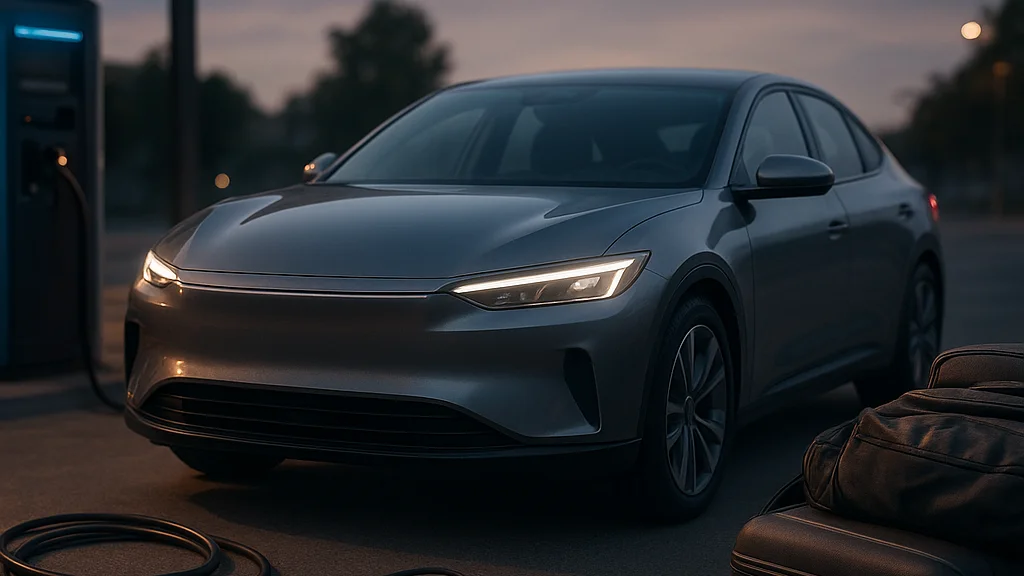

On a summer evening in Barcelona, the difference between an electric car that looks brilliant on paper and one that works beautifully in real life becomes obvious very quickly. A compact EV may promise more than 300 miles of range, yet after a day of stop-start city driving, a fast motorway run toward Sitges, and a search for a public charger near a crowded shopping district, the owner discovers that value is not a sticker price and range is not a laboratory number. That gap between brochure logic and lived experience is where most buying mistakes happen.
The market has matured fast. Buyers now face dozens of credible options from Tesla, Hyundai, Kia, BMW, Mercedes-Benz, Rivian, Nissan, Chevrolet and others. Media lists help, but they can also mislead if readers turn rankings into rigid truths. Edmunds' value-focused EV picks, republished by MSN, and Detroit Free Press selections for electric SUVs are useful starting points, not final answers. The same model can be a bargain for a suburban commuter and a poor choice for a frequent intercity driver.
I see the same pattern repeatedly: shoppers anchor on one headline metric, usually EPA range or monthly payment, and ignore the system around the car. Charging speed, battery preconditioning, winter efficiency, software reliability, insurance cost, tyre wear, home charging access, and resale value all shape the real equation. Readers who want a broader primer can compare this analysis with Beginner’s Guide to the Best Electric Vehicles for Range and Value and Best Electric Vehicles for Range and Value: An Expert Guide, but the key point is simple: the most common mistakes are not about choosing a bad EV. They are about asking the wrong questions before buying a good one.
Range matters, but usable range matters more. Value matters, but total ownership value matters most.
The first mistake: treating range as a single, universal truth
Consumers often speak about range as if it were one fixed number, like the height of a building. It is not. Range is conditional. It changes with temperature, speed, elevation, wheel size, load, HVAC use, and battery chemistry. A driver cruising at 120 km/h on a hot Spanish autovía with the air conditioning working hard will not see the same result as a commuter gliding through urban traffic in mild weather. Yet buyers still compare cars as if a 20-mile difference on an official test settles the matter.
This is where rankings can distort judgment. An article such as AOL's roundup of EVs with more range than a Tesla Model 3 can be directionally useful, but the wrong reader may infer that a longer-range sedan is automatically the better purchase. It may not be, especially if it charges more slowly, costs much more to insure, or has weaker route planning. According to Reuters and major auto reviewers in recent years, buyers increasingly care about charging convenience almost as much as nominal range, because a fast and predictable stop can beat a longer but less practical battery pack.
There is also a European nuance. In cities like Barcelona, many owners drive relatively short daily distances and can recover most of their needs overnight. For them, the decisive factor is often not maximum range but whether the vehicle remains efficient in mixed use and whether public charging is easy when weekend travel begins. A 250-mile EV with excellent efficiency and stable DC fast-charging may outperform a 330-mile EV that consumes more energy at motorway speeds.
- Official range tells you the test-cycle potential, not your guaranteed outcome.
- Motorway efficiency often matters more than city efficiency for long-trip buyers.
- Seasonal loss can be substantial in cold weather, especially without a heat pump.
- Wheel and tyre choices can reduce range meaningfully versus base configurations.
The smarter question is not, “Which EV has the longest range?” It is, “What range will I actually get in my use case, and how quickly can I recover it?” That shift alone prevents a remarkable number of expensive disappointments.
The second mistake: confusing purchase price with value
A low entry price is seductive. I understand why. When households compare an EV with a petrol or hybrid alternative, the upfront number still dominates the conversation. But value is a layered calculation, and the cheapest electric car is often not the best-value electric car. Media rankings have become more sophisticated here. Auto Express evaluates EVs across categories rather than just price, while Edmunds has highlighted value picks based on broader ownership logic. That is the correct direction.
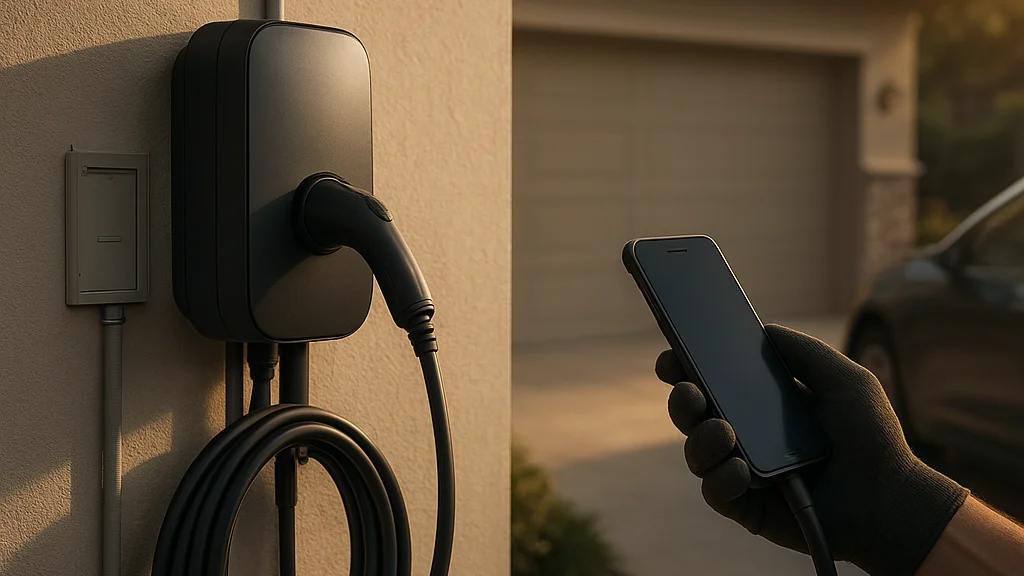
Buyers routinely overlook four line items. First, home charging installation can add meaningful cost, particularly in older apartment buildings. Second, insurance premiums for some EVs remain unexpectedly high because of repair complexity, battery concerns, and parts pricing. Third, tyres wear faster on many electric cars due to weight and torque. Fourth, depreciation varies sharply by brand and model. A discount-heavy EV may look affordable at the showroom and painful on the used market two years later.
This is especially important in 2026 because the EV market is no longer defined by novelty. It is defined by competition. Price cuts, incentives, and inventory moves can make one month’s bargain become next quarter’s resale headache. According to industry reporting from Reuters and consumer testing organizations, used EV pricing has been more volatile than many buyers expected, partly because newer models improve quickly and partly because incentives can reset used-market expectations.
- Calculate electricity cost at home and on public DC charging separately.
- Request insurance quotes before placing a deposit.
- Estimate tyre replacement intervals and cost for your wheel size.
- Check battery warranty terms and any mileage caps.
- Research resale trends for the exact trim, not just the brand.
Readers who want a focused checklist should also see Common Mistakes When Choosing Electric Vehicles for Range and Value. The central lesson is that value emerges over years, not at the moment of purchase. A beautifully priced EV can become a poor-value asset if charging, depreciation, and maintenance-adjacent costs are ignored.
The best-value EV is rarely the one with the lowest sticker. It is the one whose costs remain predictable after the excitement of delivery fades.
The third mistake: ignoring charging speed, charging curve, and network reality
If range is the headline metric, charging is the hidden architecture. Buyers still underestimate how much charging performance shapes satisfaction. Two EVs can both claim rapid charging, yet one may briefly touch a high peak and then taper aggressively, while the other sustains strong power for a much longer window. For road-trip drivers, the second car is often the superior tool even if the marketing number looks smaller.
This distinction has grown more important as charging networks expand and as automakers refine battery thermal management. In 2026, access to reliable charging is improving in North America and Europe, but reliability remains uneven by region, operator, and station age. Tesla’s network continues to influence buyer confidence, while other networks have improved but not uniformly. Several automakers have also moved toward broader charging interoperability and, in some markets, access to previously closed ecosystems. That changes the value equation because charger availability can matter more than the difference between 290 and 330 miles of rated range.
Battery preconditioning is another underappreciated factor. A car that can automatically warm or cool its battery while routing to a fast charger often saves real time, especially in winter. This is not glamorous technology. It is practical technology. Drivers who skip this detail may buy an EV that looks competitive in a comparison table and feels frustrating on a cold holiday journey.
There is a lesson here from urban Europe. Barcelona’s mobility planning has taught residents to think in systems rather than isolated machines. The same mindset applies to EV ownership. The car, the home charger, the public network, the payment apps, the route planner, and the battery management software form one ecosystem. Break any link and the ownership experience deteriorates.
- Peak charging speed is less useful than average charging power from 10% to 80%.
- Preconditioning can materially improve winter fast-charging times.
- Plug access and network compatibility affect real convenience every week.
- Route-planning software reduces charging anxiety more than marketing slogans do.
This is why some highly rated long-range vehicles still disappoint owners. They solved battery size but not charging rhythm. For many households, especially those making frequent regional trips, that is the wrong trade-off.
The fourth mistake: buying the wrong body style and battery for actual life
One of the stranger features of the EV market is that many shoppers buy for imagined use rather than documented use. They picture annual ski trips, emergency detours, and once-a-summer family holidays, then overspend on a large SUV or an enormous battery pack that sits underused most of the year. It is the automotive version of building a cathedral when a well-designed apartment would do. Gaudí understood proportion. EV buyers should too.
The rise of electric SUVs has intensified this error. The category is popular for understandable reasons: commanding visibility, cargo space, family flexibility. The Detroit Free Press roundup of 2026 electric SUVs reflects how competitive the segment has become. But large vehicles are not automatically better value. They are heavier, often less efficient, usually more expensive to insure, and can require pricier tyres. If your driving consists mainly of commuting, school runs, and local errands, a smaller crossover or hatchback may offer the superior ownership equation.
Battery size creates a similar trap. Bigger packs can reduce charging frequency and improve long-trip flexibility, but they also raise purchase cost and vehicle mass. In some cases, a medium-battery trim paired with good charging performance is the sweet spot. This matters in Europe, where urban parking, narrower streets, and shorter average daily driving distances can make oversized vehicles feel cumbersome rather than liberating.
Recent buying guides have become better at segmenting recommendations by use case, and that is healthy. Still, consumers often skip the discipline of mapping their own driving. Before choosing an EV, log six weeks of real travel: daily distance, weekly peak, monthly long trip, parking conditions, and charging opportunities. The result is usually eye-opening. Most people discover they need less battery than they thought and better charging than they assumed.
For readers comparing trims and categories, Best Electric Vehicles for Range and Value Explained is a useful companion. A precise match between vehicle size and life pattern is one of the surest ways to avoid overpaying.
The fifth mistake: underestimating software, reliability, and ownership friction
Electric vehicles are not only batteries on wheels. They are rolling software platforms, and software quality increasingly determines whether a car feels premium, efficient, and dependable. Consumers who concentrate solely on range and price can miss the importance of route planning, charging integration, over-the-air updates, app stability, driver-assistance calibration, and infotainment responsiveness. None of these features sounds as dramatic as a 0-60 time or a 350-mile claim. All of them matter more after month three.
In 2026, software maturity is separating winners from merely competent entrants. Some automakers have improved dramatically, while others still struggle with glitchy interfaces or inconsistent app performance. Reviewers at major outlets have repeatedly noted that a strong EV can be undermined by unreliable trip planning or awkward charging menus. This becomes critical for new EV owners, who depend on the car’s guidance far more than experienced drivers do.
Reliability should also be framed correctly. Battery failure is not the most common ownership problem, but smaller issues can accumulate into frustration: sensor faults, charging handshake problems, trim quality, or delayed parts availability after minor collisions. According to consumer reporting over the past few years, repair timelines for some EVs have been longer than expected because of parts logistics and specialized service requirements. That affects value just as surely as energy consumption does.
There is a cultural tendency, especially among tech-forward buyers, to forgive early friction in exchange for innovation. Sometimes that is rational. Often it is expensive. A vehicle used daily by a family or a business must be judged by consistency, not charisma. Ask how often software updates arrive, whether they solve real problems, and how local service support performs when something goes wrong.
A polished charging map and a dependable mobile app do not appear on showroom placards, yet they often decide whether an owner recommends the car a year later.
Do not treat ownership friction as a soft issue. It is a financial issue, a time issue, and a trust issue. In the EV world, those three are tightly connected.
What changed in 2026, and why old buying habits now fail
The EV market of 2026 is more crowded, more price-sensitive, and more infrastructure-aware than the market of even two years ago. That means some old heuristics no longer work. Buyers used to assume that paying more guaranteed better batteries, better software, and better charging. That is less true now. Mainstream brands have improved quickly, premium brands face fiercer scrutiny, and cross-shopping is broader than before. A family considering a Tesla may also compare Kia, Hyundai, Chevrolet, Nissan, BMW, or Rivian depending on body style and budget.
Another shift is the growing seriousness of value journalism. Lists such as the Edmunds selections carried by MSN and broader category rankings from Auto Express reflect a market where consumers demand practical answers, not just aspirational ones. Yet the abundance of rankings creates a new hazard: list fatigue. Shoppers bounce between “best EV,” “best value EV,” “best electric SUV,” and “longest-range EV” articles until the distinctions blur. They start mixing incompatible criteria and end up confused.
Policy and infrastructure also matter more now. In Europe, regulatory pressure, urban access rules, and charging investment continue to shape ownership economics. Spain’s solar momentum has reinforced the appeal of home charging paired with rooftop generation, making the value case especially strong for households that can charge on self-produced electricity. In that scenario, a slightly more expensive EV with excellent efficiency can deliver superior long-term returns.
Meanwhile, buyers are better informed about battery chemistry, but not always in a useful way. Discussions around LFP versus NMC packs, charging habits, and daily state-of-charge targets can become overcomplicated. Chemistry matters, yes, but only within a broader ownership context. The practical question remains: does this battery type suit your charging access, climate, and travel pattern?
For a forward-looking view, readers can pair this piece with The Future of Best Electric Vehicles for Range and Value in 2026. The market is moving toward smarter, more nuanced buying decisions. Those still using 2022-era shortcuts are increasingly likely to choose badly.
How to avoid the most expensive EV mistakes
The best defense against a weak EV purchase is method, not instinct. Create a decision framework before you test-drive anything. Start with your real mobility profile. Then score each candidate on five dimensions: usable range, charging performance, ownership cost, software quality, and fit for your actual life. This sounds obvious. Very few buyers do it rigorously.
Begin with data from your own routine. How many kilometers do you drive on an average weekday? How often do you exceed 250 kilometers in one day? Do you have private parking with charging access? Will you rely on curbside AC charging, workplace charging, or public DC fast charging? Once those answers are clear, the field narrows naturally. A city-based household with home charging may prioritize efficiency and compact dimensions. A sales professional covering long motorway distances may prioritize charging curve, seat comfort, and route-planning software.
Then test beyond the showroom. Drive the car at motorway speed. Use the navigation to plan a charging stop. Sit in the rear seats with the front adjusted for your actual height. Check boot access, cable storage, app features, and menu logic. Ask the dealer or manufacturer representative about preconditioning, software update cadence, and local service capacity. If those answers are vague, treat that as information.
- Track your real driving for at least a month before shopping.
- Compare trims, not just models; wheel size and battery option can change value sharply.
- Price home charging installation early, especially in shared buildings.
- Run insurance quotes for each finalist before making a decision.
- Read owner reports alongside professional reviews to identify recurring friction points.
- Prioritize charging consistency and software quality if you travel regularly.
One final principle matters. Do not buy an EV to win an argument. Buy one to solve a mobility problem elegantly. The most satisfying electric cars are not always the most famous or the most extreme. They are the ones whose capabilities align with daily life so closely that the technology fades into the background. That is true in Barcelona, in Berlin, in Detroit, and almost everywhere the transition is accelerating.
The common mistakes in choosing the best electric vehicles for range and value are common because the market encourages simplification. But good decisions require texture. Ask harder questions. Compare the whole system. Respect the difference between numbers and experience. If you do, the right EV becomes much easier to spot.






























Sign in to leave a comment.