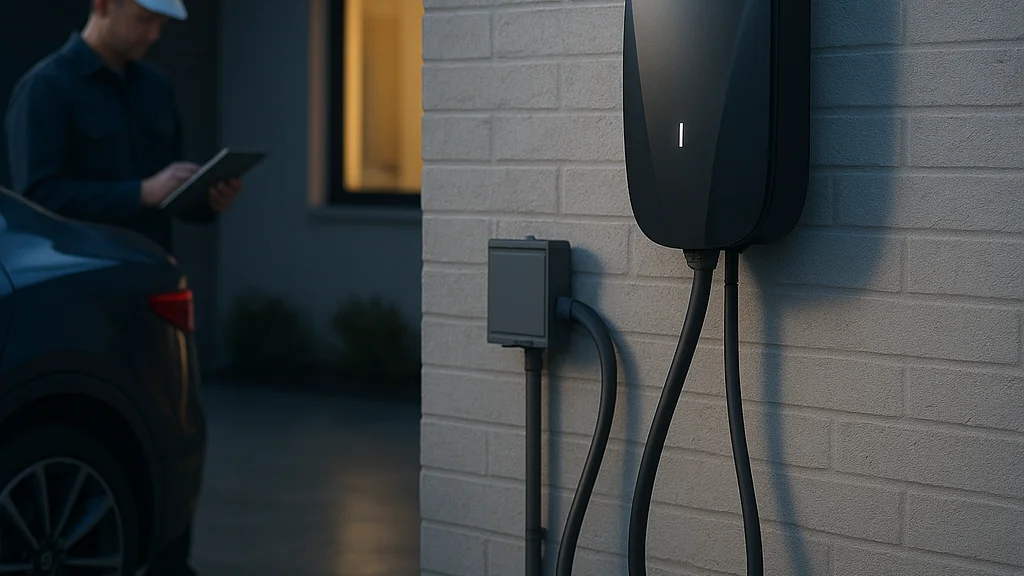

Most people start this process backwards. They shop for a shiny wall box first, compare app screenshots, argue about cable length on Reddit, and only then ask the question that actually decides everything: can the house support it? Three things usually go wrong before anything good happens. First, buyers confuse charger speed with vehicle acceptance rate. Second, they underestimate panel capacity and circuit loading. Third, they assume installation is a simple appliance swap when it is closer to adding a small, continuous industrial load to a home electrical system. That sounds harsh, but actually it saves money.
Home charging is where EV ownership becomes convenient rather than performative. The U.S. Department of Energy has long framed home charging as the primary charging method for many drivers, and utilities in North America and Europe have spent the last few years pushing time-of-use rates to move charging into overnight windows. The result is simple: if your setup is planned well, you wake up to a full battery at the lowest practical cost. If it is planned badly, you get nuisance breaker trips, expensive service upgrades, ugly conduit runs, or a charger that never delivers the speed advertised on the box.
Recent reporting has made the same point from different angles. The Atlanta Journal-Constitution focused on the electrical reality inside the house, while Yahoo News UK and Shropshire Star both emphasized installation basics and property-specific constraints. The smart-home angle has also become more serious than the marketing fluff suggests; a 2025 Forbes Tech Council piece argued that integration with home energy systems is becoming central, not optional, for cost control and load management.
The unpopular truth: the best home EV charger is often not the fastest one. It is the one your panel, utility tariff, parking layout, and car can use efficiently for the next five to ten years.
If you want a baseline before going deeper, WriteUpCafe has a useful primer in Complete Guide to Home EV Charging Station Installation. But the real work starts with the home itself, not the hardware catalog.
Start with the electrical math, not the product page
Level 1 charging uses a standard household outlet, usually 120 volts in the U.S., and it is slow enough that many households outgrow it quickly. Level 2 charging, typically 240 volts, is what most homeowners mean when they say they want a home charging station. The catch is that Level 2 is a category, not a single speed. Common residential charging rates range from 16 amps to 48 amps, sometimes more in specific configurations, but the practical limit is usually set by the home electrical system and the car’s onboard charger.
Here is the part that gets mangled in online arguments: a 48-amp charger usually requires a 60-amp circuit because EV charging is treated as a continuous load under electrical code principles. Continuous loads are generally sized at 125% of the expected current draw. That means a homeowner with an older 100-amp service panel may not have enough spare capacity for a high-output charger without load calculations, load management, or a service upgrade. According to the Atlanta Journal-Constitution, this is exactly where many installations become more complex and costly than buyers expect.
An electrician will typically examine the following before quoting the job:
- Main service size: often 100A, 150A, 200A, or higher
- Available breaker space: whether the panel has physical room for a new two-pole breaker
- Existing load profile: HVAC, electric range, dryer, water heater, pool equipment, and other large loads
- Distance to parking location: longer wire runs increase labor and material costs
- Mounting environment: garage, carport, exterior wall, pedestal, or shared parking area
Actually, the smartest outcome for many homes is not a panel replacement but a managed charging solution. Some newer chargers can throttle output based on household demand or utility schedules. That matters in 2026 because more homes now combine EV charging with heat pumps, induction cooking, battery storage, and rooftop solar. The panel that looked oversized in 2018 can feel cramped now.
If you want a second internal read that frames the owner mindset well, Home EV Charging Station Installation Guide for Smart Owners is a natural companion. It helps connect the hardware decision to how people actually live with the system.
Choose the charger by use case, not by ego
Three things people get wrong here: they buy more amperage than they need, they ignore the car’s onboard charging limit, and they treat app features as if they matter more than reliability. The right charger depends on miles driven per day, time parked at home, local rates, and whether one or multiple EVs share the circuit. A commuter driving 30 to 50 miles daily may be perfectly served by a modest Level 2 setup. A household with two EVs, one large battery SUV, and limited overnight parking time has a different problem entirely.
Most residential buyers should compare chargers using five filters.
- Output capacity: 16A, 24A, 32A, 40A, 48A and so on
- Connection type: hardwired versus plug-in on a NEMA outlet where allowed by code and manufacturer guidance
- Cable length and cold-weather flexibility: bad cable management is a daily annoyance, not a minor detail
- Smart features: scheduling, load sharing, utility demand response, solar integration, and usage reporting
- Certification: look for recognized safety listings and installer familiarity
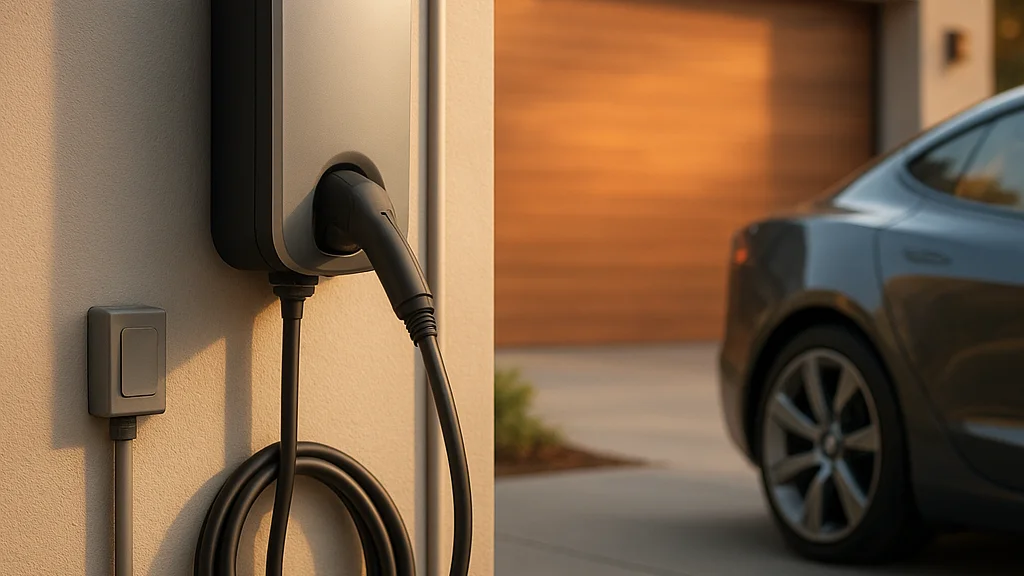
Hardwired units are often the better long-term option. They can support higher amperage in many cases, reduce the chance of outlet overheating, and tend to satisfy inspectors and electricians more easily. Plug-in chargers have their place, especially for renters or homeowners who may move, but they introduce another component that must be installed correctly and matched to the circuit. A cheap receptacle on a high-load EV circuit is not clever; it is a failure point.
Vehicle-side constraints matter too. If your EV’s onboard charger only accepts 32 amps on AC charging, installing a 48-amp wall unit will not make the car charge faster. It may still be useful for future-proofing or for a second vehicle later, but that should be a conscious decision, not a forum-induced flex. Yahoo News UK’s installation explainer stressed this practical mismatch issue, and it is one of the few points that cuts through the marketing noise cleanly.
A home charger is not buying speed in the abstract. It is buying enough overnight energy, safely and repeatedly, at the lowest friction your house can support.
Also, think about connector standards and compatibility. In North America, the market has been shifting around NACS adoption while J1772 remains common for Level 2 AC charging through adapters or native ports depending on model and brand. In Europe and the UK, Type 2 remains the norm. The installation guide is therefore partly regional by design. The hardware on your wall must match both your current car and the adapter reality you are willing to tolerate.
What a professional installation actually includes
The fantasy version of installation is a technician showing up, mounting a box, and leaving in 90 minutes. The real process is more like a small electrical project with code, permitting, and inspection layers. That is not bureaucracy for its own sake. EV charging draws high current for long periods, and poor workmanship can create heat, voltage drop, nuisance tripping, or outright fire risk. Actually, this is where paying for competence matters more than paying for branding.
A standard professional installation usually includes a site assessment, load calculation, equipment selection confirmation, permit application where required, circuit installation, charger mounting, commissioning, and inspection. If the parking area is detached from the house, trenching or conduit routing may be necessary. If the panel is full, electricians may propose tandem breakers where code allows, a subpanel, load management hardware, or a full service upgrade. The right answer depends on the house, not on what was easiest in the last job they did.
Expect cost drivers to include:
- Panel upgrades: often the biggest variable if existing service is undersized
- Long wire runs: copper is expensive, and labor adds up fast
- Exterior mounting: weather-rated equipment and more complex routing can raise costs
- Masonry or finished-wall work: drilling, patching, and concealment are not free
- Permits and inspections: essential in many jurisdictions and often required for incentives
The Atlanta Journal-Constitution reported on a core issue homeowners miss: not every house can simply absorb a new EV load without tradeoffs. That is especially true in older housing stock built before widespread electrification. Meanwhile, the Yahoo News UK and Shropshire Star pieces highlighted another practical point: the ideal charger location is usually the one that minimizes cable strain, avoids trip hazards, and keeps the unit protected from impact and weather exposure. That sounds obvious. It somehow still gets ignored.
Ask installers direct questions. Will they perform a formal load calculation? Are they recommending hardwire or receptacle and why? What wire gauge and breaker size will they use? Will they handle permits? Is the quoted charger on the utility’s approved list if rebates apply? If they get annoyed by those questions, good. You learned something useful before signing.
For broader comparisons, Top 7 Home EV Charging Station Installation Guide is helpful as a cross-check on feature sets and planning priorities.
Smart charging, solar, and batteries changed the equation in 2026
This is where the conversation got more interesting over the last two years. Home charging is no longer just about plugging in a car overnight. It is becoming part of a household energy stack that may include rooftop solar, stationary battery storage, dynamic utility pricing, and software that shifts loads automatically. The 2025 Forbes Tech Council article on smart home integration argued that EV chargers are evolving into orchestrated energy devices rather than dumb power dispensers. That framing is actually correct, even if the industry sometimes wraps it in unbearable buzzwords.
In practical terms, smart charging can do three valuable things. It can schedule charging for off-peak rates, modulate charging based on household demand, and coordinate with solar generation to maximize self-consumption. For homeowners facing demand charges or steep time-of-use differentials, those functions can materially change the economics. If your utility charges far less overnight than during evening peaks, the charger app is not a gimmick; it is part of the payback model.
By 2026, vehicle-to-home discussion also moved from niche forum obsession to something closer to a real planning variable. A recent TechTimes guide to vehicle-to-home charging outlined how some EVs and bidirectional systems can support backup power use cases. The caveat is enormous: V2H is not a standard feature across the market, and it requires compatible vehicles, approved hardware, interconnection rules, and often more expensive installation design. Do not buy a charger today assuming magical future backup capability unless your automaker and installer can document a real pathway.
Still, the planning implication is important. If you are already opening walls, upgrading service, or adding a battery, ask whether conduit sizing, panel layout, and charger selection can preserve future options for solar or bidirectional systems. Future-proofing is often less about buying the fanciest unit now and more about avoiding boxed-in infrastructure later.
Three 2026 realities stand out:
- Utilities are more aggressive about managed charging programs and may offer incentives for enrollment
- Homes are electrifying faster through heat pumps and electric appliances, increasing panel competition
- Bidirectional charging is more visible but still uneven, brand-specific, and installation-sensitive
So yes, smart features matter. But only when they solve a billing or load problem you actually have.
Permits, incentives, and the compliance trap nobody enjoys
Three bad assumptions wreck budgets here. Homeowners assume rebates are automatic, they assume any electrician can document the job properly, and they assume inspection is a minor afterthought. Actually, incentives often come with strings: approved equipment lists, licensed installation, utility enrollment, proof of permit closure, and deadlines that look generous until they are suddenly not.
In the U.S., federal, state, local, and utility incentives can all interact, but they do not always stack cleanly. Some programs reward panel upgrades, some focus on charger hardware, and others pay for managed charging participation rather than installation itself. In the UK and parts of Europe, grant structures have changed over time, with support often narrowed toward renters, flats, landlords, workplaces, or special categories rather than universal homeowner subsidies. That shifting policy environment is why current utility and government program details should be checked before buying hardware.
Permitting serves more than a legal function. It creates a paper trail that can matter for home resale, insurance claims, and warranty disputes. If an unpermitted charger installation causes damage, insurers may ask ugly questions. If a buyer’s inspector finds undocumented electrical work, the “small shortcut” suddenly becomes a closing problem. The Yahoo News UK and Shropshire Star coverage both stressed the importance of using qualified installers and understanding local requirements, which is boring advice right up until it saves you thousands.
Before installation day, assemble this checklist:
- Utility tariff review: confirm time-of-use or EV-specific rates
- Incentive eligibility: charger model, installer credentials, and deadlines
- Permit scope: charger only, panel work, trenching, or service upgrade
- Inspection timing: whether energizing must wait for approval
- Documentation: invoices, serial numbers, load calculations, and photos
There is a cultural tendency in tech circles to treat regulation as friction invented by lesser minds. Fine. Then a claim gets denied, or a rebate is rejected over one missing permit number, and suddenly everybody becomes a proceduralist. Better to handle it correctly from the start.
Real-world installation scenarios and what they teach
The cleanest installation is usually a newer detached home with a 200-amp panel, attached garage, short run to the parking bay, and a driver who charges overnight. In that case, a hardwired Level 2 charger on a dedicated circuit can be straightforward, fast to install, and relatively affordable by project standards. The owner benefits most from scheduling around utility rates and from choosing a cable length that reaches the port without awkward stretching.
A more complicated but common case is an older home with 100-amp service and multiple electric loads already in play. Here the homeowner may be forced to choose between a lower-amperage charger, a load management device, or a panel/service upgrade. The contrarian answer is often to accept slower charging. If the car is parked for 10 to 12 hours overnight, a moderate charging rate may still fully cover daily driving. Spending heavily to chase theoretical speed can be irrational.
Then there is the multifamily or townhouse scenario, where the electrical challenge is often matched by governance headaches: assigned parking, HOA approval, common meter arrangements, and conduit pathways through shared structures. This is where planning early matters most. A one-off charger can be done; a scalable strategy for several residents is harder. If your building may electrify parking over time, a load-sharing architecture is usually smarter than oversized dedicated circuits for a few early adopters.
Finally, the solar-plus-EV household introduces a different optimization problem. Charging at midday may maximize self-consumption, but work schedules often make overnight charging more realistic. Smart chargers can bridge some of that gap by adapting to solar production on weekends or remote work days while still defaulting to off-peak charging otherwise. The point is not ideological purity. The point is matching the charging pattern to the household rhythm.
The best installation is not the prettiest one on social media. It is the one that disappears into daily life, passes inspection, and keeps working when the novelty is gone.
If you want a future-facing perspective, The Future of Home EV Charging Station Installation: A Comprehensive Guide adds context on where residential charging design is heading.
What to do next if you want a charger without regrets
Start with the house, then the car, then the utility, then the charger. That order feels almost offensively unsexy, which is probably why people resist it. But it works. Gather your panel details, note the parking layout, estimate daily mileage, and check whether your EV can actually accept the charging rate you think you want. After that, pull current utility tariffs and incentive rules. Only then should you ask installers for quotes.
Get at least three quotes if the project involves panel work or exterior routing. Ask each contractor to specify breaker size, wire path, charger mounting point, permit handling, and whether the quote assumes a hardwired unit. If one bid is dramatically cheaper, inspect what is missing rather than congratulating yourself. The missing item is often the thing that becomes expensive later.
For most homeowners, a sensible path looks like this:
- Confirm your daily energy need rather than chasing maximum possible charging speed
- Have a licensed electrician assess service capacity with a real load calculation
- Select a charger with scheduling and load management if your utility rates or household loads justify it
- Use permits and inspections to protect incentives, insurance, and resale value
- Leave room for the next upgrade whether that is a second EV, solar, or battery storage
The home EV charging market in 2026 is more mature than it was a few years ago, but maturity does not mean simplicity. It means the mistakes are better documented. We know what fails. We know what gets overpriced. We know what features matter and which ones are mostly app-store theater. A good installation is engineering plus honesty: honest about your driving, honest about your panel, honest about your budget, and honest about whether a slower, smarter setup is actually enough.
That is the guide, really. Ignore the hype, respect the electrical math, and build a charging setup that fits the home you have, not the forum fantasy somebody else is performing.






























Sign in to leave a comment.