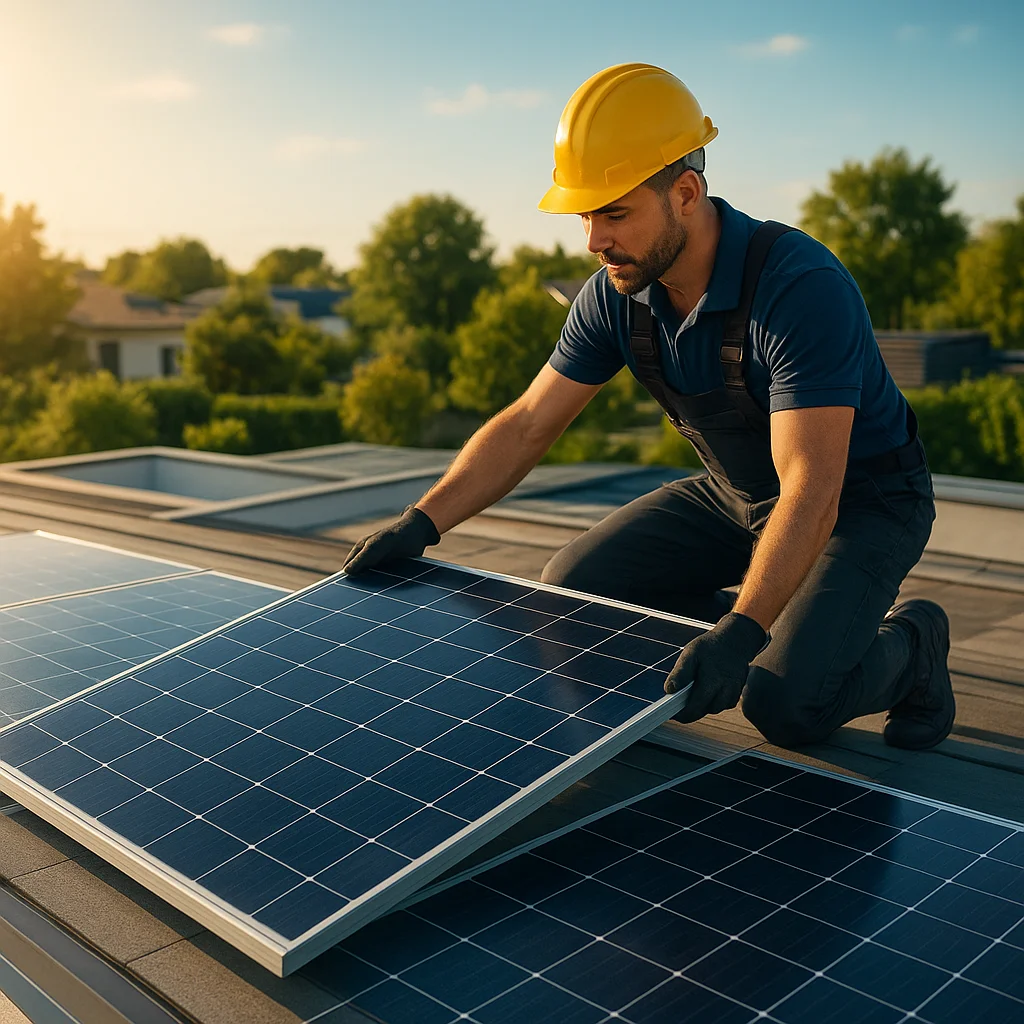

Illuminating the Path: Why Solar Panels Are a Home Essential
Imagine a quiet Saturday morning in a leafy Calgary suburb. Sunlight filters softly through the trees, casting dappled shadows on rooftops where sleek solar panels silently hum with purpose. The hum isn’t just the sound of electricity; it’s the pulse of sustainable living taking root in households everywhere. Solar panels are no longer a futuristic luxury—they are increasingly vital tools in reshaping how we consume energy and protect our planet.
Statistics from the International Energy Agency indicate that residential solar installations have tripled globally over the past decade, with a record 15 million new home solar systems installed in 2025 alone. This surge reflects growing awareness of climate change and the desire for energy independence. Yet, the process of installing solar panels can seem daunting, filled with technical jargon, financial considerations, and regulatory hurdles.
Understanding the installation process helps homeowners make informed decisions, maximize savings, and embrace green technology without overwhelm. This guide unpacks the essential elements of solar panel installation, offering you a roadmap from initial curiosity to full rooftop transformation.
Tracing the Journey: The Evolution of Residential Solar Energy
The concept of harnessing the sun’s power dates back centuries, but the modern solar panel only gained commercial traction in the late 20th century. Early photovoltaic (PV) cells were costly and inefficient, primarily used in space applications. It wasn’t until the 1970s energy crises that interest in solar technology expanded into residential markets.
Advancements in silicon-based solar cells, combined with government incentives, gradually lowered costs. By the 2000s, solar panels became accessible to many homeowners thanks to improved efficiency and economies of scale. However, installation remained a niche specialty, often limited by high upfront costs and complex permitting.
Fast forward to today, and the solar industry has matured into a $250 billion global sector with innovations such as bifacial panels, microinverters, and integrated battery storage. The U.S. Department of Energy reports that average solar panel costs have dropped by over 70% since 2010, making solar a realistic option for millions.
Alongside technology, policy played a crucial role. Net metering laws, tax credits, and subsidy programs incentivized adoption. Homeowners now benefit not only from environmental impact but also from tangible financial returns through energy savings and property value increases. For a deeper dive into this history and its implications, the comprehensive home guide on solar installation explains these shifts in detail.
Breaking Down the Installation Process: Key Steps and Considerations
Installing solar panels is more than slapping photovoltaic cells on your roof. It involves a detailed process that ensures safety, efficiency, and compliance.
- Site Assessment and Feasibility Study: A professional evaluates your roof’s orientation, angle, shading (including tree cover), and structural integrity. According to CNET, even partial shading can reduce output substantially, so understanding your property’s solar exposure is critical.
- System Design: Based on energy needs and site conditions, installers design the panel layout, select panel types (monocrystalline, polycrystalline, or thin-film), and decide on inverter technology. This stage can include battery integration for energy storage.
- Permitting and Approvals: Navigating local regulations, building permits, and utility interconnection agreements is necessary. This phase often takes weeks, as compliance with electrical codes and safety standards is mandatory.
- Installation: Professional crews install mounting racks, secure panels, connect electrical wiring, and install inverters and meters. Modern installations typically take 1–3 days, depending on scale.
- Inspection and Commissioning: After installation, local inspectors and utility representatives verify adherence to codes and authorize system activation.
Homeowners should also consider maintenance and monitoring options post-installation. Many systems now include smart monitoring that tracks production and alerts users to issues.
“A precise site assessment is foundational. Overlooking shading or roof condition can lead to underperformance or costly repairs later,” advises solar industry expert Dr. Anika Patel.
For those weighing financial factors, the guide to buying residential solar offers detailed insights on costs and incentives.
2026 Update: Innovations and Trends Revolutionizing Solar Installation
The solar landscape in 2026 has witnessed remarkable innovations that enhance system efficiency, aesthetics, and accessibility.
- Bifacial Panels: These panels capture sunlight on both sides, increasing energy yield by up to 15%. Their adoption is growing rapidly in residential settings.
- Integrated Battery Storage: Lithium-ion and emerging solid-state batteries now offer homeowners reliable backup power and peak-shaving capabilities, reducing grid dependence.
- Smart Energy Management Systems: AI-driven software helps optimize energy consumption, predict production patterns, and recommend behavioral changes for greater savings.
- Flexible and Building-Integrated Photovoltaics (BIPV): Solar shingles and facade-integrated panels blend seamlessly with roof materials, appealing to design-conscious homeowners.
- Streamlined Permitting: Many jurisdictions have adopted digital permitting platforms, cutting wait times by half and simplifying approvals.
Additionally, the cost per watt of solar panels has stabilized around $0.20, making comprehensive installations more affordable than ever. According to AOL’s analysis, typical residential systems now produce roughly 25–30% more electricity annually compared to those installed five years ago.
“The marriage of smart technology and solar hardware is redefining how energy is generated, stored, and used at home,” notes Julia Kim, CTO of a leading solar tech startup.
Learning from Experience: Real-World Installation Case Studies
Exploring actual solar installations reveals challenges and triumphs that inform better decisions.
Consider the Smith family in suburban Toronto, who installed a 6 kW system in 2024. Their installer performed a thorough shade analysis that determined a partial tree removal was necessary to optimize output. The family also opted for battery storage, allowing them to reduce peak-hour grid consumption by 40%. Their electricity bills dropped by 70% within six months.
Contrast this with the experience of a homeowner in Phoenix who chose a low-cost DIY kit without professional assessment. Unexpected roof shading and improper wiring led to underperformance and safety concerns, resulting in costly retrofits.
These cases underscore the importance of professional site evaluation, quality equipment, and adherence to codes. The top installation guide for 2026 highlights best practices and vetted installers to help homeowners avoid pitfalls.
Looking Ahead: What Homeowners Should Watch For
The future of residential solar promises even greater integration with smart home ecosystems and community energy networks. Here are key trends and takeaways for homeowners considering installation:
- Emergence of Solar-as-a-Service Models: Leasing and power purchase agreements reduce upfront costs and transfer maintenance responsibility, expanding access.
- Advances in Recycling and Sustainability: New programs focus on repurposing old panels and reducing the environmental footprint of solar manufacturing.
- Grid Modernization: Enhanced grid infrastructure will enable better two-way energy flows and dynamic pricing, increasing solar’s value.
- Customization and Design: Expect more options tailored to architectural styles and urban spaces, including vertical panels and solar canopies.
- Policy Evolution: Incentives may shift towards community solar projects and equitable access, empowering renters and multi-family dwellers.
By staying informed and working with trusted professionals, homeowners can ensure their solar investments remain beneficial and forward-compatible.
Solar panel installation is not merely a technical upgrade; it is a step toward a more resilient and sustainable lifestyle. If you’re considering this journey, resources like the future solar panel installation guide provide thorough perspectives on emerging innovations and decision-making strategies.
May your rooftop embrace the sun’s gift, and may your home brighten with the quiet power of thoughtful energy.
































Sign in to leave a comment.