

The market is late, not early
Three things are wrong with how people talk about renewable energy investment opportunities. First, too many investors still treat the sector like a morality trade instead of an industrial one. Second, they obsess over flashy technologies while ignoring transmission, storage, and boring balance-sheet discipline. Third, they keep repeating the old line that the easy money is gone. Actually, that last point is lazy. The energy transition is not a single trade that already happened; it is a long capital cycle with bottlenecks, policy shocks, and repricing events that keep creating fresh entries.
The scene in 2026 is less romantic and more useful. Solar modules are cheap again after periods of oversupply. Grid queues remain clogged in major markets. Battery costs have resumed their long downward trend after the raw-material spike earlier in the decade. Utilities, oil majors, infrastructure funds, pension allocators, and retail platforms are all competing for exposure, but not in the same places. That matters. Opportunity appears where capital is hesitant, regulation is changing, or execution skill is scarce.
According to the International Energy Agency, global clean energy investment has been running well above fossil fuel supply investment in recent years, a structural break that would have sounded radical not long ago. Yet broad enthusiasm hides severe unevenness. Some public renewable developers have traded poorly because higher interest rates punished capital-intensive businesses. Some private infrastructure assets have held up because long-term contracts still look attractive in a volatile macro backdrop. If you are scanning for returns, the gap between sentiment and asset quality is where the work starts.
Readers who want a wider map of the field can compare this piece with WriteUpCafe’s Complete Guide to Renewable Energy Investment Opportunities and Unlocking Renewable Energy Investment Opportunities Across Global Markets. My argument is narrower and more oppositional: the best renewable energy investment opportunities are often the least cinematic parts of the value chain.
Renewables stopped being a niche environmental bet years ago. They are now a pricing, infrastructure, and industrial policy story.
That is why a serious investor should stop asking, “Is clean energy a good theme?” and ask a harder question instead: which renewable assets can still earn acceptable returns after subsidy cuts, supply-chain volatility, and higher financing costs? The answer is not one thing. It is a stack of opportunities with very different risk profiles.
How we got here: from idealism to hard infrastructure math
The clean energy boom did not arrive as a straight line. It came in waves. The first wave was policy-led, built on feed-in tariffs, tax credits, and national decarbonization targets. The second wave was cost-led: solar and wind became competitive because manufacturing scaled and learning curves did what learning curves do. The third wave, where we are now, is systems-led. Cheap generation alone is not enough. Capital has to solve intermittency, permitting delays, interconnection bottlenecks, critical mineral concentration, and the mismatch between where power is produced and where demand is growing.
That shift changes what counts as an opportunity. Ten years ago, buying exposure to utility-scale wind or solar developers could be enough. In 2026, investors need to think in layers. Generation still matters, but so do storage, inverters, cables, transformers, software for energy management, distributed generation platforms, and regulated grid expansion. The market finally understands that electrons are not useful just because they are green; they have to arrive when needed, at a bankable price, through infrastructure that is actually built.
Recent coverage from Yahoo Finance on investment opportunities at the heart of the energy transition captured this broader framing well, highlighting that the transition is creating investable openings across transport, power, and enabling infrastructure rather than in one narrow bucket. That is the adult version of the story. The childish version is still all over social media: buy anything with a turbine, panel, or battery in the pitch deck and wait for the planet to reward you. Sure, because capex cycles are famously sentimental.
Policy also became more strategic. The U.S. Inflation Reduction Act changed project economics and manufacturing incentives. Europe leaned harder into energy security after the gas shock earlier in the decade. China kept dominating clean-tech manufacturing scale. Emerging markets moved unevenly, but some are becoming more investable as procurement rules, local partnerships, and financing structures improve. That means returns are increasingly shaped by jurisdiction, not just technology.
- Generation economics: solar and wind remain competitive, but project returns depend heavily on land, connection, and financing.
- System balancing: battery storage, demand response, and flexible generation are becoming central rather than optional.
- Grid dependence: transmission and distribution upgrades are now one of the largest hidden constraints on renewable deployment.
- Policy leverage: tax credits, auctions, and local content rules can create or destroy equity value quickly.
Actually, this is why broad “green investing” labels are less useful than they look. The sector is maturing into infrastructure, and infrastructure rewards people who can read contracts, debt costs, utilization assumptions, and permitting calendars. Not vibes.
Where the strongest opportunities are hiding now
If I had to rank the most interesting renewable energy investment opportunities in 2026, I would start with the areas the average retail investor finds boring. Grid equipment and transmission-linked assets deserve more attention than they get. So does battery storage. Distributed energy platforms come next, especially where electricity prices are volatile and commercial customers want resilience. Utility-scale generation still belongs on the list, but only selectively, because oversupply in some equipment segments and aggressive bidding in some auctions have compressed margins.
Battery storage has moved from sidekick to protagonist. In markets with high solar penetration, standalone and co-located storage can capture value through arbitrage, ancillary services, and capacity payments. The trick is not to assume every battery project is gold. Revenue stacks vary wildly by market design. Degradation assumptions matter. Merchant exposure can boost upside but also increase volatility. Investors who understand those mechanics can find better risk-adjusted returns than in crowded pure-play generation portfolios.
Transmission, substations, and grid modernization are even less glamorous and arguably more essential. Renewable deployment is increasingly constrained by connection delays, transformer shortages, and local network weakness. That creates openings in regulated utilities, equipment suppliers, engineering contractors, and private infrastructure vehicles tied to grid buildout. These are not always labeled “renewables” in a brokerage app, which is exactly why many people miss them.
Distributed energy is another category where the market still underestimates demand. Commercial and industrial customers want rooftop solar, behind-the-meter batteries, microgrids, and energy management software to reduce bills and avoid outages. The business model can be sticky when structured through power purchase agreements or energy-as-a-service contracts. It also benefits from a simple truth: many companies do not want to become power traders; they want predictable energy costs.
- Battery storage: strongest where market rules compensate flexibility and peak shifting.
- Grid infrastructure: a bottleneck business with long-duration demand.
- Distributed energy: attractive for recurring revenue and customer retention.
- Selective utility-scale renewables: best in markets with disciplined auctions and viable interconnection timelines.
- Supply-chain enablers: inverters, power electronics, and specialized engineering services can offer cleaner economics than project developers.
WriteUpCafe’s Top 10 Renewable Energy Investment Opportunities in 2026 approaches the field from a broader thematic angle, but the practical takeaway is similar: the value is spreading beyond pure generation. Investors who insist on only buying the obvious names are probably arriving after the easy narrative premium has already been captured.
The highest-conviction clean energy investments are often the assets that make renewable power usable, financeable, and dispatchable.
There is another wrinkle. Public markets and private markets are sending different signals. Listed developers may look cheap because investors fear refinancing risk or slower project starts. Private infrastructure funds may still price similar assets richly because long-term contracted cash flows remain scarce and desirable. That divergence creates opportunity, but only for investors willing to compare structures, not slogans.
What changed in 2026: capital got pickier
Three developments define 2026 so far. First, financing discipline hardened. After a period when almost any energy transition story could raise money, lenders and equity sponsors now care much more about project sequencing, offtake quality, and supply-chain certainty. Second, the geography of opportunity widened. Third, job creation and industrial policy became more central to the investment case, especially in emerging markets and politically sensitive regions.
One useful signal comes from wealth and private-market distribution. MSN reported on Endowus partnering with Copenhagen Infrastructure Partners to offer renewable energy investments, a reminder that access to infrastructure-style clean energy exposure is broadening beyond institutions. That does not mean risk disappeared. It means the product shelf is evolving because demand for long-duration, real-asset exposure remains strong even after rate volatility.
Another major theme is cross-border expansion into Southeast Asia. China Briefing’s guide to investing in Indonesia’s renewable energy sector points to a market where foreign investors are studying policy design, local participation rules, and project structures more seriously. Indonesia matters not because it is easy, but because it sits at the intersection of power demand growth, resource endowment, industrial development, and decarbonization pressure. That combination tends to attract patient capital.
Labor economics also entered the conversation more forcefully. Mail & Guardian’s reporting on green jobs in South Africa’s renewables industry underlined a point investors sometimes treat as secondary: local job creation can influence procurement, community acceptance, and policy durability. Actually, that is not secondary at all. Projects survive political cycles more easily when they create visible economic value beyond carbon accounting.
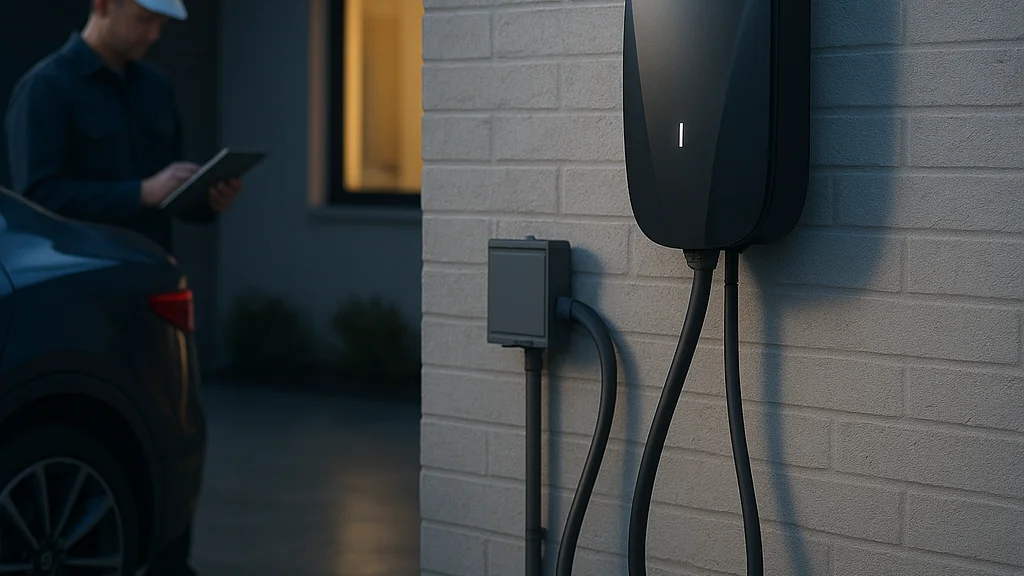
Meanwhile, electric vehicles keep feeding the clean energy story from the demand side. More EVs mean more electricity demand, more charging infrastructure, and more pressure to optimize load shapes. Investors in clean energy should care because transport electrification increases the value of flexible grids and storage. The EV and renewable narratives are not separate categories; they are increasingly one system with shared bottlenecks and shared upside.
The risks most investors still underprice
Now the unpopular part. Plenty of renewable energy investment opportunities are bad investments. Not bad technologies. Bad investments. There is a difference that gets lost when climate enthusiasm turns into spreadsheet amnesia. The first underpriced risk is interest rates. Renewable projects are capital-intensive and often financed over long periods. Even a modest increase in the cost of debt can crush equity returns, particularly for projects that won auctions aggressively or rely on thin merchant margins.
Permitting risk remains brutal. Developers can spend years on land assembly, environmental review, community engagement, and interconnection studies before a project reaches notice to proceed. Delays destroy internal rates of return because capital sits idle while assumptions age badly. A project can be technically sound and still become economically mediocre because the queue moved slower than expected.
Then there is equipment and supply-chain risk. Module prices may be lower in some periods, but not every component is easy to source. Transformers, switchgear, and specialized grid equipment have all experienced shortages or long lead times. A project model that assumes frictionless procurement is fantasy. So is the idea that battery projects are simple. They carry fire-safety, thermal management, warranty, and degradation issues that demand technical diligence.
- Rate sensitivity: higher borrowing costs disproportionately hurt long-duration infrastructure returns.
- Regulatory volatility: subsidy design, local content rules, and tariff changes can alter economics fast.
- Execution risk: construction delays and interconnection setbacks erode projected returns.
- Merchant exposure: power price swings can amplify upside or wreck cash-flow stability.
- Technology mismatch: cheap hardware does not guarantee profitable deployment in the wrong market structure.
There is also a valuation problem. Some listed clean energy names still carry a “transition premium” even when earnings quality is weak. Others have been punished so severely that the market may be missing asset value. Separating those two groups is the real work. Investors should look for contracted revenue visibility, manageable leverage, realistic capex assumptions, and evidence that management can execute through policy changes rather than merely complain about them on earnings calls.
If you want another angle on how the market is sorting winners from laggards, WriteUpCafe’s Renewable Energy Investment Opportunities in 2026: A Comprehensive Analysis and 2026 Renewable Energy Investment Opportunities: Trends and Insights are useful companion reads. My addition is simpler: if a renewable investment thesis works only under perfect policy, perfect rates, and perfect execution, it does not work.
Case studies: where opportunity looks real, not theoretical
Start with utility-scale solar paired with storage in mature markets. These projects can produce more dependable cash flows than standalone solar because batteries shift output into higher-value periods and support grid services. The best examples tend to sit in regions with strong evening peaks, transparent ancillary service markets, and manageable interconnection timelines. The opportunity is not “solar is good.” The opportunity is in understanding which dispatch profile earns money.
Next, consider distributed commercial solar-plus-storage. Warehouses, data-adjacent facilities, retailers, and industrial sites increasingly want lower bills and backup capability. Investors can access this through platform companies, yield-style structures, or private funds focused on small-to-mid-scale assets. The attraction is repeatability. Once a platform solves customer acquisition, financing, installation, and maintenance, it can scale with less project-specific drama than giant greenfield developments.
Emerging-market opportunities are more uneven but potentially compelling. Indonesia is one example because electricity demand growth, industrial policy, and renewable buildout can align under the right structures. As the China Briefing analysis suggests, foreign investors need local literacy: permitting, partnership requirements, and policy sequencing matter as much as resource quality. South Africa offers another lesson. The Mail & Guardian piece on green jobs showed how renewable buildout interacts with employment and local industrial development, which in turn affects social license and policy continuity.
There is also a quieter case in grid-linked service providers. Engineering firms, cable and transformer suppliers, inverter manufacturers, and software businesses that optimize distributed energy systems may not headline climate conferences, but they can sit in the middle of durable demand. They benefit when projects get built, when grids are upgraded, and when customers need more control over electricity use. Sometimes the best way to invest in renewables is to sell picks and shovels to the people arguing on conference stages.
Clean energy investing works best when you follow constraints, not headlines. Bottlenecks are where pricing power tends to hide.
That is especially true in the EV ecosystem. Charging networks, managed charging software, and fleet electrification infrastructure all rely on renewable-friendly grids and storage. As transport electrifies, the line between an energy asset and a mobility asset gets thinner. Investors who can map that overlap will probably see more opportunities than those who keep these sectors in separate mental boxes.
What to watch next and how to think about allocation
The next phase of renewable energy investing will be shaped less by whether the transition continues and more by who captures the economics. Watch four things closely. One: grid reform and interconnection policy. Two: the cost of capital. Three: market rules for storage and flexible demand. Four: industrial policy that changes local manufacturing and project economics. These are not side issues; they decide who gets paid.
For allocation, the sensible approach is barbelled. Hold some lower-volatility exposure in regulated utilities, infrastructure funds, or contracted renewable operators. Pair that with selective higher-upside positions in storage, distributed energy platforms, grid technology, or undervalued listed developers with credible pipelines. Avoid the temptation to make one giant thematic bet on “clean energy” as if all subsectors move together. They do not. A battery developer in a capacity market, a rooftop solar platform, and a transmission utility face completely different drivers.
Investors should also think globally without becoming naive. Developed markets usually offer stronger contract enforcement and deeper financing pools. Emerging markets can offer faster demand growth and better greenfield opportunities, but execution and policy risk are higher. The answer is not to avoid one side. It is to match asset type to jurisdiction and demand a margin of safety where uncertainty is real.
Actually, the strongest takeaway is almost boring: renewable energy investment opportunities are now good enough to analyze like any other serious industrial sector. That is progress. It means the conversation has moved beyond symbolism. The winners will likely be investors who can distinguish durable cash-flow engines from subsidized theater, who understand that EV growth raises the value of flexible clean power, and who are comfortable owning the infrastructure nobody posts about on contrarian Twitter until after it rerates.
If the sector still feels messy, good. Mess is where mispricing lives. The transition is not tidy, and that is precisely why opportunity remains. Just do not confuse a noble theme with an investable one. The market already made that mistake for you. No need to repeat it.



























Sign in to leave a comment.