

The hardest part is not buying the charger
Three things usually go wrong before anything good happens with a home EV charging setup: buyers underestimate their electrical panel, overestimate the value of the cheapest wall box online, and assume installation is basically hanging a gadget on drywall. It is not. A home EV charging station is an electrical project first, a convenience upgrade second, and only then a shiny piece of clean-tech lifestyle branding for your driveway. That unpopular order matters because the difference between a smooth install and a budget-wrecking mess is usually hidden behind the service panel door.
Picture the scene that electricians now describe all the time in 2026: a homeowner takes delivery of a new EV on Friday, plugs into a standard 120-volt outlet over the weekend, watches the battery crawl upward, then spends Monday panic-searching for a Level 2 charger. The impulse is understandable. According to reporting by The Atlanta Journal-Constitution, what home charging really requires is often less about the charger brand and more about whether the house can safely support a dedicated 240-volt circuit. That is the point many people miss.
The better way to think about installation is brutally simple: your car is adding one of the largest continuous electrical loads most homes will ever carry. A central air conditioner cycles. An oven turns on and off. An EV charger can pull power for hours. That changes the math. If you want a useful primer before calling contractors, the WriteUpCafe guides Complete Guide to Home EV Charging Station Installation and Home EV Charging Station Installation Guide for Smart Owners are solid starting points, but the real decisions begin when you match your daily driving, panel capacity, and utility rate structure.
A home EV charger is not a gadget purchase. It is a load-management decision with hardware attached.
Once you accept that, the process gets clearer. You stop shopping by influencer hype and start shopping by amperage, breaker space, cable length, certification, and installation complexity. Actually, that shift alone saves people money.
Start with your driving habits, not the maximum charger speed
The internet loves extremes. Either Level 1 charging is framed as useless or 80-amp charging is treated like a personality trait. Both takes are bad. The right charger size depends on your vehicle, commute, parking pattern, and how many hours the car sits at home. If you drive 25 to 40 miles a day and park overnight for 10 hours, you may not need the fastest unit your service can support. If you run a long commute, have a large battery SUV, or share one charger between two EVs, the calculation changes fast.
Most home buyers in the US choose Level 2 charging because 240-volt charging dramatically cuts recharge times compared with a standard 120-volt outlet. The exact miles of range added per hour vary by vehicle efficiency and charging power, but the practical takeaway is stable: Level 2 is usually the sweet spot for convenience. Reporting from The Independent explains that charging can be cheaper and simpler than many first-time EV owners expect, especially when overnight tariffs are available. But cheaper only stays cheaper if the installation is sized intelligently.
Here is the useful way to estimate your needs:
- Daily mileage: Multiply your average daily miles by your EV's efficiency. Many EVs land around 3 to 4 miles per kWh in mixed driving.
- Charging window: Count the hours the car is consistently parked at home, not your idealized schedule.
- Circuit size: A 40-amp charger on a 50-amp circuit often gives plenty of overnight recovery for typical commuters.
- Future use: Add margin if a second EV is likely within a few years.
What actually burns money is overspecifying hardware that your panel cannot support without a major upgrade. A 48-amp charger may sound better than a 32-amp or 40-amp unit, but if the jump forces a service upgrade, trenching, or a subpanel rework, the economics can flip. A slower charger installed correctly often beats a faster charger delayed for months by permit issues and utility coordination.
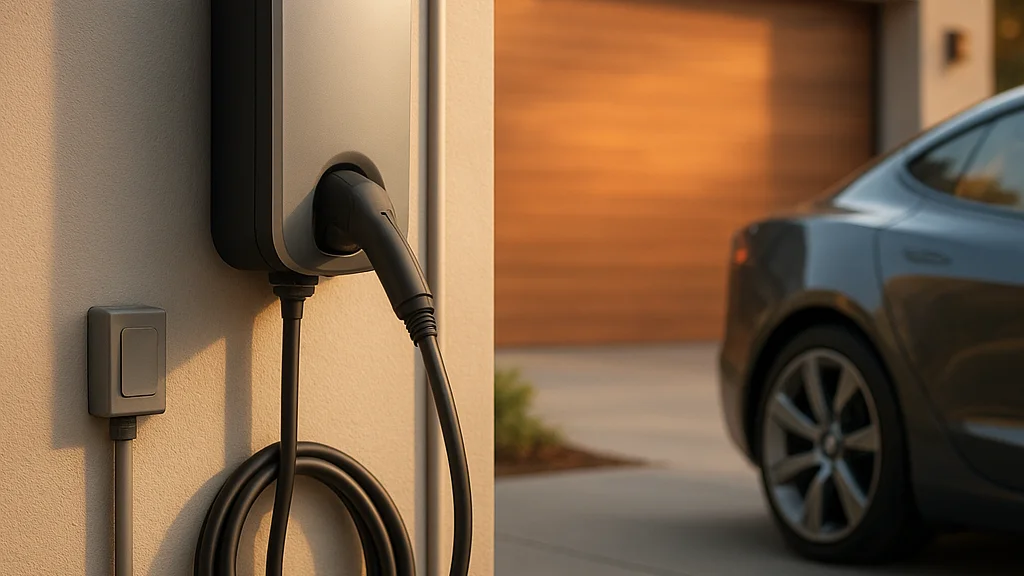
There is another contrarian point here: fixed wall chargers are not always superior to outlet-based setups. In some homes, a NEMA 14-50 receptacle paired with a compatible EVSE can preserve flexibility. In others, hardwiring is safer and more durable, especially for higher-amperage charging or outdoor exposure. The choice should follow the electrical plan, local code, and product rating, not Reddit bravado from someone who has never opened a load center.
Choose the charger that matches your real overnight energy needs, not the one that wins an argument online.
Your panel is the project, and load calculation is the truth serum
If a charger advertises 48 amps, the circuit usually needs to be rated higher because EV charging is treated as a continuous load. Under common code practice, continuous loads are generally sized at 125 percent, which is why a 40-amp charger often sits on a 50-amp circuit and a 48-amp charger on a 60-amp circuit. That one rule instantly exposes whether your home is ready or whether the installation quote is about to get ugly.
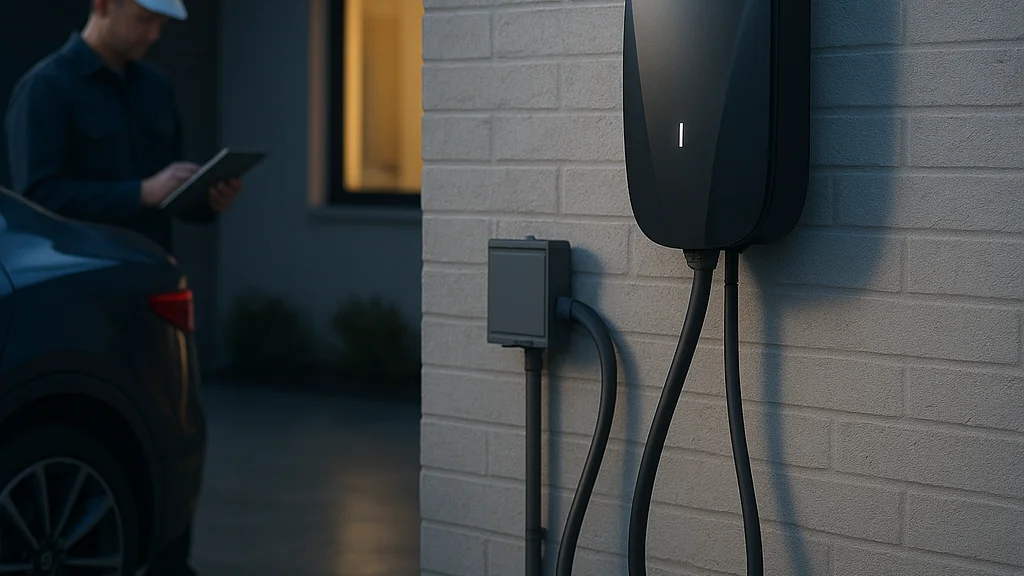
Electricians typically start with a load calculation. This is where the romance dies and the useful facts begin. They review service size, existing major loads, breaker space, wire path, grounding, and whether the panel is already crowded with HVAC, electric range, dryer, water heater, or heat pump circuits. Older homes with 100-amp service can sometimes support EV charging, but not always at the speed the owner wants. Newer homes with 200-amp service have more headroom, yet even there, all-electric households can run tight once heat pumps, induction cooking, and electric water heating are in the mix.
According to the AJC report, homeowners should expect an electrician to assess panel capacity before recommending equipment. That sounds obvious. It is not. Plenty of sales funnels still begin with the charger catalog and only later mention the service constraints. The more responsible approach mirrors what practical installation guides, including The Future of Home EV Charging Station Installation: A Comprehensive Guide, emphasize: evaluate the house first.
Watch for these technical pressure points during the site survey:
- Service size: 100-amp, 150-amp, or 200-amp service changes your options immediately.
- Available breaker slots: No space may mean tandem breakers, a subpanel, or a larger panel.
- Distance to parking area: Longer wire runs increase labor and material cost.
- Indoor versus outdoor mounting: Weather-rated equipment and conduit choices matter.
- Main panel location: A garage-adjacent panel is easier than a basement panel on the opposite side of the house.
- Local permit requirements: Some jurisdictions move fast; others do not.
There is one more 2026 reality. Load-management devices are getting more attention. If your panel is near its limit, an electrician may propose energy management systems that dynamically reduce EV charging when the house load spikes. This can avoid a full service upgrade in some cases. These systems are not magic, and they are not appropriate everywhere, but they are increasingly part of the serious conversation. Homeowners who think the only options are “install anything” or “replace the whole panel” are missing the middle ground.
Installation cost is mostly about the house, not the charger box
People fixate on charger sticker prices because hardware is visible and labor is not. That is backwards. The charger itself may represent a modest share of the total project once you add permits, conduit, cable, breaker work, wall penetrations, trenching, pedestal mounting, or panel upgrades. The cheap-box fantasy dies the moment your electrician says the panel is full and the garage is detached.
The Pennsylvania-focused guide from Online Recruitment makes a practical point that applies well beyond one state: installation costs vary widely because every property layout is different. A charger mounted beside the panel in an attached garage is the easy mode. A charger at the far end of a driveway, requiring underground conduit, is not. Add municipal permit fees and inspection timelines, and the final bill can swing dramatically.
The three biggest cost drivers are usually these:
- Electrical capacity upgrades: Service or panel work can become the dominant expense.
- Wire run complexity: Long routes through finished walls, crawlspaces, or underground paths add labor fast.
- Mounting environment: Outdoor pedestals, detached garages, and weatherproofing all cost more.
Actually, homeowners should ask for line-item quotes, not vague package pricing. A proper estimate should separate equipment, permit fees, labor, circuit materials, panel work, and optional extras such as load management, surge protection, or smart controls. That makes comparison possible. It also reveals when one bid is low only because it quietly excludes patching, permitting, or inspection coordination.
Do not ignore cable length and connector management either. Bad UX in home charging is real. A charger mounted in the wrong place turns every evening into an awkward parking ritual. Measure where the charge port sits on your current EV and think about where a future EV might place it. Front-left, rear-right, center-front: manufacturers still refuse to standardize this in a way that respects actual human behavior. So you must plan around it.
Smart features can be worth paying for if they solve a real problem. Wi-Fi scheduling, utility demand-response integration, energy usage reports, and access control matter for some households. They do not matter for everyone. If your utility offers lower overnight rates, scheduling is useful. If your internet in the garage drops every third day, a simple reliable charger may be better than a feature-heavy one with app drama straight out of a founder apology thread.
Permits, codes, and safety are where amateurs get humbled
The DIY temptation is strong because the hardware looks simple. One box. One cable. Four mounting screws. *Sure, what could go wrong.* Quite a lot, actually. EV charging involves sustained high current, code requirements for continuous loads, proper overcurrent protection, grounding and bonding, GFCI considerations depending on configuration and local code interpretation, and weather exposure issues if mounted outdoors. This is not the place for improvisation.
Permits are not bureaucratic decoration. They create a paper trail for insurance, resale, and safety verification. An inspected installation helps prove that conductor sizing, breaker selection, mounting, and disconnect requirements were handled correctly. In some areas, utilities or local incentive programs may also require permitted work to qualify for rebates or special EV rates.
Homeowners should ask installers very direct questions:
- Will you pull the permit and schedule inspection?
- Are you licensed and insured for residential electrical work in this jurisdiction?
- Will the charger be hardwired or plug-in, and why?
- What load calculation method are you using?
- Is surge protection recommended at the panel?
- How will outdoor conduit, sealing, and weather rating be handled?
One of the quieter shifts in 2026 is the wider awareness of bidirectional charging and vehicle-to-home potential. Not every EV supports it. Not every charger supports it. And not every jurisdiction or utility framework is ready for it. But if you are already upgrading electrical infrastructure, it is reasonable to ask whether conduit sizing, panel choices, or equipment selection should preserve future options. That does not mean overspending today on capabilities you cannot use. It means avoiding short-sighted design that locks you out later.
For readers comparing installation approaches, Top 7 Home EV Charging Station Installation Guide and Home EV Charging Station Installation Guide 2026 are useful companion reads, especially for understanding how product categories and home layouts shape the final setup.
There is also a resale angle. A permitted, professionally installed Level 2 charger can be a selling point in EV-heavy markets. A suspicious outlet with no documentation and a breaker label written in fading marker is not. Buyers are more informed now. So are inspectors. The era of “trust me, my cousin wired it” should stay where it belongs: in bad forum posts.
What changed in 2026: utilities, smart charging, and future-proofing
The market in 2026 is more mature than it was even two or three years ago, but maturity does not mean simplicity. It means the choices are sharper. Utilities in more regions are pushing time-of-use pricing, managed charging programs, and demand-response incentives. That changes the economics of home charging because the cheapest setup is no longer just the one with the lowest install cost. It may be the one that reliably shifts charging to off-peak hours and avoids demand spikes.
Smart chargers now commonly offer app-based scheduling, energy metering, and software updates. Some utilities prefer or require compatible devices for rebate participation. Before buying, check whether your utility has an approved equipment list or a special EV tariff. This is one of those boring administrative steps that people skip, then complain later when they realize the charger they bought at a discount does not qualify for the better rate plan. Bad UX, yes, but still your problem.
Another 2026 development is the broader conversation around home energy ecosystems. More households now pair EV charging with rooftop solar, battery storage, or electrification upgrades such as heat pumps. That can be excellent, but it complicates panel planning. A charger that looks fine in isolation may become awkward once other electrification loads are added. The smarter strategy is to map likely upgrades over the next five to seven years, not just next month. If you expect solar, storage, or a second EV, tell the electrician during the first site visit.
Industry reporting and installer experience suggest homeowners are also asking more questions about interoperability and standards. North American charging hardware has been adapting around changing connector realities and manufacturer decisions, and buyers understandably want to avoid stranded hardware choices. The practical answer is to focus on certified equipment, reputable manufacturers, and installers who can explain adapter use, connector compatibility, and upgrade paths without sounding like they are improvising from a contrarian Twitter thread.
Future-proofing does not mean buying the most expensive charger. It means making wiring and panel decisions that leave you room to adapt.
Finally, incentives remain fragmented. Federal, state, local, and utility programs can stack in some places and disappear in others. Because these programs change, the safest advice is procedural: check current utility and local government offerings before purchase, confirm eligibility rules, and keep all permit and invoice documentation. The money is real when available, but the paperwork is usually where good intentions go to die.
The installation playbook that actually works
If you want the short version, here it is: inspect first, buy second, install third. Reversing that order is how people end up with unopened charger boxes in the garage and a quote for major service work they never budgeted. A disciplined process is less exciting, but it works.
Start by gathering your household facts. Know your panel rating, the age of the home, where you park, your daily mileage, and whether a second EV is likely. Then get at least two quotes from licensed electricians with EV charger experience. Not generic electrical experience alone. EV charging has enough specific considerations that installer familiarity matters. Ask each contractor to explain recommended circuit size, mounting location, hardwired versus receptacle setup, permit handling, and whether load management could avoid a larger upgrade.
Use this sequence:
- Define charging need: daily miles, battery size, overnight parking hours.
- Assess electrical capacity: service size, panel space, load calculation.
- Choose installation type: hardwired or receptacle-based, indoor or outdoor.
- Review utility options: off-peak rates, managed charging, rebate eligibility.
- Compare quotes line by line: equipment, labor, permits, extras.
- Install with permit: inspection, labeling, documentation.
- Test real-world use: cable reach, scheduling, breaker behavior, app reliability.
After installation, do not treat the job as finished the moment the charger lights up. Test the setup over a normal week. Confirm that the car charges during scheduled off-peak windows, the cable reaches without strain, and the breaker does not nuisance-trip. If the charger has software controls, update firmware and document settings. If multiple drivers use the car, make sure everyone understands the charging schedule and connector handling. A technically correct install can still be annoying if the human workflow is bad.
The final contrarian point is this: the best home EV charging station is often the one you barely think about. It works quietly, charges overnight, fits your electrical reality, and does not require ritual sacrifice to an app every time Wi-Fi drops. That sounds almost too modest for a category packed with hype, but modest is good. Reliable is better. And in home charging, boring competence beats flashy regret every single time.





























Sign in to leave a comment.