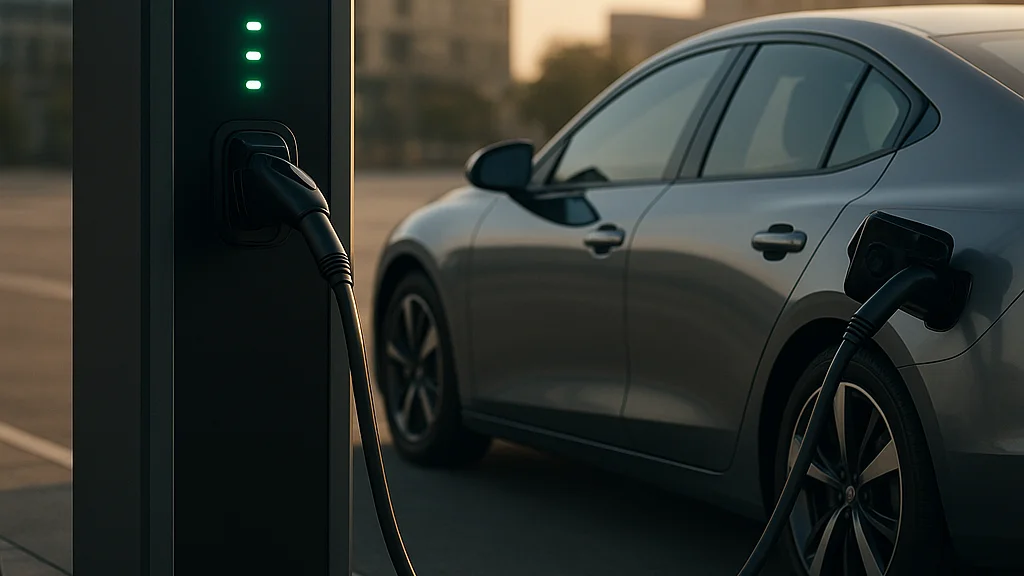

At a motorway service area in northern Italy this summer, I watched a familiar scene change in a subtle but decisive way. Two years ago, drivers arriving in electric cars often circled the charging bays with visible anxiety, calculating range and queue time together. In 2026, the atmosphere is different. More stalls, faster chargers, clearer apps, better payment systems: not perfect, certainly, but unmistakably more mature. That small shift matters because charging infrastructure is no longer a side issue in transport electrification. It is the system that determines whether electric mobility feels practical, equitable, and scalable.
The growth of electric vehicle charging infrastructure has become one of the most important tests of the clean transport transition. Carmakers can launch dozens of battery models, governments can announce phaseout targets for combustion engines, and investors can celebrate EV sales curves. Yet if households cannot charge near home, if logistics fleets cannot recharge on schedule, or if apartment residents remain excluded, adoption slows. Infrastructure is where ambition meets asphalt, copper, and local planning rules.
Recent reporting underlines the point. In the UK, Fleet News reported strong growth in on-street EV chargers, a category that is especially important for drivers without private driveways. In Asia, The Manila Times highlighted charging infrastructure as essential to sustainable EV growth in the Philippines, showing that the issue is global, not confined to wealthy early-adopter markets.
For readers tracking this sector, a useful starting point is to separate headlines from fundamentals. The story is not simply that more chargers are being installed. The deeper story is that networks are becoming denser, more specialized, more grid-aware, and more integrated with urban policy. As discussed in How Electric Vehicle Charging Infrastructure Is Scaling, scale is not just a matter of counting plugs. It is about where they are located, how reliably they work, and whether they match real driving behavior.
Charging infrastructure is not merely hardware. It is public confidence made visible.
How the market moved from pilot projects to strategic build-out
A decade ago, many charging projects had the character of demonstration programs. Municipalities installed a handful of public stations to signal innovation. Utilities experimented with tariffs. Startups entered with optimistic maps and thin balance sheets. The result was useful, but fragmented. Drivers often encountered incompatible payment systems, uneven maintenance, and charger locations chosen more for publicity than for demand. Growth occurred, though it lacked the coherence needed for mass adoption.
The turning point came when three trends converged. First, EV sales rose enough to create recurring utilization in key corridors and urban centers. Second, policymakers began linking charging access to industrial strategy, climate targets, and energy security. Third, private capital became more comfortable with the business models around charging, even if profitability timelines remained longer than many investors initially hoped. This combination transformed charging from a symbolic green amenity into core infrastructure.
Europe offers a particularly instructive example. The continent’s transition has been shaped by emissions regulation, city-level low-emission zones, and a strong push for cross-border travel compatibility. The challenge resembles the logic of Renaissance trade routes: isolated excellence is not enough; what matters is the network. A charger in one city is useful, but a predictable chain of functioning chargers across regions changes consumer behavior entirely.
In parallel, the market learned that different use cases require different solutions. Home charging remains the foundation for many private owners, but it does not solve the needs of apartment dwellers, delivery vans, taxis, buses, or long-distance travelers. Public AC charging, rapid DC hubs, depot charging, workplace solutions, and on-street systems each serve a distinct role. Articles such as Electric Vehicle Charging Infrastructure Growth Explained and Expanding Electric Vehicle Charging Infrastructure: Progress and Prospects make this point clearly: the infrastructure story is about a layered ecosystem, not one universal charger type.
That recognition has improved planning. Instead of asking only, “How many chargers do we need?” serious market participants now ask more precise questions about dwell time, grid capacity, power level, utilization rates, software interoperability, and local land constraints. This is a healthier phase of development because it replaces enthusiasm alone with operational discipline.
What the numbers really show about charging growth
Public discussion often reduces charging growth to headline counts, but raw totals can mislead. A city may double its number of charge points while still underserving residents if those units are slow, poorly maintained, or concentrated in affluent districts. Conversely, a smaller increase in high-power charging on a strategic corridor can have an outsized effect on regional mobility. The quality of deployment matters as much as the quantity.
Still, the market trajectory is clearly upward. Yahoo Finance recently cited forecasts that the global electric vehicle market could reach US$1.72 trillion by 2034, with a 7.73% CAGR, in its coverage of sector expectations at Yahoo Finance. Forecasts differ by methodology, but the implication is consistent: charging networks are being built against a demand base that is expected to keep expanding for years.
Meanwhile, reporting from Yahoo News UK and The Daily Star described EV adoption outpacing some earlier expectations in certain markets, which places extra pressure on infrastructure planning. When vehicle uptake beats forecasts, charger deployment can look impressive on paper and still feel insufficient on the street. That mismatch has become one of the defining tensions of 2025 and 2026.
- On-street charging is growing quickly because many urban drivers lack off-street parking.
- Rapid and ultra-rapid hubs are expanding along highways to reduce range anxiety and cut dwell times.
- Fleet and depot charging is becoming a major submarket as delivery, bus, and service fleets electrify.
- Destination charging at supermarkets, hotels, and retail parks is increasingly used to capture drivers during existing dwell periods.
One of the most consequential data points from 2026 is the acceleration of on-street infrastructure. According to Fleet News, this segment posted the highest growth in the UK. That matters beyond Britain. On-street charging is one of the few credible answers to the apartment-access problem that slows EV adoption in dense cities from Milan to Manila. If charging remains easiest for homeowners with garages, electrification risks becoming socially uneven.
Reliability is another metric gaining overdue attention. Networks now face tougher scrutiny not only on installation numbers but on uptime, payment simplicity, and queue management. Drivers do not experience “infrastructure” as a spreadsheet. They experience it as a charger that either starts in thirty seconds or does not. Investors and regulators are beginning to understand this distinction, and service-level expectations are rising accordingly.
The next phase of charger growth will be judged less by ribbon-cutting ceremonies and more by uptime, access, and trust.
The hidden bottlenecks: grid capacity, permits, and economics
If charger deployment were simply a matter of buying hardware, the sector would already be much further ahead. The real bottlenecks are less visible and far more stubborn. Grid connection delays, transformer upgrades, planning approvals, land leases, civil works, and utility coordination can all slow projects by months or even years. In many markets, the charger itself is no longer the hardest part. The hard part is everything around it.
Grid capacity is especially decisive for high-power charging. A modern fast-charging hub can require substantial electrical service, and in constrained urban or peri-urban areas the local network may not be ready. This has pushed developers toward battery-buffered systems, solar integration where feasible, and smarter load management. These solutions help, but they do not eliminate the need for broader grid modernization. Electrified transport and electrified heating are arriving at the same moment, and both compete for infrastructure investment.
Economics are equally complex. Utilization rates vary widely by location and daypart. A charger in a premium corridor may be heavily used, while another in a poorly chosen site can sit idle. Early-stage networks often struggle with the classic infrastructure dilemma: high upfront capital costs, uncertain payback periods, and a need to build ahead of demand. Public subsidies have therefore played a critical role, but subsidy design matters. Poorly targeted incentives can create dead zones, underused assets, or maintenance liabilities.
- Permitting delays can stall even funded projects, especially where multiple agencies must approve works.
- Grid interconnection queues are slowing larger fast-charging sites in several markets.
- Land access is becoming more competitive near highways, logistics corridors, and dense urban districts.
- Business model uncertainty persists where charging tariffs are politically sensitive or electricity prices are volatile.
There is also a design problem that many cities are only beginning to confront. Installing chargers without considering curb management, pedestrian flow, accessibility standards, and neighborhood aesthetics can provoke backlash. Italy knows well that infrastructure must coexist with heritage. A charging post in a historic center cannot be treated like a warehouse fixture. The best urban projects respect place, much as Venetian glass artisans balanced utility with beauty. That is not decorative thinking; it is practical politics. Well-integrated infrastructure encounters less resistance and scales faster.
For operators, another lesson has become clear: maintenance budgets cannot be an afterthought. Broken screens, damaged cables, blocked bays, and confusing apps erode public confidence quickly. The WriteUpCafe piece Common Mistakes in Electric Vehicle Charging Growth is useful here because it highlights a recurring industry error: celebrating installations while underinvesting in operations.
What changed in 2026: denser networks, smarter software, tougher expectations
The charging sector in 2026 feels more adult than it did even eighteen months ago. Expansion continues, but the conversation has shifted from novelty to performance. Governments are pressing for broader geographic coverage. Fleet operators are demanding predictable uptime. Consumers increasingly expect contactless payment, live availability data, and shorter queues. The market is no longer rewarded simply for existing.
One notable development is the stronger focus on underserved charging contexts. On-street deployment, curbside retrofits, and neighborhood charging hubs are receiving more attention because they address a structural access gap. Reporting from Fleet News on the UK’s on-street charger growth reflects this change in priorities. Rather than concentrating only on flagship motorway sites, policymakers are looking more carefully at ordinary streets where millions of drivers actually live.
Another shift is the emergence of software as a competitive differentiator. Routing integration, charger reservation pilots, dynamic load balancing, roaming agreements, and predictive maintenance tools are becoming central to network performance. Hardware remains essential, of course, but software increasingly determines whether infrastructure feels seamless or frustrating. A charger that is technically available but impossible to activate is not a functional asset from the driver’s perspective.
Across developing markets, 2026 has also sharpened the debate over sequencing. The Manila Times article on the Philippines captured a challenge seen in many countries: charging infrastructure must grow in step with vehicle adoption, local grid realities, and urban development. Build too slowly and EV demand stalls. Build too quickly in the wrong places and capital is wasted. This balancing act is difficult, especially where public budgets are tight and import costs remain high.
There is also more realism about standards and interoperability. Drivers increasingly expect one app or card to work across multiple networks, and regulators are less tolerant of closed ecosystems that create friction. The sector is moving, unevenly but clearly, toward more open access. That is good for users and healthy for competition.
For a broader snapshot of recent shifts, Electric Vehicle Charging Infrastructure Growth in 2026: Trends and Insights frames the year well: expansion is no longer measured by ambition alone but by whether networks are becoming easier to use for ordinary people, not only enthusiasts.
Why equity and urban form now sit at the center of the debate
One of the most underappreciated questions in EV infrastructure is who gets convenient access first. In early adoption phases, the answer was often predictable: affluent households with private parking. That model may have been sufficient to launch the market, but it cannot support a broad social transition. A transport system is not sustainable if its benefits are structurally easier to capture for one housing class than another.
This is why urban form matters so much. Dense European cities, Asian megacities, and rapidly growing suburban belts each require different charging strategies. In apartment-heavy neighborhoods, curbside chargers and community hubs may be more important than private wall boxes. In logistics districts, megawatt-scale depot planning becomes central. In rural areas, corridor reliability can matter more than charger density. A one-size-fits-all policy produces uneven results.
Accessibility goes beyond geography. It includes pricing transparency, payment options, physical design for disabled users, and clear wayfinding. Public charging that requires multiple app downloads, account creation, and confusing tariff structures is functionally exclusionary. The best networks reduce friction. They do not ask the driver to become a software troubleshooter.
There is also a housing policy dimension. Landlords, condominium boards, and local authorities can either accelerate or obstruct charging access. In many cities, residents who want home or shared-building chargers still face outdated rules, slow approvals, or uncertain cost allocation. Reform in these areas may not look glamorous, but it is among the most effective ways to support equitable adoption.
- Apartment residents need reliable alternatives to private driveway charging.
- Lower-income drivers benefit from transparent pricing and public investment in accessible locations.
- Small businesses and local fleets need financing tools for depot and workplace charging.
- Historic urban districts require careful design so new infrastructure fits existing streetscapes.
From a sustainable living perspective, this is where charging infrastructure becomes more than a transport topic. It shapes air quality, neighborhood noise, energy demand patterns, and the social legitimacy of decarbonization itself. If the transition is seen as convenient only for the already comfortable, political support weakens. If it is visibly practical for many kinds of households, support deepens.
What to watch next: consolidation, grid integration, and better local planning
The next chapter of charging infrastructure growth will likely be less theatrical and more consequential. Expect fewer grand claims and more attention to execution. Some operators will consolidate, especially where capital costs remain high and utilization has not yet reached expectations. Larger energy companies, retailers, utilities, and mobility platforms are likely to play an even bigger role because they can spread risk across broader business lines.
Grid integration will become a defining frontier. Smart charging, demand response, on-site storage, and time-of-use pricing can reduce strain and improve economics, but only if regulators and utilities align incentives properly. The long-term opportunity is significant: EVs can become flexible grid assets rather than passive electricity loads. That possibility is still emerging, yet it may prove as important as charger expansion itself.
Local planning quality will also separate successful regions from laggards. The best jurisdictions are mapping travel patterns, housing density, grid constraints, fleet depots, and commercial destinations together. They are treating charging as part of a wider urban and energy system. The weaker ones are still installing chargers opportunistically, reacting to grants rather than building coherent networks.
For readers, businesses, and municipalities evaluating the sector, several practical conclusions stand out:
- Do not judge progress by charger counts alone; examine reliability, power levels, and location quality.
- Prioritize neighborhoods without private parking, because that is where equitable growth is won or lost.
- Plan charging alongside grid upgrades, not after them.
- Support interoperable payment and data systems to reduce user friction.
- Allocate funding for maintenance from the beginning, not as a later correction.
According to Yahoo News UK and The Daily Star, EV growth in some markets has outpaced predictions. That is encouraging, but it also raises the standard for infrastructure delivery. The sector now has less room for symbolic progress and more need for durable competence.
There is a lesson here that Italians know from our built heritage. Lasting systems are not created by isolated masterpieces alone. They endure because structure, proportion, and public use are considered together. Electric vehicle charging infrastructure is reaching that stage now. Its growth is real, its momentum is substantial, and its next test is plain: can it become ordinary, reliable, and fair enough that drivers stop thinking about it at all? When that happens, the transition will have matured.



































Sign in to leave a comment.