

A charging network, not just a car market
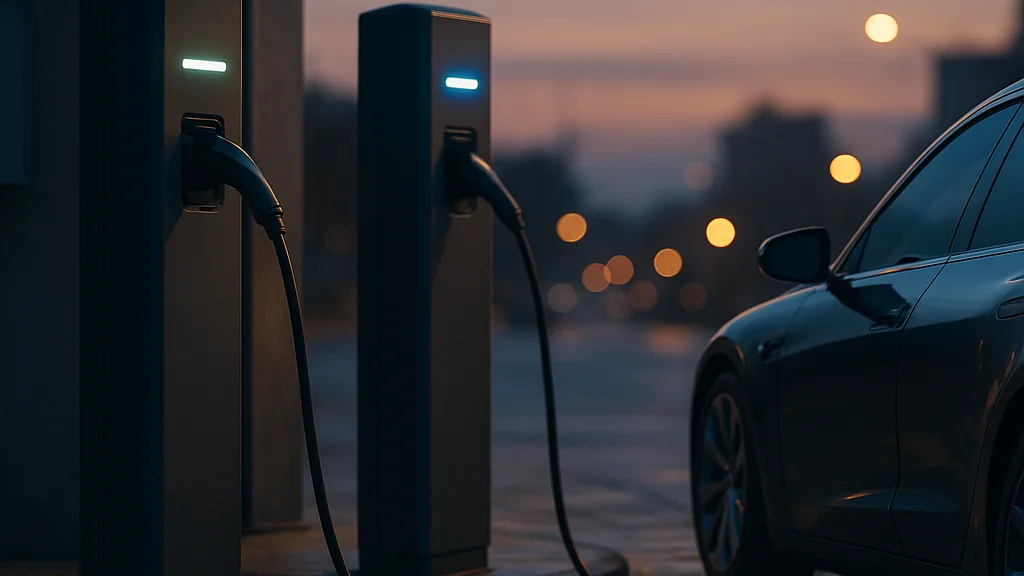
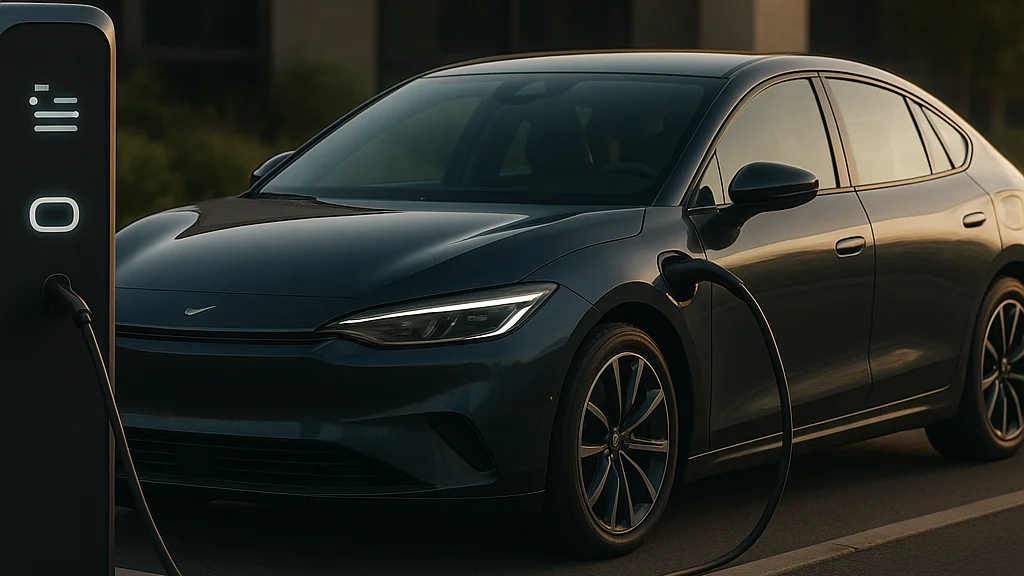
On a cold Nordic morning, the difference between electric mobility that feels effortless and electric mobility that feels fragile often comes down to one thing, the charger you can trust. A sleek battery-electric car parked outside a Stockholm apartment block is only part of the story. The real system sits behind it: curbside AC posts, highway fast chargers, depot charging software, transformers, grid connections, payment systems, and the patient civil engineering that makes all of that work together. Electric vehicle adoption has always been visible. Charging infrastructure growth is less glamorous, yet it is where the transition either becomes lagom, balanced and practical, or stalls in queues and frustration.
The scale of the build-out is now impossible to ignore. According to the International Energy Agency's recent tracking of global EV trends, public charging stations continued expanding rapidly through the mid-2020s, with fast charging seeing especially strong growth as larger vehicles and longer-distance travel increase demand. BloombergNEF and Reuters have also repeatedly highlighted a simple truth: charger deployment is no longer a side issue to EV sales, it is a strategic industrial race involving utilities, automakers, oil majors, retailers, logistics firms, and governments.
That shift matters because infrastructure growth is changing character. A few years ago, success was often measured by raw charger counts. In 2026, the more serious questions are about uptime, power levels, geographic distribution, interoperability, and whether new installations arrive where drivers actually need them. For households with home charging, public networks are a convenience. For apartment dwellers, taxi operators, delivery fleets, and drivers without private parking, they are the backbone.
If you want a useful companion read on the broader momentum behind this build-out, WriteUpCafe has already explored the topic in Electric Vehicle Charging Infrastructure Growth in 2026: Trends and Insights. What follows here goes deeper, with a closer look at how the market is scaling, where the bottlenecks remain, and why charging has become one of the defining green-tech infrastructure stories of this decade.
“The climate crisis has already been solved. We already have all the facts and solutions.” Greta Thunberg’s line is often quoted, and in transport it lands with force: the challenge is not inventing the EV, but building the systems around it at real speed.
How we got here: from pilot projects to national strategy
The first phase of EV charging expansion was experimental. Cities installed demonstration posts. Automakers partnered with niche networks. Early adopters tolerated unreliable apps, awkward payment systems, and hardware that seemed designed by engineers who had never stood in the rain. The market was fragmented because the vehicles were fragmented too, sold in modest volumes and often concentrated in wealthy urban districts.
That began to change sharply in the late 2010s and early 2020s as battery costs fell, emissions rules tightened, and major carmakers committed capital to electrification. Europe accelerated under stricter fleet CO2 targets. China scaled at extraordinary pace through industrial policy and urban demand. The United States, after a patchier start, increased federal support for corridor charging and domestic manufacturing. Each region moved differently, yet all ran into the same lesson: EV adoption can rise faster than charging infrastructure if policy and permitting lag behind.
What makes the current phase distinct is that charging is now treated as essential public infrastructure, closer in spirit to broadband rollout or grid modernization than to a consumer gadget. Utilities have become central players because high-power charging sites require distribution upgrades, transformers, and careful load planning. Property owners have become gatekeepers because the right site can matter more than the hardware brand. Software firms have moved from the margins to the core because smart charging, payment integration, and uptime monitoring increasingly determine whether a station is economically viable.
Governments have also become more sophisticated. Early subsidy programs often rewarded simple installation numbers. Newer frameworks focus more on reliability standards, minimum power thresholds, corridor coverage, and support for multi-unit dwellings or underserved regions. In Scandinavia, where practical design tends to win over noise, that feels exactly right. A charger that works every time is more valuable than three ribbon-cutting ceremonies.
For readers interested in the policy-and-progress angle, another useful internal reference is Expanding Electric Vehicle Charging Infrastructure: Progress and Prospects. The broader point is clear: the market has matured from proving EVs are possible to proving charging can be dependable at mass scale.
The numbers that matter now: speed, density, uptime, and utilization
Counting plugs still has value, but it no longer tells the full story. A slow AC charger in a suburban car park and a 350-kilowatt DC unit on a freight corridor are not interchangeable assets. Serious infrastructure analysis now looks at four metrics together: charger speed, network density, reliability, and utilization. Miss one of them, and the picture becomes distorted.
Start with speed. As battery packs grow and drivers expect shorter stops, direct-current fast charging has become the prestige battleground. Highway networks, retail hubs, and fleet depots increasingly need high-power equipment. Yet AC charging remains indispensable, especially for overnight dwell time at homes, workplaces, hotels, and residential streets. A healthy system is mixed, not monolithic.
Density is equally important. A country can boast impressive national totals while leaving rural areas, apartment-heavy districts, or secondary roads underserved. This is where public policy and commercial logic often clash. Private operators prefer high-traffic sites with predictable returns. Public authorities care about universal access and social legitimacy. The best national strategies blend both, using subsidies or mandates to fill the gaps.
Then there is uptime, the issue that finally moved from driver complaint to boardroom KPI. A charger that is offline, blocked, or incompatible is not infrastructure in any meaningful sense. Reuters and industry analysts have repeatedly noted that network reliability is becoming a decisive factor in customer confidence. Hardware quality, maintenance contracts, software integration, and spare-parts availability now matter as much as installation pace.
Utilization, meanwhile, determines economics. Underused chargers struggle to generate returns. Overused chargers create queues and reputational damage. Operators therefore need careful site selection and dynamic load management, especially where grid upgrades are slow or expensive.
- AC charging remains crucial for long dwell times, residential streets, workplaces, and destination charging.
- DC fast charging is increasingly essential for highways, commercial fleets, ride-hailing, and drivers without home charging.
- Reliability has become a competitive differentiator, not a technical afterthought.
- Grid connection timelines are now one of the biggest hidden constraints on deployment.
- Utilization rates increasingly shape where private capital flows next.
One more data point helps frame investor optimism. Yahoo Finance reported on a market forecast projecting the broader electric vehicle market to grow at a 7.73% CAGR and reach US$ 1,720.00 billion by 2034. Forecasts should always be handled carefully, but the direction is unmistakable: if vehicle sales keep rising, charging infrastructure must scale in lockstep or better.
The charging market is no longer asking, “Will EVs arrive?” It is asking, “Can power, permits, land, and software keep up with the vehicles already on the road?”
What changed recently: the defining developments of 2026
The 2026 picture is shaped less by novelty than by execution. Several developments stand out. First, charging is becoming more fleet-driven. Parcel delivery, municipal vehicles, buses, taxis, and service vans are electrifying because their routes are predictable and fuel savings can be compelling. That shifts infrastructure demand toward depots, urban fast-charging hubs, and managed charging systems rather than only public roadside stations.
Second, emerging markets are moving from aspiration to planning. The conversation is no longer confined to Europe, China, and North America. BEST Magazine highlighted a report describing a $3.8 billion EV charging infrastructure opportunity across emerging economies. That matters because these markets may leapfrog some of the slower, fragmented patterns seen elsewhere, especially if charging is integrated early with urban planning and renewable power.
Third, Asia offers vivid examples of infrastructure becoming the hinge of mobility policy. VietNamNet reported that charging infrastructure is central to Vietnam's electric mobility transition, underscoring a challenge visible across fast-growing economies: vehicle ambition means little without accessible, affordable, and geographically sensible charging.
Fourth, private logistics players are building their own ecosystems when public networks are not enough. The Hindu BusinessLine reported that Amazon is leveraging its own charging infrastructure to grow its electric delivery fleet in India. That is a significant signal. When major fleet operators internalize charging, they reduce dependency on immature public networks and create demand for energy management, depot software, and distributed charging assets.
Finally, 2026 is the year when interoperability and payments have become consumer expectations rather than premium features. Drivers increasingly expect tap-to-pay, roaming agreements, transparent pricing, and apps that reflect real-time availability. Networks that fail on these basics may still add chargers, but they will struggle to earn loyalty.
- Fleet electrification is accelerating demand for depot and hub charging.
- Emerging economies are becoming major infrastructure growth stories.
- Corporate self-provisioning is rising where public charging remains uneven.
- Payment simplicity and roaming are now mainstream expectations.
- Grid-aware software is moving from optional to essential.
Why the hardest problem is often not the charger, but the grid
Ask charging developers what slows projects, and many will mention the same villain: grid connection. It is not the visible part of the story, which is perhaps why it receives less public attention than it deserves. A charging site can secure land, financing, and hardware, then wait months or longer for utility approvals, transformer capacity, or substation work. This is where the clean-tech transition meets the old physical realities of copper, concrete, and regulatory process.
High-power charging places concentrated demand on local networks, especially where several vehicles charge simultaneously. A four-bay fast-charging site can require power levels that small commercial properties were never designed to handle. Multiply that by depots for buses or delivery vans, and the challenge becomes systemic. Utilities therefore need better forecasting, more flexible tariffs, and stronger coordination with transport planners. That is not glamorous, but it is the work that determines whether decarbonization feels smooth or chaotic.
There are several responses already gaining traction. Smart charging can shift loads to lower-demand periods. On-site batteries can reduce peak draw, though economics vary by market and use case. Solar can help at some locations, particularly for daytime fleet charging, but it is rarely a complete solution for high-power sites. Vehicle-to-grid and vehicle-to-building systems remain promising, especially for fleets parked for predictable periods, yet commercial scaling still depends on regulation, standards, and compensation models.
From a sustainable living perspective, this is where the conversation becomes broader than cars. Charging infrastructure growth is really an energy systems story. It touches apartment design, workplace planning, public procurement, electricity pricing, and the resilience of urban grids. Scandinavian design teaches that good systems disappear into daily life. The best charging ecosystem will feel almost invisible, a calm utility in the background, not a source of friction.
Greta Thunberg has often insisted that society must act as if the crisis is real. In practical terms, that means treating grid modernization and charging deployment as linked priorities, not separate policy silos. A charger without power capacity is a promise, not infrastructure.
Case studies from the field: fleets, cities, and emerging markets
The most instructive examples today often come from use cases where charging demand is predictable. Fleet operators know where vehicles start, stop, and return. That makes electrification financially and operationally attractive, provided infrastructure is designed with discipline. Amazon's approach in India is a telling case. According to The Hindu BusinessLine and mirrored coverage from The Economic Times on MSN, the company is leveraging its own charging infrastructure to support growth in its electric delivery fleet. This is not merely a corporate sustainability gesture. It reflects a hard-headed operational view: if charging access is mission-critical, owning or tightly controlling the charging environment can reduce risk.
Vietnam offers a different lesson. As VietNamNet noted, charging infrastructure is key to the country's electric mobility transition. That framing is important because it rejects a common policy mistake, assuming consumer demand alone will solve infrastructure gaps. In rapidly urbanizing markets, networks need to be planned around density, affordability, and mixed vehicle types, from two-wheelers to buses and passenger cars. The transition will not look identical to Europe's, and it should not. Local mobility patterns matter.
European cities, meanwhile, are wrestling with curbside equity. Dense neighborhoods with apartment living cannot rely on the detached-house model of home charging. Municipalities are experimenting with lamp-post chargers, residential street charging, mobility hubs, and requirements for new buildings. The challenge is balancing visual order, grid limits, pedestrian space, and accessibility. A beautiful street in Stockholm or Copenhagen should not become a forest of bollards, yet residents without driveways must not be excluded from the EV transition.
Across all these cases, one principle holds. Charging works best when matched to behavior:
- Home and apartment charging supports daily convenience and lower-cost overnight energy use.
- Workplace charging extends access for commuters and helps flatten demand with managed schedules.
- Depot charging is ideal for commercial fleets with predictable routes.
- Destination charging at shops, hotels, and leisure sites turns parked time into useful energy time.
- Highway fast charging preserves confidence for long-distance travel and regional commerce.
That is why one-size-fits-all narratives are unhelpful. The charging market is really a mosaic of use cases, each with different economics, power needs, and policy requirements.
The business model question: who pays, who profits, who waits
Infrastructure growth is often discussed as a technical challenge, but the commercial model is just as decisive. Installing chargers is capital-intensive, and returns can be uneven. Urban fast-charging hubs in high-traffic locations may attract private investment relatively easily. Rural corridors, low-income districts, or early-stage apartment retrofits often do not. This creates a familiar green-transition tension: the places most socially important may be the least immediately profitable.
Operators are responding in several ways. Some pair charging with retail, using dwell time to increase spending at supermarkets, cafés, or service stations. Some utilities invest because charging can increase electricity demand and support broader electrification strategies. Automakers back networks to reduce customer anxiety and protect vehicle sales. Oil and gas majors see charging as a hedge and a way to repurpose prime roadside real estate. Property owners view chargers as amenities that can raise occupancy or asset value.
Yet investors have become more disciplined. They want evidence of utilization, dependable hardware, manageable maintenance costs, and realistic assumptions about power pricing. They also care about software. Dynamic pricing, reservations, energy management, and predictive maintenance can materially change project economics. A charger is not just a metal box. It is an energy retail point, a digital service node, and increasingly a grid-interactive asset.
This is where public money still matters. Strategic subsidies, concessional finance, and targeted mandates can unlock private capital without replacing it. Emerging economies may be especially sensitive to financing structures, which is one reason the opportunity identified by BEST Magazine deserves attention. If capital costs remain too high or grid planning too slow, infrastructure deployment will lag vehicle ambition.
For the charging sector, scale is not only about installing more units. It is about building a business model robust enough to keep those units maintained, powered, and useful for years.
The strongest networks in 2026 are therefore not always the ones with the loudest announcements. They are the ones quietly improving uptime, expanding where demand is real, and aligning hardware, software, and energy supply with a sustainable commercial logic.
What to watch next: the practical future of charging growth
The next stage of expansion will likely be less dramatic in headlines and more consequential in everyday life. Watch apartment charging closely. In many mature EV markets, detached-home owners have already captured the easiest gains. The larger social test is whether renters and residents of multi-unit buildings can charge simply and affordably. That will require building codes, retrofit incentives, shared metering solutions, and landlord engagement. If policymakers get this wrong, EV adoption risks becoming socially uneven.
Keep an eye on megawatt-class charging for heavy transport as well. Trucks, ports, logistics depots, and industrial corridors will place new demands on grids and site design. The decarbonization of freight is not identical to passenger mobility, but the two systems increasingly overlap in planning and power procurement. A country that prepares only for private cars will soon find itself behind.
Another frontier is software orchestration. Managed charging can reduce costs for fleets, help utilities avoid local peaks, and make better use of existing infrastructure. The more EVs join the system, the more intelligence matters. In practical terms, that means the winners may include not only charger manufacturers, but also utilities, energy platforms, and software providers that can make electrons move at the right time for the right price.
Consumers, for their part, should watch for three signs of a healthy market: easy payment, visible uptime, and fair siting. If a network offers transparent pricing, working chargers, and locations where people naturally stop, it is likely built on sound fundamentals. If it relies on obscure memberships, chronic outages, or inconvenient placement, growth may be more cosmetic than durable.
The long view remains encouraging. Cleaner transport is not a distant abstraction. It is becoming embedded in streets, depots, service areas, and apartment blocks. The build-out will stay uneven, because infrastructure always does, but the direction is unmistakable. Electric vehicle charging infrastructure growth is no longer a speculative side story to the mobility transition. It is the transition's operating system, the quiet architecture that determines whether cleaner transport becomes ordinary, affordable, and trusted.
That is the real benchmark. Not whether a country can announce another thousand chargers, but whether people can live with electric mobility as naturally as they live with light, heat, and public transport. When charging becomes that seamless, almost as calm as a Swedish pine forest after fresh snow, the market will have matured in the truest sense.

































Sign in to leave a comment.