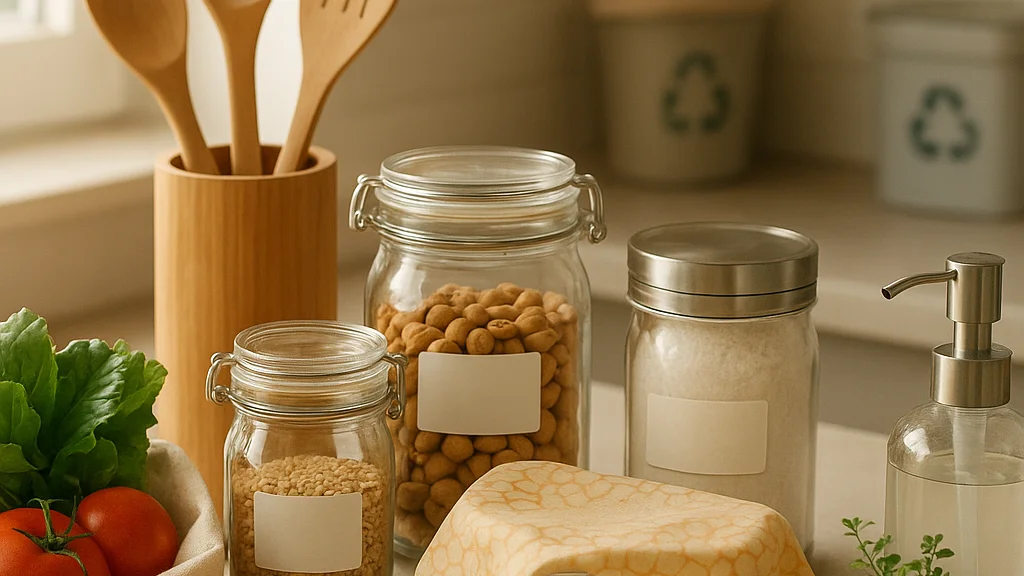

A glass jar of oats, a cotton tote folded by the door, a soap bar drying on a wooden dish, these small details can look almost poetic, very Scandinavian even, but the zero waste life does not begin with aesthetics. It begins with arithmetic. The world generated an estimated 2.24 billion tonnes of municipal solid waste in 2020, according to the World Bank, and without stronger action that figure is projected to rise sharply by 2050. For a beginner, that number can feel glacial and distant, like a dark Baltic winter. Yet household habits remain one of the few climate and resource questions we touch every single day.
Zero waste, despite the name, is not a purity test. It is a design principle for daily life: reduce what you buy, reuse what you can, repair what still has value, and compost or recycle only after those options are exhausted. The practical goal is not to fit a year of trash into a mason jar. The practical goal is to stop treating materials, energy, food, and time as disposable. That distinction matters, because many newcomers quit when the lifestyle is framed as perfection rather than progress.
Across Europe, and increasingly worldwide, the policy mood is shifting in the same direction. The European Union has tightened rules around packaging, food waste, and producer responsibility. Cities are expanding refill pilots, reuse logistics, and separate bio-waste collection. Retailers are experimenting with returnable systems. What used to feel fringe now has institutional backing. For beginners, that is good news: the easier sustainable systems become, the less individual willpower is required.
If you have read broad starter guides such as Top 6 Zero Waste Lifestyle Tips for Beginners to Embrace Sustainability or the more reflective Rethinking Zero Waste Lifestyle Tips for Beginners, you already know the basics. What follows goes deeper, with a focus on what actually works, what saves money, where beginners usually stumble, and how zero waste habits fit into 2026 realities rather than an idealized Pinterest kitchen.
“No one is too small to make a difference.” Greta Thunberg’s line is quoted often, but for waste it has a sharp practical meaning: systems matter, and so do repeated daily choices.
Start with a waste audit, not a shopping spree
The most common beginner mistake is buying a whole set of bamboo cutlery, stainless containers, glass dispensers, beeswax wraps, and labeled pantry jars before understanding where their waste actually comes from. That is consumption dressed as sustainability. A better first move is a one-week household waste audit. Keep a notebook or phone note, and record every item you throw away: food scraps, delivery packaging, plastic film, receipts, tissues, coffee pods, shampoo bottles, takeaway cups, and all the rest. By day seven, patterns become obvious.
Most households discover that their biggest waste streams are not exotic. They are usually food, packaging, and convenience items. According to the UN Environment Programme’s Food Waste Index, households account for a substantial share of food waste globally. In practical terms, that means the carrot you forgot, the yogurt that expired, and the leftovers you ignored matter more than whether your dish brush handle is made of beechwood. Beginners need this hierarchy. It keeps effort aligned with impact.
A simple audit also reveals which swaps are genuinely useful. If you buy takeaway lunch three times a week, a reusable container and cup may earn their place quickly. If you never use cling film, replacing it with expensive wraps solves nothing. This is where the advice in Zero Waste Lifestyle Tips for Beginners: Practical Steps to Sustainable Living becomes especially relevant: match tools to behavior, not to trends.
Try categorizing your audit into four columns:
- Refuse: freebies, single-use cutlery, junk mail, promotional samples
- Reduce: packaged snacks, impulse online orders, overbuying produce
- Reuse: jars, cloth bags, durable bottles, lunch boxes
- Recover: recycling, composting, textile collection, repair
That framework does something subtle but important. It shifts your attention from guilt to systems thinking. Instead of asking, “Why am I bad at zero waste?” you ask, “Which recurring stream can I redesign first?” That is a lagom approach, balanced, realistic, and far more durable over time.
The beginner’s hierarchy: cut what is disposable and invisible
Once your audit is complete, focus on the items that leave the house quickly and return constantly. These are the invisible drains on both waste and money. They include paper towels, bottled water, coffee capsules, cling film, takeaway packaging, disposable razors, and individually wrapped snacks. The reason to start here is not moral drama. It is leverage. Small repetitive purchases create large cumulative waste.
Consider bottled water. In places with safe tap water, replacing bottled water with a filter jug or plain tap water in a reusable bottle can eliminate hundreds of containers per year for a single household. Coffee is another rich target. If you use pods, switching to ground coffee, a French press, moka pot, or refillable capsule can significantly reduce packaging. Kitchen roll often disappears by habit rather than need; washable cloths can handle most spills. None of these swaps are glamorous. All of them work.
The MSN guide to zero waste success at home emphasizes this same principle: begin with practical, repeatable changes in the home rather than chasing a complete lifestyle overhaul. That is sound advice. The best zero waste habit is the one that survives a busy Tuesday.
For many beginners, the highest-impact first changes look like this:
- Carry a reusable shopping bag and water bottle every day.
- Replace paper towels with washable cloths.
- Use bar soap before buying any new liquid soap.
- Choose loose produce or the largest sensible package size to reduce unit packaging.
- Keep one container and one mug in your bag for takeaway situations.
- Pause all nonessential impulse purchases for 30 days.
There is also a psychological reason this stage matters. Visible wins create momentum. When your bin is less full after two weeks, the lifestyle stops feeling abstract. You can see the result. You can often see the savings too. A household that buys fewer disposables usually buys fewer duplicates, fewer emergency replacements, and fewer “just in case” items.
Zero waste is less about owning the right reusable products and more about needing fewer products in the first place.
That may sound austere, but it is often liberating. Less clutter, fewer errands, lower spending, and a calmer home are not side benefits. They are part of the appeal.
Food is where beginners can make the biggest difference fastest
If I had to choose one area for newcomers to prioritize, it would be food. Not because it is trendy, but because the numbers are stubborn. Food waste carries embedded emissions from farming, transport, refrigeration, and packaging, while overpackaged groceries add another layer of material use. In many homes, the kitchen is where zero waste either becomes real or remains decorative.
Begin with meal visibility. Put perishables at eye level, not hidden in a drawer where spinach goes to disappear. Create a “use first” box in the fridge. Plan three or four core meals before shopping, then build the list around those meals rather than around vague healthy intentions. Frozen vegetables are not a failure of zero waste if they prevent fresh produce spoilage. Canned beans are not less virtuous than dried beans if convenience means you actually cook them.
Shopping habits matter just as much. Buying in bulk can reduce packaging, but only if you buy quantities you will use. Otherwise, bulk becomes waste by another route. Local refill stores and cooperative grocers have expanded in many cities by 2026, though availability remains uneven. Where refill is not practical, choose the least overpackaged option you can find and focus on consistency rather than perfection.
Here are the kitchen habits that tend to deliver the fastest results:
- Plan meals around what you already have before making a shopping list.
- Store herbs in water or wrapped cloth to extend freshness.
- Freeze bread, leftovers, and ripe fruit before they cross the line.
- Cook “root to stem” where appropriate, using broccoli stalks, herb stems, and vegetable tops.
- Learn three leftover meals: soup, fried rice, and frittata are classics for a reason.
- Compost unavoidable scraps if your municipality or building supports it.
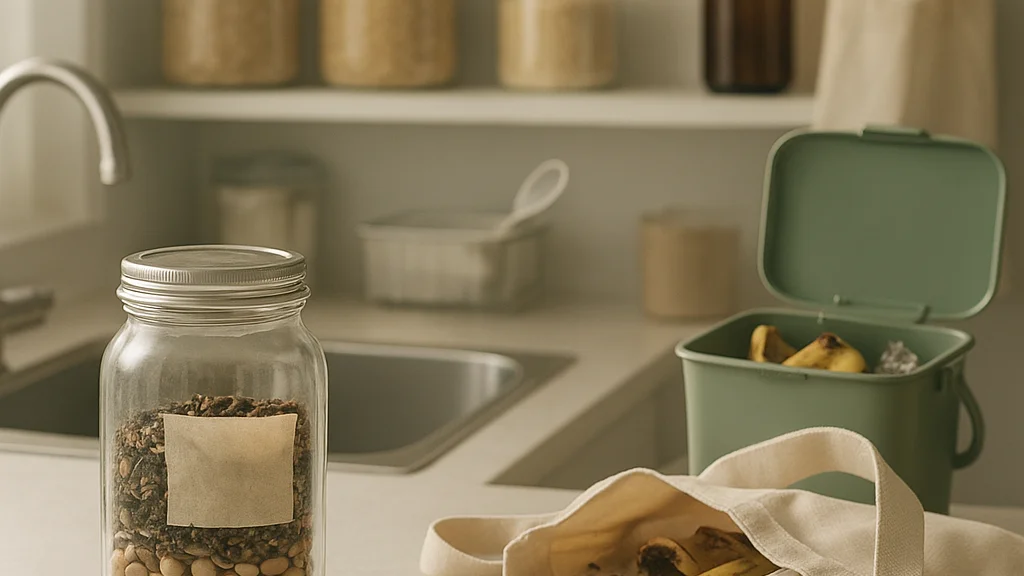
Municipal bio-waste systems are improving across Europe, and many cities now collect food scraps separately or support neighborhood composting. That is one of the quiet but important 2026 developments: infrastructure is catching up with household intent. Still, composting should come after prevention. A compost bin is useful, but the most sustainable banana is the one you eat.
There is also a design lesson here. Scandinavian kitchens often feel efficient not because they are sparse for the sake of style, but because every object earns its place. A clear jar, a stackable container, a wooden crate for onions, these are not merely visual choices. They reduce friction. The easier it is to see and use your food, the less likely it is to become waste.
Bathrooms, cleaning, and laundry: the quiet frontier of waste reduction
People often associate zero waste with grocery shopping, yet bathrooms and utility cupboards hide a surprising amount of plastic and disposability. Shampoo bottles, toothpaste tubes, cotton pads, cleaning sprays, detergent jugs, disposable mop sheets, and synthetic sponges add up over a year. The encouraging part is that this category is often easier to simplify than food, because routines are stable and product needs are predictable.
Start by using up what you already own. Throwing away half-full products to buy “eco” replacements defeats the point. When something runs out, replace it with the lower-waste version that fits your real life. Soap bars, shampoo bars, refillable cleaning concentrates, safety razors, washable cloth rounds, and powder detergents can all reduce packaging, but not every swap works for every person or hair type. A beginner needs permission to test, adjust, and keep what functions well.
Recent consumer reporting and retailer trends suggest refillable household products are becoming more mainstream in 2026, especially concentrated cleaning solutions sold in small bottles or dissolvable tablets. They reduce shipping weight and packaging volume, though performance still varies by brand. Since specific product claims change quickly, the sensible rule is simple: choose durable systems with fewer components and less packaging, and avoid replacing functioning items prematurely.
Laundry deserves special attention because waste is not only visible packaging. Synthetic textiles can shed microfibers during washing, contributing to aquatic pollution. That means one zero waste decision happens before the wash cycle: buy fewer low-quality clothes and keep garments longer. Repairing basics, washing at lower temperatures when appropriate, line drying, and using full loads can reduce both resource use and wear.
Practical bathroom and laundry swaps for beginners include:
- Switch from bottled body wash to bar soap after current bottles are finished.
- Use refill or concentrate cleaners instead of buying new spray bottles repeatedly.
- Choose durable cleaning cloths over disposable wipes.
- Replace plastic-heavy laundry habits with powder or refill detergent where available.
- Repair or repurpose old towels and T-shirts as cleaning rags.
There is a cultural shift here too. The old model sold cleanliness as endless consumption. The better model is maintenance with restraint, enough, but not excess. Very lagom, and very effective.
What has changed recently: zero waste in 2026 is more systemic
A decade ago, zero waste advice leaned heavily on individual discipline. Bring your jar. Remember your cup. Refuse the straw. Those habits still matter, but 2026 looks different because policy and business models are moving, unevenly but unmistakably, toward waste prevention. In Europe, packaging rules have tightened, extended producer responsibility schemes are expanding, and many municipalities are under pressure to improve separate collection and reuse systems. The message from regulators is increasingly clear: waste should be designed out upstream, not merely sorted downstream.
That shift affects beginners directly. Refill stations are more common in some urban supermarkets. Deposit-return systems for beverage containers are expanding or being modernized in several markets. Recommerce, repair platforms, and certified refurbished electronics are now normal categories rather than niche experiments. Food retailers are using markdown apps and dynamic pricing more aggressively to clear near-date inventory. None of this removes personal responsibility, but it lowers the friction of better choices.
The conversation has also matured. Serious sustainability reporting in outlets such as Reuters and public data from the European Environment Agency increasingly emphasize circular economy metrics, material efficiency, and producer obligations, not just consumer virtue. That is healthy. A household can reduce waste meaningfully, but it cannot redesign packaging supply chains alone.
For readers wanting a broader 2026 framing, Zero Waste Lifestyle Tips for Beginners: Sustainable Living in 2026 offers a useful companion perspective. The key change since earlier years is that beginners now have more support structures, but also more greenwashing to sort through. A product labeled sustainable is not automatically low waste. Sometimes the greener choice is simply to buy nothing, borrow one, repair one, or choose secondhand.
Greta Thunberg has long pushed the public to see climate action as a matter of systems rather than slogans. Waste belongs in that frame. The beginner who understands this avoids two traps at once: cynicism on one side, performative consumption on the other.
The strongest zero waste habit in 2026 may be discernment: knowing when a reusable item solves a real problem, and when it is just more stuff painted green.
How to build habits that last when life gets busy
The difference between a short-lived zero waste phase and a lasting lifestyle is rarely motivation. It is logistics. If your reusable bag lives in a drawer, you will forget it. If leftovers are hidden behind condiments, you will not eat them. If your compost caddy smells bad, you will stop using it. Lasting habits are designed into the environment so they require less memory and less moral effort.
Start with what behavioral researchers often call friction. Make the good option easier than the wasteful one. Keep bags by the door, containers in your work bag, and a water bottle where you can see it. Put a small recycling guide on the fridge if your local rules are confusing. Store cleaning cloths within reach of the sink so you do not instinctively grab paper. Design beats intention more often than people like to admit.
A second principle is to stack habits onto routines you already have. Refill your bottle when you make morning coffee. Check the fridge “use first” box before ordering takeaway. Bring a container on the days you know you will buy lunch. Pairing a new action with an existing one increases the odds that it will stick.
Beginners should also expect some failure. You will forget the tote, accept the receipt, buy too much coriander, or end up with packaging you did not want. That is normal. Zero waste is not a spotless fjord with no wind. It is a working practice. What matters is whether the system improves over months.
One useful monthly review asks four questions:
- What filled the bin most often this month?
- Which reusable item did I actually use?
- What spoiled in the fridge, and why?
- What purchase could I borrow, repair, or skip next month?
This kind of review keeps the lifestyle empirical. It also helps households share the effort fairly. Waste reduction fails when one person becomes the sustainability manager for everyone else. Agree on simple defaults instead: one shopping list, one place for bags, one leftover night each week, one donation box for outgoing items.
That may sound almost boring, but boring is underrated. The habits that endure are usually the least theatrical. They fit the grain of everyday life, like pine floorboards worn smooth by years of use.
The smartest beginner mindset: buy less, keep more, ask better questions
Many people arrive at zero waste through guilt about plastic. They stay with it, if they stay, because it teaches a deeper form of freedom. You begin to ask different questions before every purchase. Do I need this? Can I borrow it? Is there a secondhand option? Will I maintain it? What happens when it breaks? Those questions ripple outward into money, space, attention, and climate impact.
For beginners, the most effective tips are not the flashiest. Refuse what you do not need. Use what you already have. Build a kitchen that prevents food waste. Replace disposables only when they run out. Choose durable, repairable goods. Learn your local recycling and compost rules. Support businesses and policies that make reuse easier for everyone. That is not perfection. It is progress with structure.
There is also a quiet emotional shift that comes with this lifestyle. Homes become less cluttered. Shopping becomes less impulsive. Meals become more intentional. You notice materials again, glass, metal, cotton, paper, wood, and you begin to respect the labor and energy behind each object. That awareness is not about deprivation. It is about relationship.
According to broad consumer advice such as the MSN feature on zero waste at home, success usually comes from consistency with a handful of core habits. I agree, with one addition: connect those habits to values you can feel. Maybe it is saving money. Maybe it is reducing household chaos. Maybe it is climate concern. Maybe it is the simple pleasure of living more lightly, more lagom, with fewer things demanding your attention.
Zero waste for beginners should be humble, practical, and a little forgiving. Start with your bin. Follow the evidence in your own home. Fix one stream at a time. The goal is not to look sustainable. The goal is to build a life where less is wasted, because more is valued.






























Sign in to leave a comment.