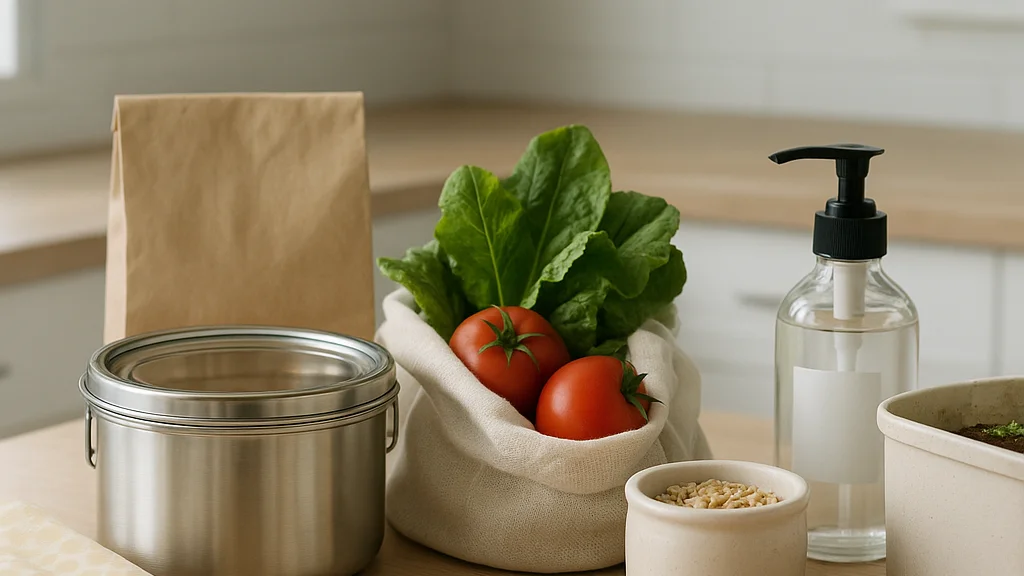

A glass jar of dried beans, a cotton tote, a steel bottle: these have become the familiar symbols of a zero waste life. Yet for many beginners, the reality is less elegant. The first attempt often starts with buying a set of reusable products, then ends in frustration when food still spoils, packaging still enters the home, and the bin still fills faster than expected. This gap matters. A zero waste lifestyle is not a shopping identity; it is a systems question, a household management practice, and, increasingly in 2026, a response to very visible pressures on municipal waste systems, resource prices, and climate targets.
The phrase itself can mislead. No household produces literally zero waste. Even the most disciplined home still encounters medicine blister packs, appliance parts, delivery packaging, and worn-out textiles. The more useful goal is to reduce waste at the source, extend product life, and make disposal the last step rather than the default. That shift sounds simple, but it asks beginners to rethink convenience, storage, routine, and cost. In Milan, where design has long celebrated both beauty and function, the lesson feels familiar: the best objects are those that last, repair well, and serve many purposes.
Recent public discussion has made the topic more mainstream. A widely shared MSN guide on essential zero waste habits highlighted small daily changes such as reusable bags and avoiding single-use plastics. Those are useful entry points, but beginners need a more complete map. If the aim is lasting change rather than a week of enthusiasm, the strategy must begin with measurement, then move into food, packaging, home care, clothing, and digital shopping habits. That is where zero waste becomes less performative and more practical.
Zero waste works best when it stops being a purity test and starts becoming a design principle for everyday life.
For readers who want a basic companion alongside this deeper analysis, WriteUpCafe has already published accessible primers such as Zero Waste Lifestyle Tips for Beginners: Practical Steps to Sustainable Living and Top 6 Zero Waste Lifestyle Tips for Beginners to Embrace Sustainability. What follows goes further: not just what to buy less of, but how to build a low-waste household that survives busy schedules, limited budgets, and the contradictions of modern retail.
Start with the bin audit, not the shopping list
Most beginners begin in the wrong place. They shop for bamboo cutlery, beeswax wraps, refillable jars, and matching containers before they understand what they actually throw away. A one-week bin audit is more revealing than any social media checklist. It shows whether your biggest problem is takeaway packaging, food waste, bathroom plastics, cleaning products, or impulse online shopping. Once you know the dominant waste stream, the first interventions become obvious and cheaper.
This method is supported by a basic truth from waste management research: household waste is highly uneven. One family may generate large amounts of food scraps and little plastic; another may buy little fresh food but produce a mountain of delivery boxes and protective film. According to the United Nations Environment Programme's Food Waste Index, households account for a substantial share of food waste globally. In Europe, Eurostat data has repeatedly shown that municipal waste levels remain high even in countries with advanced recycling systems. That means recycling alone cannot solve the problem. Prevention matters more.
A useful beginner audit can be done with paper and a kitchen timer. For seven days, record each discarded item by category and rough volume. Do not aim for perfection; aim for pattern recognition.
- Food waste: spoiled produce, leftovers, stale bread, coffee grounds, peels
- Packaging: plastic film, trays, bottles, takeaway containers, cardboard
- Bathroom waste: shampoo bottles, cotton pads, razor cartridges, cosmetic packaging
- Cleaning waste: detergent bottles, wipes, sponges, disposable cloths
- Miscellaneous: batteries, broken chargers, receipts, worn textiles
After one week, rank the top three categories by frequency and volume. Then ask a second question: which of these is easiest to reduce within 30 days? That second filter is essential. Beginners often choose the most visible issue rather than the most solvable one. Replacing cling film with containers is easy. Eliminating all supermarket packaging in one month is usually not.
The real benefit of a bin audit is psychological. It replaces guilt with evidence. When people can see their own waste profile, they stop copying generic advice and begin designing a personal system. That is a more durable foundation than any aesthetic kit of reusable products.
The biggest win is usually food, not plastic gadgets
If there is one area where beginners can cut waste quickly, it is the kitchen. Food waste is heavier, costlier, and more climate-intensive than many people realize. When food is discarded, the waste is not only the item itself; it also includes the land, water, fertilizer, transport, refrigeration, and labor used to produce it. A spoiled bag of salad is a small object with a long resource story behind it.
For that reason, a serious zero waste plan starts with meal design. Not meal perfection, but meal design: planning what will be cooked, what can be frozen, what ingredients overlap, and what leftovers can become tomorrow's lunch. In Italian homes, this logic is old rather than fashionable. Yesterday's bread becomes panzanella or breadcrumbs. Vegetable scraps can enrich broth. Beans, lentils, tomatoes, and grains store well, making them ideal low-waste staples. The lesson is not nostalgia; it is resilience.
Beginners should focus on a few high-impact shifts before worrying about niche swaps. The sequence matters.
- Plan three to five core meals before shopping.
- Buy perishable produce in realistic quantities, not aspirational ones.
- Store food correctly: herbs in water, grains sealed, leftovers labeled with dates.
- Cook older ingredients first using a “use soon” shelf or box.
- Freeze portions early, before fatigue or travel disrupts the plan.
These habits reduce both waste and spending. Industry and consumer studies across Europe have consistently found that households save meaningful amounts when they reduce edible food waste, though the exact figure varies by family size and buying habits. Even without a universal number, the pattern is clear: the less food you throw away, the less often you need emergency purchases, takeaway meals, and duplicate ingredients.
Packaging reduction should follow the same practical logic. Buy larger formats only if you will finish them. Choose refill shops where they are genuinely accessible. Prefer loose produce when quality is good, but do not reject packaged items if the package extends shelf life and prevents spoilage. This is where zero waste advice often becomes simplistic. A cucumber wrapped in plastic may have a lower total waste footprint than an unwrapped cucumber that softens before being eaten. Context matters.
The most sustainable food is not the one with the prettiest packaging story; it is the one you actually eat before it spoils.
That is why beginners should judge kitchen choices by three questions: Will I use it? Can I store it well? Does this packaging prevent more waste than it creates? Sensible zero waste living is full of such trade-offs, and pretending otherwise only discourages people.
Reusable products help, but only if they replace a real habit
The consumer market has become very efficient at selling the image of sustainability. Stainless steel straws, silicone bags, compost bins, refillable dispensers, safety razors, cloth rounds, lunch boxes, produce sacks: all can be useful, but none is automatically transformative. The decisive factor is substitution. A reusable item works only when it displaces a disposable item consistently over time. Otherwise, it becomes another object, another material burden, another drawer of good intentions.
For beginners, the most effective reusable toolkit is usually small. One sturdy bottle, one food container, one shopping bag kept by the door, and a compact cutlery set for work or travel cover far more real situations than a large starter kit. The same principle applies in the bathroom. A safety razor can reduce cartridge waste, but only if the user is comfortable with it. Shampoo bars can cut plastic, but not every scalp tolerates every formula. Cloth napkins are easy for some households, less so for others without laundry capacity. Practicality is not a compromise; it is what makes change stick.
This is why I advise a “one in, one out” rule for zero waste purchases. Do not buy a reusable version until you have identified the disposable habit it will replace. Then test it for four weeks before expanding. This prevents a common beginner error: buying a whole sustainability set and discovering that half of it remains unused.
- Carry a bottle if you regularly buy drinks outside.
- Use a container if you often purchase takeaway lunches.
- Adopt washable cloths if you rely heavily on paper towels.
- Switch to refill cleaners if a refill station exists on your normal route.
- Try loose soap first before changing every bathroom product at once.
There is also a cost question. Some reusable products save money quickly; others take years to break even. A durable water bottle may replace frequent bottled purchases. A premium set of niche zero waste accessories may not. Beginners with limited budgets should prioritize the items with the highest replacement rate. Repair kits, sewing basics, food storage containers, and quality glass jars often deliver more value than trend-driven eco merchandise.
WriteUpCafe's Zero Waste Lifestyle Tips for Beginners: Sustainable Living in 2026 touches on this newer consumer reality: sustainability is now marketed aggressively, and discernment matters as much as enthusiasm. The most responsible purchase is often the one you postpone until a clear need appears.
What changed recently: zero waste in 2026 is more digital, more regulated, and more complicated
The beginner advice of a few years ago focused heavily on individual swaps. In 2026, the context is broader. Policy, retail technology, and supply-chain pressures are changing how households buy and discard goods. Across Europe, packaging rules, deposit-return discussions, extended producer responsibility schemes, and separate waste collection systems continue to evolve. Not every reform is uniform across countries, but the direction is unmistakable: governments and businesses are under stronger pressure to reduce packaging waste and improve material recovery.
At the same time, e-commerce has become a major zero waste challenge. One online order can generate a cardboard box, tape, labels, padded envelopes, plastic sleeves, and product packaging inside the outer box. For beginners, this means the zero waste conversation can no longer remain confined to supermarket aisles. Digital consumption now belongs at the center of household waste strategy. Fewer fragmented orders, slower shipping choices when available, and combining purchases into one delivery can reduce packaging intensity. Some retailers have introduced reusable or reduced-packaging pilots, but the market remains inconsistent.
Another 2026 development is the rise of refill and reuse infrastructure in urban areas, though access remains unequal. In some cities, refill shops and detergent stations are becoming more common; in others, they are still niche and more expensive. The result is a split reality. Middle-class urban neighborhoods may offer low-waste options that suburban or rural households simply do not have. Good beginner advice must acknowledge this. A person without a nearby refill store should not be made to feel that they are failing. Choosing concentrated products, buying larger recyclable formats, and reducing consumption frequency may be the more realistic path.
Media coverage reflects this practical turn. The MSN article on reducing daily waste emphasizes simple habits, and that remains useful. But in 2026, the stronger insight is that personal habits now interact more directly with infrastructure and regulation. Your success depends partly on what your city collects, what your shops stock, and how your deliveries arrive.
That is why zero waste for beginners should now be reframed around three layers:
- Personal behavior: planning, reuse, repair, refusal of unnecessary items
- Retail choices: where you shop, how often, in what quantities, with what packaging
- Local systems: compost access, municipal sorting rules, repair services, refill availability
Once these layers are visible, the topic becomes less moralistic and more strategic. That is a healthier way to begin.
The overlooked categories: clothing, cleaning, and convenience waste
When people say they want a zero waste life, they often picture kitchen jars. Yet some of the most stubborn waste comes from categories that receive less attention. Clothing is one. Cleaning is another. Convenience products, especially disposable wipes, coffee capsules, and single-use household items, are a third. Beginners can make meaningful progress here without dramatic lifestyle changes.
Textiles deserve special attention because the waste is both physical and hidden. Fast-fashion garments may be cheap to buy, but they often wear out quickly, shed fibers in washing, and become difficult to repair due to poor construction. A beginner zero waste wardrobe does not require a capsule aesthetic or an all-natural-fiber budget. It requires slower buying. Before purchasing, check seams, fabric composition, care instructions, and whether the item works with what you already own. Extending garment life by even one or two years reduces replacement frequency and disposal pressure.
Cleaning products are another easy intervention point. Many households routinely buy sprays for glass, kitchen surfaces, bathrooms, limescale, floors, and special-purpose tasks that could be handled with fewer products. Consolidating cleaners reduces packaging, storage clutter, and accidental overconsumption. Refillable concentrates, where available, can help. So can washable cloths, durable brushes with replaceable heads, and avoiding disposable mop pads and wipes.
Convenience waste is often the most revealing category because it exposes where time pressure shapes consumption. Coffee pods, paper napkins, pre-portioned snacks, disposable plates for informal gatherings, and individually wrapped items are not simply bad habits; they are labor-saving tools in busy lives. To reduce them, beginners need alternatives that are almost as easy. A tin of loose snacks portioned at home, a washable set of guest napkins, a thermos of coffee, or a standing rule to keep one emergency meal in the freezer can all prevent higher-waste choices made under stress.
Waste is frequently a symptom of friction: when the sustainable option is harder, slower, or less visible, the disposable option wins.
This is why the best zero waste systems reduce friction. Keep reusables where decisions happen. Store cloths under the sink, not in a distant cupboard. Place a donation bag in the wardrobe area. Keep a repair box with thread, glue, spare buttons, and tape. Small spatial decisions shape daily outcomes more than lofty intentions.
How beginners can build a realistic 30-day zero waste system
A beginner does not need a manifesto. They need a sequence. Over three decades of environmental communication, one lesson has repeated itself: people maintain change when it is specific, observable, and forgiving. The first month should therefore be treated as a pilot, not a test of moral worth. The aim is to identify what works in your household and refine it.
Week one should be devoted to the bin audit and a shopping review. Track what is discarded and where impulse purchases occur. Week two should target food planning and storage. Week three should address one disposable habit with one reusable replacement. Week four should focus on maintenance: repair, donation, refill, and adjustment. This sequence creates momentum without overload.
- Days 1–7: audit waste, count takeaway meals, note packaging hotspots
- Days 8–14: plan meals, create a leftovers shelf, freeze surplus portions
- Days 15–21: replace one major disposable item, such as bottled water or paper towels
- Days 22–30: review results, remove unused “eco” purchases, set two habits for the next month
Metrics help. Weighing household waste is ideal, but not essential. A simpler method is to count full bin bags, takeaway containers, or food items discarded each week. If the number falls, the system is working. If it does not, the problem is not failure; it is usually design. Perhaps the container was not kept in the right place. Perhaps meal plans were too ambitious. Perhaps the nearest refill store is too far away. Adjustments are part of the process.
Beginners should also create three standing rules that match their lifestyle. For example: no single-item online orders; no grocery shopping without a list; leftovers must be labeled before refrigeration. These rules work because they reduce decision fatigue. The less often you renegotiate your values in the supermarket or on an app, the easier low-waste behavior becomes.
There is a cultural element here too. In much of Italy, thrift was historically embedded in domestic life, not branded as activism. Mending, preserving, reusing jars, serving seasonal food, and respecting materials were ordinary practices. Reviving that sensibility does not mean romanticizing the past. It means recognizing that durability, restraint, and care are forms of intelligence. The Renaissance admired ingenuity not only in grand architecture but in precise craft. A beginner zero waste home benefits from the same discipline: elegant solutions, carefully used.
What to watch next: from personal habits to collective pressure
The future of zero waste living will not be decided only in kitchens and bathrooms. It will depend on whether consumers, cities, and companies move in the same direction. For beginners, this means the next step after household habits is civic attention. Learn your local sorting rules. Use municipal compost or food-waste collection if available. Support repair cafés, refill pilots, second-hand markets, and deposit systems when they appear. Businesses notice participation rates; policymakers notice voter behavior and public demand.
There are also reasons for caution. Some brands now use the language of circularity and reuse while continuing to flood the market with short-lived products and excessive packaging. A beginner should therefore ask harder questions: Is this item durable? Can it be repaired? Is the refill truly reducing material use, or simply shifting packaging into another format? Transparency remains uneven, and green claims are not always backed by meaningful redesign.
Still, the direction of travel is encouraging. More households understand that waste reduction is not a niche identity but a practical response to cost, clutter, and environmental strain. More cities are experimenting with better collection systems. More consumers are rediscovering second-hand value, repair culture, and the quiet satisfaction of using something fully before replacing it.
The most useful takeaway is modest and demanding at once. Do not aim to look zero waste. Aim to become harder to sell waste to. Refuse what you do not need. Use what you already own. Repair before replacing. Buy with a plan. Store food like it matters, because it does. And when a perfect option does not exist, choose the less wasteful one available and keep moving.
Beginners often fear inconsistency. They forget lunch boxes, accept takeaway packaging, replace a broken item quickly, or order online in a rush. None of this cancels the project. A zero waste lifestyle is not a clean line; it is a pattern of better decisions repeated often enough to change the household baseline. That is the rethinking this movement needs in 2026: less purity, more structure; less symbolism, more systems; less pressure to perform, more capacity to persist.

































Sign in to leave a comment.