
On a Saturday morning in Milan, the evidence of our waste habits is impossible to ignore. A market stall overflows with tomatoes, basil, and peaches worthy of a Renaissance still life, yet by afternoon the bins behind the same market are lined with cardboard, plastic film, coffee cups, and half-eaten food. This contradiction sits at the heart of the beginner's zero-waste journey: most people do not lack goodwill, they lack a system that fits ordinary life. The old advice was often too pure, too rigid, and sometimes too expensive. What deserves rethinking is not the ambition to waste less, but the method.
Zero waste, in practice, does not mean producing literally nothing. It means designing daily routines so fewer materials are extracted, fewer products are bought for convenience, and less food or packaging becomes trash. According to the United Nations Environment Programme, households play a major role in food waste, while the World Bank has repeatedly warned that global municipal solid waste volumes are rising as urbanization and consumption increase. Those are large, structural trends, but they are made of small domestic decisions: what we buy, how we store it, how long we use it, and what we throw away.
For beginners, the most useful shift is psychological. Stop imagining zero waste as a performance of mason jars, matching linen bags, and flawless routines. Think of it instead as household engineering. Venetian glassmakers refined craft through iteration, not through instant perfection; the same discipline applies here. The goal is to remove friction from low-waste choices and expose the hidden costs of disposable habits. If a habit cannot survive a rushed Monday, a family dinner, or a rainy commute, it is not yet a durable habit.
This article rethinks common zero waste lifestyle tips for beginners by focusing on what actually reduces waste, what often backfires, and what has changed by 2026. For readers who want companion reading, WriteUpCafe has already explored adjacent ideas in Zero Waste Lifestyle Tips for Beginners: Practical Steps to Sustainable Living and Zero Waste Lifestyle Tips for Beginners That Actually Stick. Here, the aim is narrower and tougher: separate symbolic gestures from high-impact decisions.
Zero waste begins not with buying eco-products, but with noticing where waste appears predictably in your week.
Why the classic beginner advice often fails
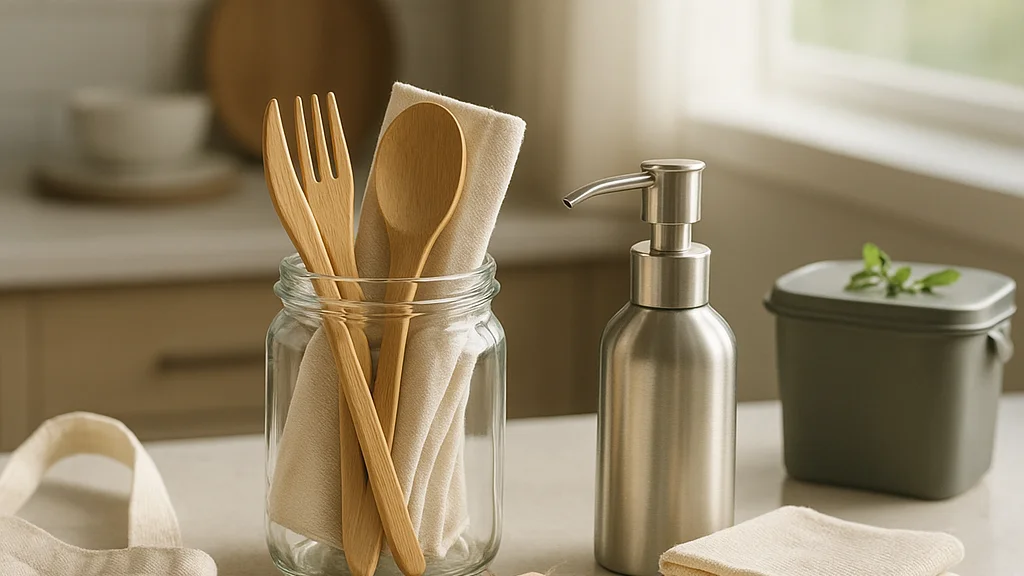
Many beginners are told to replace everything at once: buy stainless steel straws, beeswax wraps, bamboo cutlery, glass dispensers, reusable produce bags, cloth napkins, and artisanal soap bars. This can create a strange result: more consumption in the name of consuming less. A cupboard full of sustainability accessories is still a cupboard full of products that required materials, transport, packaging, and money. The first principle worth defending is simple: use what you already own.
The problem is not just financial. Rigid zero-waste advice often ignores how habits form. Behavioral research summarized by institutions such as the OECD and public health agencies has long shown that convenience, visibility, and routine strongly shape behavior. If the reusable cup is never near the door, it will not travel with you. If leftovers are stored in opaque containers at the back of the fridge, they will be forgotten. If bulk shopping requires three buses and an hour of free time, many households will revert to packaged goods. Beginners then blame themselves, when the real issue is system design.
There is also a moral trap. Some zero-waste content implies that every item must be homemade, package-free, and ethically perfect. That standard excludes renters, shift workers, students, caregivers, and people on tight budgets. It also misunderstands scale. Reusing a yogurt jar is fine; preventing a weekly bag of spoiled salad, takeaway packaging, and impulse purchases is better. A single family that plans meals well can avoid far more waste than a beautifully curated pantry that still leaks food and disposable items.
Three beginner myths deserve retirement:
- Myth 1: You need to buy a full zero-waste kit to start. In reality, existing containers, old tote bags, and ordinary cutlery are enough.
- Myth 2: Recycling is the main answer. Recycling matters, but reducing and reusing usually save more resources upstream.
- Myth 3: Small swaps are enough. They help, but food waste, overbuying, and short product lifespans usually matter more.
That is why a more mature beginner strategy starts with audit, not aesthetics. Before buying any “green” replacement, track one week of rubbish and one week of food discarded. Most households quickly discover recurring categories: snack wrappers, bottled drinks, coffee pods, takeaway containers, cling film, and produce that went soft before being used. Those patterns tell you where to act first.
The waste audit: the most underrated beginner tool
If I had to choose one practice that changes behavior fastest, it would be the household waste audit. It sounds technical, but it is merely observation with honesty. For seven days, note what enters the bin, recycling, and food caddy. Do not aim to be virtuous during the audit; aim to be accurate. The purpose is to reveal your true waste map.
What appears is often surprising. A household may think plastic packaging is the major issue, only to find that spoiled food by weight is the bigger problem. Another may discover that “just one coffee on the go” produces five paper cups a week. In Europe, food waste has become a sharper policy focus in recent years, with the European Commission pushing member states toward stronger prevention measures and better measurement. The reason is obvious: wasted food means wasted land, water, energy, transport, and money.
A useful beginner audit can be organized into four categories:
- Food waste: leftovers, expired dairy, wilted vegetables, stale bread, fruit gone bad.
- Single-use packaging: snack packets, takeaway boxes, film wrap, bottles, pods, sachets.
- Bathroom and cleaning waste: wipes, disposable razors, detergent bottles, cotton pads.
- Hidden replacement waste: items bought because older ones were lost, broken early, or poorly maintained.
This exercise does two things at once. First, it prevents random action. Second, it makes progress measurable. If your family throws away 1.5 kilograms of edible food in a week, reducing that by half is a meaningful achievement. If you buy three bottles of water per person each week, installing a simple filtration jug or carrying a bottle becomes an obvious intervention. The audit converts guilt into priorities.
There is another advantage. It reveals what should not be your focus. If you rarely use straws, replacing them changes little. If you already recycle glass and paper well, your next gains may come from meal planning or laundry habits instead. The beginner who understands their own waste profile is already ahead of the consumer who buys fashionable “eco” products without changing the waste-heavy routines underneath.
The bin is a diary. Read it carefully and it will tell you where your money, convenience, and attention are leaking away.
Readers looking for more foundational steps can compare this method with the practical framing in Top 6 Zero Waste Lifestyle Tips for Beginners to Embrace Sustainability, but the key point remains: track first, replace later.
Where beginners should start for the biggest impact
Once the audit is complete, the smartest path is to tackle high-volume, high-frequency waste streams. In most homes, these are food, packaging from convenience purchases, and disposable household consumables. The order matters. Starting with the areas that recur weekly builds confidence because results are visible quickly.
Food is the first frontier. According to UNEP's Food Waste Index reports, a substantial share of food waste occurs at household level. Beginners should not begin with complicated preservation projects; they should begin with planning. A low-waste kitchen runs on a short list of repeatable meals, a clear view of what is already in the fridge, and a “use first” shelf. Transparent containers help. So does a simple rule: cook ingredients in sequence, from most perishable to most durable. Herbs, berries, leafy greens, and fresh bread should be planned early in the week; dried goods, carrots, cabbage, and frozen ingredients can wait.
Packaging is next. Here, the strongest beginner move is not always bulk buying. Bulk works well only if the shop is accessible and the products are actually used. Otherwise, the practical wins are often more modest:
- Choose larger formats of staples you already consume regularly, reducing packaging per unit.
- Shift from individually wrapped snacks to homemade portions or larger packs decanted at home.
- Carry one durable bottle, one cup, and one shopping bag in the places you already reach for daily: handbag, backpack, bicycle basket, or car door.
- Reduce takeaway frequency by one or two meals a week rather than promising never to order again.
Bathroom and cleaning routines come third. These categories matter, but they are usually smaller by volume than food and packaging. The best beginner swaps are the ones that do not require learning a new skill. Refillable soap, concentrated cleaners, washable cloths instead of disposable wipes, and a durable razor often work because they fit existing behavior. By contrast, making every cleaning product from scratch can collapse under time pressure.
There is also a financial dimension. Waste reduction often aligns with thrift when done well. Fewer impulse purchases, fewer spoiled groceries, and longer product use can matter more than the price premium of niche sustainable goods. In that sense, zero waste resembles old Italian household wisdom: respect materials, buy carefully, mend what still has life, and cook what is already in the pantry before chasing novelty.
What data and policy tell us in 2026
By 2026, the zero-waste conversation is no longer confined to personal virtue. Policy and industry are reshaping the choices available to consumers, though unevenly. Across Europe, packaging rules, single-use restrictions, deposit return systems, and producer-responsibility schemes have continued to expand or tighten. The European Union's Packaging and Packaging Waste Regulation has kept pressure on businesses to reduce unnecessary packaging and improve reuse and recyclability, even as implementation details remain complex. For beginners, this matters because the market itself is changing: refill, return, and reduced-packaging options are gradually becoming less niche.
At the same time, many cautionary lessons have emerged. Some compostable or bioplastic products have been marketed as simple answers, yet waste experts repeatedly note that material substitution alone does not solve overconsumption or contamination in waste streams. A compostable fork used for ten minutes is still a single-use item. If local infrastructure cannot process it properly, the environmental benefit may be limited. Reports from environmental groups and municipal waste operators have stressed this point for years: labels can confuse consumers, and the most robust hierarchy still favors reduction and reuse.
Several 2026 developments are especially relevant for beginners:
- Refill systems are broadening in household cleaning, beauty, and some grocery categories, though availability varies sharply by region.
- Deposit return schemes for beverage containers continue to spread, making returnable or high-recovery packaging more visible to ordinary shoppers.
- Retailers are under stronger packaging scrutiny, which may reduce some excessive formats but does not remove the need for careful purchasing.
- Digital tools are improving, from food inventory apps to local sharing platforms for borrowing, resale, and repair.
Still, no beginner should wait for perfect infrastructure. The household actions that matter most remain stubbornly old-fashioned: plan meals, store food properly, maintain products, borrow rarely used items, and resist convenience purchases disguised as necessities. According to the Ellen MacArthur Foundation's longstanding circular economy analysis, designing out waste is more effective than trying to manage waste after it appears. The same logic applies in miniature at home.
For broader context on the sustainable living conversation around this theme, readers may also find Zero Waste Lifestyle Tips for Beginners: Sustainable Living in 2026 useful, especially where policy shifts and consumer options intersect.
The beginner toolkit that does not create more clutter
One of the ironies of sustainable living is that enthusiasm can produce accumulation. A better toolkit is deliberately small. You do not need a boutique shelf of accessories; you need a few dependable tools placed where they remove friction. Think of the toolkit as a set of defaults rather than a collection.
Start with transportable reusables. One water bottle, one cup, and one shopping bag per person cover a surprising amount of single-use waste. Add food containers only if they solve a real pattern, such as packed lunches or leftover storage. Glass is durable at home, but stainless steel or lightweight plastic containers already in your kitchen may be more practical for commuting. The sustainable choice is often the one you will actually carry and use.
Next comes visibility. In many homes, waste is created by forgetting. Put a bowl for “eat next” fruit on the counter. Keep leftovers at eye level. Store dry goods in a way that reveals quantities before duplicate purchases happen. A freezer list on paper can prevent expensive ingredients from becoming archaeological objects under bags of frozen peas. These are humble interventions, but they work because they respect how busy people behave.
Repair and maintenance deserve a beginner place too. Fast disposal often begins with small neglect: dull blades, loose buttons, weak phone batteries, descaled kettles, worn pan surfaces, torn backpack seams. Learning a few maintenance habits extends product life without romanticizing self-sufficiency. Not every item can or should be repaired, but many can survive longer with basic care.
A lean beginner toolkit might include:
- A durable water bottle and cup
- Two or three containers for leftovers or packed food
- One foldable shopping bag kept permanently near the exit
- Washable cloths for kitchen and cleaning tasks
- A simple meal planner or shopping list system
- A repair pouch with needle, thread, glue, and basic tools
Notice what is absent: no pressure to buy matching jars, specialty cutlery sets, or decorative storage. The aesthetics may come later, if desired. For now, function is the point. As with the clean geometry of Milanese design, elegance emerges from utility well resolved.
Real-world routines: how beginners make low-waste habits stick
The most durable zero-waste routines are attached to moments that already exist. Morning coffee, grocery shopping, lunch packing, laundry, and weekly cooking are more reliable anchors than abstract intentions. This is why beginners should design around routines, not ideals.
Consider the coffee habit. If takeaway cups appear four times a week, the answer is not self-lecture. It is to leave a cup by the keys, keep one at work, or choose cafés that accept reusables where local rules allow. If bottled water is common during commuting, place filled bottles in the fridge each evening and one near the door each morning. If online shopping creates packaging surges, consolidate purchases and delay non-urgent orders by 48 hours; many impulse items lose their urgency in that pause.
Households with children often need another layer of realism. School snacks, birthday parties, and convenience meals can generate packaging quickly. Rather than attempting purity, reduce repetition. If five individually wrapped snacks are bought each school week, replacing two with homemade or minimally packaged alternatives is already progress. If a family orders takeaway every Friday, keeping the ritual but choosing lower-packaging options or collecting food in reusable containers where accepted may be more sustainable than making a rule that fails by the second month.
Community also matters. Repair cafés, neighborhood sharing groups, refill shops, and secondhand platforms reduce waste by expanding access, not by demanding saintly discipline. A drill used for ten minutes a year does not need to be owned by every apartment. A formal outfit needed once can be borrowed or bought secondhand. Circularity becomes easier when social systems support it.
For many readers, the useful benchmark is consistency over intensity. If one routine change saves 200 disposable items a year, that is meaningful. Five such routines alter a household's material footprint significantly. Perfection remains fragile; repetition is stronger.
A low-waste life becomes stable when the sustainable option is the easiest option at the exact moment you need it.
What to watch next, and the beginner mindset that matters most
The next phase of zero waste will be shaped less by influencer aesthetics and more by infrastructure, product design, and cost of living. Consumers in 2026 are more price-sensitive than they were a few years ago, and that reality can help the movement if it is framed honestly. Waste prevention saves money when it reduces overbuying, food spoilage, and disposable convenience. Policymakers, retailers, and manufacturers have responsibilities here, but households still control a crucial frontier: demand.
Watch for three trends. First, refill and return systems may become more mainstream in urban areas, especially for detergents, personal care, and beverages. Second, digital product passports and stronger repairability standards, already advancing in Europe, could make it easier to maintain electronics and appliances for longer. Third, food-waste technology, from smarter date-label practices to inventory apps and dynamic discounting of near-expiry goods, may help households waste less if they use these tools with discipline.
Yet the beginner mindset is more important than any trend. Think in layers. Refuse what you do not need. Reduce what you buy often. Reuse what you already have. Repair before replacing. Recycle what remains, correctly and without illusions. Compost where practical. This hierarchy is familiar, but its power lies in sequence. Too many people begin at the bottom with recycling and never question the purchases that created the waste.
A final piece of advice: choose one category per month. In August, perhaps food planning. In September, takeaway packaging. In October, bathroom refills. Slow progress is not a weakness; it is how durable systems are built. Florence was not carved in a week, and neither is a household culture that treats materials with respect.
Beginners do not need a new identity. They need clearer priorities, fewer gimmicks, and a willingness to observe their own routines without embarrassment. Zero waste is not a contest of purity. It is a practical discipline of care: for resources, for money, for time, and for the places that absorb what we discard. Rethought in this way, it becomes not restrictive but liberating, because every avoided waste stream is one less burden hidden in the background of daily life.



































Sign in to leave a comment.