
The first time many people try a zero waste lifestyle, the pattern is almost painfully familiar. They buy a stainless-steel bottle, a set of glass jars, perhaps a bamboo cutlery kit in soft beige tones that would look quite at home in a Stockholm kitchen, then they promise themselves that from Monday everything changes. Two weeks later, the jars are unused, the cloth bags are forgotten at home, food has spoiled in the fridge, and guilt begins to replace motivation. The problem is not laziness. Usually, it is strategy.
Zero waste, despite the name, was never meant to be a purity contest. It is a systems question, a habits question, and very often an infrastructure question. According to the UN Environment Programme, the world generates more than 2 billion tonnes of municipal solid waste each year, and mismanaged waste remains a major driver of pollution. At the household level, beginners often imagine that the answer is simply to buy less plastic. That matters, certainly, but it is only one piece of the circle. Food waste, energy use, product durability, repair access, local recycling rules, and time constraints all shape outcomes.
That is why the most common mistakes in zero waste living are not dramatic. They are quiet and ordinary: replacing too much too quickly, prioritizing aesthetic swaps over high-impact habits, misunderstanding composting, and assuming that personal discipline can compensate for poor local systems. Greta Thunberg once said, “No one is too small to make a difference.” The line still resonates, but there is another truth beside it: no one person can solve a structural waste problem alone. A beginner needs a practical, lagom approach, balanced enough to last through winter darkness and summer abundance alike.
If you are just starting, resources such as Zero Waste Lifestyle Tips for Beginners: Practical Steps to Sustainable Living and Zero Waste Lifestyle Tips for Beginners That Actually Stick offer useful foundations. Yet before adding more tips, it helps to understand what tends to go wrong. Avoiding these mistakes can save money, reduce frustration, and make your efforts far more effective.
Zero waste is not about buying a new identity
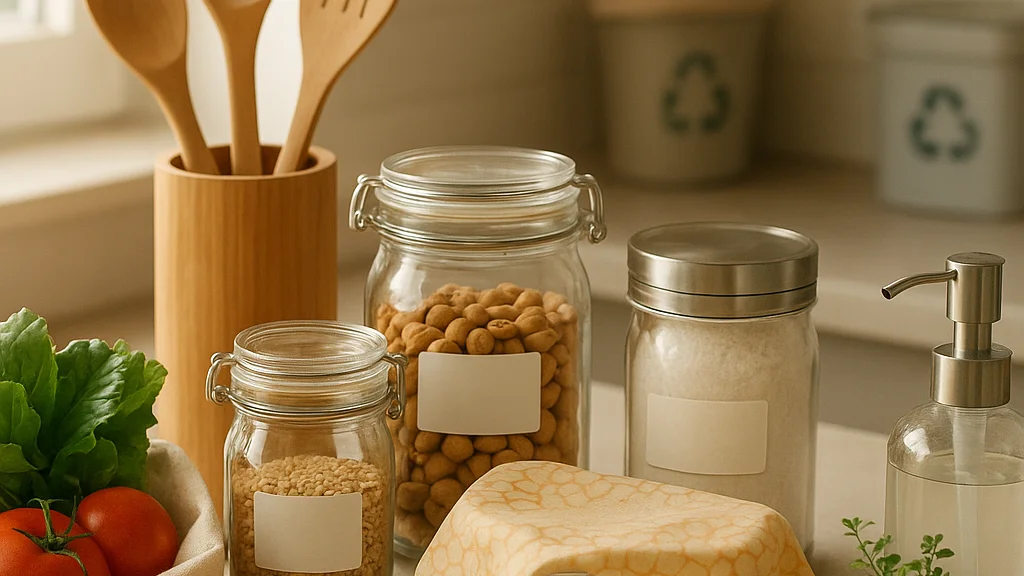
One of the most expensive beginner mistakes is treating zero waste as a shopping category rather than a behavior shift. Retailers have noticed the appeal. Reusable coffee cups, silicone storage bags, refillable cleaning bottles, beeswax wraps, and matching pantry canisters are marketed as if sustainability begins at checkout. Sometimes these products are genuinely useful. Often, though, they become a green-tinted version of overconsumption.
The waste hierarchy has long been clear: reduce comes before reuse, and reuse comes before recycling. The European Environment Agency and many national waste agencies repeat this ordering because it reflects real environmental impact. Manufacturing a new “eco” product still requires materials, transport, packaging, and energy. If a beginner throws away five perfectly good plastic containers only to replace them with glass, the result may feel virtuous, but it is not automatically lower impact.
A better question is simple: what do you already own that can do the job? An old jam jar stores lentils. A washed takeaway container can hold leftovers. A repaired backpack carries groceries as well as any branded tote. Scandinavian design at its best has always understood this, function before spectacle, calm utility before clutter. Zero waste works best when it follows the same principle.
Buying a reusable item you do not need is still consumption. The greenest product is often the one already in your cupboard.
Beginners can avoid this trap by pausing before every “sustainable” purchase and asking three things:
- Do I already have something that serves this purpose?
- Will I use this item at least weekly for the next year?
- Is this replacing a disposable habit I actually have, not one I imagine I might have?
That final point matters. Many households buy bulk jars before they have access to a bulk store, or purchase produce bags while still relying on weekly supermarket delivery. Zero waste habits should fit real routines, not aspirational ones. If your life is hectic, build from what is nearest and most repeatable. Durable progress is quieter than marketing suggests.
The biggest impact is often in the bin you do not notice
Plastic straws and takeaway cutlery are visible, which is why they dominate beginner conversations. Yet in many homes the heaviest, most frequent, and most climate-relevant waste stream is food. The UN estimates that roughly one-third of food produced globally is lost or wasted, while UNEP’s Food Waste Index has repeatedly shown large amounts of waste occurring at household level. For a beginner, this changes the priority list immediately.
Throwing away a bag of salad is not just a waste of packaging. It wastes the water, land, labor, refrigeration, and transport behind that food. In climate terms, food waste can easily outweigh the benefit of swapping one disposable item for a reusable one. Beginners who focus only on visible packaging miss this hidden impact.
Several mistakes drive household food waste. People buy ambitious quantities after watching meal-prep videos. They store produce incorrectly. They misunderstand date labels. They cook large batches without a plan for leftovers. In Europe and North America, “best before” is often treated as “unsafe after,” even though many foods remain fine well beyond that date. Public agencies in multiple countries have tried to clarify this distinction, but confusion persists.
The most effective beginner habits are not glamorous:
- Plan three to four anchor meals per week rather than seven perfect dinners.
- Keep one visible “eat first” box in the fridge.
- Freeze bread, herbs, and portions before they become waste.
- Learn proper storage for potatoes, onions, leafy greens, and berries.
- Track what you throw away for two weeks, then adjust shopping accordingly.
According to WRAP in the UK, households can save substantial sums each year by reducing food waste, and the pattern is similar across many high-income countries. That makes this a rare sustainability measure with immediate financial reward. If you want a realistic framework, Top 6 Zero Waste Lifestyle Tips for Beginners to Embrace Sustainability and Rethinking Zero Waste Lifestyle Tips for Beginners are useful complements, especially when paired with a food-first mindset. In practice, a saved meal is often a stronger zero waste win than a newly purchased set of metal straws.
Composting is excellent, but beginners often use it as an excuse
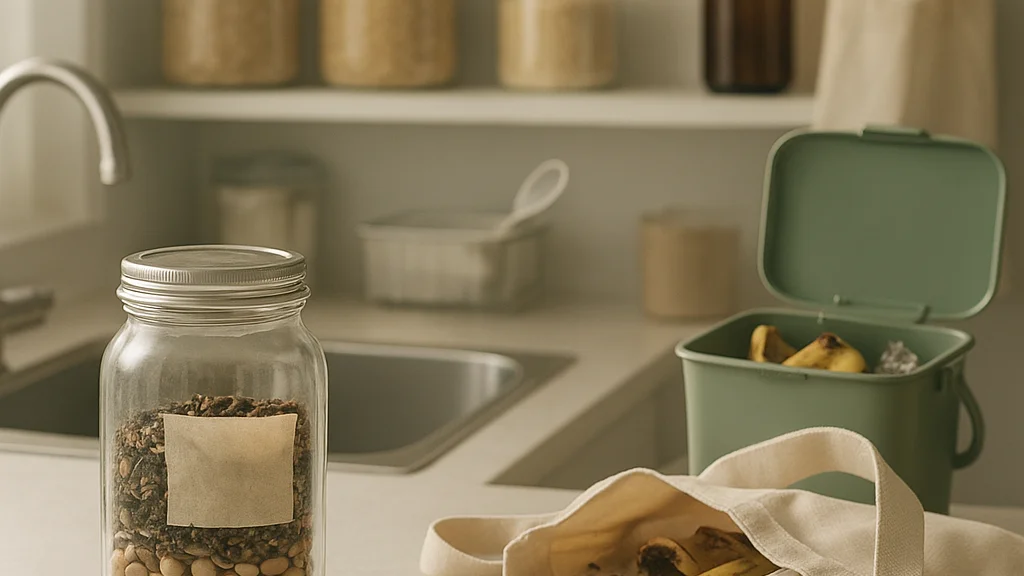
Composting has become a kind of moral shorthand in sustainable living. If scraps go into a compost caddy, many people feel they have solved the problem. In truth, composting is valuable, but it sits lower on the hierarchy than prevention. A mouldy cucumber in the compost is still wasted food. The nutrient loop is better than landfill, yes, but it is not a free pass for poor planning.
There is a second problem. Beginners often assume composting is universally simple. It is not. Apartment dwellers may lack municipal collection. Home compost systems can attract pests if not balanced properly. Compostable plastics create confusion because industrial composting standards differ from home compost conditions. Products labeled compostable may require facilities that a local council does not offer. In 2026, this remains a major issue across many cities, despite improvements in organics collection.
Recent policy shifts have helped in some regions. More municipalities in Europe and parts of North America have expanded food-scrap collection, and packaging rules are gradually becoming stricter. Still, infrastructure remains uneven. According to the OECD and national waste agencies, labeling complexity continues to undermine proper sorting. Beginners should therefore start with local rules, not social media assumptions.
Composting is a recovery tool, not a license to waste food. Prevention still matters more than disposal method.
To avoid common composting mistakes, keep these principles in mind:
- Check whether your city accepts food scraps, garden waste, compostable liners, or certified compostable packaging.
- Do not buy compostable products unless your local system can process them.
- Use composting to handle unavoidable scraps, such as peels and coffee grounds, not preventable leftovers.
- If you live in a flat, consider a countertop caddy plus municipal drop-off or collection before investing in complex equipment.
There is a very Swedish lesson here, one rooted in practicality rather than perfection. Systems should fit the home, the building, the season, and the municipality. A balcony in January is not a suburban garden in June. Lagom applies to compost too.
Perfectionism is one of the fastest routes to burnout
Many beginners fail not because zero waste is impossible, but because they define success too narrowly. One plastic-wrapped emergency purchase, one forgotten tote bag, one takeaway meal after a brutal workday, and suddenly the whole project feels compromised. This all-or-nothing mindset is deeply counterproductive. It turns a long-term practice into a test that most people will eventually fail.
Behavioral science has shown again and again that habits stick when friction is low and rewards are visible. Researchers writing in journals such as Nature Sustainability and policy analysts working on household consumption repeatedly emphasize convenience, social norms, and system design. Moral pressure alone rarely sustains change. That is why a beginner should focus on repeatable routines rather than symbolic purity.
One useful method is to choose three anchor habits for 30 days. For example: carry a bottle, plan meals twice a week, and refuse default cutlery in delivery apps. That is enough to begin. Once those actions become automatic, add another. This gradual approach also makes it easier to see what actually reduces waste in your life rather than in someone else’s beautifully filmed kitchen.
Greta Thunberg’s most enduring message is not about personal purity but urgency paired with honesty. She has often argued that society must stop pretending small gestures alone are enough. The same logic applies here. Your reusable cup matters, but so do municipal refill systems, producer responsibility laws, deposit schemes, and repair access. A beginner who understands this is less likely to collapse into guilt and more likely to stay engaged.
Watch for these signs of unsustainable zero waste ambition:
- You are spending significantly more than before on “eco” alternatives.
- You feel anxious every time you cannot control packaging.
- You have added so many rules that daily life feels harder, not clearer.
- You are ignoring higher-impact areas like food, transport, and home energy.
Long-term sustainability should support life, not dominate it. The goal is not a spotless mason-jar aesthetic. The goal is less waste, better systems, and habits sturdy enough to survive ordinary chaos.
Recycling confusion still derails good intentions in 2026
For all the talk of circularity, recycling remains one of the most misunderstood parts of beginner zero waste practice. Many people engage in what waste experts call “wishcycling,” placing uncertain items into recycling bins in the hope that someone else will sort it out. Unfortunately, contamination can reduce the value of recyclables and in some systems can send entire loads for disposal instead.
The confusion is understandable. Rules differ by municipality. Cartons may be accepted in one city and excluded in another. Black plastic is still difficult for some sorting technologies to identify. Flexible films remain a challenge in many curbside programs. Labels, adhesives, mixed materials, and food residue complicate matters further. According to the Ellen MacArthur Foundation and reporting by Reuters over recent years, packaging redesign and extended producer responsibility have gained momentum, but household sorting is still constrained by what local infrastructure can actually process.
In 2026, several developments are reshaping the picture. Deposit return systems continue to expand or modernize in Europe. The EU’s packaging reforms and national reuse targets are pushing brands to rethink formats. More retailers are piloting refill stations, though scale remains limited. Digital product passports and better material tracing are advancing in some sectors, but they have not yet solved the beginner’s kitchen-bin dilemma.
The practical lesson is blunt: know your local rules better than your favorite influencer’s tips. A yogurt pot rinsed and accepted by your council is useful action. A compostable coffee pod tossed into the wrong stream is not. If your area provides a sorting guide, save it on your phone. If not, check the municipal website or call the waste service line. Source accuracy beats aesthetic confidence every time.
A sensible beginner recycling checklist looks like this:
- Empty and lightly rinse containers to avoid contamination.
- Separate materials when local rules require it, such as cardboard sleeves from plastic trays.
- Do not assume biodegradable or compostable means recyclable.
- Prioritize items with established recovery systems, including deposit containers where available.
- When uncertain, follow official local guidance rather than generic online advice.
Zero waste begins before the bin, but the bin still matters. Misunderstanding it can quietly cancel out good intentions.
Beginners often ignore repair, borrowing, and secondhand systems
A surprisingly common mistake is reducing zero waste to packaging management while overlooking product lifespan. Yet for many categories, especially electronics, furniture, tools, and textiles, the environmental burden is concentrated in production. The International Energy Agency, the European Commission, and numerous lifecycle studies have shown that extending use phases can significantly reduce overall impact. Buying less often, repairing sooner, and sharing occasionally are not side topics. They are central.
This is where zero waste intersects with a broader circular economy. If a household avoids disposable coffee cups but replaces a smartphone every two years without necessity, the arithmetic changes. The same goes for furniture bought cheaply and discarded quickly, or kitchen gadgets purchased for one niche purpose. Durable, repairable, multipurpose goods fit the zero waste logic far better than shelves full of single-use “solutions.”
Recent developments in 2026 make this area especially relevant. Right-to-repair rules have strengthened in parts of Europe, spare-parts access has improved for some product categories, and refurbished electronics markets are more mature than they were a few years ago. Large brands still vary widely in repairability, but consumers now have more tools to compare options. According to iFixit-style repair advocacy and European policy reporting, repair scores and serviceability are becoming more visible, though not yet universal.
For beginners, the easiest gains often come from community systems:
- Borrow tools you use once or twice a year.
- Choose secondhand for storage furniture, kitchenware, and children’s items.
- Repair zippers, shoes, lamps, and small appliances before replacing them.
- Use local swap groups for books, toys, and seasonal equipment.
There is a quiet beauty in this model, one that feels close to Nordic common sense. A drill does not need to belong to every household. A table does not lose dignity because it had a previous life. Waste reduction becomes easier when ownership is not the default answer to every need.
What beginners should do instead: a practical roadmap that lasts
Once the common mistakes are clear, the path forward becomes less intimidating. Start with an audit, not a shopping spree. For two weeks, note what fills your bin: food scraps, snack wrappers, online delivery packaging, toiletries, cleaning bottles, takeaway containers. Patterns appear quickly. Most households discover that only a handful of categories account for most of their waste. That is where effort should go first.
From there, build a sequence. First reduce preventable food waste. Second replace your most frequent disposables with reusables you will genuinely use. Third learn local recycling and compost rules. Fourth explore repair, refill, and secondhand options nearby. Fifth advocate for better systems where gaps remain. This order matters because it aligns effort with impact and keeps motivation grounded in visible results.
If you want a compact framework, think in layers:
- Layer 1: Use what you have.
- Layer 2: Buy less and buy better.
- Layer 3: Prevent food waste before managing scraps.
- Layer 4: Reuse, repair, borrow, and share.
- Layer 5: Recycle and compost correctly according to local systems.
Current 2026 trends support this more grounded approach. Refill retail is expanding, though unevenly. Deposit systems are improving in several markets. Brands face rising pressure over packaging and material transparency. Municipal organics collection is more common than it was a few years ago, even if access is still patchy. None of these shifts removes personal responsibility, but they do mean beginners have more support than before, provided they work with the systems available rather than against them.
For readers who want a broader starter perspective, Zero Waste Lifestyle Tips for Beginners: Sustainable Living in 2026 offers a timely overview. Pair that with your own household audit and the results will be far more useful than any universal checklist.
The most successful zero waste beginners are not the strictest. They are the ones who design habits around real life, local infrastructure, and steady improvement.
That, perhaps, is the heart of it. Zero waste is not a performance. It is a practice, shaped by kitchens, buses, offices, family schedules, and city rules. Make it practical. Make it durable. Make it lagom. Then keep going.


































Sign in to leave a comment.