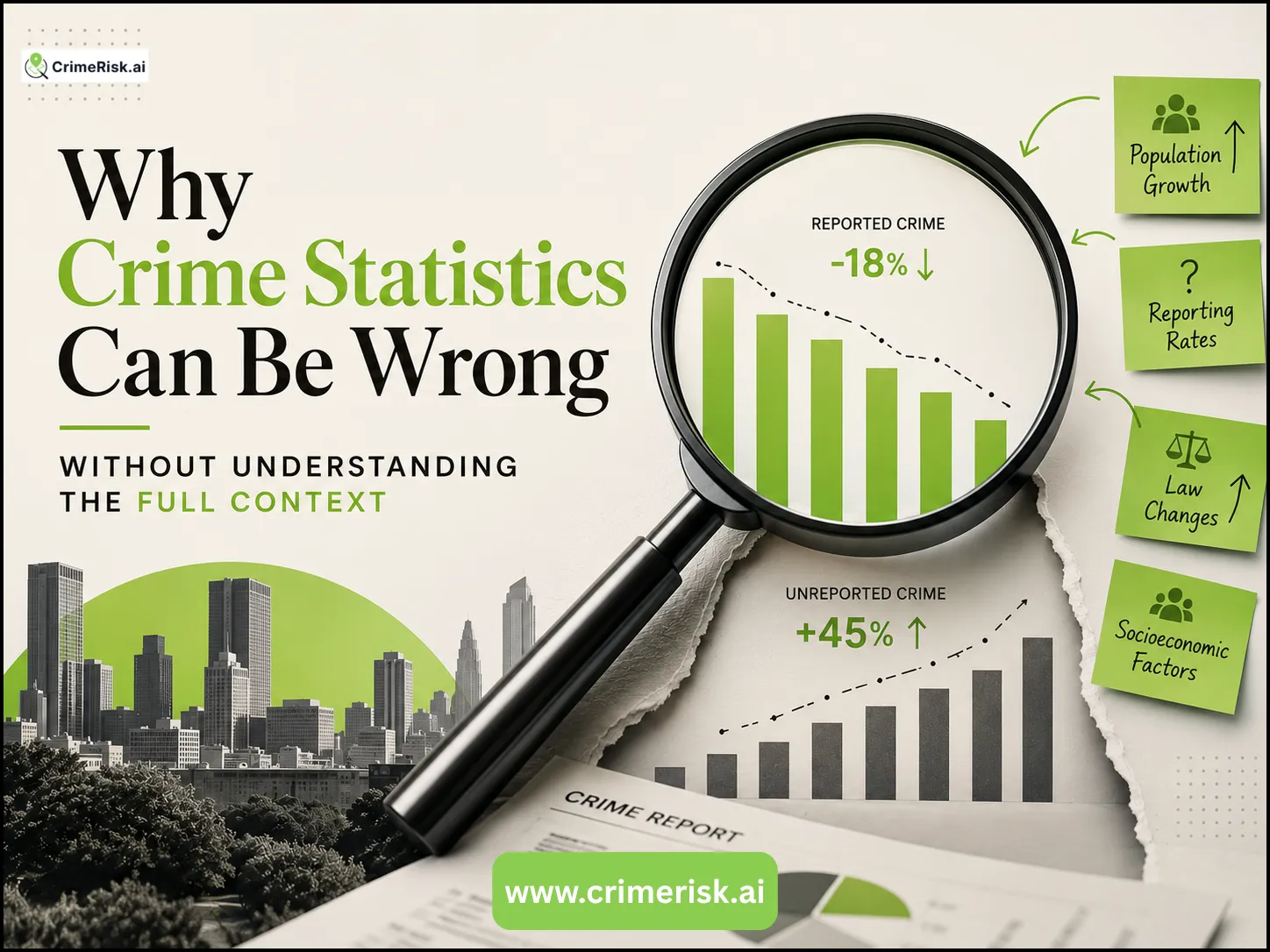

Crime statistics are often one of the first things people look at when evaluating a location. Whether it's a business choosing its next site, an investor assessing a property, or an insurer estimating risk, crime data can heavily influence decisions. But numbers alone rarely tell the whole story.
The problem is that crime statistics are frequently viewed without the context needed to understand what they actually mean. A high crime rate doesn't automatically make an area a bad investment, just as a low crime rate doesn't guarantee a location is risk-free. To make informed decisions, it's important to look beyond the numbers and understand the factors driving them.
Looking Beyond the Crime Rate
It's easy to assume that an area with more reported crimes is inherently more dangerous than one with fewer incidents. In reality, crime patterns are shaped by a wide range of influences, including population density, commercial activity, transportation hubs, local reporting practices, and socioeconomic conditions.
For example, a busy downtown district may record more incidents simply because thousands of people pass through it every day. A nearby residential neighborhood may show fewer reported crimes, but that doesn't necessarily mean it carries less risk. Without understanding the context behind the data, it's easy to draw the wrong conclusions.
This is one reason why businesses are increasingly turning to crime risk analytics instead of relying solely on basic crime counts. Analytics help uncover patterns and trends that raw statistics often fail to reveal.
Why Context Changes the Story
Crime doesn't happen in isolation. The environment surrounding a location often plays a major role in influencing risk levels.
Areas with major shopping centers, entertainment venues, transit stations, or large employment hubs naturally attract higher volumes of activity. More activity can lead to more reported incidents, but it can also create economic opportunities and growth potential.
Looking only at crime totals ignores these important realities. A location may appear risky on paper while actually offering strong business opportunities when viewed through a broader lens.
This is where crime and environmental risk insights become valuable. By combining multiple data sources, organizations can better understand the overall risk profile of a location rather than focusing on a single metric.
The Problem with Broad Geographic Data
Another common issue is the way crime data is presented.
Many reports summarize crime information at the city, ZIP code, census tract, or block-group level. While useful for identifying broad trends, these larger geographic areas can hide significant differences between nearby locations.
A neighborhood labeled as high risk may contain several blocks with relatively low crime activity. At the same time, a generally safe area may contain small pockets where incidents occur more frequently.
For businesses making location-based decisions, these distinctions matter. A few blocks can make a significant difference in exposure, safety, and long-term performance.
Why Block-Level Analysis Matters
The more precise the data, the more useful it becomes.
Access to address-specific crime data (block-level precision) allows organizations to evaluate risk at a much more detailed level. Instead of relying on averages that cover large geographic areas, decision-makers can examine conditions around a specific address or property.
This level of detail helps organizations:
- Identify localized crime patterns
- Compare sites more accurately
- Validate investment decisions
- Improve underwriting assessments
- Reduce uncertainty during site selection
For industries where location plays a critical role, having access to block-level insights can make the difference between a confident decision and an expensive mistake.
Crime Is Only Part of the Risk Equation
Even detailed crime information provides only part of the picture.
Many organizations overlook environmental factors that can significantly impact operations, property values, and long-term risk. Flood exposure, severe weather events, environmental hazards, and natural disaster vulnerabilities can create challenges that are just as important as crime levels.
A location with relatively low crime may still face substantial environmental risks that affect insurance costs, business continuity, or future development plans.
That's why evaluating crime data alongside environmental intelligence provides a more complete understanding of a location.
Understanding Environmental Risk at a Local Level
Modern risk assessment increasingly combines crime information with environmental analysis.
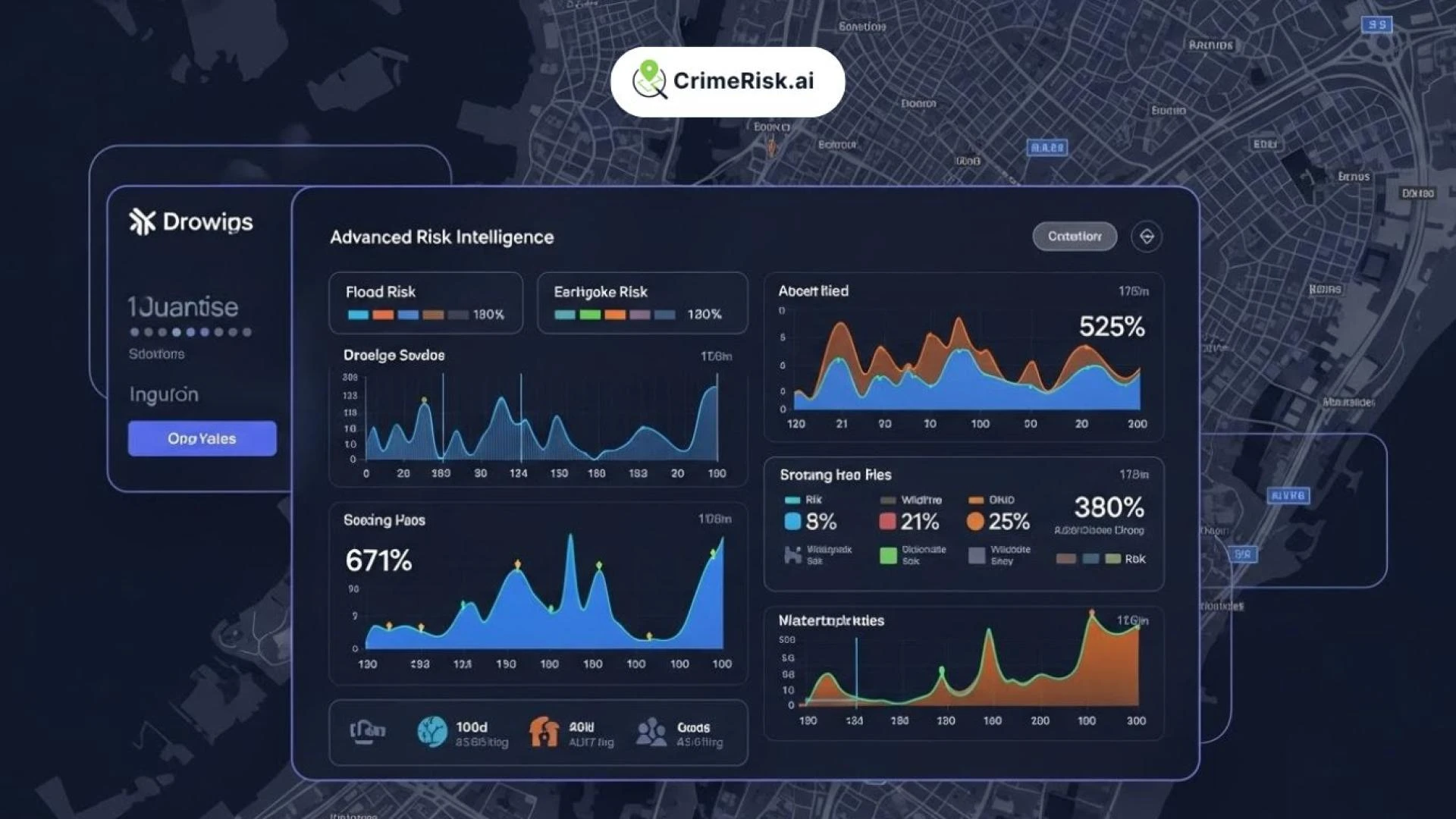
Using block-group environmental hazard analytics, organizations can gain insight into factors such as:
- Flood risk
- Environmental hazards
- Natural disaster exposure
- Community resilience indicators
- Long-term location sustainability
When these insights are viewed alongside crime patterns, decision-makers can better understand the strengths and weaknesses of a specific location.
Instead of asking only, "How much crime occurs here?" organizations can ask a more useful question: "What risks and opportunities exist at this location overall?"
The Value of a Comprehensive Crime Risk Reporting Platform
Traditional crime reports often provide static snapshots that quickly become outdated. They may contain useful information, but they rarely offer the depth needed for strategic decision-making.
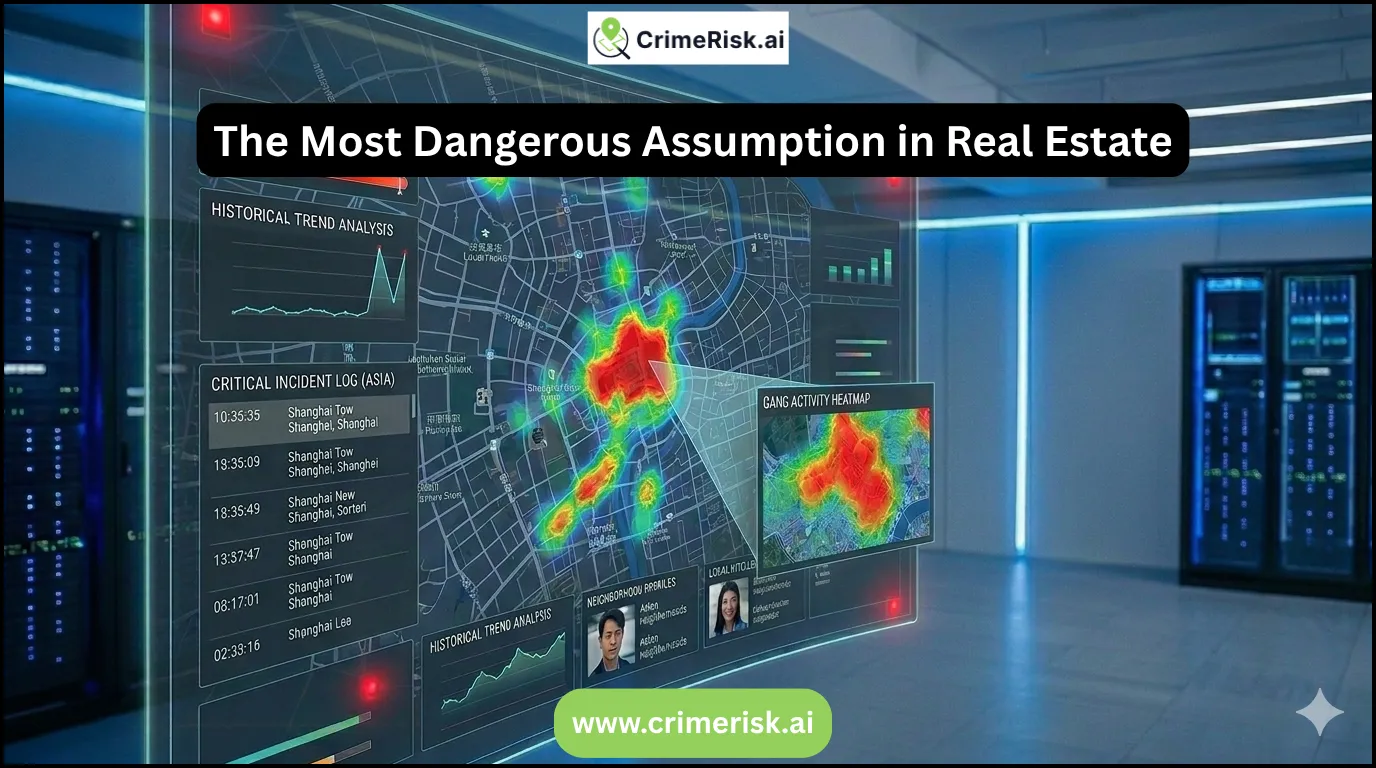
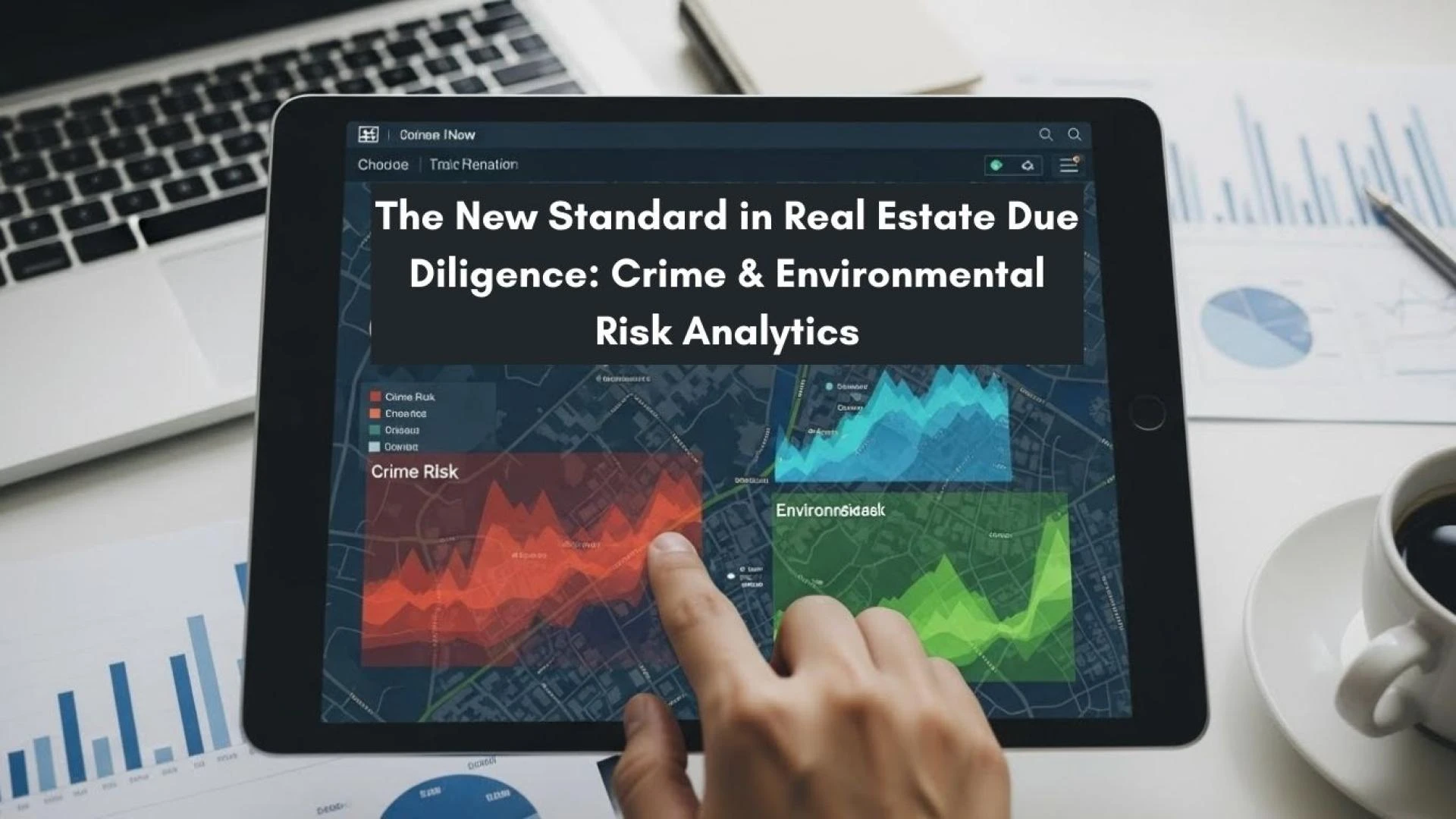
A modern crime risk reporting platform helps organizations move beyond basic crime statistics by providing interactive tools, visual mapping, and detailed location intelligence.
With access to integrated crime and environmental data, businesses can evaluate locations more efficiently, compare multiple sites, and make decisions with greater confidence.
Rather than spending hours collecting information from multiple sources, decision-makers can access a clearer view of risk through a single platform.
Why Better Context Leads to Better Decisions
Crime statistics are an important starting point, but they don't tell the full story on their own. Without proper context, businesses and investors can misjudge risk, miss opportunities, or make costly decisions.
The best decisions come from looking beyond raw crime numbers and understanding the factors behind them. With CrimeRisk.ai, businesses can evaluate locations with greater confidence, reduce uncertainty, and make smarter, data-driven decisions.



























Sign in to leave a comment.