
International ecommerce looks simple from the customer's side.
A shopper finds a product, sees a price, pays, and expects delivery.
For the business selling that product, however, the calculation is much more complicated.
A $100 international order may involve product cost, shipping, customs duties, import taxes, brokerage, handling, and other destination-specific expenses. If those costs are ignored, a business can mistake revenue for profitability.
What Is Landed Cost?
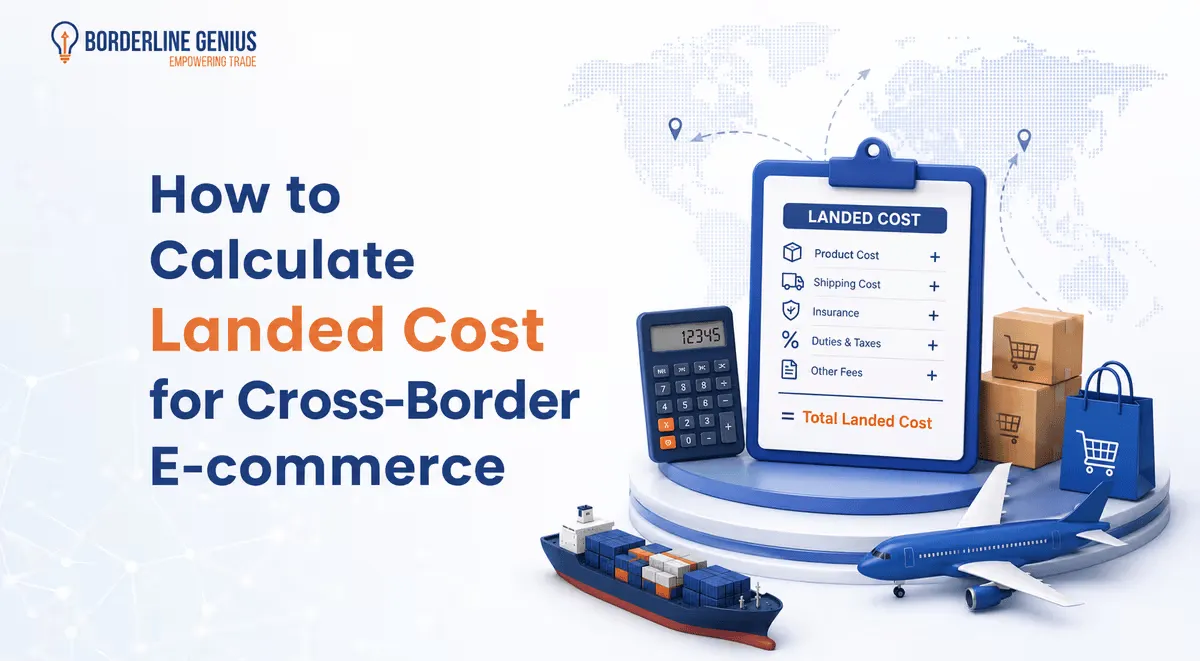
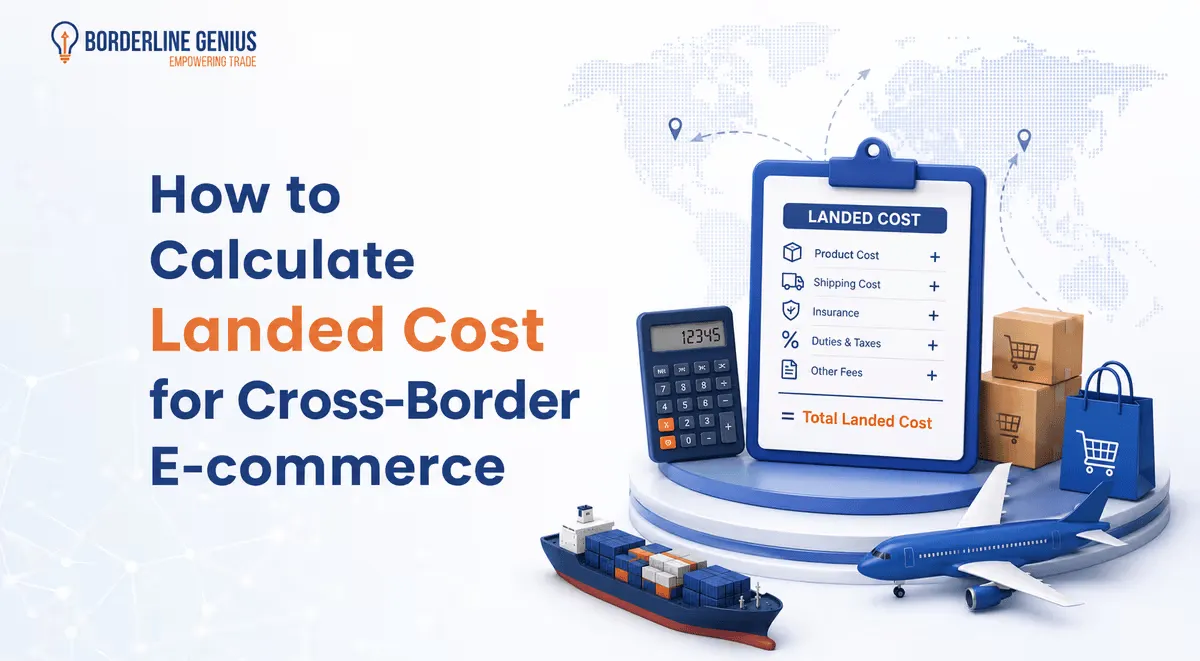
Landed cost represents the total cost associated with getting a product from its source to its intended destination.
A basic formula is:
Landed Cost = Product Cost + Shipping + Duties + Taxes + Other Applicable Costs
The exact calculation varies according to the product, origin, destination, customs classification, shipment characteristics, and commercial terms.
For a more detailed explanation of the calculation and its ecommerce applications, this cross-border ecommerce landed cost guide provides a useful reference.
Why International Margins Can Be Misleading
Imagine an ecommerce business sells a product for $100.
Its basic costs are:
- Product cost: $35
- Fulfillment: $8
- Payment and platform costs: $7
That leaves $50 before international expenses.
Now add:
- International shipping: $12
- Customs duty: $5
- Import tax: $8
- Other costs: $3
The remaining contribution drops to $22.
The selling price did not change.
The product did not change.
The original calculation simply did not include the full cost of serving an international customer.
This is why businesses should evaluate landed cost before expanding into new markets or setting international prices.
Every Market Can Have Different Economics
A product does not necessarily have one global landed cost.
Shipping, duties, taxes, customs procedures, and other costs can vary between countries.
A product shipped from the United States to Germany may have different economics from the same product shipped from China to Canada or the United Kingdom.
This makes destination-specific analysis important.
A market with a large customer base is not automatically a profitable market.
Businesses need to consider whether they can serve that market at a commercially viable cost.
Customs Classification Matters
Product classification is another important part of the calculation.
The applicable HS code can influence customs treatment and duty rates.
Other factors can also matter, including country of origin, customs value, trade agreements, preferential treatment, and applicable trade measures.
For businesses with large ecommerce catalogs, inaccurate product data can therefore create inaccurate landed-cost estimates.
Maintaining reliable information about product descriptions, SKUs, origin, value, weight, dimensions, and classification becomes increasingly important as international sales grow.
DDP and DAP Change Who Handles Import Costs
Delivery terms can also affect the economics and customer experience.
With DAP, the buyer generally handles import clearance and applicable duties and taxes.
With DDP, the seller assumes substantially more responsibility for import clearance and applicable duties and taxes, subject to destination requirements.
For customers, this distinction can be significant.
A DAP order may result in an additional customs or tax payment when the shipment arrives.
A DDP arrangement can create a more predictable delivered-cost experience, but it can also increase the seller's operational responsibility.
Neither option is universally better. The right choice depends on the destination, product, logistics model, customer expectations, and business economics.
Why Spreadsheets Become Difficult at Scale
A spreadsheet may work for a small catalog.
But consider an ecommerce company with:
5,000 products × 20 destination countries
That represents 100,000 potential product-market combinations.
Each combination may involve different:
- HS classifications
- Duty rates
- Tax rules
- Shipping costs
- Countries of origin
- Currencies
- Incoterms
- Fulfillment locations
Keeping all of this accurate manually becomes difficult.
Common problems include outdated rates, missing charges, incorrect classifications, inconsistent assumptions, and duplicated costs.
At that point, landed-cost calculation becomes a data-management problem rather than simply a mathematical one.
Where Automation Helps
For larger ecommerce businesses, landed-cost information may need to connect with existing systems such as:
- Ecommerce platforms
- ERP systems
- Order management
- Shipping software
- Tax technology
- Analytics
- Checkout systems
A simplified workflow could be:
Product + Origin + Destination + Shipment Data
↓
Trade and Cost Calculation
↓
Estimated Landed Cost
↓
Pricing / Checkout / Profitability / Fulfillment
This allows businesses to use landed-cost information before a decision is made rather than discovering the real economics after an order has already shipped.
Landed Cost and Market Expansion
Before entering a new country, businesses should compare the complete economics of serving that market.
For example, two countries may have similar customer demand but very different additional costs.
Market A
Shipping: $8
Duties: $4
Taxes and other costs: $5
Additional cost: $17
Market B
Shipping: $12
Duties: $10
Taxes and other costs: $8
Additional cost: $30
If the product price and domestic costs remain the same, Market A may provide considerably better contribution.
This type of analysis can influence which markets a company enters first, which products it sells, where it holds inventory, and how it structures its international pricing.
The Practical Takeaway
Cross-border ecommerce is not simply about finding customers in another country.
It is about understanding the complete economics of serving those customers.
Product cost is only the beginning.
Shipping, duties, taxes, customs classification, Incoterms, brokerage, fulfillment, and destination-specific expenses can all affect profitability.
The businesses that understand these costs before expanding are in a much better position to make informed decisions about pricing, markets, suppliers, and fulfillment.
For a deeper resource covering ecommerce landed-cost calculations, checkout considerations, DDP and DAP, automation, APIs, and international profitability, see the complete landed cost guide for cross-border ecommerce.






















Sign in to leave a comment.