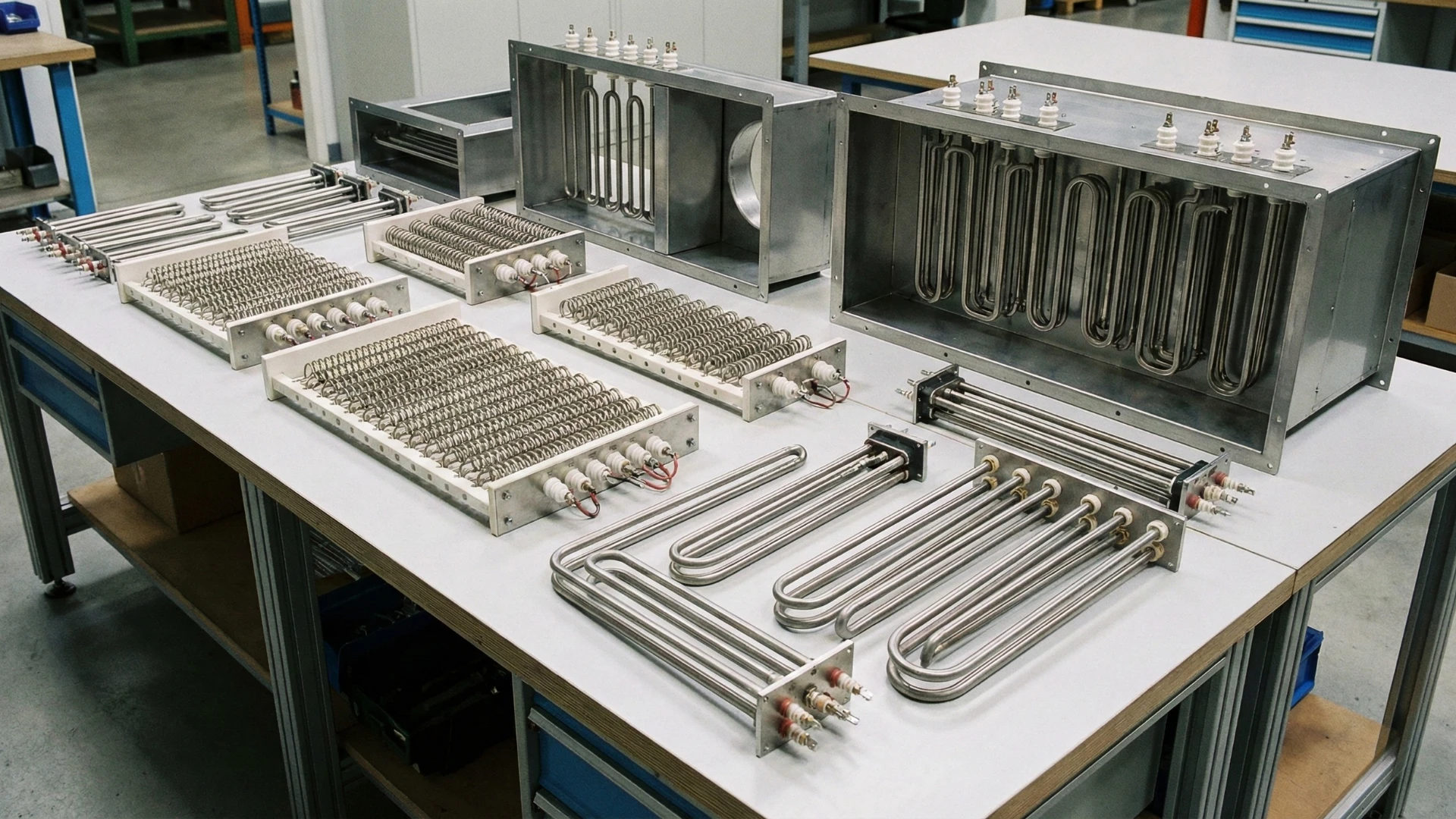

In industrial environments, heating systems are rarely interchangeable. Airflow conditions vary, electrical infrastructure differs from site to site, space constraints are real, and operating temperatures are often pushed to the limit. Yet many systems still rely on standard catalog electric heaters designed to satisfy broad, generalized requirements.
While catalog heaters are suitable for basic applications, manufacturers operating in demanding conditions often quickly discover their limitations. This is why custom electric heater assemblies consistently outperform standard models in real-world industrial use.
This blog explains the technical, operational, and economic reasons custom electric heater assemblies deliver superior performance over off-the-shelf options.

Custom Heater Assemblies Are Engineered for the Application
The primary advantage of a custom electric heater assembly is that it is designed around the actual operating conditions rather than a generic specification. A strong custom build process begins with correct sizing, configuration, and application review, which is why many teams rely on electric heater design consulting before finalizing heater specifications.
Key design factors are tailored, including:
- Wattage and watt density matched to the heating medium
- Coil geometry optimized for airflow or fluid movement
- Physical dimensions built to fit ducts, enclosures, or tanks precisely
- Electrical configuration aligned with available power
- Materials selected for temperature, corrosion, and duty cycle
This application-driven approach eliminates guesswork and allows the heater to operate within safe, efficient limits across its full service life.
The Fundamental Limitation of Catalog Heaters
Catalog heaters are engineered to meet average conditions. They are designed around fixed watt densities, standardized dimensions, and common voltage configurations. This approach simplifies manufacturing and distribution, but it assumes the application fits neatly within those parameters.
In practice, most industrial systems do not.
Manufacturers often encounter challenges such as uneven airflow, restricted mounting space, unusual voltages, strict temperature tolerances, or regulatory requirements that catalog heaters were never designed to address. When a heater is forced into an application it was not engineered for, compromises follow.
Those compromises typically show up as reduced efficiency, premature failures, safety concerns, or ongoing maintenance issues.
Superior Thermal Performance and Temperature Control
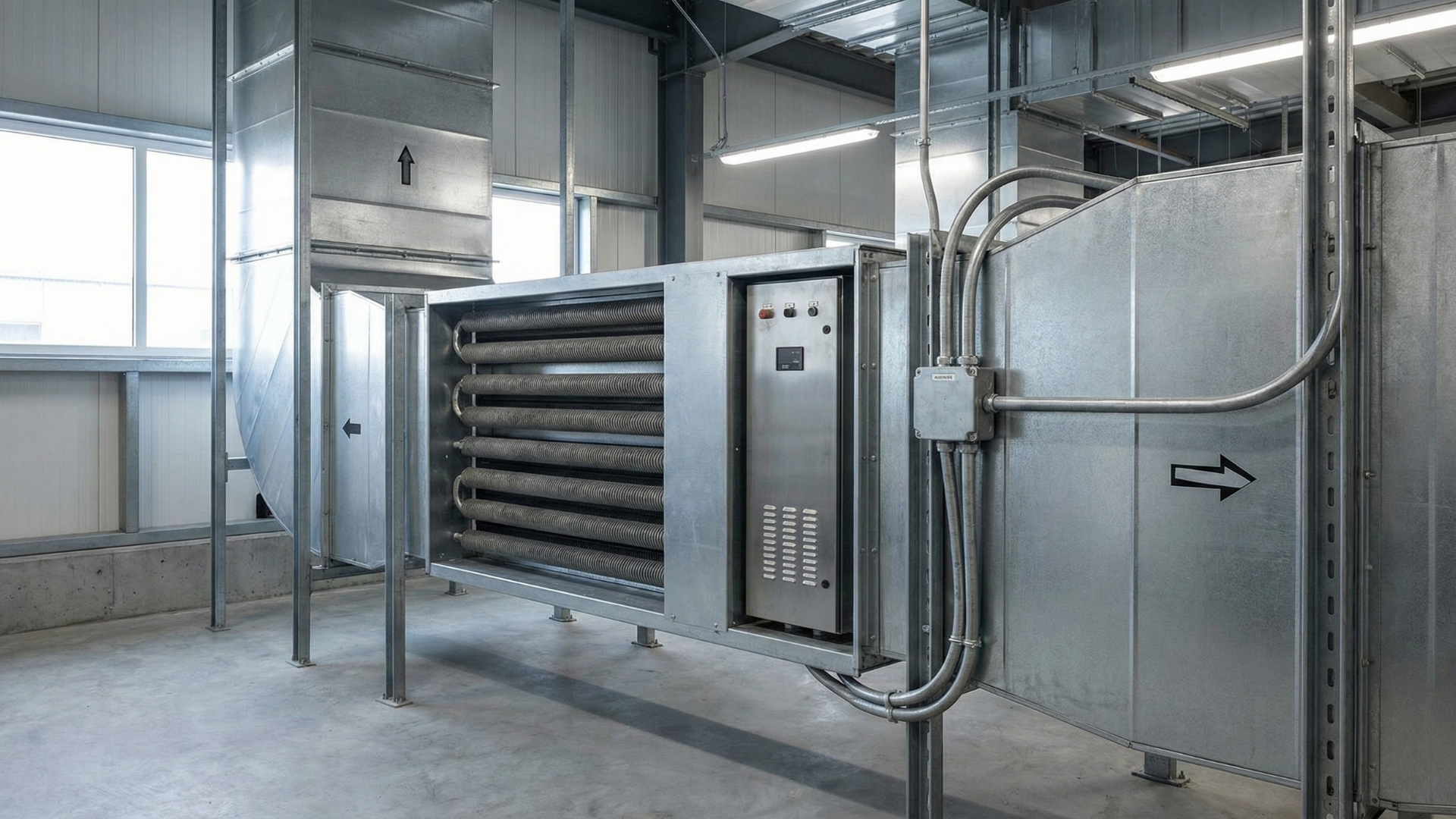
Custom electric heaters deliver more consistent heat because surface area, element spacing, and watt density are engineered together. This reduces hot spots, prevents localized overheating, and improves temperature uniformity.
In processes such as air heating, drying, curing, or environmental control, uniform temperature directly affects product quality and system reliability. Catalog heaters often struggle here because their fixed designs cannot account for real airflow patterns or heat load variations.
Custom assemblies solve this by aligning heater geometry with how heat is actually transferred in the system.
Improved Reliability Under Continuous Duty
Industrial heaters often operate continuously or cycle frequently at elevated temperatures. Under these conditions, small design shortcomings become major failure points.
Custom heater assemblies address durability by:
- Selecting resistance alloys appropriate for the operating temperature
- Reducing thermal stress through proper coil spacing
- Using ceramic or mica supports designed for long-term dielectric stability
- Reinforcing terminals and connections to handle vibration and expansion
These design choices significantly extend heater life compared to catalog models that operate near their maximum ratings.

Better Mechanical Fit and Easier Installation
Standard heaters often require field modifications such as adapter plates, additional brackets, or altered wiring routes. These workarounds increase installation time and introduce new failure risks.
Custom heater assemblies are built to match existing equipment geometry, which results in:
- Faster installation
- Cleaner wiring layouts
- Reduced risk of airflow restriction
- Easier servicing and replacement
For OEMs, this also simplifies production by eliminating assembly variability.
Integrated Controls and Safety Features
Modern heating systems rarely operate as standalone elements. They require sensors, safeties, and control components to meet performance and compliance standards.
Custom heater assemblies can integrate:
- Temperature sensors
- Over-temperature protection
- Airflow or pressure switches
- Contactors and relays
- Control transformers and fusing
Integrating these features at the assembly level reduces wiring complexity, improves system reliability, and ensures safety components are tested as part of the complete heater system.
Electrical Compatibility Without Compromise
Many facilities operate with non-standard voltages or specific load balancing requirements. Catalog heaters may force oversizing, derating, or inefficient power distribution.
Custom designs allow engineers to:
- Match exact voltage and phase requirements
- Balance three-phase loads correctly
- Stage heating circuits to manage demand
- Align breaker and conductor sizing with actual loads
This results in safer electrical systems and improved energy efficiency.
Lower Total Cost of Ownership
Although custom electric heater assemblies may carry a higher upfront cost, they frequently reduce long-term expenses.
Lower total cost of ownership comes from:
- Longer heater lifespan
- Fewer unplanned shutdowns
- Reduced maintenance labor
- Lower energy waste
- Faster installation and replacement
When downtime, product loss, and service calls are considered, custom assemblies often outperform catalog heaters economically over the life of the system.
Ideal for Legacy and Retrofit Applications
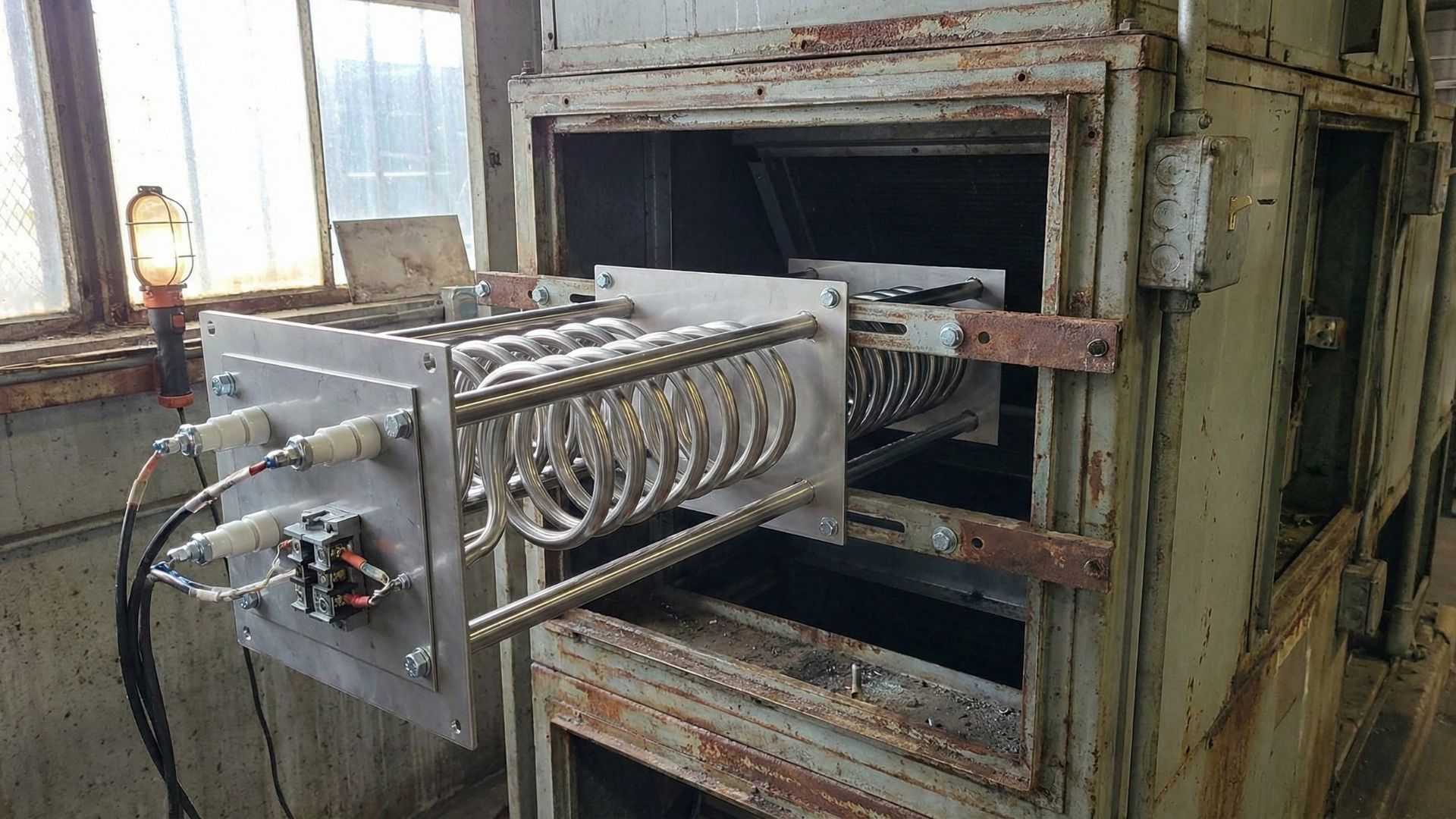
Older equipment often relies on heaters that are no longer manufactured. Retrofitting with catalog models can introduce mechanical or electrical mismatches.
Custom heater assemblies can be engineered as drop-in replacements that preserve existing equipment while improving performance and safety. In many cases, extending equipment life also means restoring existing heater banks rather than replacing entire systems, making heater repair services a practical option for maintenance teams.
When Custom Electric Heater Assemblies Make Sense
A custom heater is usually the right choice when:
- Heating directly impacts product quality or safety
- Space, airflow, or temperature constraints exist
- The system operates near performance limits
- Equipment is built repeatedly as an OEM product
- Heater failures are recurring
- Compliance requirements are strict
For manufacturers assessing heater build quality, material selection, and production flexibility, it is useful to examine how industrial heater assemblies are engineered and validated in real manufacturing environments.
The information outlined in Why Creative Assemblies provides practical insight into manufacturing controls, short-run production capability, and turnaround considerations that distinguish application-specific heater assemblies from generic catalog designs.
In these scenarios, custom assemblies provide reliability and performance that catalog models simply cannot match.
Final Perspective
Custom electric heater assemblies outperform standard catalog models because they are engineered for reality, not averages. By aligning heater design with actual operating conditions, manufacturers gain better thermal performance, longer service life, improved safety, and lower long-term costs.
In industrial environments where reliability matters and downtime is expensive, a heater designed specifically for the job is not a luxury. It is a strategic advantage.










Sign in to leave a comment.