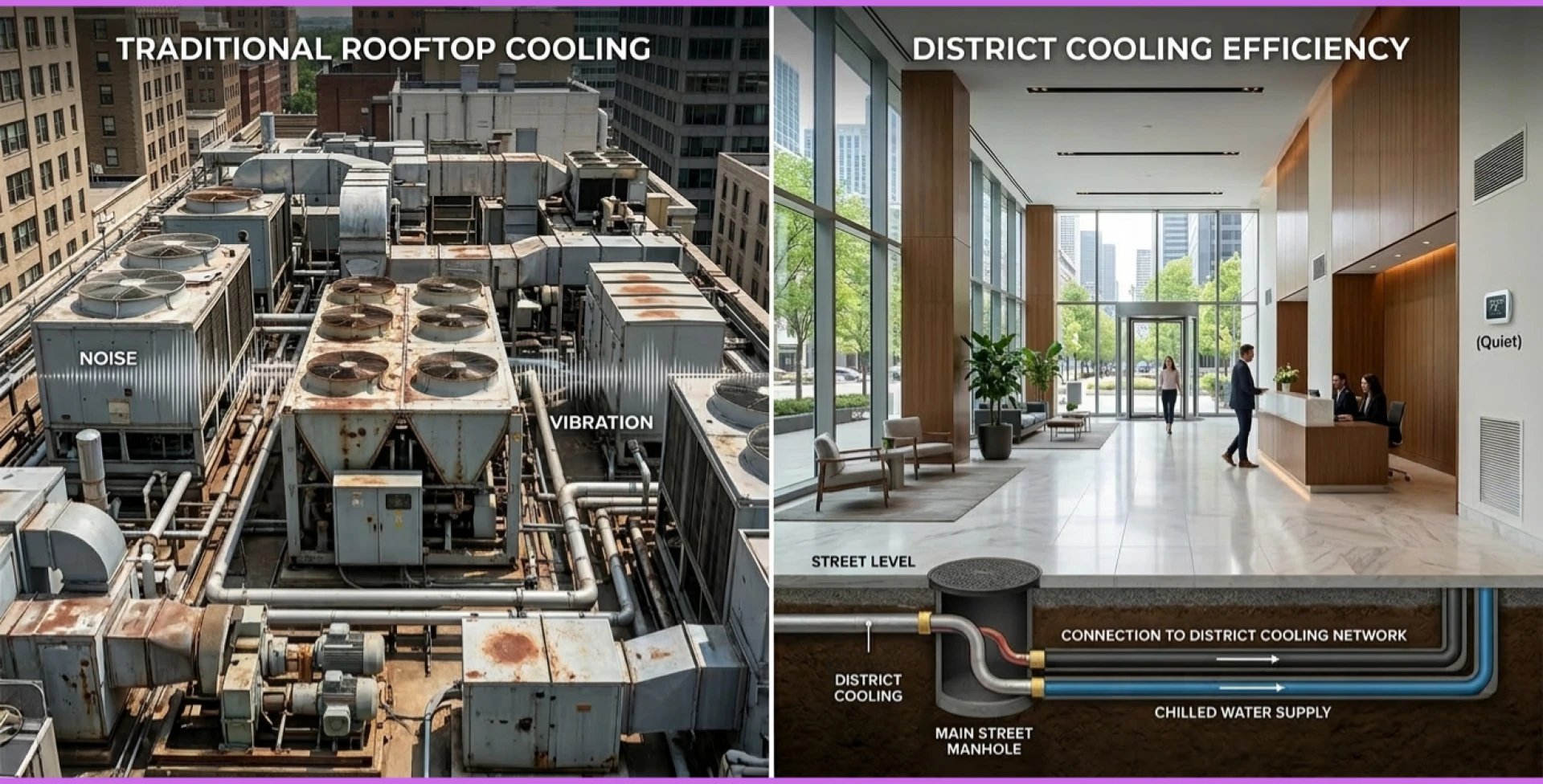

Keeping office buildings comfortable in hot climates requires reliable cooling systems. Most offices traditionally rely on standalone air-conditioning units or centralized chillers. While these methods work, they often consume large amounts of energy and require frequent maintenance. Today, many commercial developments are shifting toward district cooling because it offers greater efficiency and sustainability compared to conventional office cooling solutions.
Understanding how district cooling works can help you see why it is becoming a preferred option for modern commercial buildings.
What Is District Cooling?
District cooling is a centralized system that produces chilled water in a dedicated cooling plant and distributes it to multiple buildings through insulated underground pipes. This chilled water is then used to cool indoor spaces through air-handling units or heat exchangers.
Unlike traditional air-conditioning systems, which require separate equipment in every building, district cooling allows several buildings to share a single, highly efficient cooling infrastructure. This centralized approach improves efficiency and reduces overall energy consumption.
Higher Energy Efficiency
One of the main advantages of district cooling is its energy efficiency. Central cooling plants are designed with advanced equipment that operates at optimal performance levels. Because these plants serve multiple buildings, they can use larger and more efficient chillers compared to individual building systems.
As a result, you benefit from lower electricity consumption and reduced operational costs. Many studies have shown that centralized cooling networks can reduce energy usage by a significant percentage compared to conventional cooling methods.
These improvements are among the key district cooling benefits that make the technology attractive for commercial hubs and business districts.
Reduced Maintenance and Operating Costs
Traditional cooling systems require each building to install and maintain its own chillers, cooling towers, and compressors. This means higher maintenance costs, more technical staff, and frequent repairs.
With district cooling, the cooling equipment is located in a central plant managed by specialized professionals. As a building owner or facility manager, you no longer need to maintain large mechanical cooling units inside the building.
This reduces maintenance responsibilities and operational costs while ensuring reliable performance throughout the year.
Space Saving for Office Buildings
Cooling equipment such as chillers and cooling towers can occupy significant space in traditional building designs. These systems are usually placed on rooftops or in mechanical rooms, limiting usable space within the building.
District cooling removes the need for bulky cooling equipment inside the building. Instead, cooling is supplied directly from the central plant. This allows developers to use the saved space for additional offices, facilities, or amenities.
In large commercial developments, this space efficiency becomes a major advantage.
Environmentally Friendly Cooling
Sustainability is becoming a priority for modern cities and businesses. Traditional air-conditioning systems often use more energy and produce higher carbon emissions.
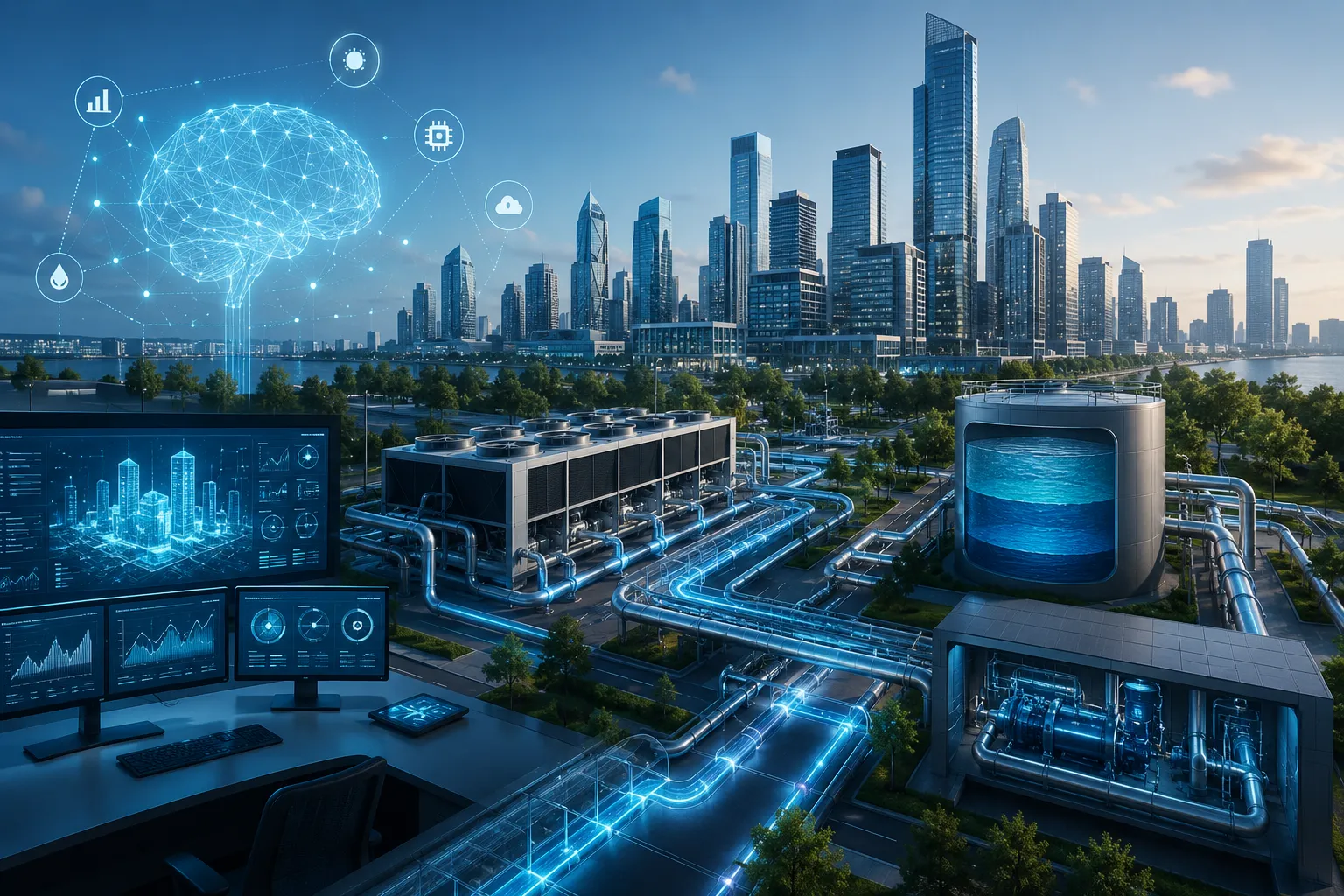
District cooling systems are designed to reduce environmental impact by optimizing energy use and reducing electricity demand. Central plants can also integrate energy-efficient technologies and advanced monitoring systems to improve performance.
Many large-scale urban developments now include a district cooling project as part of their sustainable infrastructure planning. This approach helps cities reduce energy consumption while maintaining comfortable indoor environments.
Reliable Cooling for Large Developments
District cooling is particularly beneficial for business districts, commercial complexes, and mixed-use developments. Because cooling is generated from a central plant, the system can maintain consistent temperatures across multiple buildings.
You benefit from reliable cooling even during peak demand periods, which is especially important in regions with extreme heat.
Conclusion
District cooling is becoming a preferred choice for modern commercial buildings because it offers higher efficiency, lower maintenance requirements, and improved environmental performance compared to conventional systems. By using centralized cooling plants and advanced technology, businesses can maintain comfortable indoor temperatures while reducing energy consumption and operational costs. These long-term advantages highlight the growing importance of district cooling benefits for offices and large developments seeking sustainable and reliable cooling solutions.


Sign in to leave a comment.