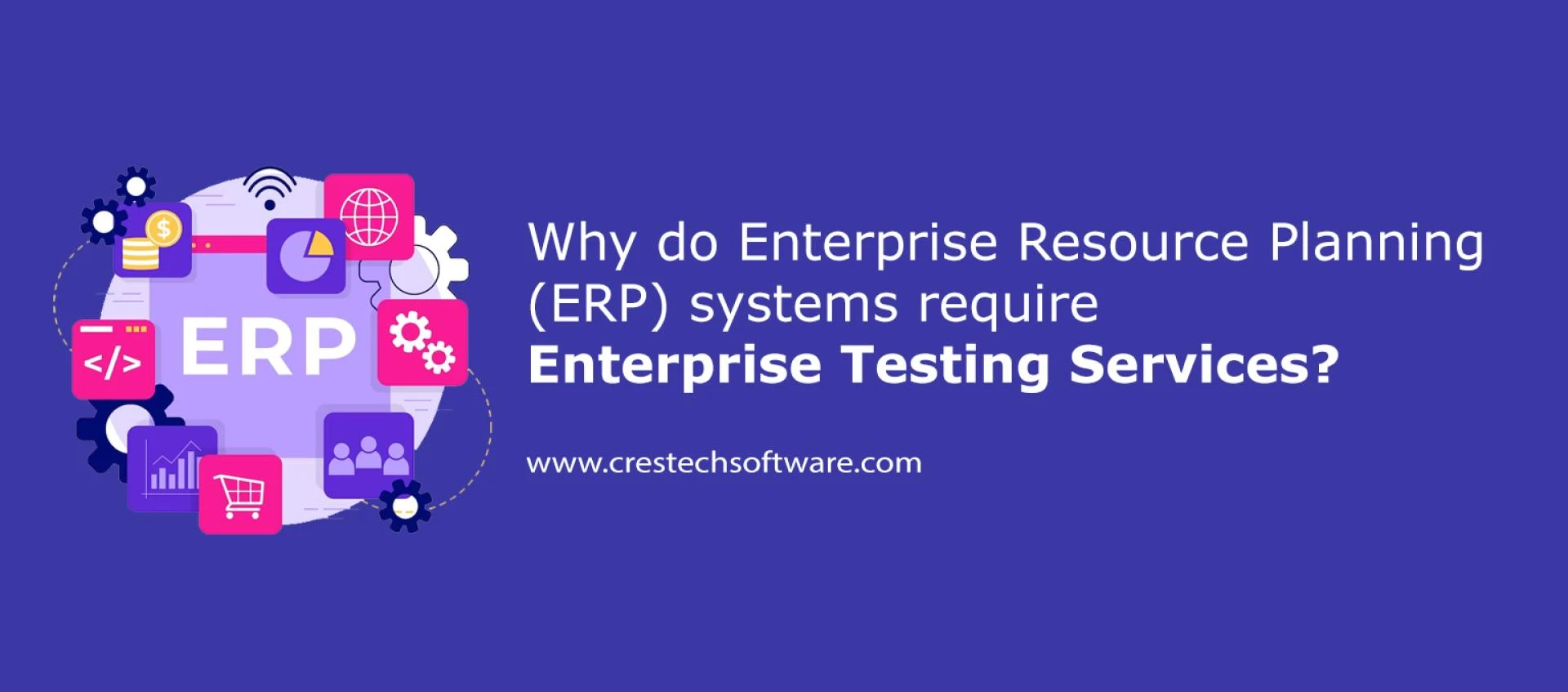

Enterprise Resource Planning (ERP) systems are complex software solutions that integrate various business processes and functions within an organization. These systems are critical to the smooth operation of a company, as they help streamline operations, improve efficiency, and provide real-time data and insights for decision-making. Given the critical role ERP systems play in an organization, it is imperative to ensure that they are thoroughly tested before implementation. This is where enterprise testing services come into play.
Here are some reasons why ERP systems require enterprise testing services:
Complexity and Customization: ERP systems are often highly customizable to meet the specific needs of an organization. This customization introduces complexity, as various modules and components need to work seamlessly together. Enterprise testing services can validate that the customized ERP solution functions as intended without causing conflicts or errors.
Integration: ERP systems integrate with various other software and hardware components within an organization, including databases, third-party applications, and hardware devices. Testing ensures that all these integrations are working correctly and that data flows smoothly between systems.
Data Accuracy: ERP systems are a central repository for critical business data. Errors in data entry, processing, or retrieval can have serious consequences. Testing helps identify data inconsistencies or inaccuracies and ensures data integrity throughout the system.
Performance: ERP systems must perform efficiently, especially in large enterprises with a significant volume of transactions and users. Performance testing assesses the system's response times, scalability, and resource utilization under different load conditions to ensure it can handle the demands of the organization.
Security: ERP systems often store sensitive business data, including financial and customer information. Security testing helps identify vulnerabilities and ensures that the system is protected against unauthorized access, data breaches, and cyber threats.
Compliance: Many industries and regions have specific regulatory requirements that organizations must adhere to. ERP systems may need to comply with these regulations. Testing services can validate that the system meets regulatory standards.
User Experience: User acceptance testing (UAT) is a crucial part of ERP testing. It ensures that the system is user-friendly and meets the needs of end-users. UAT helps identify any usability issues or training needs.
Business Continuity: ERP systems are mission-critical for many organizations. Testing for disaster recovery and business continuity ensures that the ERP system can recover quickly in case of unexpected outages or disasters.
Cost Savings: Thorough testing can help identify and resolve issues early in the ERP implementation process, reducing the likelihood of expensive rework or disruptions post-implementation.
Risk Mitigation: ERP implementations are often high-risk projects due to their complexity and the impact they have on an organization. Testing helps identify and mitigate risks, ensuring a smoother and more successful implementation.
In summary, ERP systems are complex and integral to an organization's operations. Enterprise testing services play a vital role in ensuring that ERP implementations are successful, secure, and aligned with the organization's needs. Testing helps identify and address issues before they impact business processes and helps deliver a robust, reliable, and high-performance ERP system.





















Sign in to leave a comment.